
Brazil, a South American giant and one of the world’s largest economies, frequently sparks curiosity regarding the fundamental structure that underpins its vast financial landscape. Is it a beacon of free-market capitalism, or does it lean towards a more centrally planned model? The truth, as is often the case with complex nations, lies in a nuanced blend. Brazil operates under a mixed economic system, a dynamic interplay of market forces and significant state intervention. This intricate balance shapes everything from investment opportunities to everyday living costs, making an understanding of its unique characteristics crucial for anyone engaging with the Brazilian financial environment.
This article delves into the core components of Brazil’s economic system, exploring its historical evolution, the key pillars that define its current state, and the inherent challenges and opportunities it presents. For investors, entrepreneurs, and financial analysts alike, grasping the intricacies of this system is not merely an academic exercise but a practical necessity for navigating one of the most significant emerging markets on the global stage.
Understanding Brazil’s Mixed Economic Landscape
To truly appreciate Brazil’s economic framework, it’s essential to first situate it within the broader spectrum of economic thought. From there, we can trace its historical development and pin down the specifics of its mixed model.
The Theoretical Spectrum: Command vs. Market
At one end of the theoretical spectrum lies the command economy, where the state owns and controls most means of production, making central decisions about what, how, and for whom goods and services are produced. Historically, examples include the Soviet Union. At the other extreme is the pure market economy, characterized by private ownership, minimal government intervention, and decisions driven by supply and demand forces through free competition. No truly pure market economy exists, but countries like the United States and Singapore are often cited as leaning heavily towards this model.
Most economies, including Brazil’s, exist somewhere in between, forming various types of mixed economies. These systems integrate elements of both private enterprise and government control, aiming to harness the efficiency of markets while addressing social equity and market failures through state action.
Brazil’s Historical Economic Trajectory
Brazil’s economic journey has been marked by significant shifts, largely influencing its current mixed status. In the mid-20th century, particularly from the 1930s to the 1980s, Brazil pursued an import-substitution industrialization (ISI) strategy. This involved high tariffs to protect domestic industries, heavy state investment in strategic sectors (like energy, telecommunications, and banking), and a significant role for state-owned enterprises (SOEs). The goal was to reduce dependence on imports and foster local industrial growth.
While ISI achieved considerable industrialization, it also led to inefficiencies, high public debt, and periods of hyperinflation. The 1990s ushered in a period of liberalization, privatization, and fiscal austerity. Governments began selling off SOEs, opening the economy to foreign trade and investment, and stabilizing inflation through reforms like the Plano Real. However, the legacy of state intervention and a robust social safety net remains deeply ingrained.
Defining Brazil’s “Mixed” Economy
Today, Brazil’s mixed economy is characterized by a co-existence of a vibrant private sector, significant state ownership in key industries, and an active regulatory and welfare state. The Constitution provides for both private property rights and market competition while also mandating the state’s role in promoting economic development, social justice, and environmental protection.
This means that while the majority of economic activity is driven by private enterprises responding to market signals, the government maintains a substantial hand through direct ownership in strategic sectors, extensive regulation across industries, and robust social programs designed to mitigate inequality and provide public services. It’s a system that continually seeks to balance capitalist dynamism with a commitment to social responsibility.
Key Pillars of Brazil’s Economic System
The mixed nature of Brazil’s economy is not an abstract concept but is evident in concrete structures and policies that shape its financial reality. These pillars define how capital flows, how businesses operate, and how wealth is distributed.
State-Owned Enterprises and Strategic Sectors
Despite significant privatization efforts, state-owned enterprises (SOEs) continue to play a crucial role in Brazil’s economy, particularly in strategic sectors.
- Petrobras, the national oil company, is a prime example, dominating oil and gas exploration and production. Its influence extends to energy prices, investment decisions, and even national industrial policy.
- Banco do Brasil and Caixa Econômica Federal are major public banks that provide extensive financial services, including housing finance and social program disbursements, competing with and often guiding the private banking sector.
- In the electricity sector, companies like Eletrobras (though undergoing partial privatization) have historically held substantial sway over power generation and transmission.
These SOEs are often seen as instruments for national development, job creation, and price stabilization, but they can also be prone to political interference, inefficiency, and corruption, posing unique challenges for investors and policymakers.
Market Mechanisms and Private Sector Dominance
Alongside state influence, Brazil boasts a powerful and diverse private sector that drives the bulk of its economic output.
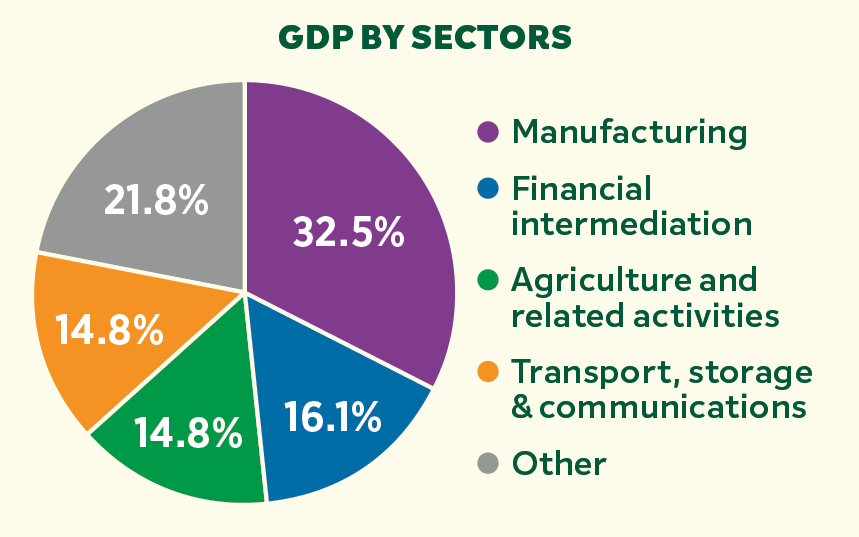
- Agriculture is a significant example, where private farms, often large-scale, are global leaders in the production of commodities like soybeans, coffee, beef, and sugar. This sector operates largely on market principles, responding to international prices and demand.
- The services sector (retail, finance, tourism, telecommunications) and a substantial portion of manufacturing are predominantly private. Domestic and multinational corporations compete fiercely, driving innovation and consumer choice.
- Private investment, both domestic and foreign direct investment (FDI), is crucial for job creation, technological advancement, and infrastructure development. The Brazilian stock market (B3) and a sophisticated banking system facilitate capital allocation and financial transactions for private entities.

Regulatory Framework and Government Intervention
Beyond direct ownership, the Brazilian government exerts considerable influence through its extensive regulatory framework and active fiscal policy.
- The Central Bank of Brazil (BCB) is a crucial institution, responsible for monetary policy, inflation targeting, and maintaining financial stability. Its decisions on interest rates (the Selic rate) profoundly impact borrowing costs, investment, and currency valuation.
- Regulatory bodies like CADE (Administrative Council for Economic Defense) oversee competition, preventing monopolies and ensuring fair market practices. Sector-specific agencies regulate areas like telecommunications (Anatel), electricity (Aneel), and health (Anvisa).
- The government also uses fiscal policy (taxation and public spending) to influence the economy. Social programs like Bolsa Família (now Auxílio Brasil) are globally recognized for their role in poverty reduction and income redistribution. Furthermore, significant public investments in infrastructure, education, and healthcare are common. Environmental regulations are also increasingly impactful, affecting industries like mining and agriculture.
Challenges and Opportunities within the System
Brazil’s mixed economic system, while providing a unique blend of stability and dynamism, also presents specific challenges and ripe opportunities that shape its financial future.
Navigating Economic Volatility and Inflation
Brazil has a history of significant economic volatility, marked by periods of high inflation, currency depreciation, and boom-and-bust cycles. While the Plano Real in the 1990s brought hyperinflation under control, managing inflation remains a perennial challenge for the Central Bank, often requiring high interest rates that can stifle economic growth. Political instability and global commodity price fluctuations frequently exacerbate this volatility. For businesses and investors, this means a higher degree of risk but also potential for significant returns if managed effectively. Robust hedging strategies and a deep understanding of macroeconomic indicators are essential.
Addressing Inequality and Social Welfare
One of the primary justifications for state intervention in a mixed economy is to address social inequality. Brazil, despite its economic size, struggles with profound disparities in income and wealth distribution, alongside regional imbalances. Government social welfare programs, aimed at poverty reduction, education, and healthcare access, are critical components of the system. While these programs have improved living standards for millions, sustained economic growth and structural reforms are necessary to tackle the root causes of inequality and ensure long-term social mobility. This focus on social inclusion can also open markets for goods and services catering to a broader economic base.
Fostering Sustainable Growth and Innovation
Brazil possesses immense natural resources, a large domestic market, and a vibrant entrepreneurial spirit, offering significant potential for sustainable growth and innovation. The challenge lies in transitioning from a commodity-dependent economy to one driven by value-added industries and technological advancement.
- Investment in infrastructure (transportation, logistics, energy) is crucial to reduce the “custo Brasil” (Brazil cost) and improve competitiveness. Public-private partnerships are increasingly utilized to bridge this investment gap.
- Technological innovation and the growth of the digital economy are areas of increasing focus, with efforts to foster startups and attract investment in tech.
- Renewable energy, given Brazil’s vast hydroelectric potential and growing solar/wind capacity, represents a major opportunity for sustainable economic development and aligns with global environmental goals.
These areas present considerable investment prospects for both domestic and international capital, albeit often within a complex regulatory environment that demands careful navigation.
Brazil’s Role in the Global Economy
Brazil’s economic system is not insular; it is deeply interconnected with the global economy, influencing and being influenced by international markets, trade flows, and geopolitical dynamics.
A Major Player in Global Commodities
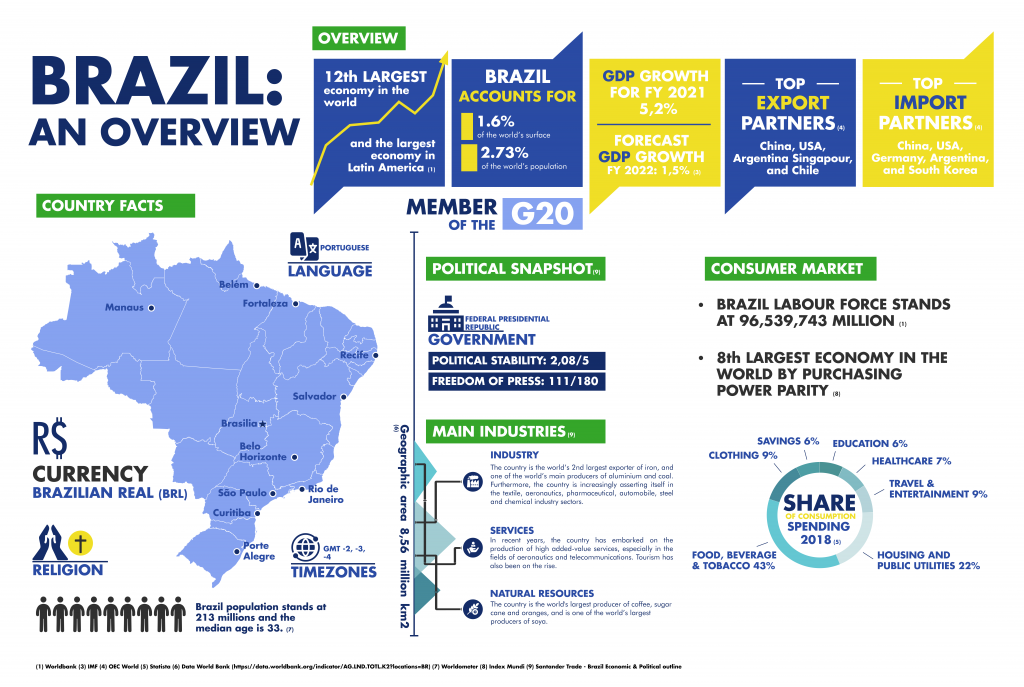
Brazil is an agricultural powerhouse and a significant producer of minerals. Its exports of soybeans, iron ore, coffee, beef, and sugar have a substantial impact on global commodity markets and form a critical component of its trade balance. Fluctuations in international commodity prices directly affect Brazil’s export revenues, currency value, and overall economic stability. This reliance on primary goods links Brazil’s economic health closely to global demand cycles and the performance of its trading partners, particularly China, which is a major consumer of Brazilian commodities.
Attracting Foreign Direct Investment (FDI)
Despite its complexities, Brazil remains an attractive destination for Foreign Direct Investment (FDI) due to its large domestic market, abundant natural resources, and strategic position in South America. The legal framework generally protects foreign investors, and the government actively seeks to attract capital for infrastructure, industry, and technology. However, challenges such as bureaucratic hurdles, tax complexity, and perceived political risk can deter some investors. Understanding the specific regulatory environment, potential for returns, and long-term economic outlook is vital for any entity considering FDI in Brazil.
Regional and International Trade Agreements
Brazil is a founding member of Mercosur, a South American trade bloc that includes Argentina, Paraguay, and Uruguay, aiming to foster free trade and fluid movement of goods, people, and currency within the region. While Mercosur’s effectiveness has varied, it underscores Brazil’s commitment to regional economic integration. Beyond Mercosur, Brazil engages in various bilateral and multilateral trade discussions, seeking to diversify its export markets and integrate further into global supply chains. These agreements influence market access for Brazilian goods and services and shape the competitive landscape for businesses operating within the country.
Conclusion
Brazil operates a comprehensive and dynamic mixed economic system, characterized by a delicate balance between free-market principles and strategic state intervention. Its historical path, from import substitution to market liberalization, has forged an economy where a powerful private sector coexists with influential state-owned enterprises and an active regulatory state. This unique blend profoundly impacts investment decisions, financial policies, and the overall economic trajectory of the nation.
While Brazil offers immense opportunities stemming from its vast resources, large consumer base, and innovative spirit, it also presents challenges such as economic volatility, persistent inequality, and the need for continuous structural reforms. For those looking to engage with this significant emerging market, a thorough understanding of its economic system is not just an advantage, but a necessity. Brazil’s economic journey is a continuous evolution, striving to harmonize growth with social equity, and its success in navigating this path will continue to shape its standing as a pivotal player in the global financial landscape.
aViewFromTheCave is a participant in the Amazon Services LLC Associates Program, an affiliate advertising program designed to provide a means for sites to earn advertising fees by advertising and linking to Amazon.com. Amazon, the Amazon logo, AmazonSupply, and the AmazonSupply logo are trademarks of Amazon.com, Inc. or its affiliates. As an Amazon Associate we earn affiliate commissions from qualifying purchases.