
The image of a “wealthy person” in popular culture is almost inseparable from the roar of a high-performance Italian supercar or the chauffeur-driven elegance of a British limousine. We are conditioned to believe that a direct correlation exists between the size of one’s bank account and the prestige of the badge on their grille. However, when we analyze the spending habits of the truly affluent—those who prioritize wealth preservation and long-term financial growth—a much more nuanced and pragmatic picture emerges.
In the world of personal finance and strategic asset management, a vehicle is rarely viewed as a status symbol. Instead, it is evaluated as a depreciating asset, a tax tool, or a utility-driven necessity. Understanding what the wealthy actually drive requires peeling back the layers of “stealth wealth” and looking at the financial logic that dictates their automotive choices.
1. The Financial Philosophy of Automotive Acquisition
For the average consumer, a car is often the second-largest purchase they will ever make, frequently funded through high-interest debt to project an image of success. For the wealthy, the acquisition of a vehicle is a calculated move within a broader financial portfolio. The primary goal is often the mitigation of “lifestyle creep” and the minimization of asset depreciation.
The Reality of Depreciating Assets
The wealthy understand a fundamental rule of money: never tie up a significant portion of your net worth in an asset that loses 15% to 20% of its value the moment it leaves the showroom floor. While a middle-class buyer might stretch their budget to afford a $70,000 Entry-Level Luxury sedan, a millionaire often recognizes that the same $70,000, if invested in a diversified index fund or a real estate REIT, could double in a decade. Consequently, many high-net-worth individuals (HNWIs) opt for brands known for their “slow” depreciation curves or, more commonly, they buy pre-owned vehicles where the initial “steep” depreciation has already been absorbed by a previous owner.
The “Millionaire Next Door” Archetype
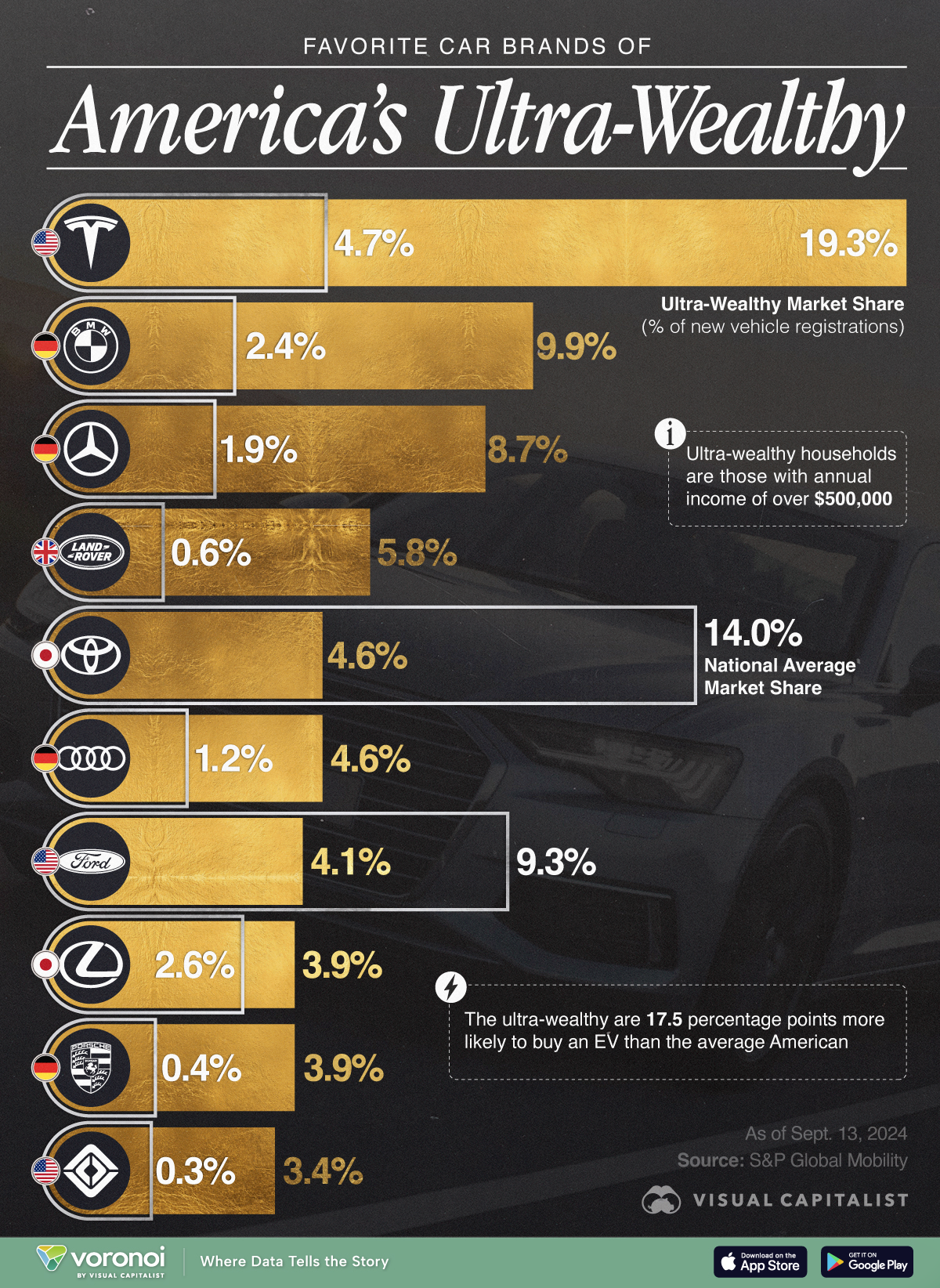
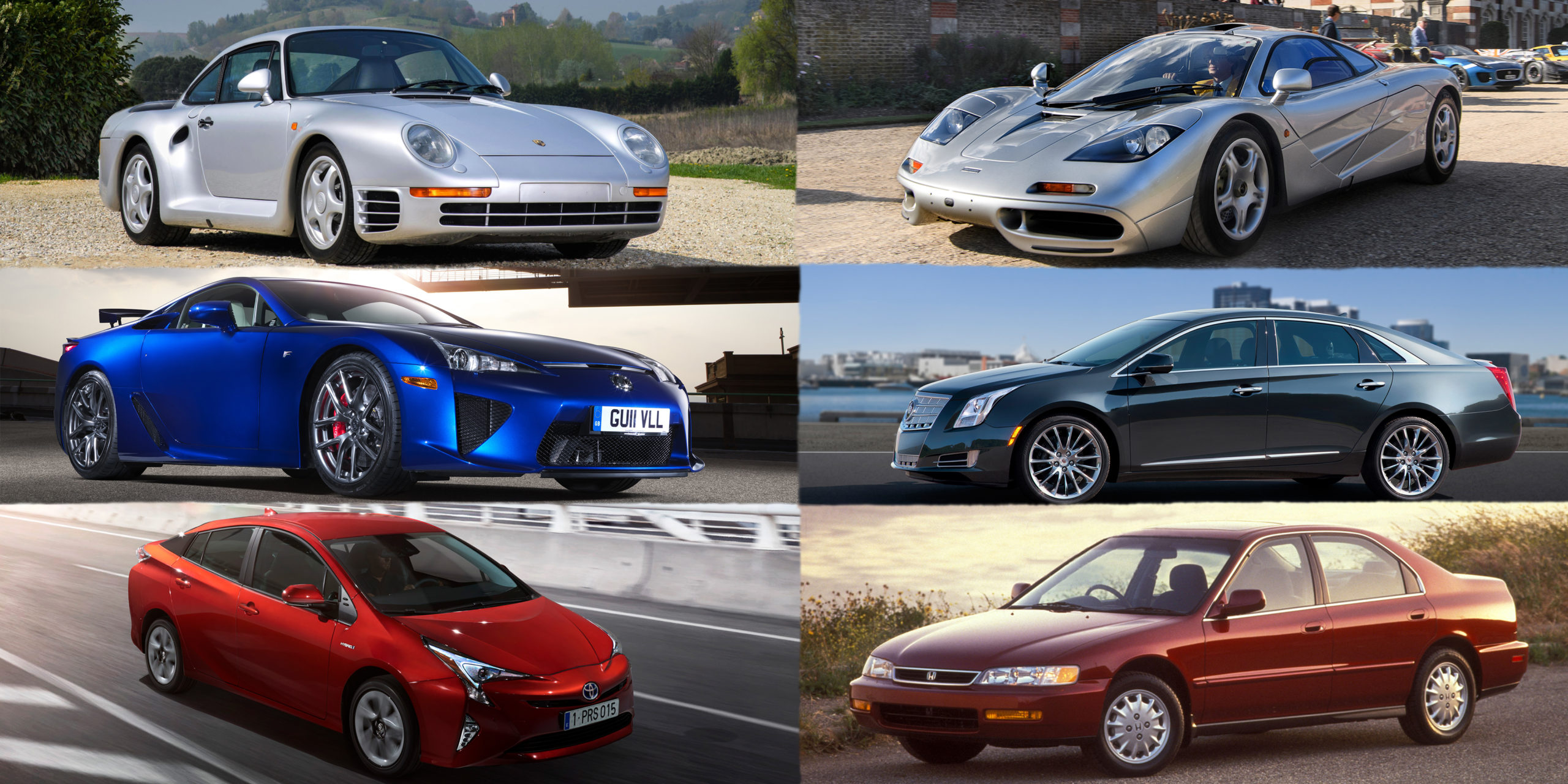
Data from studies like those conducted by Thomas J. Stanley (author of The Millionaire Next Door) consistently show that the most common car brands driven by millionaires are not Ferrari or Lamborghini, but rather Toyota, Honda, and Ford. Specifically, the Toyota Camry and the Honda Accord have historically topped the lists of vehicles owned by people with a net worth exceeding $1 million. The logic is simple: these vehicles provide high utility, exceptional reliability, and low maintenance costs, allowing the owner to redirect their capital toward income-generating assets.
2. Stealth Wealth: The Rise of Practical Luxury
While many wealthy individuals stick to economy brands, there is a segment of the affluent population that prefers a higher level of comfort without the ostentation associated with traditional “old money” brands. This has led to the rise of “Stealth Wealth” automotive choices—brands that offer premium features but fly under the radar of public scrutiny.
The Dominance of Lexus and Acura
Lexus, the luxury arm of Toyota, is a perennial favorite among the wealthy. It offers a unique financial proposition: the comfort of a high-end European sedan with the legendary reliability and lower service costs of a Japanese economy car. From a money management perspective, Lexus represents “smart luxury.” The resale value remains high, the cost of ownership over ten years is significantly lower than that of its German counterparts, and it doesn’t attract the unwanted attention that a more “flashy” brand might invite. Similarly, Acura provides a similar value proposition, balancing performance with fiscal responsibility.
European Reliability vs. European Status
While Mercedes-Benz and BMW certainly have their place in wealthy neighborhoods, the financial behavior associated with these brands differs between the “income-rich” and the “wealthy.” High-income earners who are still building their balance sheets often lease the newest models of these brands to project success. In contrast, established wealthy individuals who choose these brands often lean toward the SUVs (like the GLE or X5) for their utility and safety ratings, often keeping them for seven to ten years rather than trading them in every three-year cycle. This long-term ownership strategy helps amortize the high initial cost and maintenance.
3. Strategic Tax Advantages and Business Deductions
For business owners and high-level entrepreneurs, the choice of a car brand and model is frequently dictated by tax codes rather than personal preference. In the United States, for instance, the “Section 179” deduction plays a massive role in what kind of vehicles the wealthy drive.
The “6,000 Pound” Rule
Under Section 179 of the IRS tax code, certain vehicles with a Gross Vehicle Weight Rating (GVWR) of over 6,000 pounds qualify for accelerated depreciation or immediate expensing. This has led to a massive influx of wealthy business owners purchasing heavy SUVs and trucks, such as the Cadillac Escalade, the Range Rover, or the Tesla Model X. By purchasing a vehicle that meets these weight requirements, a wealthy individual can often write off a significant portion—if not the entire cost—of the vehicle against their business income in the first year. In this context, a $100,000 SUV becomes a strategic tax shield, making it a “cheaper” financial move than buying a $40,000 sedan that doesn’t qualify for the same deduction.
Fleet Management and Corporate Leasing
Wealthy individuals with multiple businesses often don’t “own” their cars in the traditional sense. Instead, the vehicles are owned or leased by their holding companies or corporations. This allows for the deduction of lease payments, fuel, insurance, and maintenance as legitimate business expenses. By choosing brands that are recognized as “executive class,” such as Audi or Volvo, they maintain a professional image for client interactions while utilizing the company’s cash flow to fund their transportation, thereby preserving their personal after-tax income for private investments.
4. Capital Allocation: The Lease vs. Buy Dilemma
One of the most debated topics in the world of high-finance automotive choices is whether to lease or buy. The decision for a wealthy person is rarely about whether they can afford the monthly payment; it is about the “opportunity cost” of their capital.
The Case for Leasing High-End Brands
Ultra-high-net-worth individuals often lease their high-end vehicles (Porsches, Bentleys, etc.) for a specific reason: liquidity. If a car costs $200,000, paying cash means $200,000 is “dead money” sitting in a garage, losing value every day. If that same individual can lease the car at a competitive rate, they can keep that $200,000 in a private equity fund or a high-yield brokerage account. If their investments return 10% annually and the cost of the lease (imputed interest) is 5%, they are effectively being “paid” to drive the car through arbitrage.
The Case for Long-Term Ownership
On the flip side, the “frugal wealthy” tend to buy and hold. They purchase a high-quality, reliable brand—such as a Subaru or a Volvo—and drive it for 150,000 miles. By avoiding the cycle of new car payments and the rapid depreciation of the first three years of a car’s life, they save hundreds of thousands of dollars over their lifetime. These savings, compounded over decades, often represent a significant portion of their liquid net worth.
5. Collector Cars as Alternative Investments
There is a final category of car brands driven by the wealthy that defies the “depreciating asset” rule: Blue-chip collector cars. In this niche, cars are not transportation; they are an asset class similar to fine art or gold.
Appreciation and Market Speculation
Brands like Ferrari, McLaren, and certain vintage Porsche models are often purchased by the wealthy because they have a historical tendency to appreciate in value. Limited edition models or “halo cars” (like the Ferrari LaFerrari or the Porsche 918 Spyder) often sell for more on the secondary market than they did at the dealership. For the wealthy enthusiast, driving one of these brands is a way to enjoy a high-performance machine while technically “parking” their money in an asset that may yield a capital gain.
The Cost of Entry and Maintenance
However, even in the world of exotic investments, the wealthy remain calculating. They account for the “carry cost”—climate-controlled storage, specialized insurance, and exorbitant maintenance fees. Only when the projected appreciation exceeds these costs do they view the brand as a viable addition to their portfolio. This is a far cry from the consumer who buys a base-model luxury car hoping it will “hold its value.”

Conclusion: The Bottom Line on Wealth and Wheels
Ultimately, the brands wealthy people drive are determined by their individual financial goals. For those focused on wealth creation, the choice is usually a reliable, low-depreciation vehicle from brands like Toyota, Lexus, or Honda. For business owners, the choice is often a heavy SUV that provides a significant tax advantage. And for the ultra-wealthy, the choice may be a sophisticated lease that allows for capital liquidity or a collector car that serves as a speculative investment.
The most profound lesson from the automotive habits of the wealthy is the decoupling of status from utility. By viewing a vehicle through the lens of finance—analyzing depreciation, tax implications, and opportunity costs—the wealthy ensure that their car serves their balance sheet, rather than their balance sheet serving their car. In the world of true wealth, the smartest “brand” to drive is the one that allows your money to keep working for you.
aViewFromTheCave is a participant in the Amazon Services LLC Associates Program, an affiliate advertising program designed to provide a means for sites to earn advertising fees by advertising and linking to Amazon.com. Amazon, the Amazon logo, AmazonSupply, and the AmazonSupply logo are trademarks of Amazon.com, Inc. or its affiliates. As an Amazon Associate we earn affiliate commissions from qualifying purchases.