
In the current digital landscape, data is the most valuable currency. For webmasters, developers, and digital architects, understanding the bridge between a server’s content and a user’s search query is fundamental to growth. When you ask, “What keywords is my site ranking for?” you are not just asking for a list of words; you are requesting a technical audit of your site’s visibility within the complex algorithms of search engine indices. Understanding this data allows you to decode how search engines like Google, Bing, and DuckDuckGo interpret your site’s architecture, content relevance, and authority.

To uncover these insights, one must navigate a sophisticated ecosystem of software tools, API integrations, and data analysis techniques. This guide explores the technical methodologies and the suite of professional tools required to identify, analyze, and optimize the keywords that define your digital presence.
The Technical Foundations of Keyword Indexing
Before diving into specific tools, it is essential to understand the underlying technology that enables keyword ranking. Search engines operate through a continuous cycle of crawling, indexing, and ranking. When a search spider—such as Googlebot—traverses your site, it parses the HTML structure, rendering JavaScript and analyzing CSS to understand the visual and textual hierarchy.
The Role of the Inverted Index
Search engines do not search the live web in real-time when a user types a query. Instead, they search an “inverted index.” This is a massive database where every word ever crawled is stored, alongside a list of the documents (webpages) in which it appears. When your site “ranks” for a keyword, it means the search engine’s algorithm has determined that your document is a highly relevant match for that specific entry in the inverted index. The technical health of your site—including Core Web Vitals, HTTPS security, and mobile-responsive design—acts as a multiplier for this relevance.
Semantic Search and NLP
Modern search technology has moved beyond simple exact-match keywords. Through Natural Language Processing (NLP) and models like BERT and Smith, search engines now understand intent and context. This means your site might rank for “high-performance cloud hosting” even if that exact phrase appears nowhere on the page, provided your technical documentation and metadata signal that specific expertise. Understanding your rankings requires a look at both “head terms” (high volume, broad) and “long-tail keywords” (specific, high intent) that the algorithm has associated with your domain.
Essential Tech Tools for Discovery and Analysis
Identifying your current rankings requires specialized software capable of querying vast amounts of historical search data. These tools range from direct search engine consoles to third-party enterprise platforms that utilize sophisticated scrapers and data modeling.
Google Search Console: The Primary Data Source
For any site owner, Google Search Console (GSC) is the most accurate technical starting point. Unlike third-party tools that estimate traffic based on click-stream data, GSC provides first-party data directly from the search engine.
- Performance Reports: By navigating to the Performance tab, you can view the “Queries” report. This identifies every specific string of text that triggered your site to appear in the Search Engine Results Pages (SERPs).
- Average Position vs. Impressions: GSC provides a technical breakdown of “Impressions” (how many times your site was seen) and “Average Position” (where you rank on the vertical axis of the search page). A high number of impressions with a low click-through rate (CTR) often indicates a technical mismatch between your page’s meta-title and the user’s intent.
Enterprise SEO Suites: Ahrefs and Semrush
While GSC shows you where you are already getting traction, enterprise-grade software like Ahrefs, Semrush, or Moz provides a broader technical view, including “Keyword Gap” analysis. These platforms maintain their own massive databases of trillions of keywords and use them to “reverse engineer” the rankings of any domain.
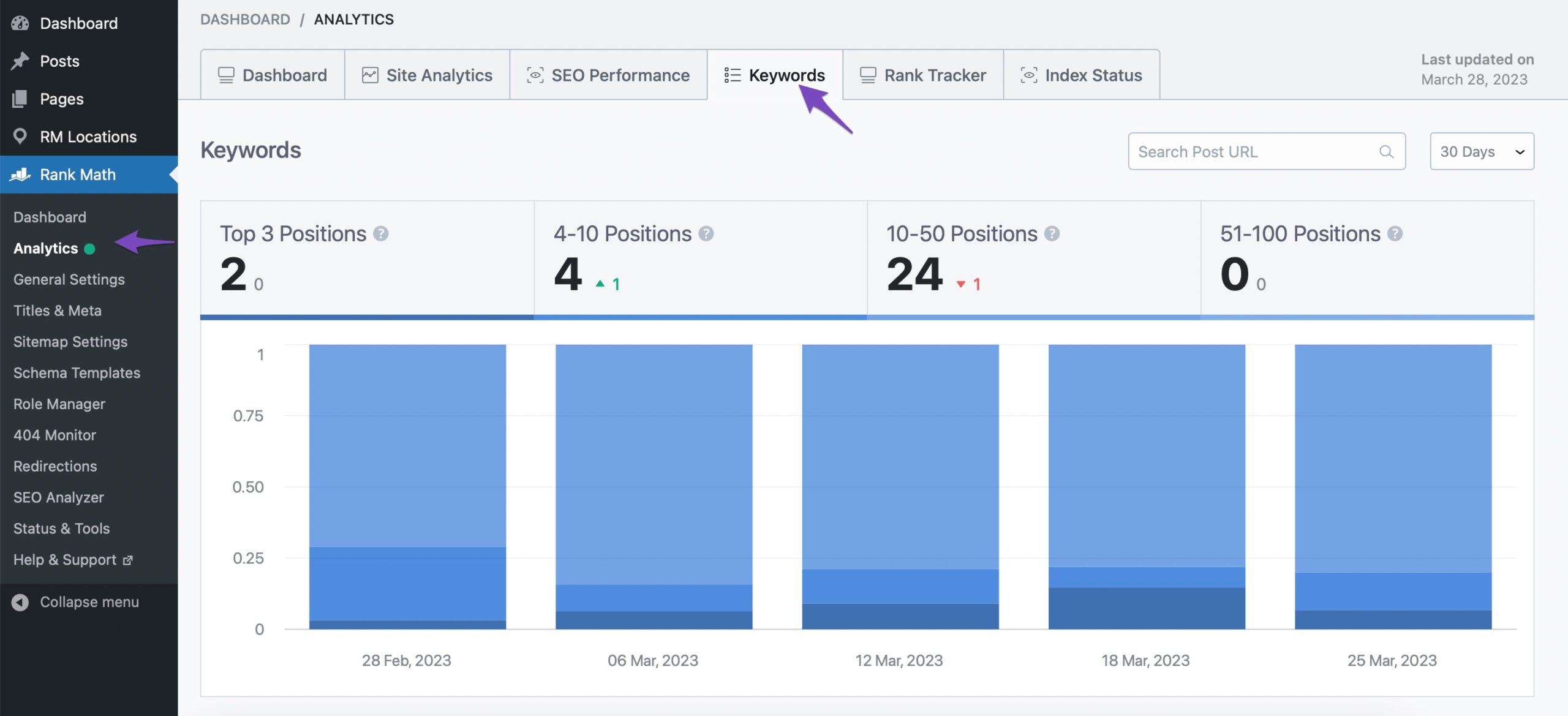
- Organic Research Modules: These tools allow you to input your URL and instantly generate a list of every keyword for which you rank in the top 100 positions.
- SERP Feature Tracking: Beyond standard links, these tools identify if you are ranking for “Rich Snippets,” “People Also Ask” boxes, or “Image Packs.” This is vital for tech-heavy sites where visual documentation or code snippets might be the primary way users find your content.
AI-Driven Rank Trackers
Newer entries in the tech space utilize machine learning to provide real-time ranking updates. Tools like AccuRanker or Wincher offer high-frequency updates, which are essential for news-driven tech sites or software companies launching new features. These tools often integrate with Slack or Microsoft Teams via Webhooks, providing automated alerts when a site drops or gains rank for “money keywords.”
Methodologies for Auditing Your Ranking Profile

Once you have access to the data, the next step is a technical audit to filter out the “noise” and focus on actionable insights. A site may rank for thousands of keywords, but only a fraction will drive meaningful user engagement or software downloads.
Identifying “Striking Distance” Keywords
One of the most effective technical strategies is identifying keywords where your site ranks in positions 11 through 20 (the top of page two). These are known as “striking distance” keywords. Because they are already indexed near the first page, minor technical optimizations—such as improving page load speed, updating the Open Graph tags, or increasing internal link density—can often push these keywords onto page one, resulting in an exponential increase in traffic.
Analyzing Search Intent via Data Clusters
Keywords are generally categorized into four technical intents: Informational, Navigational, Commercial, and Transactional. By exporting your ranking data into a CSV or connecting it to a Python script, you can use clustering algorithms to categorize your rankings.
- Informational: “How does an API work?”
- Transactional: “Buy SaaS subscription.”
If your site ranks primarily for informational keywords but your goal is software sales, there is a technical disconnect in your content strategy that needs addressing through more bottom-of-funnel technical documentation.
Competitor Overlap and Keyword Gaps
A “Keyword Gap Analysis” is a technical comparison between your domain and your primary competitors. By running a comparative script, you can identify “Missing Keywords”—terms where your competitors rank in the top 10, but your site is nowhere to be found. This often reveals gaps in your site’s topical authority or technical documentation that search engine crawlers have not yet validated.
Integrating Keyword Intelligence into the Modern Tech Stack
In an enterprise environment, keyword data should not live in a silo. It must be integrated into the broader technical infrastructure to inform product development and marketing automation.
Data Visualization with Google Looker Studio
Static reports are often obsolete by the time they are read. Tech-savvy teams use Google Looker Studio (formerly Data Studio) to create live dashboards. By connecting the GSC API and BigQuery, you can visualize ranking fluctuations in real-time. This allows developers to see the immediate SEO impact of a site migration, a new CSS framework implementation, or a change in URL structure.
API Integrations and Custom Scripts
For sites with millions of pages, manual checking is impossible. Using Python libraries like Advertools or SearchConsole, developers can automate the retrieval of ranking data. This data can be piped into internal Business Intelligence (BI) tools. For example, a custom script could cross-reference “High Ranking Keywords” with “Low Conversion Pages,” flagging specific URLs for a technical UX audit. This level of integration ensures that the technical SEO strategy is data-driven and aligned with the company’s broader technological goals.
The Future of Keyword Tracking in the Age of Generative AI
The search landscape is undergoing its most significant shift since the introduction of mobile search. The rise of Search Generative Experience (SGE) and AI-powered answer engines like Perplexity and ChatGPT is changing what it means to “rank.”
From Rankings to Mentions
In a traditional search environment, the goal was the “Blue Link.” In the AI era, the goal is to be part of the “LLM (Large Language Model) Context Window.” Identifying what keywords your site is ranking for now involves checking if your content is being cited as a source in AI-generated summaries. This requires a shift from tracking positions to tracking “Inclusion Rates” in AI snapshots.
The Impact of SGE on CTR
As AI models provide direct answers at the top of the search page, “Zero-Click Searches” are increasing. From a technical perspective, this means that even if you rank #1 for a keyword, your CTR may decrease. Future keyword analysis will require tracking “Brand Share of Voice” within AI responses, focusing on technical schema markup (such as SoftwareApplication or TechArticle schema) to ensure that AI agents can accurately parse and credit your site’s data.
To stay ahead, tech-centric organizations must view keyword ranking not as a vanity metric, but as a vital diagnostic tool. By leveraging the right software, maintaining a clean technical infrastructure, and preparing for the shift toward AI-driven discovery, you can ensure that your site remains visible and authoritative in an increasingly crowded digital ecosystem. Turning the question “What keywords am I ranking for?” into a continuous stream of actionable technical data is the hallmark of a sophisticated digital strategy.
aViewFromTheCave is a participant in the Amazon Services LLC Associates Program, an affiliate advertising program designed to provide a means for sites to earn advertising fees by advertising and linking to Amazon.com. Amazon, the Amazon logo, AmazonSupply, and the AmazonSupply logo are trademarks of Amazon.com, Inc. or its affiliates. As an Amazon Associate we earn affiliate commissions from qualifying purchases.