
The digital realm is increasingly powered by sophisticated distributed ledger technologies, and among the most prominent is the XRP Ledger (XRPL). Often associated primarily with its native cryptocurrency, XRP, the XRPL is, at its core, a robust, open-source, and decentralized blockchain designed for efficient value transfer and a wide array of financial applications. To understand “what is XRP Ledger,” one must delve into its technological underpinnings, its unique consensus mechanism, and the architectural choices that distinguish it within the crowded landscape of distributed systems. This article will meticulously explore the XRPL as a foundational piece of technology, dissecting its mechanics, capabilities, and ongoing evolution, strictly adhering to a technology-centric perspective.
The Core Technology of XRP Ledger: A Foundation for Digital Value
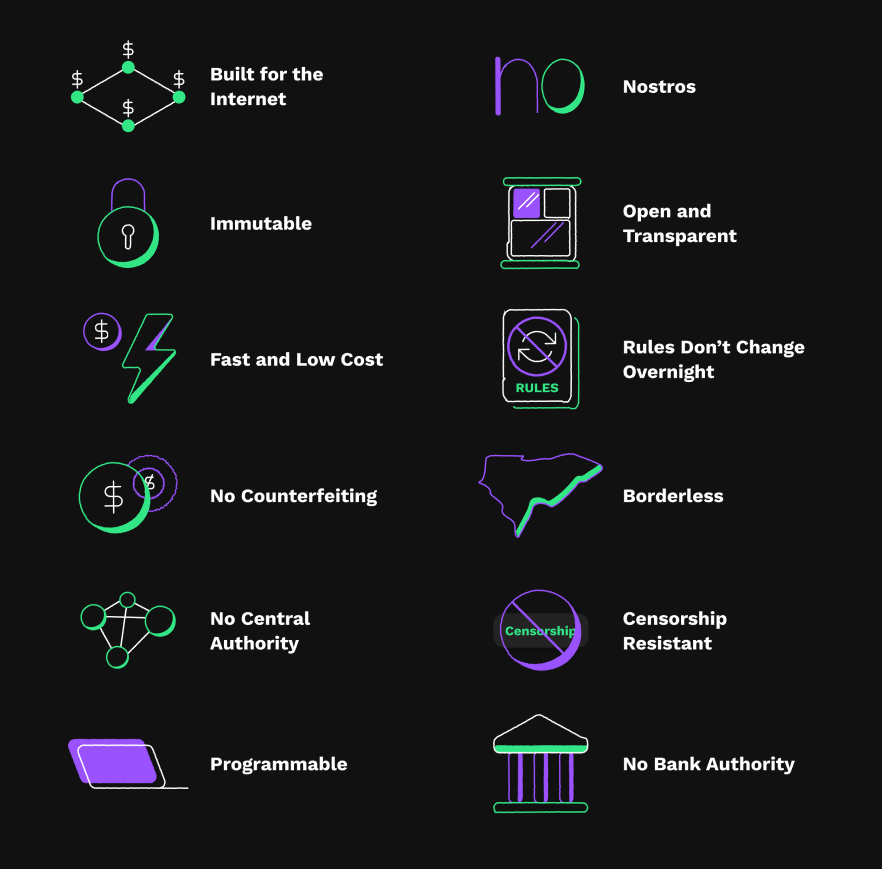
At the heart of the XRP Ledger lies a sophisticated architecture engineered for speed, scalability, and predictable transaction costs. Unlike many of its peers, the XRPL was not built on a proof-of-work (PoW) or proof-of-stake (PoS) model but introduced a novel approach that prioritizes network efficiency and transaction finality. Understanding these fundamental design choices is crucial to appreciating the ledger’s technical strengths.
A Decentralized, Public Blockchain
The XRP Ledger operates as a public, open-source blockchain, meaning its code is transparent and accessible for anyone to inspect, contribute to, and build upon. While often discussed in the context of cryptocurrencies, its broader purpose is to provide a reliable infrastructure for the movement and management of digital assets. Decentralization is achieved through a network of independent validators that process and verify transactions, ensuring no single entity controls the ledger. Each validator maintains a copy of the ledger and participates in the consensus process, making the system resilient to single points of failure. This distributed nature contributes significantly to its security and immutability, as once a transaction is validated and closed on the ledger, it becomes an unalterable part of the historical record. The ledger closes approximately every 3-5 seconds, creating a continuous chain of validated ledger versions.
Consensus Mechanism: Federated Byzantine Agreement (FBA)
A defining technological feature of the XRP Ledger is its unique consensus algorithm, known as the Federated Byzantine Agreement (FBA), specifically implemented as the XRP Ledger Consensus Protocol (XRPL Consensus Protocol). Unlike the competitive mining of PoW or stake delegation of PoS, FBA relies on a system where each validator chooses a list of trusted validators (its Unique Node List, or UNL) whose agreement it considers sufficient to reach consensus. Consensus is achieved when a supermajority of validators on a participant’s UNL agree on the order and validity of transactions.
This federated approach allows for high transaction throughput and fast finality without incurring the substantial energy costs associated with PoW or the potential centralization risks sometimes associated with large stake pools in PoS systems. Validators on the XRPL are run by diverse entities, including universities, exchanges, and private companies, contributing to a distributed trust model. The FBA mechanism allows the network to maintain operability and security even if a minority of validators act maliciously or fail, embodying a practical Byzantine fault tolerance. This technical design enables the network to process transactions quickly and reliably, a critical factor for financial applications where settlement speed is paramount.
Key Features: Speed, Scalability, Energy Efficiency
The architectural decisions behind the XRPL result in several compelling technical advantages:
- Speed: Transactions on the XRPL achieve finality typically within 3-5 seconds. This near-instantaneous settlement time is significantly faster than many other public blockchains, making it highly suitable for real-time payments and high-frequency trading applications.
- Scalability: The XRPL is designed to handle a high volume of transactions per second (TPS). While exact numbers can vary with network load and hardware advancements, the network consistently demonstrates the capacity to process hundreds of transactions per second, far exceeding the throughput of first-generation blockchains. This scalability is a direct consequence of its efficient consensus mechanism and optimized data structures.
- Energy Efficiency: The FBA consensus mechanism does not involve competitive computation, eliminating the need for vast amounts of electrical power. This makes the XRPL one of the most energy-efficient distributed ledgers, aligning with increasing demands for sustainable blockchain solutions. Each transaction consumes a negligible amount of energy, a stark contrast to the energy footprints of PoW chains.
These technical characteristics position the XRP Ledger as a robust platform for demanding applications that require rapid, reliable, and cost-effective value transfer.
The Architecture and Components of XRPL
Beyond its core consensus, the XRP Ledger is a sophisticated software system composed of several interconnected elements that enable its functionality. Understanding these architectural components provides deeper insight into how the ledger operates and supports its diverse use cases.
The XRPL Protocol and Data Structure
The XRP Ledger operates on a well-defined protocol that dictates how transactions are formed, propagated, and processed. Its data structure is highly optimized for efficiency. The ledger maintains a global state, or ledger state, which includes all account balances, issued currencies, open orders on its decentralized exchange, and other data objects. This state is updated with each validated ledger version.
Transactions on the XRPL are cryptographically signed instructions that initiate a change in the ledger state, such as sending XRP, issuing a new token, or placing an trade order. Each transaction is a JSON object, providing flexibility and ease of integration for developers. The ledger’s unique feature set also includes built-in capabilities for multi-currency payments, atomic swaps, and escrows, all managed at the protocol level. The underlying data structures are engineered to facilitate fast lookups and efficient storage, contributing to the ledger’s overall performance.
Validators and the Unique Node List (UNL)
The decentralized nature of the XRPL is sustained by a network of validators. These are independent servers running the rippled software, which is the reference implementation of the XRP Ledger. Validators receive proposed transactions, verify them against the current ledger state, and participate in the consensus process by proposing and voting on transaction sets.
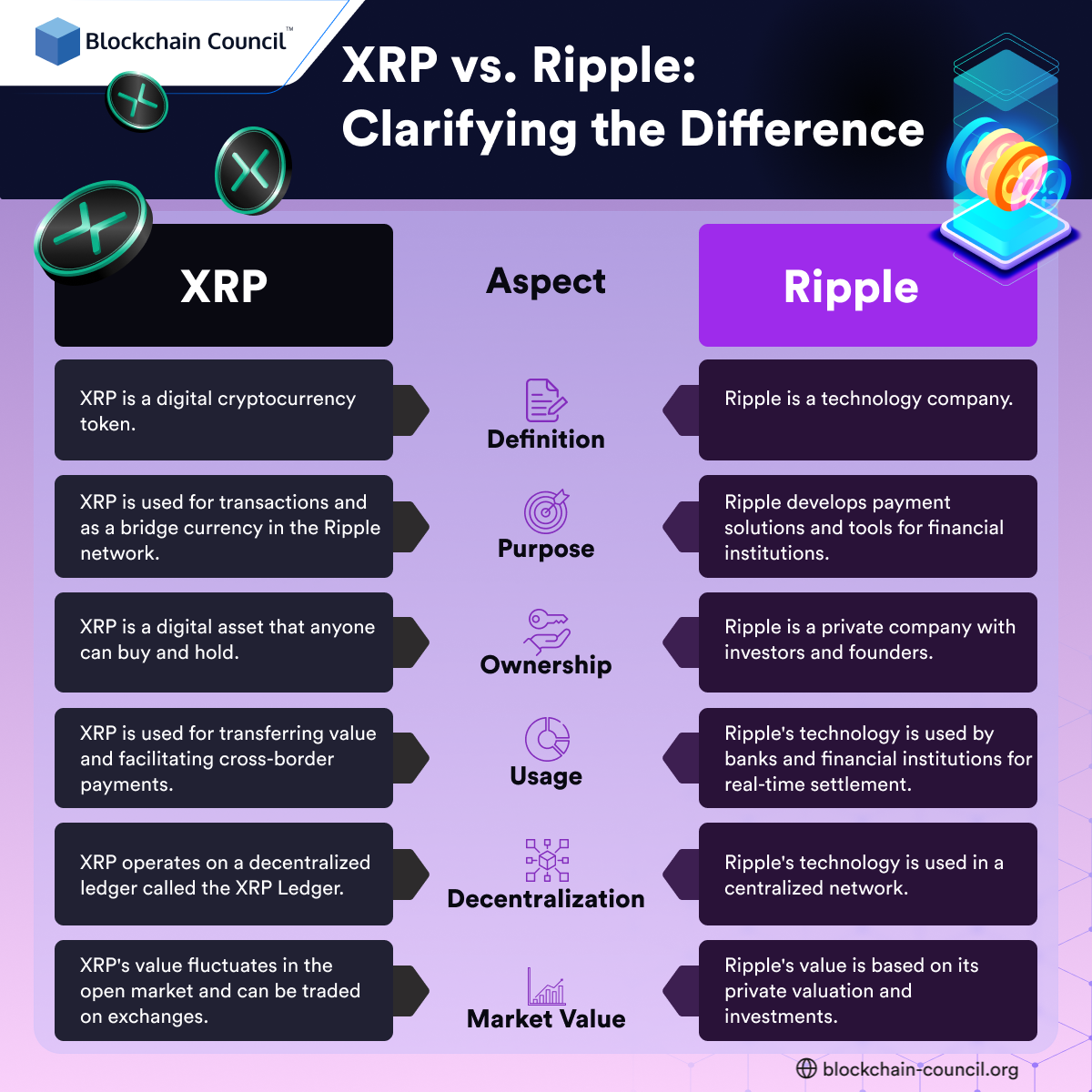
A critical concept for the FBA mechanism is the Unique Node List (UNL). Every validator maintains its own UNL, which is a list of other trusted validators. While new validators can join the network freely, their inclusion in widely trusted UNLs increases their influence on the consensus process. The collective wisdom and agreement among these UNLs drive the network’s finality. Ripple, Inc., one of the key contributors to the XRPL, publishes a recommended UNL, but any validator can curate its own list. This distributed trust model, where each participant independently chooses whom to trust, prevents single points of control and reinforces the ledger’s resilience. The integrity of the network relies on the diverse and independent operation of these validators.
Wallets, Gateways, and Decentralized Exchanges (DEX)

The XRPL ecosystem is supported by a variety of client-side and network-side components:
- Wallets: Users interact with the XRPL primarily through wallets, which are software applications or hardware devices that manage cryptographic keys and facilitate sending and receiving transactions. XRPL wallets support XRP and any other tokens issued on the ledger.
- Gateways: Gateways are entities that allow real-world assets (like fiat currencies or other cryptocurrencies) to be represented as issued currencies on the XRP Ledger. They act as bridges between traditional financial systems and the XRPL, holding the actual assets and issuing corresponding IOUs (debt obligations) on the ledger. This mechanism enables multi-currency transactions and facilitates the ledger’s use as a bridge for global payments.
- Decentralized Exchange (DEX): The XRPL has a built-in, native decentralized exchange (DEX) directly integrated into the ledger protocol. This allows users to trade any issued currency on the XRPL against XRP or other issued currencies directly on the ledger without relying on a centralized intermediary. The DEX uses order books maintained directly on the blockchain, providing high liquidity and transparent trading. This native DEX is a significant technical advantage, enabling efficient and trustless exchange of digital assets.
These components collectively form a comprehensive environment for digital asset management and exchange, all powered by the underlying XRPL technology.
Beyond Payments: Use Cases and Development on XRPL
While initially designed with payments in mind, the XRP Ledger’s robust technical foundation has enabled its evolution into a versatile platform supporting a broader range of decentralized applications and financial innovations. Its speed, cost-effectiveness, and built-in features make it attractive for developers exploring various use cases.
Digital Asset Issuance and Tokenization
One of the XRPL’s powerful built-in features is its native support for digital asset issuance. Any entity can issue custom tokens (referred to as “issued currencies” or “fungible tokens”) on the ledger, representing anything from stablecoins and traditional securities to loyalty points and in-game assets. This tokenization capability is integral to the ledger’s multi-currency functionality and its decentralized exchange. Issuers can set various parameters for their tokens, including transfer fees, freezing mechanisms, and redemption options, providing flexibility for diverse asset types.
The technical implementation of issued currencies allows them to be exchanged directly on the ledger’s DEX, opening up possibilities for new forms of financial instruments and markets. This foundational capability positions the XRPL as a strong contender for enterprises and developers looking to tokenize assets and manage them on a highly performant and secure blockchain.
Decentralized Finance (DeFi) on XRPL
The XRPL’s attributes—fast finality, low transaction costs, and a native DEX—make it an increasingly viable platform for decentralized finance (DeFi) applications. While the initial focus was on cross-border payments, the technical infrastructure supports more complex financial instruments. Developers can leverage the ledger’s capabilities to build lending protocols, stablecoin projects, asset management tools, and other DeFi services.
The XRPL’s ability to handle multi-currency payments efficiently and its native order book functionality mean that more sophisticated financial primitives can be constructed directly on the ledger. This reduces reliance on off-chain components and enhances the security and transparency inherent in decentralized systems. As the ecosystem matures, further innovation in the DeFi space built upon the XRPL’s technical stack is anticipated.
Smart Contract Capabilities via Hooks
Historically, a common perception was that the XRPL lacked “smart contract” functionality comparable to platforms like Ethereum. However, the introduction of “Hooks” significantly expands the XRPL’s programmability without compromising its core performance. Hooks are small, efficient pieces of code that can be attached to an XRPL account, allowing for custom logic to be executed before or after a transaction interacting with that account.
This innovation allows developers to implement a wide range of functionalities, from automated escrows and conditional payments to complex financial derivatives and identity-based controls, all natively on the ledger. Hooks are written in WebAssembly (WASM), making them highly flexible and performant. This development addresses a key technical requirement for building more sophisticated applications and extends the XRPL’s utility beyond basic value transfer, propelling it into a new era of decentralized application development while maintaining its inherent speed and efficiency.
Technical Advantages and Future Evolution of XRPL
The XRP Ledger’s engineering focus on performance, security, and efficiency provides a distinct set of technical advantages that are critical for its adoption and sustained relevance. Its open-source nature also fosters a dynamic environment for continuous improvement and innovation.
Performance Metrics and Transaction Finality
The XRPL consistently demonstrates industry-leading performance metrics. With transaction finality typically achieved in 3-5 seconds and the capacity to process hundreds of transactions per second (and potentially thousands with ongoing optimizations), it sets a high bar for speed in decentralized systems. This rapid finality means that once a transaction is processed and included in a closed ledger, it is irreversible and confirmed, crucial for real-time financial operations. The predictable and extremely low transaction fees, measured in drops of XRP, further enhance its utility for high-volume applications where cost efficiency is paramount. These performance characteristics are not merely theoretical; they are demonstrably consistent in live network operations, validating the FBA consensus model’s effectiveness.
Security and Immutability
Security is a cornerstone of any distributed ledger, and the XRPL is designed with robust protections. The FBA consensus mechanism provides Byzantine fault tolerance, ensuring the network can continue to operate securely even if a subset of validators becomes compromised. Cryptographic signatures secure all transactions, ensuring authenticity and preventing tampering. Once a ledger version is closed and validated by the network, it is immutable, meaning its historical data cannot be altered. The public and transparent nature of the ledger also allows for continuous auditing and verification by the community. The open-source rippled client software undergoes rigorous testing and peer review, contributing to the overall security posture of the network.
Developer Ecosystem and Future Evolution
The XRP Ledger boasts a growing and vibrant developer ecosystem. Comprehensive documentation, SDKs in multiple programming languages, and robust APIs make it relatively easy for developers to integrate with and build upon the XRPL. The introduction of Hooks is a significant technical milestone, offering a powerful tool for extending ledger functionality and enabling a new generation of decentralized applications.
Future evolutions of the XRPL are driven by its open-source community and organizations like Ripple. Ongoing research and development focus on further scalability improvements, enhanced privacy features (e.g., sidechains for sensitive data), and expanding the utility of Hooks. The technical roadmap emphasizes maintaining the ledger’s core strengths—speed, scalability, and cost-effectiveness—while continuously adding capabilities that meet the evolving demands of enterprise and individual users in the digital economy. As a foundational piece of technology, the XRP Ledger continues to adapt and innovate, solidifying its role as a critical infrastructure for the future of digital assets and decentralized finance.
aViewFromTheCave is a participant in the Amazon Services LLC Associates Program, an affiliate advertising program designed to provide a means for sites to earn advertising fees by advertising and linking to Amazon.com. Amazon, the Amazon logo, AmazonSupply, and the AmazonSupply logo are trademarks of Amazon.com, Inc. or its affiliates. As an Amazon Associate we earn affiliate commissions from qualifying purchases.