
The digital asset landscape is currently defined by a select few tokens that have survived multiple market cycles, regulatory headwinds, and shifts in investor sentiment. Among these, XRP remains one of the most discussed and polarizing assets in the “Money” and “Investing” sectors. Created by the founders of Ripple, XRP was designed to serve a specific purpose: to act as a bridge currency for international settlements, solving the inefficiencies of the traditional SWIFT banking system.
As we look toward the next phase of the global economy, the question of what XRP is going to do is no longer just a matter of retail speculation. It is a question of institutional adoption, regulatory precedent, and the underlying plumbing of the global financial system. To understand its trajectory, one must analyze the convergence of legal clarity, technological utility, and macroeconomic shifts.

The Regulatory Pivot: From Litigation to Market Clarity
For nearly four years, the primary driver of XRP’s price action and adoption was not its utility, but its standing in a courtroom. The lawsuit filed by the U.S. Securities and Exchange Commission (SEC) against Ripple Labs created a cloud of uncertainty that stifled domestic growth in the United States while the rest of the world continued to build on the XRP Ledger (XRPL).
The Landmark Ruling and Its Aftermath
The trajectory of XRP changed fundamentally with the summary judgment issued in July 2023. The court’s determination that XRP is not, in and of itself, a security—and that programmatic sales on secondary exchanges do not constitute investment contracts—provided the legal foundation the asset lacked for years. This ruling was a watershed moment for the entire crypto industry, but for XRP specifically, it signaled the end of its “isolation” period.
What XRP is going to do next in the legal realm involves the resolution of the final appeals and the potential for a definitive regulatory framework in the U.S. As legal hurdles vanish, the asset is being relisted on major North American exchanges, opening the floodgates for retail and institutional liquidity that had been sidelined since 2020.
Institutional Re-Entry and the ETF Prospect
With legal clarity comes the potential for institutional products. Much like Bitcoin and Ethereum paved the way with spot ETFs, XRP is now a prime candidate for a dedicated exchange-traded fund. Financial giants have already begun filing for XRP ETFs, signaling a belief that the asset has moved past its “high-risk” regulatory phase into a “standardized” investment phase. The approval of such a vehicle would likely lead to a massive influx of capital from pension funds and institutional desks that are currently restricted from buying tokens directly on exchanges.
Institutional Utility: The Engine Behind the Price
Unlike many “meme coins” or speculative tokens that rely purely on social media hype, XRP’s value proposition is rooted in “On-Demand Liquidity” (ODL). To understand what XRP is going to do, one must look at how Ripple is integrating this technology into the traditional banking stack.
Solving the Pre-Funding Problem
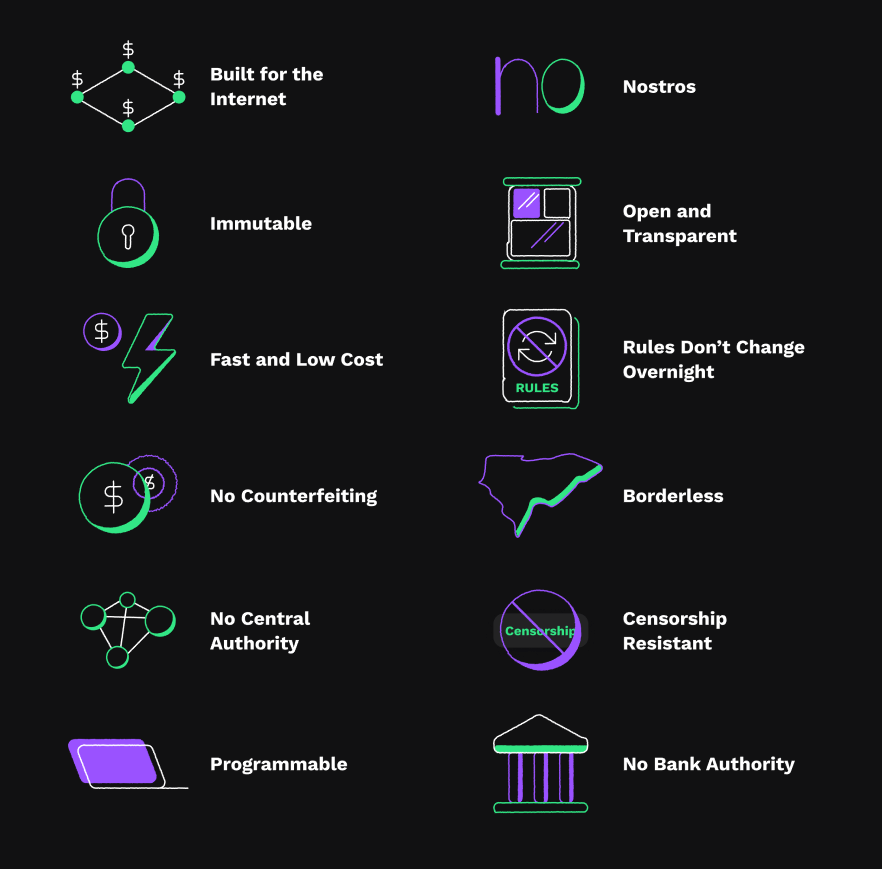
In the traditional financial system, banks must maintain “nostro/vostro” accounts—pre-funded accounts in foreign currencies—to facilitate cross-border payments. This ties up trillions of dollars in idle capital. XRP’s role is to act as a bridge. A bank can send USD, which is instantly converted to XRP, moved across the ledger in seconds, and converted into the destination currency (such as MXN or PHP) for a fraction of the cost of traditional methods.
As Ripple expands its partnerships with payment providers and central banks, the demand for XRP as a liquidity tool is expected to scale. We are moving from a “speculative” era where the price is driven by news to a “utility” era where the price is driven by the volume of transactions processed through the ledger.
CBDCs and the XRPL
Central Bank Digital Currencies (CBDCs) are no longer a theoretical concept; they are being piloted by dozens of nations. Ripple has positioned the XRP Ledger as a private, highly efficient version for central banks to issue their own digital currencies. In this ecosystem, XRP serves as the neutral intermediary that allows different CBDCs to talk to one another. If XRP becomes the “connective tissue” for global CBDCs, the liquidity requirements would necessitate a significantly higher price floor than what we have seen in previous years.
The Technical Roadmap: Price Patterns and Market Cycles
From an investing perspective, XRP has been characterized by long periods of consolidation followed by explosive, vertical moves. To determine what XRP is going to do in the coming months, analysts often look at the “7-year consolidation” pattern that has been forming since its all-time high in 2018.
The Macro Bull Pennant
XRP is currently trading within one of the largest “bull pennants” in the history of the digital asset market. This technical formation suggests that a massive volatility squeeze is occurring. Historically, when an asset breaks out of a multi-year consolidation, the move tends to be proportional to the length of the consolidation. For XRP, this could mean a retesting of its previous highs and an entry into “price discovery” mode.
Correlation with Bitcoin and the Halving Cycle
While XRP has its own unique fundamentals, it still operates within the broader crypto market. We are currently in a post-Bitcoin halving environment, a period that has historically led to “altcoin seasons.” As Bitcoin reaches saturation in a cycle, investors typically rotate capital into large-cap assets with high liquidity and clear use cases. XRP, sitting consistently in the top ten by market capitalization, is often the first destination for this rotated capital.
The Evolution of the XRP Ledger (XRPL)
What XRP is going to do is also tied to the technological upgrades of its underlying ledger. For years, the XRPL was viewed as a “payments-only” chain. That is changing rapidly.
RLUSD: The Native Stablecoin
Ripple’s introduction of its own USD-pegged stablecoin (RLUSD) is a strategic move to capture the booming stablecoin market. By having a trusted, regulated stablecoin natively on the XRPL, the network can facilitate even more complex financial transactions. This doesn’t replace XRP; rather, it complements it. XRP will remain the gas for the network and the primary bridge asset, while RLUSD provides a stable medium for those who want to avoid volatility while staying within the XRPL ecosystem.
Smart Contracts and DeFi Integration
The XRPL is evolving to support smart contracts and decentralized finance (DeFi). This allows for the creation of Automated Market Makers (AMMs), lending protocols, and even the tokenization of Real-World Assets (RWA) like real estate or gold. By bringing these features to a ledger that is faster and cheaper than Ethereum, XRP is positioning itself to be a hub for institutional DeFi. When you tokenization trillions of dollars in assets on a ledger, the underlying native token (XRP) gains immense value through its role as the network’s foundational currency.
Macroeconomic Factors and the Future Outlook
Finally, the question of “what is XRP going to do” must be answered in the context of the global “Money” landscape. We are living through a period of “De-dollarization” and the rise of the BRICS nations, who are actively seeking alternatives to the Western-dominated financial system.
A Neutral Global Reserve Asset?
XRP is often discussed as a “neutral” asset. Because it is not controlled by any single government or central bank, it is an attractive option for nations that want to settle trades without being dependent on the U.S. dollar or the political whims of the SWIFT network. If the global financial system moves toward a multi-currency, digital-first infrastructure, XRP is uniquely positioned to be the liquidity layer that holds it all together.
The Realistic Path Forward
In the short term, XRP is likely to experience continued volatility as it breaks free from its multi-year range. Investors should expect a period of “re-rating” as the market adjusts to its new status as a legally clear, institutionally favored asset.
In the long term, the success of XRP will be measured by its “utility-to-speculation” ratio. As more banks flip the switch on ODL and more developers build DeFi applications on the XRPL, the price will likely decouple from the broader “meme-driven” crypto market and start tracking the growth of global digital value transfer.
XRP is no longer just a digital token; it is a contender for the future of the world’s financial plumbing. What it is going to do is attempt to move from the fringes of “crypto” into the very heart of “Money.” For the patient investor, the convergence of legal victory, institutional adoption, and technological evolution suggests that XRP is entering its most significant era yet.
aViewFromTheCave is a participant in the Amazon Services LLC Associates Program, an affiliate advertising program designed to provide a means for sites to earn advertising fees by advertising and linking to Amazon.com. Amazon, the Amazon logo, AmazonSupply, and the AmazonSupply logo are trademarks of Amazon.com, Inc. or its affiliates. As an Amazon Associate we earn affiliate commissions from qualifying purchases.