
In the digital age, businesses and remote teams rely on precise synchronization to maintain operational efficiency. Whether you are managing global software deployments, scheduling cross-country video conferences, or optimizing server maintenance windows, understanding regional time zones is a foundational requirement for any tech-driven enterprise. Wyoming, known for its rugged landscapes and growing reputation as a hub for tech-forward legislative policies, operates under a specific time standard that every digital professional must keep on their radar.
Understanding Mountain Standard Time (MST)
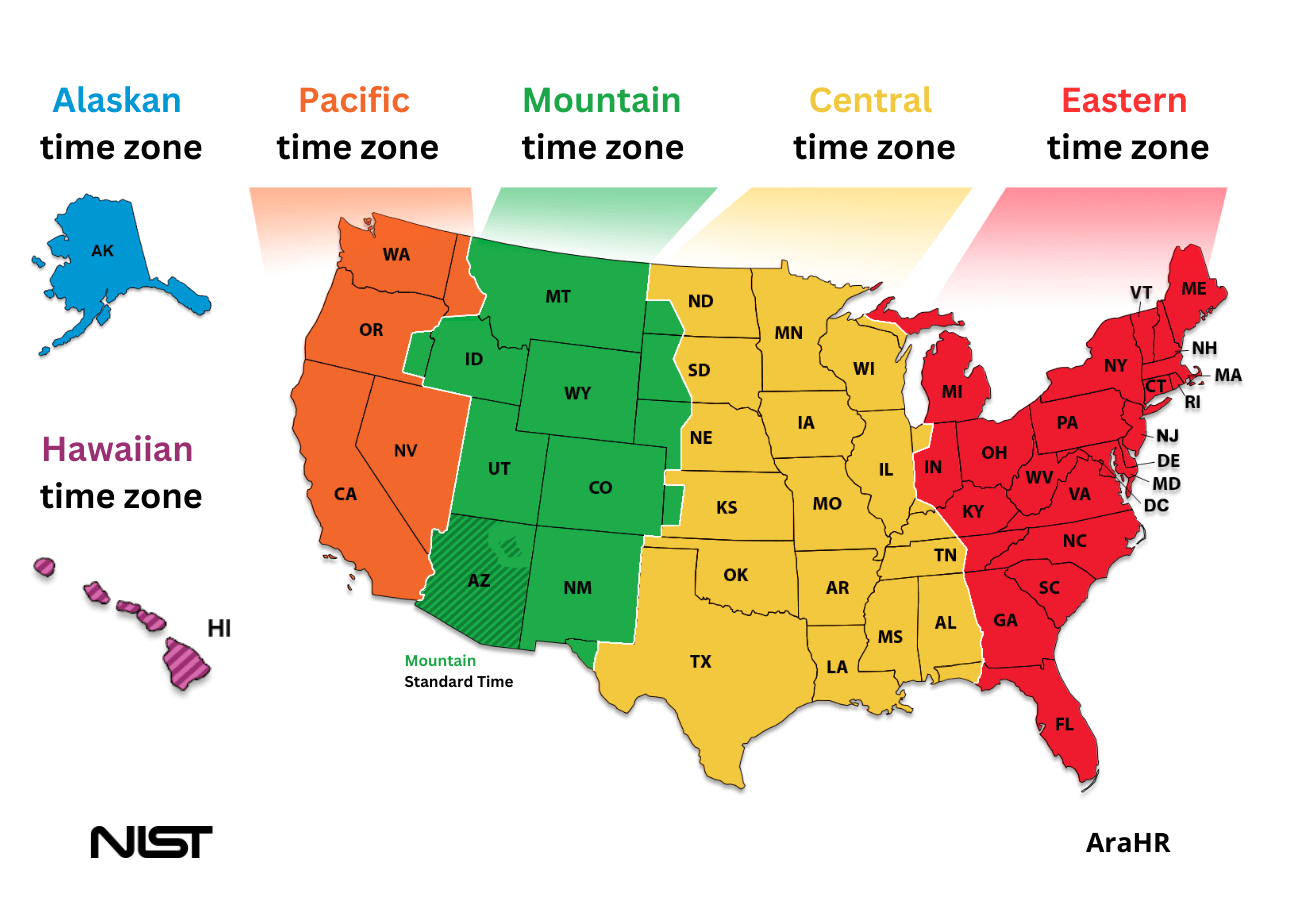
Wyoming operates entirely within the Mountain Time Zone. This is a crucial detail for tech project managers and infrastructure engineers, as it dictates the scheduling of critical system updates, cloud backups, and team collaboration hours.
The Dynamics of Mountain Standard Time
Mountain Standard Time (MST) is defined as Coordinated Universal Time (UTC) minus seven hours. When the rest of the world is synchronizing against UTC, Wyoming’s clock sits at UTC-7 during the standard winter months. This geographical standardization ensures that the state remains aligned with neighboring regions in the Western United States, facilitating consistent communication channels for businesses that utilize data centers or satellite offices throughout the Intermountain West.
Technical Implications of Time Standardization
For software engineers working on distributed systems, the “Mountain Time” designation carries significant weight in backend architecture. When developing event-driven applications, it is standard practice to store all timestamps in UTC to avoid ambiguity; however, user-facing interfaces must account for the local time offset. If a Wyoming-based user triggers an action in a platform, the application must correctly calculate the offset of UTC-7 to ensure that audit logs, transaction receipts, and scheduling notifications remain accurate. Miscalculating this offset is a common source of “off-by-one” bugs in legacy codebases, leading to inconsistent reporting and logistical friction.
Daylight Saving Time and System Reliability
Like most of the United States, Wyoming observes Daylight Saving Time (DST). This transition—shifting from Mountain Standard Time to Mountain Daylight Time (MDT)—is a recurring event that demands rigorous oversight within the tech sector.
Transitioning to Mountain Daylight Time (MDT)
During the summer months, Wyoming shifts to Mountain Daylight Time, which is UTC-6. This adjustment occurs annually, typically requiring automated systems to handle the “missing hour” in the spring and the “repeated hour” in the autumn. From a systems administration perspective, this transition is a high-risk period for scheduling software. Engineers must ensure that cron jobs, automated deployments, and API polling mechanisms are DST-aware. Failure to account for the jump forward or the fallback can result in critical maintenance tasks being delayed or executed at the incorrect local time, potentially causing downtime or data corruption in unsynchronized databases.
Best Practices for Time-Zone Aware Infrastructure
Modern cloud infrastructure has largely automated the handling of DST, but developers remain responsible for the logic layer. To ensure maximum reliability, tech teams operating in or with Wyoming-based entities should adhere to the following protocols:
- Database Normalization: Always store data in UTC. Use regional offsets only when rendering data to the end-user.
- Library Utilization: Utilize battle-tested libraries such as
date-fns-tzfor JavaScript or thepytzlibrary in Python to handle DST transitions programmatically rather than attempting to calculate offsets manually. - Testing Protocols: Run integration tests that specifically simulate the transition dates. Testing your software’s behavior during the exact hour of the switch prevents unexpected crashes or UI glitches when the local clock changes.
Coordinating Across Geographical Frontiers
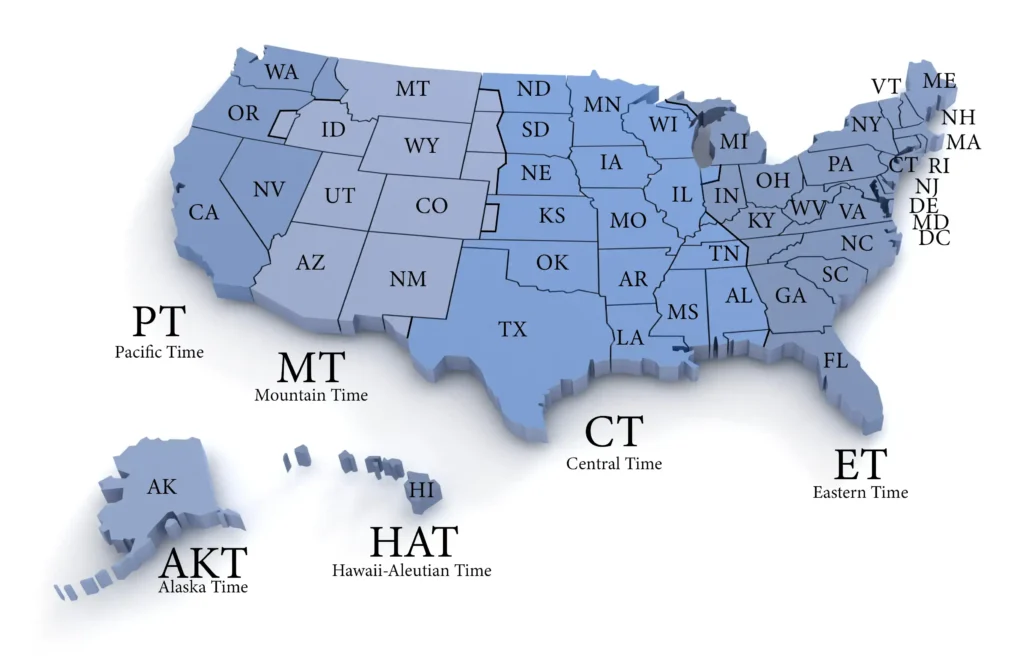
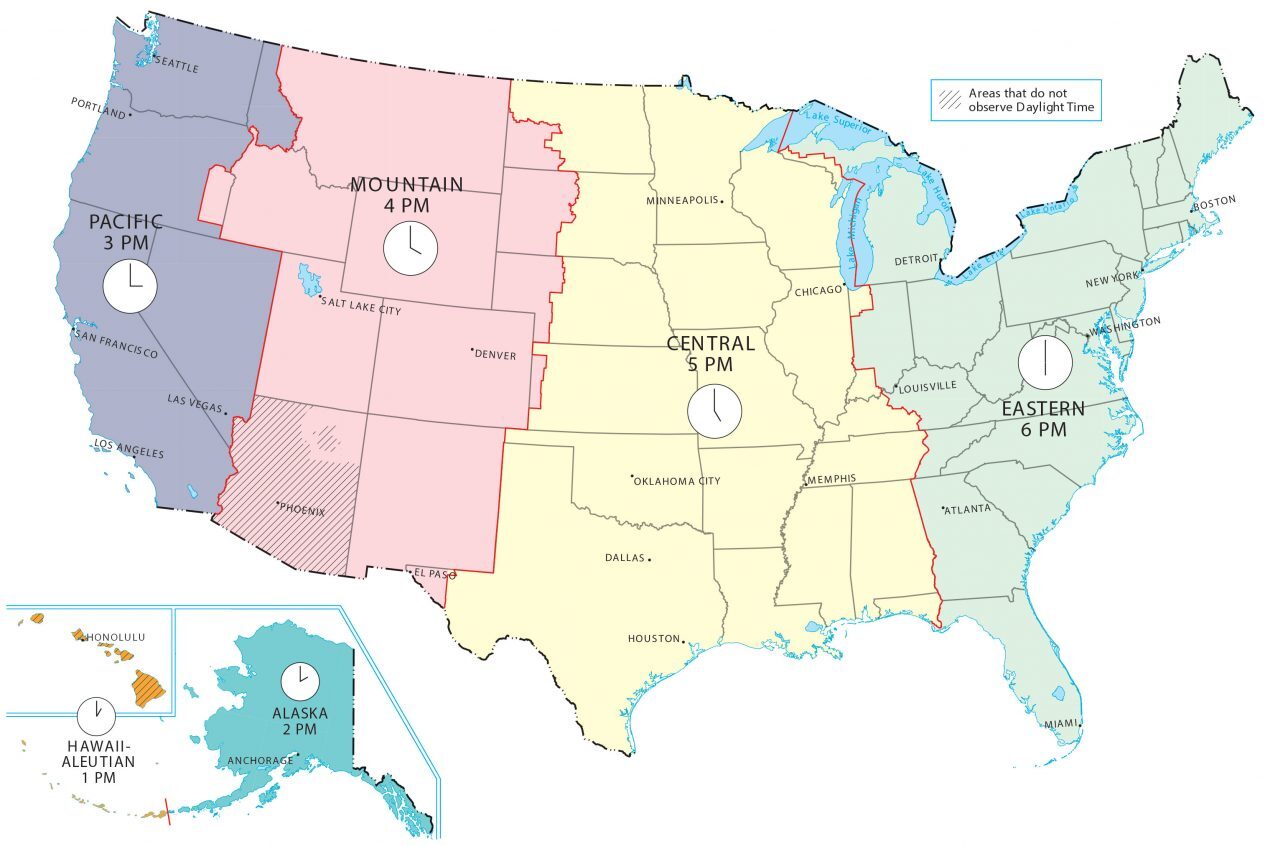
For remote-first companies and distributed software development teams, Wyoming’s place in the Mountain Time Zone creates a unique middle-ground for collaboration. Its position, two hours behind Eastern Time (ET) and one hour ahead of Pacific Time (PT), makes it an ideal nexus for nationwide workflows.
Synchronous Collaboration Strategies
The primary challenge in modern tech workflows is balancing synchronous meetings with deep-focus work. Because Wyoming is located in the Mountain Time Zone, it serves as a critical bridge. Teams based in Wyoming can start their day at 8:00 AM MT, which coincides with 10:00 AM ET (the start of the business day for East Coast offices) and 7:00 AM PT (a time when West Coast developers are just beginning to log in).
This overlap window allows for highly efficient stand-ups, sprint planning sessions, and emergency bug triage. By anchoring collaboration in this middle time zone, managers can maximize the hours in which all remote team members are online simultaneously, reducing the “dead time” that often plagues fully distributed international teams.
Remote Workflow Optimization
Tech leaders should leverage Wyoming’s time zone to structure the “ideal” remote day. By treating the Mountain Time Zone as the baseline for cross-regional meetings, companies can establish a rhythm where:
- Early Morning (MT): Focused, independent development work before the East Coast wakes up.
- Mid-Day (MT): The peak window for collaborative meetings, code reviews, and cross-team synchronization.
- Late Afternoon (MT): Dedicated time for closing out tasks and ensuring deployments are finalized before the West Coast offices conclude their day.
This structure minimizes context switching and ensures that no single region is constantly forced into “after-hours” meetings.
The Future of Time Standardization in Tech
As technology continues to evolve, the concept of “local time” is being challenged by globalized digital platforms. While Wyoming adheres to the Mountain Time Zone, the rise of serverless computing and globally distributed edge nodes means that physical location is becoming less relevant for system architecture, though it remains vital for human management.
The Shift Toward UTC-First Thinking
We are entering an era where time-zone-agnostic design is the industry standard. Advanced SaaS products are increasingly built to operate entirely in UTC environments, with local time zone display being nothing more than a lightweight client-side presentation layer. This evolution reduces the complexity of managing server-side clock drifts and simplifies the synchronization of globally distributed clusters. However, the human element—the developers, the project managers, and the stakeholders—must still operate within their local constraints.
The Strategic Value of Location-Agnostic Talent
Because Wyoming offers a favorable environment for digital nomads and tech companies seeking lower operational overhead, understanding the nuances of the Mountain Time Zone will remain a professional asset. As companies continue to hire across borders, the ability to translate “Mountain Time” into “System Time” and “Team Time” will separate competent engineers from those who struggle with the logistics of distributed work.
The tech landscape is shifting toward a model where your physical location (and thus your time zone) is a strategic choice rather than a mandatory constraint. Whether you are building infrastructure that spans multiple continents or simply coordinating a sprint from a Wyoming-based hub, mastering the logic of time zones ensures that your technical operations are as seamless as the code you deploy. By respecting the local standard—whether in Wyoming or anywhere else—you ensure that your business remains in lockstep with the global digital pulse.
aViewFromTheCave is a participant in the Amazon Services LLC Associates Program, an affiliate advertising program designed to provide a means for sites to earn advertising fees by advertising and linking to Amazon.com. Amazon, the Amazon logo, AmazonSupply, and the AmazonSupply logo are trademarks of Amazon.com, Inc. or its affiliates. As an Amazon Associate we earn affiliate commissions from qualifying purchases.