
Natural language is a marvel of human cognition, allowing for nuanced expression, complex thought, and efficient communication. Yet, this very richness and flexibility present a formidable challenge for machines. One of the most persistent and intriguing hurdles in the field of Natural Language Processing (NLP) is the phenomenon of ambiguity. Words, the building blocks of language, often carry multiple meanings, and understanding which meaning is intended in a specific context is crucial for accurate comprehension. This pivotal task is known as Word Sense Disambiguation (WSD).
WSD is the computational process of identifying the correct meaning (or “sense”) of a word in a given context when that word has multiple possible meanings. Consider the word “bank.” In one context, it might refer to a financial institution (“I need to go to the bank to deposit a check.”). In another, it could mean the land alongside a river (“The fishermen sat on the river bank.”). For humans, distinguishing these meanings is effortless, often subconscious. For a machine, however, this requires sophisticated algorithms and vast amounts of linguistic data to infer the correct interpretation. WSD lies at the heart of making machines understand language more like humans do, propelling advancements across numerous AI-driven applications.
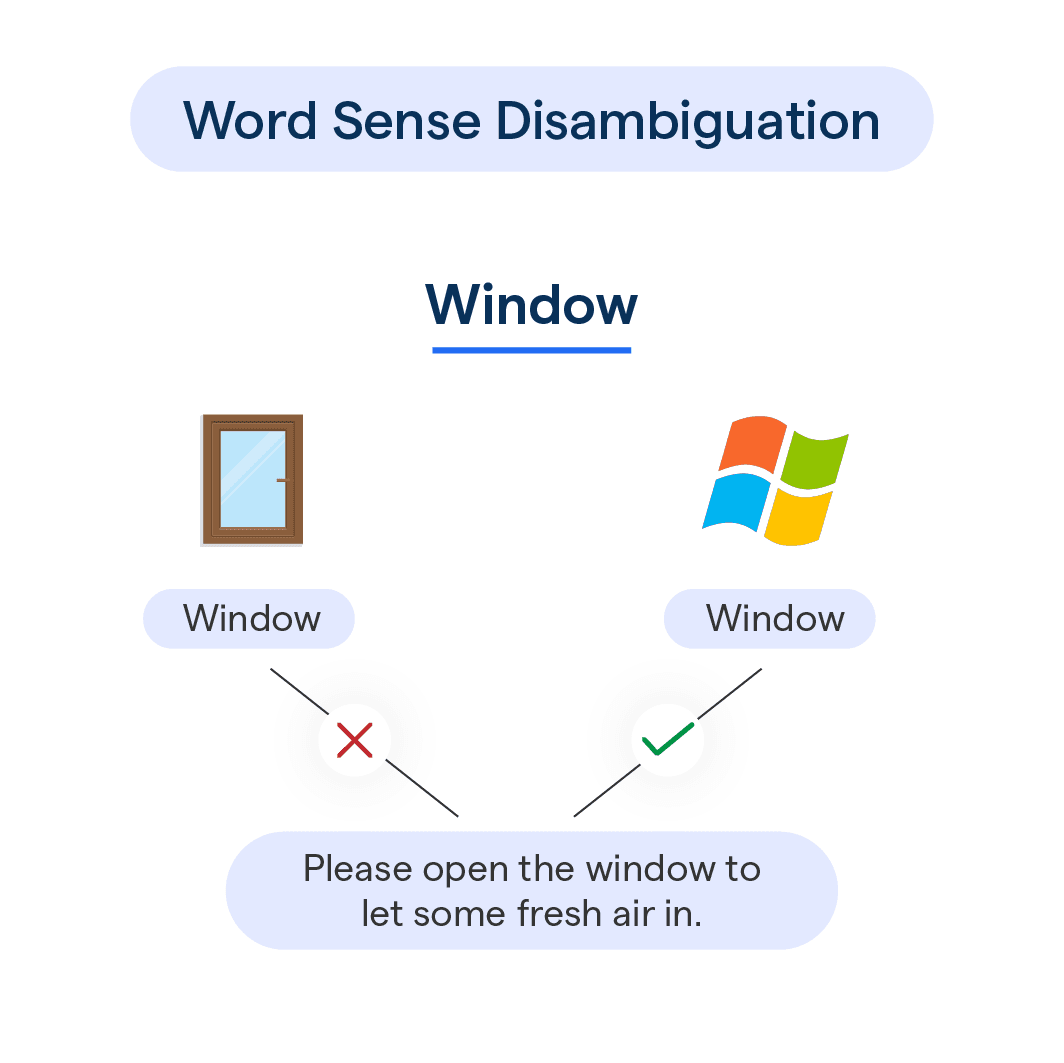
The Ambiguity Challenge in Language
The inherent ambiguity of human language stems from several factors:
-
Polysemy: A single word having multiple related meanings (e.g., “star” as a celestial body or a celebrity).
-
Homonymy: Words that sound or are spelled the same but have unrelated meanings (e.g., “bank” as a financial institution or a river bank).
-
Metonymy and Metaphor: Figurative language where words are used in non-literal ways, adding layers of complexity.
These linguistic phenomena, while enriching human expression, create a significant bottleneck for machines attempting to process and understand text. Without accurate WSD, an NLP system might misinterpret a query, generate irrelevant search results, or translate a sentence incorrectly, leading to a breakdown in communication and a frustrating user experience. The challenge of WSD is not merely a linguistic puzzle; it’s a fundamental engineering problem that impacts the efficacy and reliability of virtually every language-aware technology.
Core Concept of WSD
At its core, WSD involves mapping an ambiguous word in context to its appropriate “sense” from a predefined set of possible meanings, often sourced from a lexical resource like a dictionary or a computational lexicon (e.g., WordNet). For instance, WordNet might list several distinct senses for “bank,” each with a definition and example sentences. The WSD algorithm’s job is to select the sense that best fits the surrounding words and grammatical structure of the input sentence. This process typically involves analyzing the lexical, syntactic, and semantic features of the context words, much like a human implicitly does when interpreting language. The goal is to move beyond superficial word matching to deep semantic comprehension, enabling machines to grasp the true intent behind human communication.
Why is WSD Indispensable in Modern AI?
The ability to accurately determine the meaning of words in context is not merely an academic exercise; it is a foundational component for many cutting-edge AI and software applications. Without robust WSD capabilities, the performance of numerous language technologies would be significantly impaired, hindering their utility and intelligence. Its impact spans from improving search precision to enabling more natural human-computer interaction.
Enhancing Search Engines and Information Retrieval
Imagine searching for “Apple” on the internet. Without WSD, a search engine wouldn’t know if you’re looking for the fruit, the technology company, or perhaps a person named Apple. WSD allows search algorithms to understand the semantic intent of a query, delivering more relevant results. If your query includes “Apple stock price,” WSD would correctly identify “Apple” as the company, filtering out results about orchards. This semantic understanding reduces noise, improves precision, and drastically enhances the user’s information retrieval experience, making search engines smarter and more efficient.
Improving Machine Translation Accuracy
Machine translation (MT) systems, like Google Translate or DeepL, grapple daily with the nuances of language. A single word with multiple meanings can drastically alter the translation of an entire sentence. For example, translating “The pen is mightier than the sword” requires understanding “pen” as a writing instrument, not an animal enclosure. WSD provides MT systems with the contextual clues needed to select the correct equivalent word in the target language, preventing embarrassing mistranslations and ensuring higher fidelity and fluency in cross-lingual communication.
Powering Chatbots and Virtual Assistants
The rise of conversational AI, in the form of chatbots and virtual assistants (e.g., Siri, Alexa, Google Assistant), has made WSD more critical than ever. These systems need to comprehend user commands and questions accurately to provide helpful responses. If a user says, “Book a flight,” the system needs to understand “book” as the verb for reserving, not the noun for a publication. WSD enables these AI agents to interpret user intent correctly, leading to more natural, effective, and less frustrating interactions, allowing them to perform tasks, answer queries, and hold coherent conversations.
Refining Text Summarization and Analysis
Automatic text summarization and sentiment analysis tools rely heavily on understanding the precise meaning of words. In summarization, misinterpreting a key term can lead to an inaccurate or misleading summary. For sentiment analysis, the emotional valence of a word often depends on its context; “sick” can mean ill, or colloquially, “very good.” WSD helps these systems to accurately identify the sentiment and salience of information, leading to more reliable summaries and more granular insights into public opinion or document content.
Advancing Semantic Web Technologies
The Semantic Web aims to make internet data machine-readable, enabling more intelligent data integration and inference. WSD plays a vital role in linking ambiguous terms to specific concepts within ontologies and knowledge graphs. By disambiguating words and concepts, WSD facilitates the construction of a more interconnected and context-aware web, where machines can “understand” the meaning of data, leading to more intelligent applications for data discovery and knowledge representation.
How Does WSD Work? Techniques and Approaches
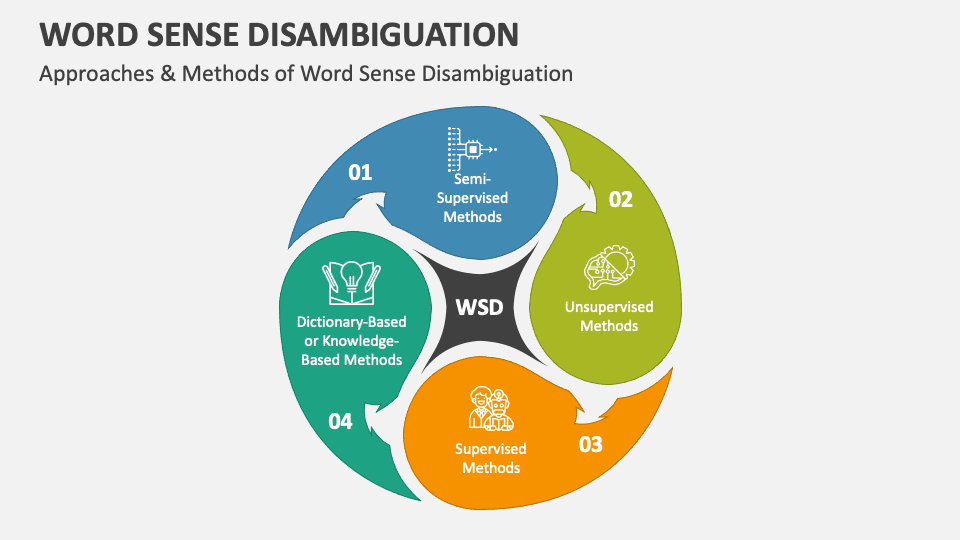
The computational approaches to Word Sense Disambiguation have evolved significantly over decades, mirroring the broader advancements in AI and machine learning. From rule-based systems to sophisticated deep learning models, the goal remains the same: to leverage context to pinpoint the correct meaning of an ambiguous word.
Knowledge-Based Approaches
Early WSD systems often relied on pre-existing lexical resources and hand-crafted rules. These methods leverage structured knowledge bases that contain information about word meanings and their relationships.
-
Dictionary and Thesaurus-Based: These approaches use the definitions provided in dictionaries or relationships in thesauri (like synonyms, antonyms, hypernyms). Algorithms might compare the context of the ambiguous word with the definitions of its senses, looking for overlaps in vocabulary. The most famous example is the Lesk algorithm, which measures the overlap between the dictionary definition of a sense and the definitions of its surrounding words.
-
Lexical Networks (e.g., WordNet): WordNet is a widely used lexical database where English words are organized into synsets (sets of synonyms) representing distinct conceptual senses. Each synset is linked to others through various semantic relations (e.g., hypernymy/hyponymy, meronymy/holonymy). Knowledge-based WSD methods use these relational structures to infer the correct sense, for example, by finding the shortest path between the ambiguous word and its context words within the WordNet graph.
Supervised Machine Learning Approaches
With the advent of machine learning, WSD shifted towards data-driven methods. Supervised learning models require large, manually sense-tagged corpora (datasets where each ambiguous word has been labeled with its correct sense) for training.
-
Feature Extraction: For each instance of an ambiguous word in the training data, features are extracted from its context. These features can include:
-
Collocations: Words that frequently appear together with the ambiguous word (e.g., “river” with “bank”).
-
Part-of-Speech (POS) tags: The grammatical category of the ambiguous word and its neighbors.
-
Syntactic features: Grammatical dependencies and relationships.
-
Bag-of-Words: All words in the surrounding context window, regardless of order.
-
-
Classification Algorithms: Once features are extracted, various classification algorithms are trained to learn the mapping from features to senses. Common algorithms include Support Vector Machines (SVMs), Naive Bayes classifiers, Decision Trees, and more recently, neural networks. The trained model can then predict the sense of new, unseen instances of ambiguous words.
Unsupervised Machine Learning Approaches
Unsupervised WSD methods do not require sense-tagged training data, which is expensive and time-consuming to create. Instead, they try to induce word senses directly from unannotated text by clustering word occurrences.
-
Clustering: These approaches group similar contexts of an ambiguous word together, assuming that each cluster corresponds to a distinct sense. For instance, all sentences where “bank” refers to a financial institution might form one cluster, while sentences where it refers to a river bank form another.
-
Distributional Semantics: This paradigm is based on the idea that “words that occur in similar contexts tend to have similar meanings.” Unsupervised WSD leverages this by analyzing the distribution of words in large corpora to infer semantic similarity and implicitly, word senses.
Deep Learning and Neural Networks
The most recent advancements in WSD have been driven by deep learning, particularly the development of sophisticated neural network architectures.
-
Contextual Word Embeddings: Models like Word2Vec, GloVe, ELMo, and especially transformer-based models like BERT (Bidirectional Encoder Representations from Transformers) and its successors (GPT, RoBERTa, etc.), have revolutionized WSD. These models generate “contextual embeddings” – vector representations of words that vary depending on their surrounding context. For example, BERT generates a different vector for “bank” in “river bank” versus “financial bank.” These context-sensitive embeddings inherently capture a degree of word sense, significantly simplifying the WSD task.
-
End-to-End Models: Modern deep learning systems often integrate WSD as an intrinsic component of larger NLP tasks (e.g., machine translation, question answering) rather than treating it as a standalone module. The neural network learns to disambiguate words as part of optimizing the overall task objective, leading to highly effective, albeit often opaque, WSD capabilities.
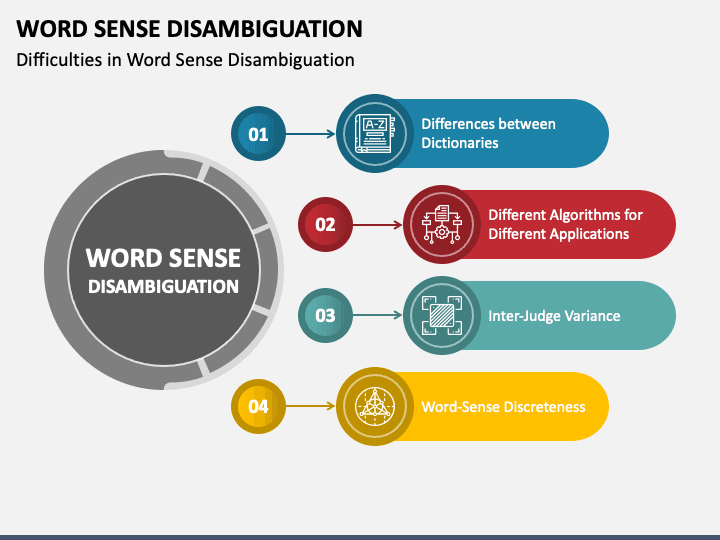
Challenges and Future Directions in WSD
Despite significant progress, Word Sense Disambiguation remains one of the hardest problems in AI, facing several persistent challenges. However, the continuous evolution of NLP, particularly with the rise of Large Language Models (LLMs), points towards exciting future directions.
The Data Sparsity Problem
A major hurdle for supervised WSD is the lack of sufficiently large and comprehensive sense-tagged corpora. Manually annotating text with word senses is incredibly labor-intensive, costly, and subject to inter-annotator disagreement. This data scarcity limits the generalizability and performance of supervised models, especially for less frequent words or domain-specific terminology where annotated data is scarce or non-existent.
Contextual Nuances and Idiomatic Expressions
Human language is rich with idioms, metaphors, sarcasm, and other forms of non-literal language. Disambiguating these nuanced expressions is exceptionally difficult for machines. For instance, “kick the bucket” means to die, regardless of the literal meanings of “kick” or “bucket.” Traditional WSD approaches often struggle with these cases, requiring deeper semantic understanding and commonsense reasoning that goes beyond simple lexical context.
Domain Specificity and Knowledge Acquisition
Word senses can be highly domain-specific. A word like “cell” means one thing in biology, another in telecommunications, and yet another in a prison context. Developing WSD systems that can seamlessly adapt to different domains without extensive retraining or manual annotation is a significant challenge. Acquiring and integrating vast amounts of domain-specific knowledge into WSD models remains an active area of research.
The Rise of Large Language Models (LLMs) and their Implications for WSD
The advent of transformer-based Large Language Models (LLMs) like GPT-3, GPT-4, and their open-source counterparts represents a paradigm shift for WSD. These models, trained on colossal amounts of text data, develop a profound understanding of context and word relationships. They generate contextualized embeddings that inherently differentiate word senses without explicit WSD modules.
-
Implicit WSD: LLMs often perform WSD implicitly as part of their core function (e.g., predicting the next word, generating coherent text). Their ability to capture long-range dependencies and intricate semantic patterns allows them to resolve ambiguities remarkably well, often outperforming traditional WSD systems.
-
Reduced Need for Explicit WSD: While dedicated WSD tasks and benchmarks still exist, for many practical applications, the “WSD problem” is increasingly being addressed as a byproduct of the LLM’s general linguistic competence. Developers can leverage LLMs for tasks that previously required explicit WSD, simplifying the NLP pipeline.
Towards Generalizable and Robust WSD Systems
The future of WSD lies in developing systems that are more robust, adaptable, and less reliant on explicit sense inventories. This involves:
-
Leveraging LLMs: Integrating and fine-tuning LLMs for specific disambiguation tasks, or using their contextual embeddings as features for downstream tasks.
-
Few-Shot and Zero-Shot Learning: Developing models that can disambiguate new words or senses with minimal or no labeled examples.
-
Multilingual WSD: Expanding WSD capabilities to efficiently handle ambiguity across multiple languages, fostering truly global language understanding systems.
-
Integrating Commonsense Knowledge: Infusing WSD models with broader world knowledge to better handle idiomatic expressions, metaphors, and highly contextual ambiguities.
In conclusion, Word Sense Disambiguation, while a challenging facet of NLP, is fundamentally important for unlocking deeper linguistic understanding in AI. As technology continues to advance, particularly with the rapid evolution of large language models, the methods for achieving WSD will continue to evolve, pushing us closer to machines that can truly comprehend the richness and complexity of human language.
aViewFromTheCave is a participant in the Amazon Services LLC Associates Program, an affiliate advertising program designed to provide a means for sites to earn advertising fees by advertising and linking to Amazon.com. Amazon, the Amazon logo, AmazonSupply, and the AmazonSupply logo are trademarks of Amazon.com, Inc. or its affiliates. As an Amazon Associate we earn affiliate commissions from qualifying purchases.