
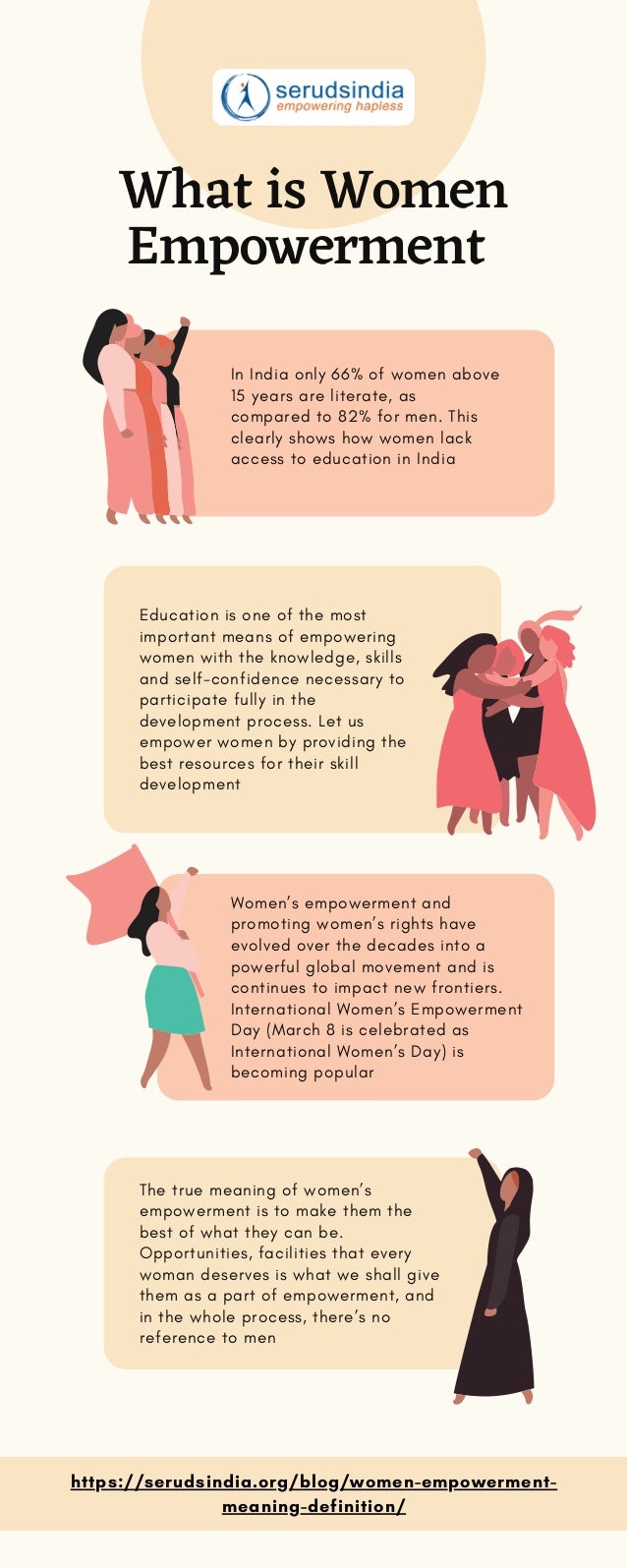
In the modern economic landscape, the question “what is women empowerment?” has evolved far beyond social advocacy or political representation. While those elements remain foundational, true empowerment in the 21st century is increasingly defined by fiscal autonomy, capital ownership, and financial literacy. To empower a woman is to provide her with the tools to manage, grow, and protect her own wealth.
Financial empowerment is the process of gaining the knowledge and confidence to make informed decisions about money, allowing women to break cycles of dependency and participate fully in the global economy. This article explores women’s empowerment through the lens of personal finance, investing, and business ownership, outlining how financial agency serves as the ultimate catalyst for systemic change.

Redefining Empowerment Through Economic Agency
At its core, women’s empowerment in a financial context refers to “economic agency”—the ability to make choices that affect one’s economic status. Historically, women have faced structural barriers to wealth, from the gender pay gap to limited access to credit. However, when women gain control over their finances, the “multiplier effect” takes hold: research consistently shows that women reinvest a significantly higher portion of their income back into their families and communities compared to men.
The Macroeconomic Impact of Empowered Women
When we look at the broader economy, empowering women is not just a moral imperative; it is a “Money” move. According to data from various global financial institutions, closing the gender gap in the workforce could add trillions of dollars to the global GDP. Empowerment, therefore, is a strategy for global prosperity. By facilitating women’s entry into high-growth sectors and ensuring they have the capital to scale businesses, we unlock dormant economic potential.
Shifting from Literacy to Capability
Financial literacy is the understanding of how money works, but financial capability is the power to act on that knowledge. Empowerment happens at the intersection of these two concepts. It involves moving beyond simply saving money to understanding the nuances of asset allocation, tax efficiency, and compound interest. For a woman to be truly empowered, she must view herself not just as a consumer or a saver, but as an investor and a wealth builder.
Strategic Personal Finance: The Bedrock of Empowerment
You cannot build a skyscraper on a swamp. Similarly, you cannot achieve long-term financial empowerment without a rock-solid foundation of personal finance. For many women, empowerment begins with the mastery of the cash flow statement—understanding exactly what is coming in and what is going out.
Mastering the Art of Budgeting and Cash Flow
Budgeting is often mischaracterized as a restrictive practice, but in the context of empowerment, it is a tool for freedom. A well-structured budget allows a woman to direct her capital toward her highest priorities, whether that is a down payment on a home, a business startup fund, or a retirement account. Professional financial management involves the “Pay Yourself First” principle, where a portion of income is diverted to savings and investments before any discretionary spending occurs.
Debt Management and Credit as a Tool
Empowerment also involves a sophisticated relationship with debt. While “bad debt” (high-interest consumer debt) is an anchor that prevents wealth accumulation, “good debt” (strategic leverage) can be a powerful tool for growth. Empowered women understand how to manage their credit scores to access lower interest rates, using borrowed capital to acquire appreciating assets like real estate or business equipment. Understanding the debt-to-income ratio is essential for maintaining the agility needed to seize financial opportunities.
The Emergency Fund: The “Freedom Fund”
In the niche of personal finance, the emergency fund is often referred to as a “Freedom Fund.” This is a liquid reserve of three to six months of expenses. For a woman, this fund provides the psychological and physical safety to leave a toxic workplace, pivot careers, or weather an economic downturn without compromising her long-term financial goals. It is the ultimate insurance policy for independence.
Investing as the Ultimate Equalizer
While saving preserves wealth, investing creates it. One of the most significant hurdles in the journey of women’s empowerment is the “investing gap.” Studies often show that while women are excellent savers, they are less likely than men to invest their surplus cash in the stock market or other income-generating assets. Closing this gap is essential for building long-term, generational wealth.
Overcoming the Risk Aversion Myth
There is a common misconception that women are “risk-averse” when it comes to money. In reality, women are often “risk-aware.” Once women begin investing, they frequently outperform their male counterparts because they tend to trade less frequently and stick to long-term strategies. Empowerment in this niche involves embracing market volatility as a mechanism for growth rather than a reason for fear.
Diversification and Asset Allocation
A key component of financial empowerment is understanding how to build a diversified portfolio. This includes:
- Equities (Stocks): Owning a piece of the world’s most profitable companies to capture long-term growth.
- Fixed Income (Bonds): Providing stability and regular interest payments.
- Real Estate: Generating passive income through rentals or equity growth through appreciation.
- Alternative Investments: Exploring REITs, commodities, or even private equity to hedge against inflation.
Leveraging Compound Interest
The most powerful force in finance is time. Empowerment means starting as early as possible to let compound interest do the heavy lifting. By understanding the “Rule of 72” (a simple way to determine how long it will take for an investment to double), women can visualize their financial future and make strategic contributions to tax-advantaged accounts like IRAs or 401(k)s.
The Entrepreneurial Shift: Creating Assets and Ownership
True financial empowerment often moves beyond being an employee to becoming an owner. Whether through a side hustle or a full-scale corporation, entrepreneurship allows women to break through income ceilings and build equity in their own ideas.
Scaling Female-Led Businesses
Empowerment in the business niche involves moving from “solopreneurship” to scalable business models. This requires a deep dive into business finance—understanding profit margins, customer acquisition costs, and EBITDA. To empower female founders, there must be a focus on accessing venture capital and angel investment, areas where women have historically been underfunded. Empowerment means teaching women how to pitch, how to value their companies, and how to negotiate for equity.
The Rise of the Side Hustle Economy
In the modern “Money” niche, the side hustle has become a primary vehicle for empowerment. Digital platforms have lowered the barrier to entry, allowing women to monetize skills in consulting, e-commerce, or digital products. This additional stream of income provides a buffer against inflation and accelerates the journey toward financial independence.
Intellectual Property as an Asset
Empowerment also means recognizing the value of intellectual property (IP). Creating a brand, writing a book, or developing software creates an asset that can generate income long after the initial work is done. Teaching women to protect and monetize their IP is a critical component of modern economic empowerment.
Financial Security and Future-Proofing
The final stage of women’s empowerment is ensuring that wealth is not only created but also preserved for the future. This involves a proactive approach to retirement and estate planning.
Retirement Security and the Longevity Factor
Statistically, women live longer than men, which means their retirement funds need to last longer. Empowerment involves calculating the “FIRE” (Financial Independence, Retire Early) number or a traditional retirement goal that accounts for healthcare costs and inflation. It means ensuring that women are not reliant solely on government pensions or a partner’s retirement plan.
Estate Planning and Legacy Building
Empowerment is also about what we leave behind. Estate planning—comprising wills, trusts, and power of attorney—ensures that a woman’s wealth is distributed according to her wishes. It allows her to create a legacy, whether that is providing for her heirs or establishing a philanthropic foundation to empower the next generation of women.
Insurance: Protecting the Portfolio
No financial plan is complete without risk mitigation. Empowerment includes the strategic use of life, disability, and long-term care insurance. These tools ensure that an unexpected health crisis or accident does not wipe out years of disciplined saving and investing.

Conclusion: The New Definition of Empowerment
So, what is women empowerment? In the world of finance and money, it is the transition from being a passive participant in the economy to becoming an active architect of one’s own financial destiny. It is the confidence to negotiate a higher salary, the wisdom to invest in a volatile market, and the courage to start a business.
When women are financially empowered, they hold the keys to their own freedom. They can make choices based on their values rather than their bank balances. By focusing on financial literacy, strategic investing, and business ownership, we move toward a world where “empowerment” is not just a buzzword, but a tangible, measurable, and bankable reality. True empowerment is, and always will be, the power of a woman with her own capital and the knowledge of how to use it.
aViewFromTheCave is a participant in the Amazon Services LLC Associates Program, an affiliate advertising program designed to provide a means for sites to earn advertising fees by advertising and linking to Amazon.com. Amazon, the Amazon logo, AmazonSupply, and the AmazonSupply logo are trademarks of Amazon.com, Inc. or its affiliates. As an Amazon Associate we earn affiliate commissions from qualifying purchases.