
The question “what is with the stock market?” echoes frequently in financial circles, among seasoned investors, and especially among those new to the world of finance. It’s a query born out of fascination, frustration, and the fundamental human desire to understand the forces shaping our economic realities. The stock market, often perceived as a complex, capricious beast, is in fact a dynamic reflection of global economic health, corporate performance, human psychology, and geopolitical events. Its movements, whether soaring highs or unsettling lows, are rarely without reason, though those reasons can be intricate and interconnected.
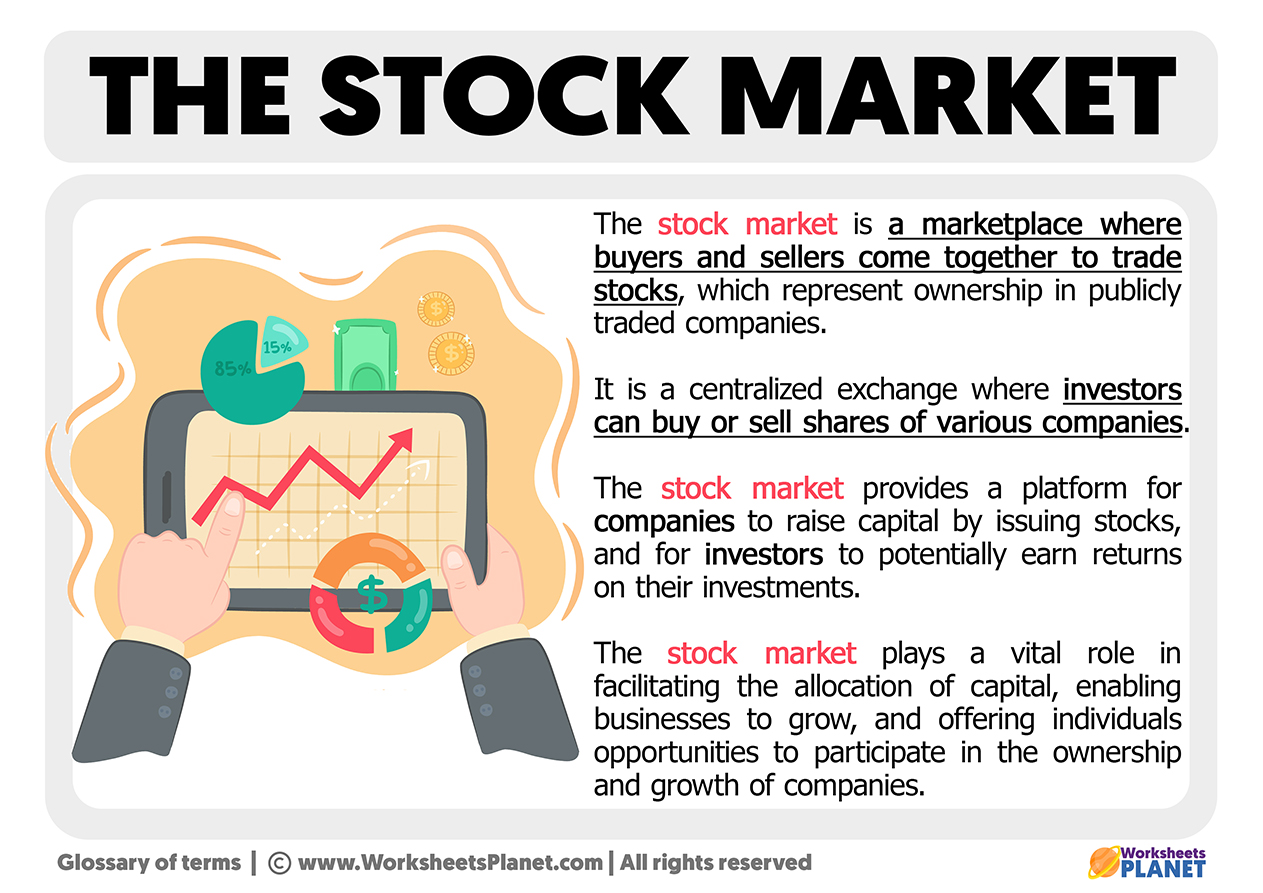
Understanding “what is with the stock market” requires delving beyond the daily headlines and appreciating the myriad macroeconomic factors, corporate fundamentals, and investor behaviors that collectively orchestrate its rhythm. In recent times, the market has presented a particularly challenging landscape, characterized by significant volatility and shifting paradigms. This article aims to demystify these complexities, providing an insightful and professional overview for anyone seeking clarity in today’s financial environment. We will explore the primary drivers currently influencing market trends, analyze key performance indicators, delve into investor psychology, and outline pragmatic strategies for navigating these turbulent waters.
The Macroeconomic Undercurrents Shaping the Market
The stock market does not exist in a vacuum. It is profoundly influenced by overarching economic conditions that dictate the profitability of businesses, the purchasing power of consumers, and the availability of capital. To comprehend the market’s recent behavior, one must first grasp the significant macroeconomic forces at play.
Inflation’s Persistent Grip
Perhaps the most dominant theme influencing global economies has been the resurgence and persistence of inflation. For decades, many developed economies experienced relatively low and stable inflation, leading some to believe it was a relic of the past. However, a confluence of factors – including pandemic-induced supply chain disruptions, robust consumer demand fueled by fiscal stimulus, and geopolitical events impacting energy and food prices – ignited a powerful inflationary surge.
Inflation erodes the purchasing power of money, which impacts both consumers and corporations. For consumers, it means their money buys less, potentially leading to reduced discretionary spending. For companies, higher costs for raw materials, labor, and transportation eat into profit margins, even if they can pass some of these costs onto customers. This pressure on corporate profitability often translates into lower stock valuations as future earnings become less certain or less valuable in real terms. Investors become more cautious, demanding a higher return for taking on risk in an inflationary environment.
Central Banks and Interest Rate Hikes
In response to soaring inflation, central banks worldwide, most notably the U.S. Federal Reserve, embarked on an aggressive campaign of interest rate hikes. The primary tool central banks use to combat inflation is to raise their benchmark interest rates, which then cascades through the financial system, making borrowing more expensive for individuals and businesses. The goal is to cool down an overheating economy by dampening demand, thereby bringing prices back under control.
While necessary for price stability, higher interest rates have significant ramifications for the stock market. Firstly, they increase the cost of capital for companies, making it more expensive to fund expansion, mergers, and acquisitions. Secondly, higher rates make “safer” investments, such as bonds and high-yield savings accounts, more attractive. This draws money away from riskier assets like stocks, as investors can now get a decent return with less risk. Thirdly, higher discount rates, used to value future corporate earnings, reduce the present value of those earnings, particularly impacting growth stocks whose profitability is largely projected far into the future. This shift in the cost of money is a fundamental re-pricing mechanism for financial assets.
Geopolitical Volatility and Global Supply Chains
Beyond pure economics, geopolitical events have played an increasingly significant role in shaping market sentiment and performance. Conflicts, trade disputes, and international political tensions create uncertainty, which markets inherently dislike. The war in Ukraine, for example, sent shockwaves through energy and commodity markets, exacerbating inflationary pressures and disrupting global supply chains for everything from food to semiconductors.
These events introduce unforeseen risks, leading investors to adopt a more defensive posture. Companies with significant international exposure or reliance on specific supply routes can see their operations hampered and their profits impacted. The interconnectedness of the global economy means that a crisis in one region can quickly ripple across continents, affecting investment decisions and market stability worldwide. This geopolitical backdrop adds another layer of complexity to an already intricate market environment.
Key Market Performance and Sectoral Divergence
While the macroeconomic landscape sets the stage, the actual performance of various sectors and individual stocks provides a more granular view of “what is with the stock market.” Not all parts of the market respond uniformly to the same pressures; indeed, divergence is often a defining characteristic during periods of transition.
A Tale of Two Markets: Growth vs. Value
One of the most prominent shifts observed in recent times has been the dramatic divergence between growth and value stocks. For much of the past decade, growth stocks – typically technology companies or innovative firms with high revenue growth but often limited current profits – significantly outperformed. Their valuations soared, driven by expectations of massive future earnings and low interest rates that made those distant profits more valuable in today’s terms.
However, as interest rates climbed, the narrative flipped. Higher discount rates disproportionately punish growth stocks by making their distant future earnings less attractive. Investors began to prioritize companies with strong current cash flow, tangible assets, and established profitability – characteristics typically found in value stocks (e.g., banks, utilities, energy companies, consumer staples). This rotation from growth to value has been a defining feature of the market, signifying a return to fundamental valuations and a more cautious investment philosophy.
Navigating Sector-Specific Trends
Within this broader growth-vs.-value dynamic, specific sectors have displayed unique resilience or vulnerability.
- Energy Sector: Benefited immensely from rising oil and gas prices, fueled by supply constraints and geopolitical tensions. Many energy companies, previously undervalued, saw substantial gains.
- Financials: Initially saw a boost from rising interest rates, as higher rates translate to better lending margins for banks. However, concerns about economic slowdowns and potential loan defaults temper some of this optimism.
- Consumer Staples & Healthcare: Often considered defensive sectors, these tend to hold up better during economic downturns because demand for their products (food, medicine) remains relatively stable. They provide consistent dividends and less volatility.
- Technology & Discretionary Consumer: These sectors, particularly those reliant on consumer spending or high valuations based on future growth, have faced significant headwinds. Layoffs in tech and reduced spending on non-essential items reflect economic uncertainties.
Understanding these sector-specific trends is crucial for investors, as it highlights that the “stock market” is not a monolithic entity but a collection of diverse industries responding to varying degrees to prevailing economic forces.
Corporate Earnings and Forward Guidance
Ultimately, a company’s stock price is rooted in its ability to generate profits. Therefore, corporate earnings reports and the forward guidance provided by management are critical indicators. In a challenging economic environment, investors scrutinize these reports for signs of resilience, weakness, or adaptability.
- Earnings Beats/Misses: How companies perform relative to analyst expectations can significantly move their stock prices.
- Revenue Growth: A key metric, especially for growth companies, but even mature companies need to show stable or increasing top-line figures.
- Profit Margins: Under pressure from inflation and rising costs, maintaining or improving margins is a sign of strong management and pricing power.
- Forward Guidance: Management’s outlook on future sales, earnings, and capital expenditures is often more impactful than past results, as it provides a window into their confidence and strategy for upcoming periods.
In times of uncertainty, cautious guidance can lead to market sell-offs, even for companies reporting decent current earnings, as investors prioritize future stability.
Investor Psychology and Market Sentiment
Beyond the cold, hard numbers of economics and corporate performance, the stock market is profoundly influenced by human emotion. Investor psychology and market sentiment play a critical role in short-term fluctuations and can even exaggerate or accelerate fundamental trends.

The Fear and Greed Index in Action
The “Fear and Greed Index,” popularized by CNN Business, provides a useful metaphor for understanding investor sentiment. When greed dominates, investors are eager to take on risk, often chasing soaring stock prices and ignoring potential downsides. This can lead to speculative bubbles. Conversely, when fear takes hold, investors become risk-averse, selling off assets indiscriminately, often leading to market capitulation and irrational undervaluation.
Recent market volatility has seen this pendulum swing wildly. Periods of significant declines often trigger panic selling, as investors, fearing further losses, liquidate positions, sometimes at significant discounts. Such moments, while painful, often present opportunities for long-term investors willing to buy when others are fearful. The herd mentality, where investors follow the actions of the majority rather than their own reasoned analysis, can amplify these emotional swings.
Retail vs. Institutional Investor Behavior
The stock market landscape is populated by both individual (retail) investors and large institutional investors (e.g., pension funds, hedge funds, mutual funds). Their behaviors, while often aligned, can diverge significantly.
- Institutional Investors: Typically have longer time horizons, deeper research capabilities, and are often bound by specific mandates. Their large capital flows can move markets, and their shifts in allocation can signal broader trends. They tend to be more sophisticated in their use of hedging strategies.
- Retail Investors: Increasingly active, especially with the rise of commission-free trading platforms. They are often more susceptible to emotional decisions, social media trends, and short-term speculation. While their individual impact might be small, their collective power, especially in coordinated moves (e.g., meme stocks), can be significant.
Understanding these different investor cohorts helps to explain certain market phenomena, from the stability of broad index funds (driven by institutional allocation) to the wild swings of specific individual stocks (often influenced by retail speculation).
The Role of Information Overload and Media Narratives
In the digital age, investors are inundated with information – news articles, financial reports, social media posts, analyst commentary, and expert opinions. While access to information is generally positive, the sheer volume can lead to “information overload,” making it difficult to discern reliable signals from noise.
Furthermore, media narratives can significantly influence sentiment. A constant stream of negative headlines about inflation, recession, or geopolitical tensions can foster widespread fear, even if underlying fundamentals don’t fully justify the extent of the panic. Conversely, optimistic narratives can fuel irrational exuberance. Savvy investors learn to filter this information, focus on primary sources, and avoid making impulsive decisions based on sensationalized reporting or unverified claims.
Strategies for Navigating a Volatile Landscape
Given the complex interplay of macroeconomic forces, corporate performance, and investor psychology, navigating today’s stock market requires a disciplined and well-thought-out approach. Rather than succumbing to fear or chasing fleeting trends, prudent investors focus on proven strategies that mitigate risk and foster long-term growth.
The Power of Diversification
Diversification remains the cornerstone of sound investment strategy. It involves spreading investments across various asset classes (stocks, bonds, real estate, commodities), different sectors, industries, and geographies. The principle is simple: if one part of your portfolio underperforms, others may compensate, thereby reducing overall portfolio volatility and risk.
- Across Asset Classes: Allocating between stocks (growth potential) and bonds (stability, income) is fundamental.
- Sectoral and Industry Diversification: Avoid over-concentration in a single sector. For instance, if tech is struggling, having exposure to energy or healthcare can cushion the blow.
- Geographical Diversification: Investing in international markets can provide exposure to different economic cycles and reduce reliance on a single country’s performance.
In a volatile market, a well-diversified portfolio acts as a crucial shock absorber, ensuring that no single event or sector downturn can catastrophically derail your financial goals.
Dollar-Cost Averaging: A Disciplined Approach
Market timing – the act of trying to buy low and sell high – is notoriously difficult, even for professionals. Dollar-cost averaging (DCA) offers a disciplined alternative. This strategy involves investing a fixed amount of money at regular intervals (e.g., monthly) regardless of the stock price.
- Advantages: When prices are high, your fixed investment buys fewer shares. When prices are low, it buys more shares. Over time, this averages out your purchase price, reducing the risk of investing a lump sum at an inopportune peak.
- Emotional Mitigation: DCA removes emotion from the investment decision, ensuring you continue to invest even during downturns, which are often the best times to buy. It promotes consistency and patience.
This strategy is particularly effective in volatile markets, allowing investors to capitalize on dips without the stress of trying to predict them.
Rebalancing and Risk Management
As market conditions change, the original allocation of your portfolio can drift. For example, if stocks have a strong run, they might come to represent a larger percentage of your portfolio than you initially intended, thereby increasing your overall risk exposure. Rebalancing involves periodically adjusting your portfolio back to your target asset allocation.
- Sell High, Buy Low: Rebalancing often means selling portions of assets that have performed well (reducing exposure to potentially overvalued segments) and buying more of those that have underperformed (increasing exposure to potentially undervalued segments).
- Risk Tolerance: Regularly reviewing your risk tolerance is also crucial. Life circumstances change, and what was an appropriate level of risk a few years ago might not be today. Adjusting your portfolio to align with your current risk profile is a critical aspect of responsible financial management.
Focusing on Fundamentals and Long-Term Goals
In the face of daily market noise and short-term fluctuations, it’s easy to lose sight of the bigger picture. Successful investing, particularly in challenging environments, often boils down to two core principles:
- Invest in Quality: Focus on companies with strong fundamentals – robust balance sheets, consistent earnings, competitive advantages, effective management, and sustainable business models. These companies are more likely to weather economic storms and recover strongly.
- Maintain a Long-Term Perspective: The stock market has historically rewarded patient investors. Despite numerous crises and downturns, the long-term trend of the market has been upward. Trying to time the market based on short-term sentiment often leads to poor outcomes. Align your investments with your long-term financial goals (e.g., retirement, education) and resist the urge to react to every market swing.
The Road Ahead: Potential Scenarios and Outlook
Looking forward, the stock market remains at a crossroads, influenced by ongoing macroeconomic adjustments and geopolitical realities. Predicting the future with certainty is impossible, but understanding potential scenarios can help investors prepare.
Recessionary Concerns vs. Soft Landing Hopes
A central debate among economists and investors revolves around whether major economies, particularly the U.S., will experience a recession or achieve a “soft landing.”
- Recession: A significant decline in economic activity, typically characterized by rising unemployment, reduced consumer spending, and corporate bankruptcies. A recession typically means further pressure on corporate earnings and stock valuations.
- Soft Landing: A scenario where inflation is brought under control without triggering a severe economic downturn. This would likely involve a period of slower growth but avoid widespread job losses. In a soft landing, markets could find stability and begin a gradual recovery as uncertainty diminishes.
The actions of central banks, the resilience of the labor market, and consumer confidence will be key determinants of which path the economy ultimately takes.
Emerging Opportunities in Dislocation
Volatile markets, while challenging, also create opportunities. When fear drives indiscriminate selling, quality assets can become undervalued, presenting attractive entry points for long-term investors.
- Undervalued Stocks: Companies with strong fundamentals and solid future prospects might trade at a discount due to broader market sell-offs. Identifying these requires thorough research and a contrarian mindset.
- New Technologies and Trends: Despite tech sector struggles, innovation doesn’t stop. Emerging technologies and businesses addressing long-term societal needs (e.g., renewable energy, biotechnology, AI) may present compelling investment cases once market conditions stabilize.
- Dividend Aristocrats: Companies with a long history of increasing dividends can provide stable income and demonstrate financial strength, making them attractive during uncertain times.
The Enduring Importance of a Financial Plan
Regardless of what the stock market does next, the most crucial element for individual investors is a robust, personalized financial plan. This plan should outline your financial goals, risk tolerance, time horizon, and investment strategy.
- Consistency: Adhere to your plan, even when emotions suggest otherwise.
- Regular Review: Periodically review and adjust your plan as your life circumstances and financial goals evolve.
- Professional Guidance: Consider consulting a qualified financial advisor who can help you tailor a plan and navigate complex market conditions.
In conclusion, “what is with the stock market” is a question with no simple answer, but rather a multifaceted exploration of economic principles, corporate performance, and human behavior. The current environment is characterized by significant macroeconomic shifts, sector-specific dynamics, and emotional volatility. By understanding these forces and adopting disciplined investment strategies focused on diversification, dollar-cost averaging, risk management, and a long-term perspective, investors can navigate the complexities of today’s market with greater confidence and work towards achieving their financial aspirations, irrespective of short-term gyrations. The market is always changing, but the principles of sound investing remain constant.
aViewFromTheCave is a participant in the Amazon Services LLC Associates Program, an affiliate advertising program designed to provide a means for sites to earn advertising fees by advertising and linking to Amazon.com. Amazon, the Amazon logo, AmazonSupply, and the AmazonSupply logo are trademarks of Amazon.com, Inc. or its affiliates. As an Amazon Associate we earn affiliate commissions from qualifying purchases.