
For decades, the question “What is the weather on Sunday?” was met with a shrug and a glance at the morning newspaper or a 30-second segment on the local evening news. Today, that same question triggers a sophisticated orchestration of orbital satellites, supercomputers, and artificial intelligence. What seems like a simple inquiry is actually the ultimate stress test for modern technology. We no longer rely on simple barometers; we rely on a complex global tech stack that translates atmospheric chaos into actionable digital data.
Understanding the “weather on Sunday” is no longer about predicting rain or shine; it is about the intersection of Big Data, Machine Learning (ML), and high-resolution hardware. This article explores the technological ecosystem that makes modern forecasting possible, moving from the sensors in the stratosphere to the algorithms on your smartphone.
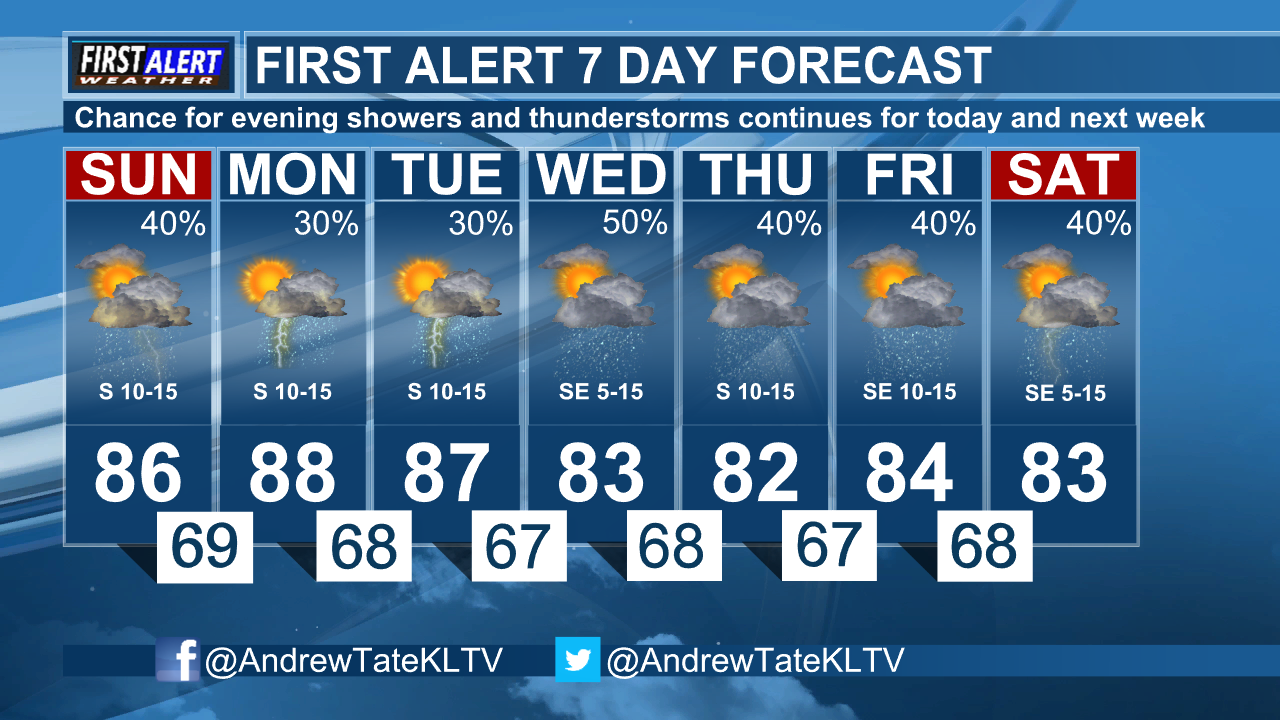
The Evolution of Meteorological Data Collection: From Sensors to Satellites
To know what happens on Sunday, technology must first understand what is happening right now, everywhere on Earth. The foundation of weather tech is a massive, multi-layered data collection network.
From Mercury Barometers to IoT Sensors
In the past, weather stations were sparse and manually operated. Today, the Internet of Things (IoT) has turned the planet into a living laboratory. Millions of automated weather stations (AWS) feed real-time data into global networks. These sensors measure temperature, humidity, wind speed, and barometric pressure with micro-precision. Interestingly, the tech in your pocket contributes to this; many modern smartphones contain internal barometers originally designed to assist GPS, which now provide “crowdsourced” atmospheric pressure data to improve hyper-local forecasts.
The Role of CubeSats and High-Resolution Satellite Imaging
The true “eye in the sky” comes from Geostationary Operational Environmental Satellites (GOES). These high-tech marvels hover 22,236 miles above the Earth, providing continuous monitoring of the hemisphere. However, the recent tech disruption in this space is the rise of “CubeSats”—miniature satellites launched by private companies like Planet or Spire. These small-scale arrays use radio occultation tech to measure how GPS signals bend as they pass through the atmosphere, providing a vertical profile of temperature and moisture that traditional satellites might miss.
Artificial Intelligence and Predictive Modeling
Once the data is collected, it must be processed. This is where the transition from traditional “Numerical Weather Prediction” (NWP) to Artificial Intelligence (AI) is revolutionizing the industry. When you ask your smart assistant about Sunday’s forecast, you are interacting with some of the most advanced AI models ever built.
Machine Learning Algorithms vs. Traditional NWP
Traditionally, weather forecasting relied on physics-based models that used massive sets of differential equations to simulate the atmosphere. While accurate, these models are computationally expensive and slow. Enter AI. Tech giants like Google DeepMind and NVIDIA are developing AI-based forecasting tools, such as GraphCast and FourCastNet.
These models don’t “calculate” the physics of every air molecule; instead, they are trained on decades of historical weather data. By recognizing patterns and signatures of past weather events, they can predict future outcomes in seconds rather than hours. This shift allows for more frequent updates, meaning your Sunday forecast becomes significantly more accurate as the weekend approaches.
Big Data: Processing Petabytes for Hyper-Local Accuracy
The challenge of forecasting is a “Big Data” problem. The European Centre for Medium-Range Weather Forecasts (ECMWF) and the National Oceanic and Atmospheric Administration (NOAA) process petabytes of data daily. The tech stack involved includes massive supercomputing clusters that perform quadrillions of calculations per second. The goal is “downscaling”—taking a global model and refining it down to a 1-kilometer grid. This is why your phone can tell you it will start raining on your specific street corner in exactly seven minutes.
The Consumer Interface: Apps, APIs, and Wearables
The most sophisticated data in the world is useless if the end-user cannot access it. The “last mile” of weather technology is the software interface that delivers the Sunday forecast to your screen.
The Rise of Hyper-Local Weather Apps
Apps like AccuWeather, The Weather Channel, and the now-Apple-integrated Dark Sky have redefined user expectations. These platforms utilize proprietary “nowcasting” engines. By leveraging RADAR (Radio Detection and Ranging) and LIDAR (Light Detection and Ranging) tech, these apps provide minute-by-minute updates. The underlying technology relies on high-speed APIs (Application Programming Interfaces) that pull data from various global models and merge them into a simplified, visual UI (User Interface) that anyone can understand.
Integration with Smart Homes and Daily Automation
In the modern tech ecosystem, “weather on Sunday” is a trigger for automation. Smart home hubs like Amazon Alexa or Google Home use weather data to adjust irrigation systems, optimize home heating, or suggest departure times based on predicted road conditions. If the “Sunday” forecast predicts a heatwave, your smart thermostat can proactively cool your home during off-peak energy hours, showcasing a seamless integration of environmental data and consumer tech.
Quantum Computing: The Next Frontier in Forecasting
Despite our current prowess, weather remains one of the most difficult “computational hurdles” due to chaos theory—the idea that a tiny change in initial conditions can lead to a vastly different outcome. This is why a Sunday forecast made on a Monday is less reliable than one made on a Friday. Quantum computing is the proposed solution to this volatility.
Solving the Chaos Theory Problem
Traditional binary computers (using 1s and 0s) struggle with the infinite variables of the atmosphere. Quantum computers, using “qubits,” can exist in multiple states simultaneously. This allows them to run “ensemble forecasts” (simulating hundreds of different Sunday weather scenarios at once) with far greater efficiency. Companies like IBM are already experimenting with quantum-ready algorithms to predict “black swan” weather events that current models might miss.
Real-time Climate Simulation
Beyond just predicting Sunday’s temperature, quantum-enhanced tech will allow us to simulate long-term climate shifts with the same granularity we currently use for daily forecasts. This represents a monumental leap in digital twins—virtual replicas of Earth’s atmosphere that allow scientists to test “what-if” scenarios regarding carbon levels, ocean temperatures, and solar radiation.
The Economic and Social Impact of Tech-Driven Forecasting
Technology does not just tell us to bring an umbrella; it safeguards the global economy. Precision in forecasting “what the weather is on Sunday” has multi-billion dollar implications for tech-dependent industries.
Precision Agriculture and Supply Chain Optimization
The agricultural sector is perhaps the biggest beneficiary of weather tech. Farmers use “AgTech” platforms that combine drone surveillance with satellite-derived weather data to determine the exact hour to harvest before a Sunday storm hits. Similarly, autonomous logistics and supply chain software use predictive weather analytics to reroute ships and trucks, preventing delays and reducing the carbon footprint of global trade.
Disaster Mitigation and Early Warning Systems
On a more critical level, the technology behind weather forecasting is a life-saving tool. Advanced warning systems for hurricanes, wildfires, and tornadoes rely on the same tech stack that tells you if it will be sunny on Sunday. The integration of 5G networks allows these warnings to be broadcast with near-zero latency, ensuring that even in the most remote areas, technology acts as a shield against the elements.

Conclusion: The Digital Atmosphere
When you search “what is the weather on Sunday,” you are tapping into a global network of innovation. From the silicon chips in supercomputers to the AI models trained on trillions of data points, weather forecasting is a testament to human ingenuity. As we move toward a future defined by quantum leaps and hyper-connected IoT devices, our ability to decode the atmosphere will only sharpen.
We are no longer passive observers of the sky; we are digital architects of our own preparedness. The next time you check your Sunday forecast, remember that you aren’t just looking at a number—you are looking at the pinnacle of modern technology, working in real-time to make the unpredictable, predictable.
aViewFromTheCave is a participant in the Amazon Services LLC Associates Program, an affiliate advertising program designed to provide a means for sites to earn advertising fees by advertising and linking to Amazon.com. Amazon, the Amazon logo, AmazonSupply, and the AmazonSupply logo are trademarks of Amazon.com, Inc. or its affiliates. As an Amazon Associate we earn affiliate commissions from qualifying purchases.