
In an increasingly complex financial landscape, where investment opportunities proliferate and economic conditions constantly shift, managing significant assets requires more than just a basic bank account or a simple brokerage. This is where wealth management in banking steps in—a sophisticated, personalized, and holistic approach designed to help affluent individuals, families, and businesses grow, preserve, and transfer their wealth across generations. Far beyond transactional services, wealth management is a comprehensive advisory process that integrates various financial disciplines to meet a client’s specific financial goals and aspirations. It’s about building a lasting financial legacy, navigating intricate tax laws, and making informed decisions that resonate with one’s personal values and long-term objectives.
The Core Pillars of Wealth Management
Wealth management is not a single service but a multi-faceted discipline built upon several interconnected pillars, each crucial for a comprehensive financial strategy. These pillars work in concert to address every aspect of a client’s financial life, ensuring that wealth is not only grown but also protected and efficiently transferred.
Investment Management
At the heart of wealth management lies sophisticated investment management. This involves more than just picking stocks; it’s a strategic process of understanding a client’s risk tolerance, time horizon, and financial goals to construct and manage an optimized investment portfolio. Wealth managers employ advanced asset allocation strategies, diversifying across various asset classes—such as equities, fixed income, real estate, commodities, and alternative investments like private equity or hedge funds—to maximize returns while mitigating risk. They continuously monitor market performance, rebalance portfolios as needed, and make tactical adjustments in response to economic shifts and client life events. The goal is to create a robust portfolio that aligns with the client’s objectives, whether that’s aggressive growth, income generation, or capital preservation.
Financial Planning
Financial planning serves as the blueprint for a client’s financial future. This pillar focuses on setting clear, measurable financial goals—ranging from retirement planning, saving for a child’s education, purchasing a second home, or planning for a major life event. Wealth managers conduct thorough cash flow analyses, create detailed budgets, and project future income and expenses. They help clients understand their current financial position, identify potential shortfalls or surpluses, and develop actionable strategies to achieve their desired outcomes. This often includes guidance on debt management, accumulation strategies, and evaluating various financial products and services to ensure they fit within the broader financial plan.
Estate Planning and Legacy Management
One of the most sensitive and critical aspects of wealth management is estate planning. This involves meticulously organizing one’s assets and affairs to ensure a smooth and tax-efficient transfer of wealth to chosen beneficiaries upon death, while also addressing wishes regarding healthcare and personal care. Wealth managers collaborate with legal experts to establish wills, trusts (such as living trusts, irrevocable trusts, or charitable trusts), and powers of attorney. They provide guidance on minimizing estate taxes, maximizing philanthropic endeavors, and ensuring that a client’s legacy—be it financial, philanthropic, or personal—is preserved according to their intentions. This pillar is about ensuring a client’s hard-earned wealth continues to serve their family and community for generations to come.
Tax Planning
Effective tax planning is indispensable for maximizing net returns and preserving wealth. Wealth managers work to develop strategies that minimize a client’s tax liabilities across various income streams, capital gains, and estate transfers. This involves understanding complex tax codes and leveraging opportunities such as tax-advantaged investment vehicles (e.g., IRAs, 401(k)s, Roth IRAs, 529 plans), tax loss harvesting, charitable deductions, and strategic gifting. Proactive tax planning is an ongoing process, adapting to changes in tax legislation and a client’s financial circumstances, ensuring that more of their wealth remains in their hands rather than going to taxes.
Risk Management and Insurance
Protecting assets from unforeseen events is as crucial as growing them. The risk management pillar involves identifying potential financial risks—such as premature death, disability, critical illness, property loss, or liability claims—and implementing strategies to mitigate their impact. This often includes recommending appropriate insurance solutions, such as life insurance, disability insurance, long-term care insurance, and umbrella liability policies. Wealth managers assess existing coverage, identify gaps, and advise on optimal policy structures to safeguard a client’s assets, income, and overall financial well-being against the unexpected.
Who Needs Wealth Management Services?
While the concept of “wealth” can be subjective, wealth management services are typically tailored for specific client profiles that require a high degree of personalization and sophisticated financial solutions.
High-Net-Worth (HNW) and Ultra-High-Net-Worth (UHNW) Individuals
The primary clientele for wealth management firms are high-net-worth (HNW) and ultra-high-net-worth (UHNW) individuals. HNW individuals are generally defined by having investable assets exceeding $1 million, while UHNW individuals often have assets upwards of $30 million. These individuals typically have complex financial situations, including diverse investment portfolios, multiple income streams, business interests, and intricate estate planning needs. Their financial goals often extend beyond simple accumulation to include wealth preservation, intergenerational transfer, philanthropic giving, and managing liquidity events like the sale of a business.
Families with Complex Financial Needs
Wealth management is also critical for families facing complex financial scenarios. This includes multi-generational families with inherited wealth, families with significant business holdings, or those with unique charitable objectives. Managing wealth across generations introduces complexities related to family governance, beneficiary education, and ensuring that wealth transfer is done smoothly and in alignment with family values. Business owners, in particular, often require integrated planning that considers both personal and business finances, including succession planning, business valuation, and tax-efficient structuring.

Individuals Seeking Comprehensive Financial Guidance
Beyond specific asset thresholds, individuals who are simply seeking comprehensive, integrated financial guidance can benefit greatly from wealth management. This includes professionals approaching retirement who need to transition from accumulation to distribution, individuals who have experienced a sudden wealth event (e.g., inheritance, lottery win, sale of a company), or those who prefer to delegate the complexities of financial decision-making to a trusted expert. These clients are looking for a long-term, personalized relationship with an advisor who can provide clarity, strategy, and peace of mind across all aspects of their financial life.
How Wealth Management Differs from Other Banking Services
It’s easy to conflate wealth management with other banking services, but key distinctions define its unique value proposition. Understanding these differences clarifies why wealth management is a specialized discipline.
Beyond Traditional Banking
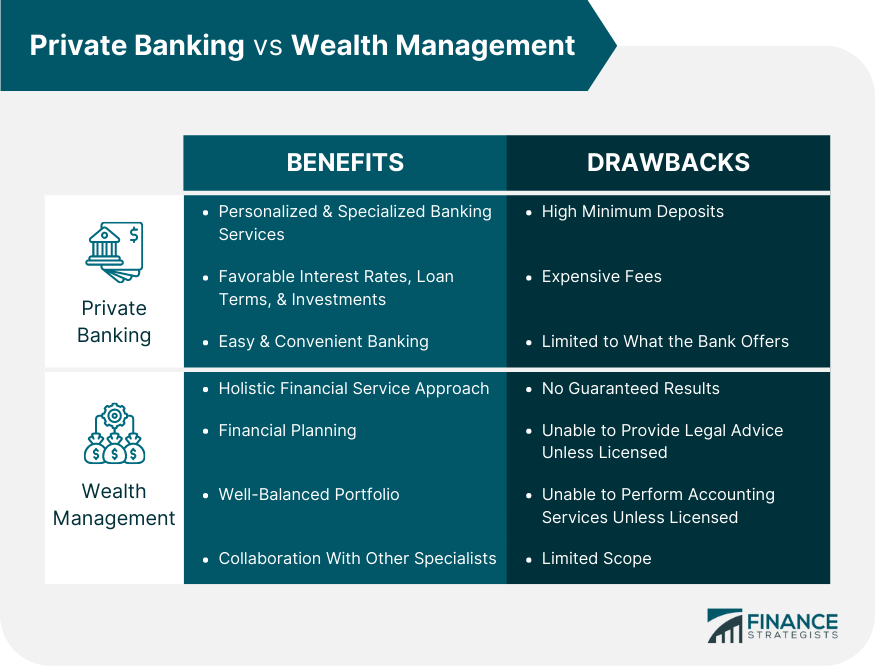
Traditional retail banking offers transactional services such as checking accounts, savings accounts, and basic loans. Private banking, while offering a more personalized experience, often focuses on credit solutions, deposits, and some basic investment products for affluent clients. Wealth management, however, transcends these by offering a much deeper, more holistic, and advisory relationship. It moves beyond product sales to provide strategic financial planning that encompasses the entirety of a client’s financial universe, not just their banking needs. It doesn’t merely facilitate transactions; it designs and implements comprehensive financial strategies.
The Role of the Wealth Manager
Unlike a bank teller or a loan officer, a wealth manager is a dedicated financial advisor who acts as a fiduciary, meaning they are legally obligated to act in the best interests of their clients. They are not merely selling financial products but providing ongoing advice, guidance, and strategic oversight. This involves developing a deep understanding of a client’s life goals, values, and risk profile. The relationship is long-term and consultative, evolving as a client’s life circumstances and financial objectives change. The wealth manager often coordinates with other professionals, such as attorneys, accountants, and insurance brokers, to provide a seamless and integrated client experience.
Holistic and Integrated Approach
The most significant differentiator is the truly holistic and integrated nature of wealth management. While other banking services might address individual financial needs (e.g., a mortgage, an investment account), wealth management integrates all these elements into a cohesive strategy. It considers how investment decisions impact tax liabilities, how estate plans align with philanthropic goals, and how insurance policies protect against identified risks. This unified approach ensures that all financial decisions work in harmony towards achieving a client’s overarching financial objectives, avoiding siloed planning that can lead to inefficiencies or missed opportunities.
The Benefits of Professional Wealth Management
Engaging with professional wealth management services offers numerous tangible and intangible benefits that can significantly enhance a client’s financial trajectory and overall well-being.
Achieving Financial Goals
Perhaps the most direct benefit is the increased likelihood of achieving complex financial goals. Whether it’s securing a comfortable retirement, funding higher education, establishing a charitable foundation, or planning for a significant wealth transfer, a wealth manager provides the expertise and strategic roadmap to turn these aspirations into reality. Their systematic approach helps clients stay on track and make informed decisions that align with their objectives.
Peace of Mind and Reduced Stress
Navigating the intricacies of financial markets, tax laws, and estate planning can be overwhelming and stressful. By entrusting their financial future to a professional wealth manager, clients gain invaluable peace of mind. They can rest assured that their assets are being managed strategically, risks are being mitigated, and their long-term financial security is a priority. This allows clients to focus their time and energy on their careers, families, and personal passions, knowing their financial affairs are in capable hands.
Optimized Returns and Risk Mitigation
Professional wealth managers possess deep market knowledge, access to advanced analytical tools, and a disciplined approach to investing. This expertise often leads to optimized investment returns tailored to a client’s specific risk profile, outperforming what many individuals might achieve on their own. Concurrently, their rigorous risk management strategies help protect wealth from market volatility and unforeseen events, ensuring a more stable and resilient financial journey.
Tax Efficiency and Estate Preservation
Through proactive tax planning and sophisticated estate strategies, wealth managers help clients significantly reduce their tax liabilities and preserve more of their wealth for future generations. They identify opportunities to minimize income, capital gains, and estate taxes, ensuring that a greater portion of assets remains within the family or designated beneficiaries, rather than being eroded by taxation.

Adaptability to Life Changes
Life is dynamic, and financial plans must be equally adaptable. Wealth management is an ongoing process that accounts for life’s inevitable changes—career shifts, family expansions, health issues, or economic downturns. A dedicated wealth manager regularly reviews and adjusts the financial plan to reflect new circumstances, ensuring that strategies remain relevant and effective throughout a client’s lifetime and beyond. This dynamic planning provides flexibility and resilience, allowing clients to navigate life’s transitions with financial confidence.
In conclusion, wealth management in banking is a comprehensive, client-centric service designed to manage, grow, and preserve the financial well-being of affluent individuals and families. By integrating investment management, financial planning, estate planning, tax planning, and risk management, wealth managers provide a holistic and strategic approach that goes far beyond traditional banking. It offers personalized expertise, peace of mind, and a clear path toward achieving complex financial goals, ultimately empowering clients to build and sustain a lasting legacy for themselves and future generations.
aViewFromTheCave is a participant in the Amazon Services LLC Associates Program, an affiliate advertising program designed to provide a means for sites to earn advertising fees by advertising and linking to Amazon.com. Amazon, the Amazon logo, AmazonSupply, and the AmazonSupply logo are trademarks of Amazon.com, Inc. or its affiliates. As an Amazon Associate we earn affiliate commissions from qualifying purchases.