
In the realm of modern technology, from the fiber optic cables buried beneath our oceans to the invisible signals enabling 5G connectivity, the concept of “wavelength” is a fundamental pillar. When we ask, “What is wavelength measured in?” we are not just looking for a simple unit of length; we are inquiring about the metric that defines the capacity, speed, and efficiency of our global digital infrastructure.
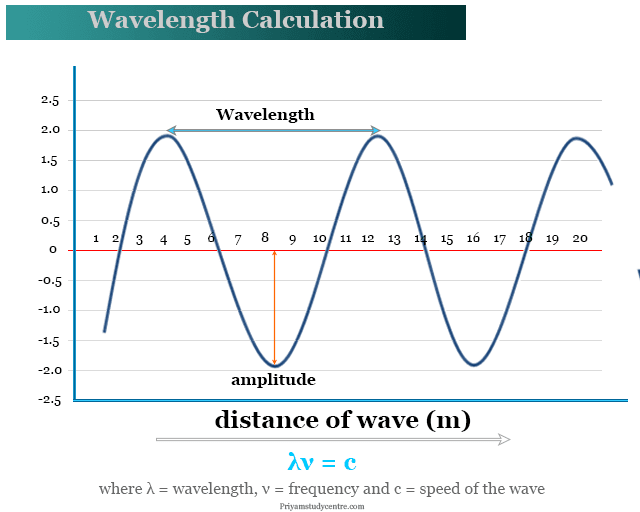
In technical terms, wavelength is the distance between successive crests of a wave, particularly electromagnetic waves. In the tech industry, measuring this distance with extreme precision is the difference between a high-speed broadband connection and a complete signal failure. To understand how our digital world functions, we must explore the specific units of measurement used across different technological sectors and why these microscopic distances matter.
The Physics of Data: Understanding Metric Units in Telecommunications
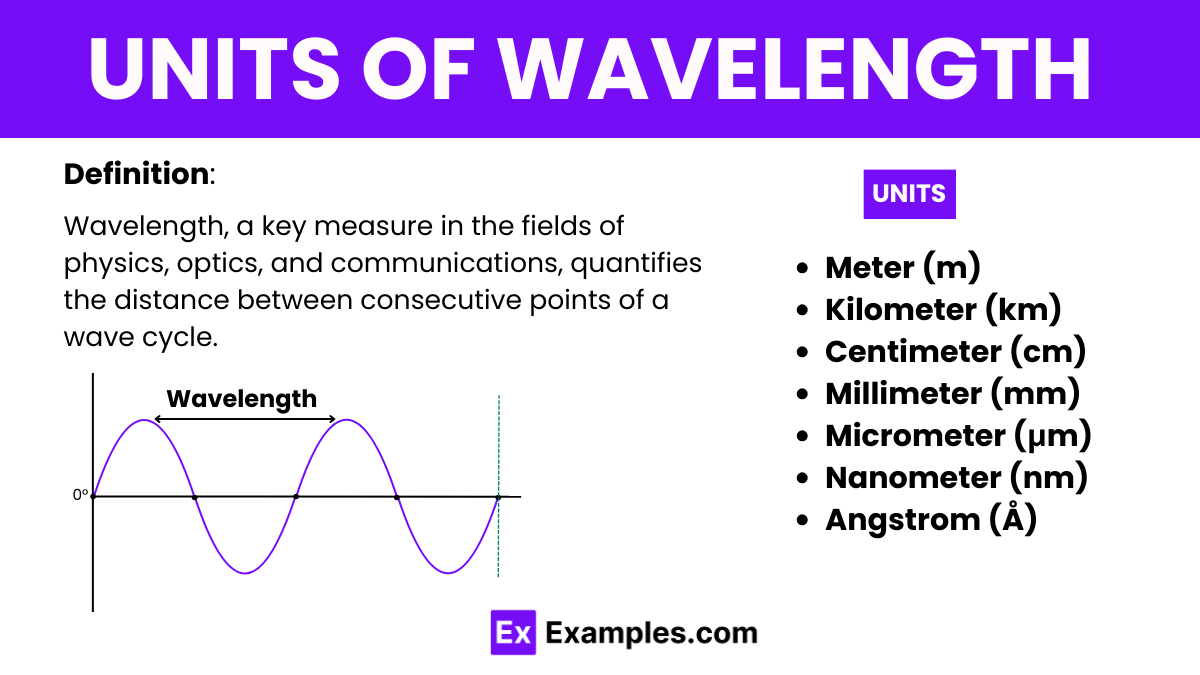
At its most basic level, wavelength is a measure of distance, and therefore, it is measured using the International System of Units (SI). However, because the spectrum of technology ranges from massive radio towers to microscopic computer chips, the scale of these measurements varies significantly.
Meters and Centimeters: The World of Radio and Satellite
For long-range communication, such as traditional radio broadcasting and satellite signals, wavelengths are often measured in meters (m) or centimeters (cm). Lower-frequency signals have longer wavelengths. For example, a radio station broadcasting at 100 MHz has a wavelength of approximately three meters. In the tech world, these measurements are critical for engineers designing antennas; the physical size of an antenna must often be a specific fraction of the wavelength it is intended to receive.
Millimeters: The 5G and Radar Frontier
As we push for higher data speeds, we move into the “millimeter wave” (mmWave) spectrum. As the name suggests, these wavelengths are measured in millimeters (mm), typically ranging from 1mm to 10mm. This is the technology powering the fastest tiers of 5G networking. By using smaller wavelengths, tech providers can pack more data into the signal, though these shorter waves have a harder time penetrating physical obstacles like walls or trees.
Nanometers: The Gold Standard for Fiber Optics
In the world of high-speed internet and data centers, the most common unit of measurement for wavelength is the nanometer (nm). One nanometer is one-billionth of a meter. Fiber optic communication primarily operates in the infrared spectrum, with standard wavelengths like 850nm, 1310nm, and 1550nm. These specific measurements are chosen because they represent “windows” where glass fiber has the lowest light attenuation, allowing data to travel hundreds of miles without losing integrity.
The Role of Wavelength in Networking and Signal Transmission
Understanding what wavelength is measured in allows engineers to manipulate the electromagnetic spectrum to maximize bandwidth. In networking, the relationship between wavelength and frequency is inverse: as the wavelength gets shorter, the frequency (and usually the data-carrying capacity) gets higher.
Wi-Fi and the Gigahertz Spectrum
Standard consumer tech, such as Wi-Fi routers, operates on 2.4 GHz, 5 GHz, and now 6 GHz frequencies. While we often discuss these in terms of frequency (Hertz), their corresponding wavelengths are measured in centimeters. A 2.4 GHz signal has a wavelength of about 12.5 cm. This measurement is crucial for “MIMO” (Multiple Input, Multiple Output) technology in modern routers, where multiple antennas are spaced precisely to manage these wavelengths and reduce interference.
5G Technology and the mmWave Revolution
The transition from 4G to 5G represented a massive shift in how we measure and utilize wavelength. 4G largely relied on “sub-6 GHz” bands with wavelengths in the decimeter range. 5G, however, introduced mmWave technology. Because these wavelengths are so small (measured in millimeters), the hardware required to transmit them—small cells—can be much smaller than traditional cell towers. However, the precision required to measure and beam-form these signals is significantly higher, requiring advanced AI-driven software to track the “spatial” location of the wavelength as it interacts with the environment.
Wavelength Precision in Digital Security
Interestingly, wavelength measurement even plays a role in digital security and hardware integrity. Optical PUFs (Physical Unclonable Functions) use the scattering of specific light wavelengths through a unique medium to create a digital “fingerprint” for a chip. If the wavelength measurement deviates by even a fraction of a nanometer, the security key will not validate, providing a hardware-level layer of protection against spoofing.
WDM and Optical Computing: Scaling the Future of Tech
As global data consumption explodes due to AI and cloud computing, the tech industry has had to find ways to send more data through existing infrastructure. This is achieved through a technology called Wavelength Division Multiplexing (WDM).
Wavelength Division Multiplexing (WDM)
WDM is a technology that multi-plexes a number of optical carrier signals onto a single optical fiber by using different wavelengths (colors) of laser light. Think of it like a highway: if a single wavelength is one lane, WDM allows us to add 80 or 160 lanes to the same physical cable. Each “lane” is measured in nanometers, often with a spacing of just 0.8nm or 0.4nm between channels.
Dense Wavelength Division Multiplexing (DWDM)
In enterprise-level networking, DWDM is the gold standard. It requires incredibly precise measurement and stabilization of wavelengths. If a laser’s wavelength drifts by even a tiny fraction of a nanometer due to temperature changes, it can “bleed” into the next channel, causing massive data corruption. This is why high-end networking hardware includes sophisticated cooling systems and wavelength lockers to ensure the measurement stays constant.
The Shift Toward Optical Computing
The next frontier in tech is the transition from electronic computing to photonic (optical) computing. Instead of electrons moving through copper traces, these computers use photons moving through silicon waveguides. In this field, measuring the wavelength is the equivalent of measuring voltage in a traditional circuit. The ability to manipulate wavelengths at the picometer (one-trillionth of a meter) scale is currently being researched to create processors that are 1,000 times faster than current silicon chips.
Beyond Cables: Wavelength Measurement in Sensors and AI Hardware
The measurement of wavelength extends far beyond just communication; it is a critical component in the hardware that allows machines to “see” and “sense” the world.
LiDAR and Autonomous Systems
LiDAR (Light Detection and Ranging) is the “eyes” of autonomous vehicles and advanced drones. These systems pulse lasers and measure the time it takes for the light to bounce back. Most LiDAR systems operate at a specific wavelength, typically 905nm or 1550nm. The 1550nm wavelength is particularly popular in high-end tech because it is “eye-safe” and can be measured with high precision over long distances, allowing a self-driving car to detect an object 200 meters away with centimeter-level accuracy.
Spectroscopy and AI Diagnostics
In the medical tech and material science sectors, wavelength measurement is used in spectroscopy. By shining a range of wavelengths through a substance and measuring which ones are absorbed, AI-powered tools can identify chemical compositions instantly. Whether it is a wearable device measuring blood oxygen levels (using red and infrared wavelengths) or an industrial sensor checking for impurities in manufacturing, the precise measurement of the light’s wavelength is the core data point.
Quantum Key Distribution (QKD)
In the cutting-edge field of Quantum Networking, the measurement of individual photons—and their corresponding wavelengths—is used to create unhackable communication lines. Quantum Key Distribution relies on the properties of light at specific wavelengths to ensure that if an eavesdropper attempts to intercept the signal, the physical state of the wavelength changes, immediately alerting the system to the breach.
Conclusion: The Precision of the Invisible
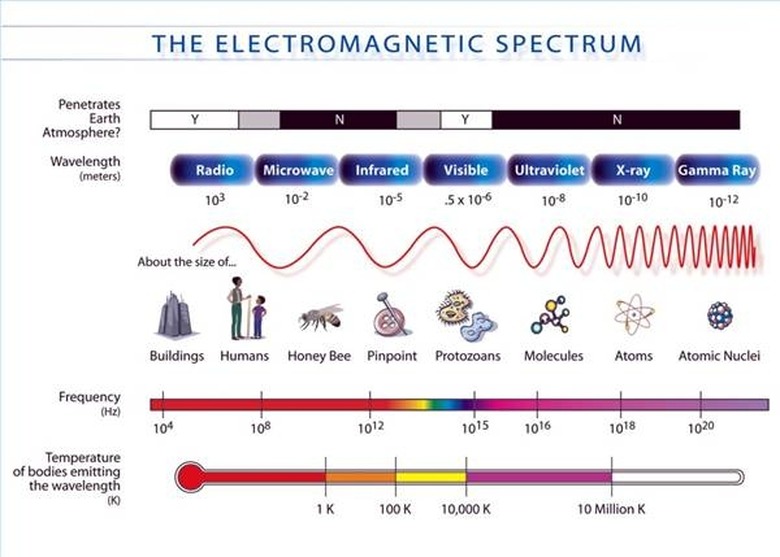
What is wavelength measured in? While the literal answer involves meters, millimeters, and nanometers, the technological answer is much broader. Wavelength measurement is the language of modern connectivity. It is the metric that defines how we partition the electromagnetic spectrum to ensure that billions of devices can communicate simultaneously without interference.
As we look toward the future—6G networking, quantum computing, and AI-driven robotics—the precision of these measurements will only become more vital. In a world that demands ever-increasing speeds and lower latency, the ability to measure and manipulate the smallest fractions of a meter is the most powerful tool in the technology industry’s arsenal. Understanding these measurements is not just a lesson in physics; it is a roadmap of how the digital future is being built, one nanometer at a time.
aViewFromTheCave is a participant in the Amazon Services LLC Associates Program, an affiliate advertising program designed to provide a means for sites to earn advertising fees by advertising and linking to Amazon.com. Amazon, the Amazon logo, AmazonSupply, and the AmazonSupply logo are trademarks of Amazon.com, Inc. or its affiliates. As an Amazon Associate we earn affiliate commissions from qualifying purchases.