
Water is often categorized as a fundamental utility, but the technology required to manage its chemical composition within a modern household is a sophisticated feat of chemical and mechanical engineering. For those living in regions plagued by “hard water,” a water softener system is not just an appliance; it is a critical piece of home technology designed to protect infrastructure and optimize the efficiency of other household gadgets.
This article explores the intricate technology behind water softener systems, examining the science of ion exchange, the evolution of digital control units, and the integration of smart home features into modern water treatment solutions.
The Core Technology: Ion Exchange and Chemical Engineering
At the heart of a traditional water softener system lies a process known as ion exchange. This is a scientific methodology that addresses the presence of excessive minerals—primarily calcium and magnesium—which characterize hard water. While these minerals are not harmful to human health, their presence in high concentrations leads to scale buildup in pipes, reduced efficiency in heating elements, and the degradation of electronic sensors in high-end appliances like dishwashers and smart laundry machines.
The Science of Hard Water
To understand the solution, one must first understand the technical problem. Hard water contains positively charged ions of calcium (Ca2+) and magnesium (Mg2+). When this water is heated or evaporates, these ions precipitate, forming a hard, rocky deposit known as limescale. From a technical standpoint, this scale acts as an insulator, forcing water heaters to work harder and eventually causing mechanical failure.
How the Ion Exchange Process Works
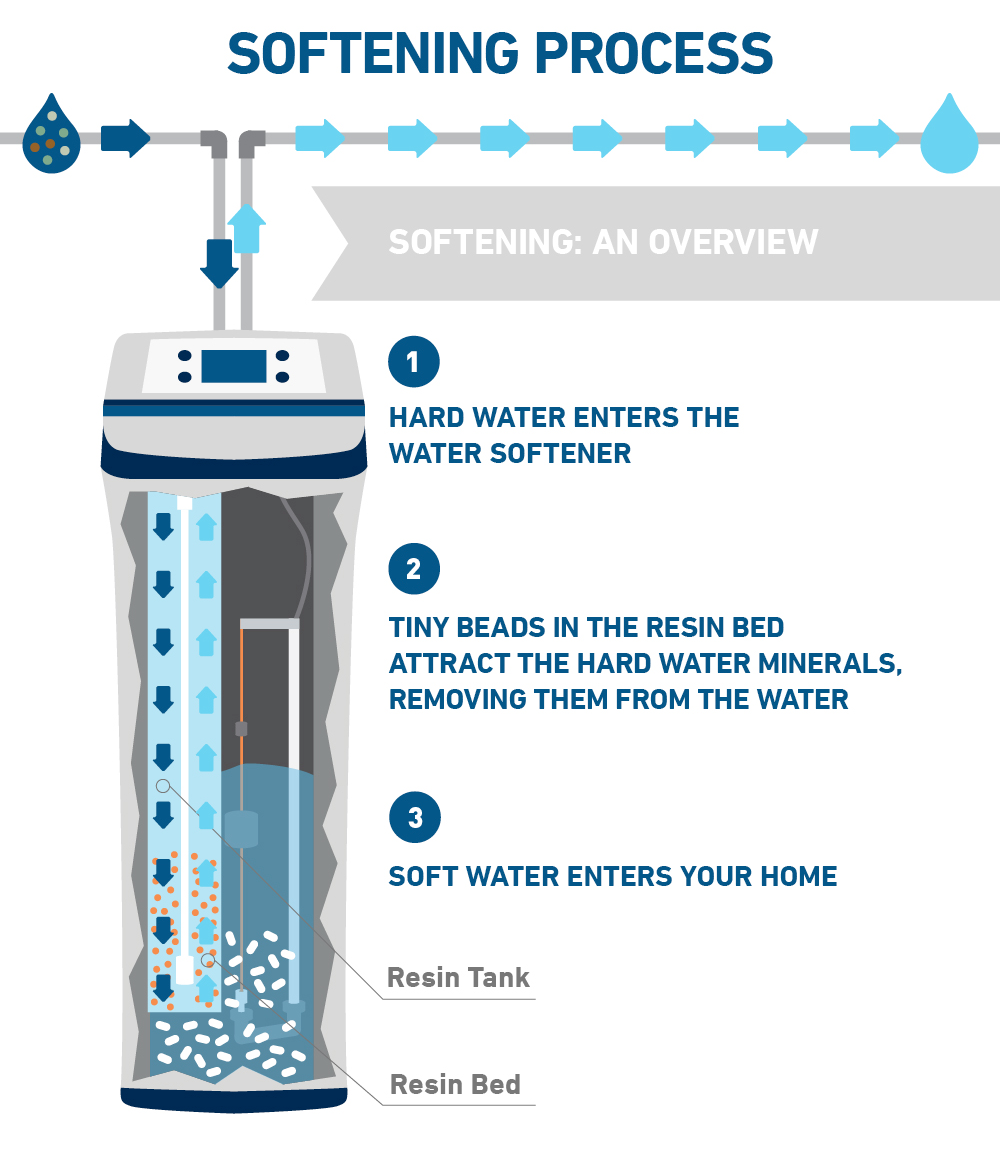
The water softener operates as a chemical reactor. Inside the mineral tank are thousands of tiny, polystyrene resin beads. These beads are negatively charged and are initially pre-loaded with sodium or potassium ions, which carry a weaker positive charge than calcium or magnesium.
As hard water flows through the resin bed, the stronger positive charge of the calcium and magnesium ions causes them to be attracted to the resin beads. In a technical “swap,” the resin releases the weaker sodium ions into the water and captures the hardness minerals. This chemical substitution ensures that the water exiting the system is “soft,” meaning it is free of the heavy minerals that cause scaling.
Anatomy of the Machine: Components and Mechanics
A water softener is a multi-component system that requires precise mechanical synchronization to function effectively over a lifespan of 10 to 15 years. Understanding the hardware is essential for anyone looking to integrate this technology into their home infrastructure.
The Mineral Tank and Resin Bed
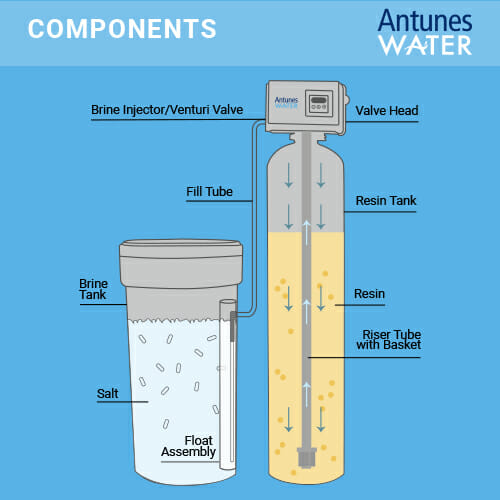
The mineral tank is the primary vessel where the filtration occurs. It is usually constructed from high-density polyethylene or fiberglass to withstand constant pressure and chemical exposure. The resin bed within this tank is the “engine” of the system. The quality of the resin—often measured by its cross-link percentage—determines how long the system can operate before the media degrades. Higher-quality 10% cross-linked resins are the gold standard in modern systems due to their resistance to chlorine degradation.
The Brine Tank and the Regeneration Cycle
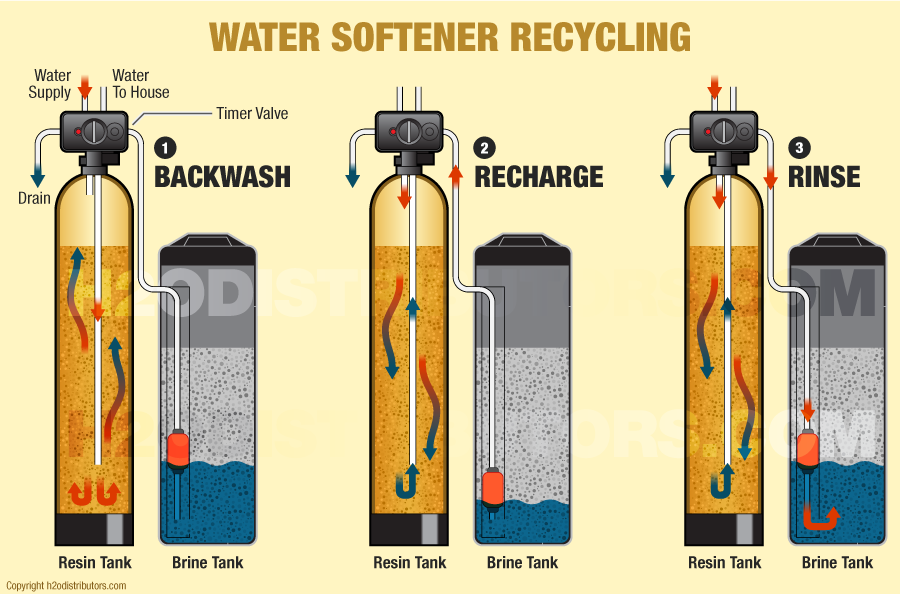
The brine tank is a secondary reservoir that holds a concentrated solution of salt (sodium chloride) or potassium chloride. This tank is essential for the “regeneration” phase. Once the resin beads in the mineral tank are saturated with calcium and magnesium, they can no longer soften water.
The system then initiates a regeneration cycle, which is a four-step mechanical process:
-
Backwash: Water is pumped through the tank in reverse to flush out dirt and debris.
-
Brine Draw: The concentrated salt solution is pulled into the mineral tank. The high concentration of sodium forces the calcium and magnesium off the resin beads.
-
Rinse: The tank is rinsed to remove the excess salt and the liberated hardness minerals, which are flushed down the drain.
-
Refill: The brine tank is replenished with water to create a new batch of brine for the next cycle.
The Control Valve: The Brain of the System
The most technologically advanced component of a water softener is the control valve, located at the top of the mineral tank. Modern control valves are essentially specialized computers. Older systems used simple mechanical timers to trigger regeneration every few days, regardless of water usage. This was inefficient and wasteful.
Modern digital control valves use “demand-initiated regeneration” (DIR). They feature digital flow meters that track every gallon of water used in the home. When the system detects that the resin capacity is nearing exhaustion, it schedules a regeneration cycle. This data-driven approach saves significant amounts of water and salt, representing a major leap in appliance efficiency.
Smart Water Softeners: The Rise of IoT in Home Utilities
As with most modern gadgets, the water softener has entered the era of the Internet of Things (IoT). Manufacturers are now integrating wireless connectivity and advanced sensor arrays into their systems, transforming a passive appliance into an interactive smart home component.
Integration with Mobile Apps and Wi-Fi
The latest generation of water softeners features built-in Wi-Fi modules. This allows homeowners to monitor their system’s health via a smartphone app. These apps provide real-time data on daily water consumption, flow rates, and the remaining “softening capacity” before the next cycle.
From a technical security and maintenance standpoint, these apps can send “Low Salt” alerts to the user’s phone, preventing the system from failing due to empty brine tanks. Some high-end models even allow for remote troubleshooting, where technicians can log into the system’s diagnostic cloud to identify errors without a physical site visit.
Data Tracking and Leak Detection
Beyond just softening water, smart systems are becoming proactive home monitors. By analyzing flow patterns, the control valve’s software can identify anomalies that suggest a leak—such as a running toilet or a burst pipe. If the system detects a continuous flow of water over a specific threshold, it can send an emergency alert or even trigger an automated shut-off valve if integrated into a broader smart home ecosystem. This crossover between water treatment and digital security is a growing trend in home tech.
Comparing Filtration Technologies: Salt-Based vs. Salt-Free
When discussing water softener technology, it is important to distinguish between traditional ion exchange and newer “salt-free” alternatives. While often marketed under the same umbrella, the engineering principles are vastly different.
Template Assisted Crystallization (TAC)
Salt-free “softeners” are technically water conditioners. They often use a technology called Template Assisted Crystallization (TAC). Instead of removing the minerals through ion exchange, TAC uses specialized media to convert dissolved calcium and magnesium into microscopic crystals. These crystals remain suspended in the water but are chemically inert, meaning they won’t stick to surfaces or form scale.
From a technological perspective, TAC systems are advantageous because they require no electricity, no drain line, and no salt. However, they do not provide the “slippery” feel of truly soft water and are less effective in environments with extremely high mineral content or high levels of iron.
Reverse Osmosis vs. Ion Exchange
While water softeners focus on minerals, some users opt for Reverse Osmosis (RO) systems. RO uses a semi-permeable membrane to remove up to 99% of all contaminants, including minerals. However, applying RO technology to a whole-house system is technically complex and energy-intensive. Most modern smart homes use a hybrid approach: a whole-house ion exchange softener to protect the plumbing, followed by a point-of-use RO system at the kitchen sink for ultra-pure drinking water.
Maintenance and Technical Optimization
To ensure a water softener system operates at peak efficiency, technical maintenance is required. This goes beyond just adding salt; it involves understanding the system’s calibration and the health of its chemical media.
Optimizing Performance through Tech Calibration
A water softener must be programmed with the specific “hardness grains per gallon” (GPG) of the local water supply. If this setting is incorrect, the system will either regenerate too often (wasting resources) or not often enough (allowing hard water into the home). Advanced systems now include automated sensors that can test the water hardness in real-time and adjust the regeneration frequency dynamically—a feature known as “auto-calibration.”
Troubleshooting and System Longevity
The primary technical failure points in a water softener include “salt bridging” (where a hard crust forms in the brine tank, preventing the salt from dissolving) and resin fouling. Resin fouling occurs when iron or manganese coats the beads, preventing ion exchange. Technical solutions for this include “resin cleaners”—chemical additives that strip the iron from the beads during the regeneration cycle.
Furthermore, the mechanical seals within the control valve are subject to wear. High-end systems utilize ceramic discs rather than rubber seals, as ceramics are virtually immune to the abrasive effects of mineral particles and chlorine, significantly extending the system’s operational lifespan.
Conclusion: The Future of Residential Water Tech
The “what” of a water softener system is more than just a salt tank in a basement; it is a sophisticated marriage of chemical engineering and digital automation. As we move toward more sustainable home technologies, the focus of water softener innovation is shifting toward high-efficiency designs that minimize salt discharge and water waste.
From the molecular precision of ion exchange to the digital oversight provided by IoT integration, the water softener is a prime example of how specialized technology can solve environmental challenges at a household level. For the modern consumer, investing in a high-quality, digitally controlled softener is not just about preventing spots on glassware—it is about utilizing advanced engineering to protect and optimize the entire technological infrastructure of the home.
aViewFromTheCave is a participant in the Amazon Services LLC Associates Program, an affiliate advertising program designed to provide a means for sites to earn advertising fees by advertising and linking to Amazon.com. Amazon, the Amazon logo, AmazonSupply, and the AmazonSupply logo are trademarks of Amazon.com, Inc. or its affiliates. As an Amazon Associate we earn affiliate commissions from qualifying purchases.