
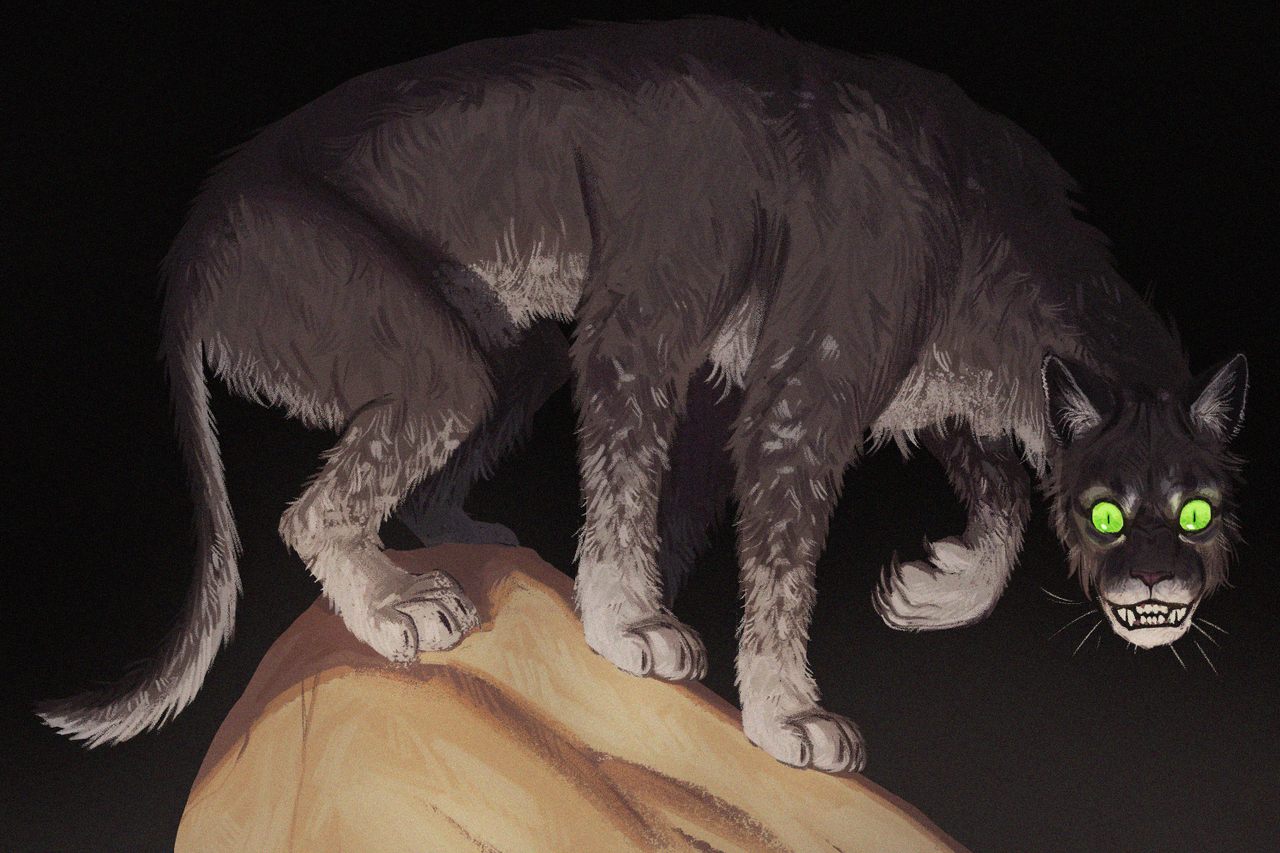
In the rich tapestry of American folklore, the Wampus Cat stands as a creature of mystery and formidable power—a fearsome, cat-like beast with a gaze that can bewitch and a presence that commands respect, or dread. While its origins lie in Appalachian tales of shapeshifting and vengeance, its essence as an elusive, powerful, and often misunderstood entity provides a surprisingly potent metaphor for certain aspects of the modern technological landscape. In an industry defined by relentless innovation and rapid change, there exist “Wampus Cats”—those foundational, complex, or hidden elements that shape our digital world, often operating in the background, defying easy categorization, and demanding a deeper understanding from those who seek to master technology.

This article delves into what the “Wampus Cat” represents in the realm of technology. It’s not a physical entity, nor a specific piece of software or hardware, but rather a symbolic representation of the elusive challenges, deep-seated complexities, and critical, often-overlooked foundations that every tech professional eventually encounters. From the legacy systems that underpin our digital infrastructure to the subtle bugs that evade detection, and the foundational algorithms that silently power our daily lives, understanding the “Wampus Cat” is crucial for building resilient, efficient, and secure technological futures.
The Wampus Cat as a Metaphor in the Digital Realm
The leap from Appalachian folklore to the digital frontier might seem unconventional, yet the symbolic resonance of the Wampus Cat perfectly encapsulates certain phenomena within technology. Just as the mythical creature is often heard before it’s seen, or felt through its impact rather than direct observation, so too are many of the profound forces at play in our digital ecosystems.
From Folklore to Firmware: A Symbolic Bridge
Why employ a mythical beast to describe elements of technology? The answer lies in the shared characteristics. A Wampus Cat, in its original lore, is not just a monster; it’s a force of nature, an entity steeped in tradition and mystery, capable of influencing events from the shadows. Similarly, within technology, there are aspects that:
-
Are foundational yet obscure: Like ancient myths, some technological principles or systems are so deeply embedded they become invisible, assumed rather than understood by newer generations.
-
Exhibit powerful, sometimes unpredictable effects: A lurking Wampus Cat could cause unexpected trouble. In tech, this translates to systems with emergent behaviors, cascading failures, or performance bottlenecks that appear without obvious cause.
-
Require specialized knowledge to understand or “tame”: Just as a folkloric creature might require specific rituals or knowledge to interact with, certain tech challenges demand deep expertise, historical context, or complex analytical skills.
-
Are often the subject of legend and speculation: Think of stories about “that old system nobody dares touch” or “the legendary bug that cost millions.” These tales circulate, sometimes with exaggeration, building a mystique around the underlying issue.
By viewing these challenging aspects through the lens of the Wampus Cat, we gain a framework for discussing complex, abstract problems with a vivid, memorable analogy.
Identifying the Digital Shadows: What Does the Wampus Cat Represent?
In a practical sense, the “Wampus Cat” in technology can manifest as several distinct, yet interconnected, concepts:
-
Deeply Embedded Legacy Systems: These are the ancient mainframes, the decades-old databases, or the arcane codebases that continue to power critical operations, often with minimal documentation or current expertise. They are powerful, indispensable, yet notoriously difficult to modify or integrate with modern systems.
-
Elusive, Intermittent Bugs: The kind of software defects that appear sporadically, defy reproduction, and seem to vanish as soon as a debugger is attached. They haunt developers, consuming countless hours and often leading to frustratingly vague resolutions.
-
Critical but Overlooked Foundational Algorithms and Protocols: The fundamental mathematical principles, networking protocols (like TCP/IP), or data structures that form the very bedrock of the internet and modern computing. Their existence is often taken for granted until a vulnerability is discovered or an edge case breaks the system.
-
Complex Interoperability Issues: When disparate systems, built at different times with different technologies, struggle to communicate, creating unpredictable data flows, synchronization problems, or performance bottlenecks that are hard to trace.
-
Pervasive but Subtle Security Vulnerabilities: Not the headline-grabbing breaches, but the long-standing, architectural flaws, misconfigurations, or subtle logical errors that create persistent attack vectors, often unnoticed until exploited.
These are the “Wampus Cats” of our digital infrastructure—powerful, often unseen, and capable of wreaking havoc if not understood and respected.
Hunting the Elusive: Examples of the “Wampus Cat” in Practice
To make the metaphor concrete, let’s explore specific examples where the “Wampus Cat” manifests in real-world technological scenarios. Understanding these manifestations is the first step towards effectively addressing them.
Legacy Systems and Technical Debt: The Roar of the Past
Perhaps the most common and potent form of the Wampus Cat is the legacy system coupled with its inseparable shadow, technical debt. Imagine an enterprise application built 20 years ago, written in a now-obsolete programming language, running on hardware no longer manufactured, and maintained by a shrinking handful of engineers who remember its origins. This system, despite its age, might still be processing millions of critical transactions daily.
-
The Wampus Cat’s Roar: Attempts to upgrade, integrate, or even fully comprehend such a system are fraught with peril. A single change could trigger unforeseen dependencies, break undocumented features, or lead to catastrophic downtime. Its “roar” is heard in the groans of developers grappling with convoluted code, the mounting costs of specialized maintenance, and the inability to quickly innovate due to its rigid constraints.
-
Technical Debt: Each workaround, each quick fix, each deferral of proper re-engineering adds to this debt, accumulating interest in the form of slower development cycles, increased defect rates, and heightened operational risk. It’s the invisible weight dragging down progress, a beast silently consuming resources.
The Ghost in the Machine: Persistent Bugs and Unforeseen Interactions
Every software engineer has encountered the Wampus Cat in the form of an elusive, intermittent bug. These are defects that defy easy replication. They might occur only under specific, rare load conditions, after a precise sequence of user actions, or only on certain hardware configurations.
-
The Wampus Cat’s Disguise: This bug might crash a system once a month, subtly corrupt data packets during peak traffic, or cause a memory leak that slowly degrades performance over days. It seems to appear and disappear at will, mocking attempts at traditional debugging. Developers spend countless hours setting up elaborate logging, tracing execution paths, and trying to recreate the exact conditions—often without success. The bug becomes a “ghost in the machine,” a legend among the team, its very existence doubted by those who haven’t directly experienced its bite.
-
Unforeseen Interactions: In complex, distributed systems, the Wampus Cat can also emerge from the unpredictable interactions between seemingly unrelated components. A change in one microservice might subtly alter the behavior of another, leading to a cascade of errors that no single team can easily diagnose.
Foundational Algorithms and Protocols: The Invisible Pillars
Below the visible layers of applications and user interfaces lie the true “bones” of our digital world: the foundational algorithms and communication protocols. These are the principles that dictate how data is transmitted, secured, and processed at the most fundamental levels—think TCP/IP, DNS, core cryptographic algorithms, or database indexing strategies.
-
The Wampus Cat’s Silent Watch: These elements are the Wampus Cat because they are often taken for granted. They work so reliably, so universally, that their intricate workings are rarely scrutinized by the average developer. Yet, when a flaw is discovered (e.g., a critical vulnerability in a widely used encryption standard, or a subtle inefficiency in a routing protocol), the impact can be global and catastrophic.
-
The Pillars of the Internet: Entire industries rest upon these “invisible pillars.” Any significant issue with them—whether it’s a security flaw, a performance bottleneck that was unforeseen at scale, or an architectural limitation—can trigger a massive scramble across the tech world, forcing widespread updates and re-architecting efforts. They are powerful forces, usually benevolent, but capable of immense disruption if their hidden complexities are not understood and continuously validated.
Taming the Beast: Strategies for Tech Professionals
Acknowledging the “Wampus Cat” in our systems is the first step; the next is developing strategies to understand, manage, and ultimately tame these elusive challenges. This requires a blend of technical prowess, strategic planning, and a commitment to continuous learning.
Deep System Archaeology: Unearthing Hidden Complexity
Confronting the Wampus Cat of legacy systems and deeply embedded logic often requires a form of digital archaeology. This isn’t just about reading code; it’s about understanding the historical context, design decisions, and original constraints that shaped the system.
-
Comprehensive Documentation and Knowledge Transfer: Investing in thorough documentation—not just what the code does, but why it was built that way—is paramount. For older systems, actively working to extract knowledge from long-serving team members before they retire is critical.
-
Code Review and Static Analysis: Regular, in-depth code reviews can uncover subtle interactions and architectural assumptions. Automated static analysis tools can help identify potential issues, vulnerabilities, or areas of high complexity that might otherwise remain hidden.
-
Architectural Deep Dives: Periodically conducting sessions dedicated to mapping out system architecture, dependencies, and data flows, particularly for core services, helps reveal the “hidden layers” where Wampus Cats often lurk.
Incremental Modernization and Refactoring: Chipping Away at the Myth
For legacy Wampus Cats, a “big bang” replacement is often too risky or costly. A more pragmatic approach is incremental modernization and continuous refactoring.
-
Strangler Fig Pattern: This architectural pattern involves gradually replacing parts of a monolithic legacy system with new, modern services. Over time, the new services “strangle” the old one, until the legacy system is no longer needed. This allows for controlled risk management and continuous delivery of value.
-
Targeted Refactoring: Instead of rewriting everything, identify the most problematic or critical components within the Wampus Cat system and refactor them in isolation. This reduces technical debt in manageable chunks, improving maintainability and performance piece by piece.
-
API-First Approach: Encapsulate legacy functionalities behind modern APIs. This creates a clean interface for new applications, decoupling them from the intricacies of the old system while the underlying “Wampus Cat” can be modernized separately.
Robust Monitoring and Observability: Setting Traps for the Wampus Cat
To catch an elusive Wampus Cat (like intermittent bugs or performance issues), you need sophisticated traps. This comes in the form of advanced monitoring and observability tools and practices.
-
Distributed Tracing: Tools that allow you to follow a single request as it traverses multiple services and components are invaluable for understanding complex interactions and pinpointing bottlenecks or errors.
-
Comprehensive Logging and Metrics: Beyond basic error logs, collecting detailed metrics on system performance, resource utilization, and business-specific events provides a rich tapestry of data. AI-powered analytics can help detect anomalies that might signal a lurking Wampus Cat.
-
Proactive Alerting: Setting up intelligent alerts based on deviations from normal behavior can help identify issues before they become critical, allowing teams to react to the “Wampus Cat’s” presence early.
-
Chaos Engineering: Deliberately introducing failures into a system in a controlled environment can help uncover hidden weaknesses and dependencies—the “Wampus Cats” that only emerge under stress.
The Enduring Presence: Why the Wampus Cat Continues to Roam
Even with the best strategies, the Wampus Cat will never be fully eradicated from the technological landscape. Its presence is, in many ways, an inherent byproduct of innovation and complexity.
The Cycle of Innovation and Obsolescence
Every new breakthrough eventually becomes part of the existing fabric, and over time, some of it will age into a new generation’s “legacy.” Today’s cutting-edge microservices architecture might be tomorrow’s Wampus Cat, as newer paradigms emerge. The relentless pace of technology ensures a continuous cycle where new solutions create new interdependencies, new complexities, and ultimately, new Wampus Cats. The very act of building creates the conditions for their emergence.

Cultivating Tech Literacy and Historical Awareness
Ultimately, dealing with the Wampus Cat requires not just technical skills but also a cultural shift within tech organizations. It’s about fostering tech literacy that extends beyond the latest frameworks, embracing a deeper understanding of foundational principles and system history. New engineers must be encouraged to understand not just how to build, but also what they are building upon. This includes:
-
Mentorship and Knowledge Sharing: Senior engineers have a critical role in passing down institutional knowledge and explaining the “why” behind complex systems.
-
Investing in Training: Continuous education that covers not just new technologies but also system architecture, design patterns, and debugging methodologies that help unpack existing complexities.
-
Valuing Maintainability and Understandability: Prioritizing clear code, good documentation, and robust testing over purely feature-driven development helps prevent new Wampus Cats from forming prematurely.
In conclusion, the Wampus Cat of technology is a powerful metaphor for the intricate, often hidden, and sometimes fearsome challenges that reside within our digital systems. It represents the legacy components that demand respect, the elusive bugs that test our patience, and the foundational elements that silently underpin our world. By recognizing these “beasts,” employing strategic approaches to understand and manage them, and cultivating a culture of deep technical literacy, we can not only tame the existing Wampus Cats but also navigate the complex technological wilderness more effectively, building a more resilient and understandable digital future.
aViewFromTheCave is a participant in the Amazon Services LLC Associates Program, an affiliate advertising program designed to provide a means for sites to earn advertising fees by advertising and linking to Amazon.com. Amazon, the Amazon logo, AmazonSupply, and the AmazonSupply logo are trademarks of Amazon.com, Inc. or its affiliates. As an Amazon Associate we earn affiliate commissions from qualifying purchases.