
In an era where digital transformation is no longer a luxury but a necessity for survival, the surface area for potential cyberattacks has expanded exponentially. Every new application, cloud instance, or IoT device added to an organization’s network introduces a potential gateway for malicious actors. To combat this, cybersecurity professionals rely on a fundamental proactive measure: vulnerability scanning.
Vulnerability scanning is the automated process of identifying, evaluating, and reporting security weaknesses in an organization’s IT infrastructure. Unlike reactive measures that focus on mitigating a breach after it has occurred, vulnerability scanning aims to find the “holes” in the fence before a burglar discovers them. This article provides an in-depth exploration of the technology, methodologies, and strategic importance of vulnerability scanning within the modern tech landscape.
The Mechanics of Vulnerability Scanning: How It Works
At its core, a vulnerability scanner is a specialized software tool that probes systems to find known security gaps. It operates like a digital inspector, checking the “locks” on every door and window of a network to ensure they are secure. The process is complex, involving several distinct phases to ensure comprehensive coverage.
Discovery and Probing
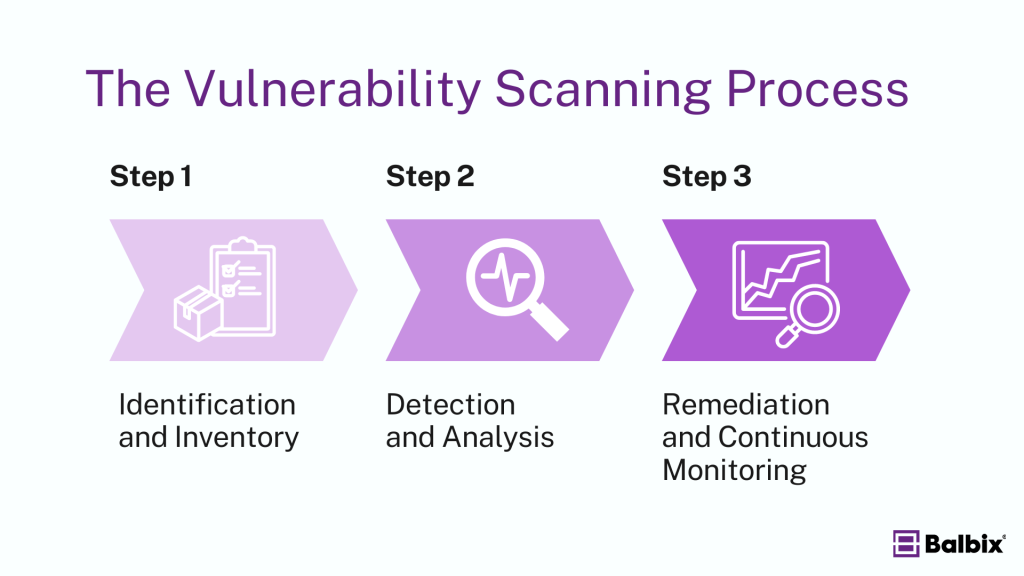
The first stage of any scan is discovery. The scanner sends out “pings” or packets of data to identify all active assets within a specific range. This includes servers, workstations, routers, switches, and even mobile devices connected to the network. Once the inventory is established, the scanner probes each asset to determine its operating system, the software versions it is running, and the open ports through which it communicates. This initial footprinting is crucial because you cannot protect what you do not know exists.
The Role of the Vulnerability Database
The true power of a scanner lies in its intelligence—specifically, its connection to a vulnerability database. These databases, such as the Common Vulnerabilities and Exposures (CVE) list or the National Vulnerability Database (NVD), are vast repositories of known security flaws. The scanner compares the data collected from the network assets against these databases. If a server is running an outdated version of Apache that is known to have a specific buffer overflow flaw, the scanner flags this as a vulnerability. Leading tech vendors frequently update these databases to include “zero-day” threats and newly discovered exploits.
Authenticated vs. Unauthenticated Scans
A critical technical distinction in vulnerability scanning is the difference between authenticated (credentialed) and unauthenticated (non-credentialed) scans. An unauthenticated scan views the network from the perspective of an external attacker. It searches for open ports and services that are visible from the outside.
Conversely, an authenticated scan uses provided login credentials to enter the system. This allows the scanner to see “inside” the machine, identifying issues like insecure local configurations, outdated internal software libraries, or weak password policies that an external scan would miss. For a robust security posture, organizations must utilize both methods to gain a 360-degree view of their risk.
Classifying Vulnerability Scanning: Exploring the Different Types
Vulnerability scanning is not a one-size-fits-all solution. Depending on what part of the tech stack needs protection, different specialized scanning tools are employed. Understanding these categories is essential for building a multi-layered defense.
Network-Based Vulnerability Scanning
This is the most common form of scanning. It focuses on identifying vulnerabilities in the network infrastructure itself. This includes misconfigured firewalls, vulnerable routers, and unsecured wireless access points. Network scans are vital for preventing unauthorized access to the data that flows between systems. They help IT teams ensure that the perimeter is hardened and that internal network segments are properly isolated.
Web Application Scanning (DAST)
Modern software often relies on web applications, which are prime targets for hackers. Dynamic Application Security Testing (DAST) scanners interact with a web application while it is running to find vulnerabilities like SQL injection, Cross-Site Scripting (XSS), and insecure direct object references. Because web applications are updated frequently, these scans must be integrated into the development lifecycle to ensure that new code doesn’t introduce new risks.
Host-Based and Cloud Scanning
While network scans look at the “traffic” and the “perimeter,” host-based scans look at the individual machines (hosts). These scanners analyze the configuration files, registry settings, and system patches of specific servers or workstations. In the modern tech environment, this has evolved into Cloud Security Posture Management (CSPM). Cloud-specific scanners check for misconfigurations in environments like AWS, Azure, or Google Cloud, such as publicly accessible S3 buckets or overly permissive Identity and Access Management (IAM) roles.
The Strategic Vulnerability Management Lifecycle
A vulnerability scan is not a “one-and-done” task. In high-stakes tech environments, it is part of a continuous cycle known as Vulnerability Management. Identifying a problem is only the first step; fixing it and ensuring it stays fixed is where the real value lies.

Identification and Classification
Once the scanner completes its run, it generates a report listing hundreds or even thousands of potential issues. The first task for a security team is classification. Not all vulnerabilities are created equal. Some may be “informational” (e.g., revealing a software version number), while others are “critical” (e.g., allowing remote code execution). Modern scanners use the Common Vulnerability Scoring System (CVSS) to provide a numerical score representing the severity of the flaw, helping teams categorize the data they’ve received.
Prioritization and Scoring (CVSS)
The “Scan-and-Patch” treadmill can be exhausting. To avoid “vulnerability fatigue,” tech leads must prioritize remediation. This involves looking at the CVSS score in context. For example, a “High” severity vulnerability on an internal printer may be less urgent than a “Medium” severity vulnerability on a customer-facing database server. Effective vulnerability management considers the asset’s value and the likelihood of exploitation. This strategic prioritization ensures that the team’s limited time is spent on the risks that pose the greatest threat to the business.
Remediation and Reporting
The final phase is remediation—applying the patch, changing the configuration, or updating the software. However, remediation is not always possible immediately due to compatibility issues or downtime requirements. In these cases, security teams might implement “compensating controls,” such as adjusting firewall rules to block the exploit path. Once the fix is applied, a follow-up scan (rescan) is conducted to verify that the vulnerability is indeed closed. This creates an audit trail that is essential for compliance and management reporting.
Why Vulnerability Scanning is Essential for Business Continuity
In the current tech landscape, a single unpatched server can lead to a ransomware attack that cripples an entire corporation. Vulnerability scanning serves as the backbone of a proactive security strategy, offering benefits that go far beyond simple technical checks.
Closing the Security Gap
The “Security Gap” is the time between the discovery of a new vulnerability and the moment it is patched. Hackers are incredibly fast; they often begin scanning the internet for vulnerable systems within hours of a new exploit being publicized. Automated vulnerability scanning allows organizations to shrink this gap by providing near real-time visibility into their weaknesses. By staying one step ahead of the threat actors, companies can prevent breaches before they occur.
Meeting Compliance and Regulatory Standards
For businesses operating in the tech sector, compliance is a major operational requirement. Regulations such as the Payment Card Industry Data Security Standard (PCI DSS), the General Data Protection Regulation (GDPR), and the Health Insurance Portability and Accountability Act (HIPAA) all mandate regular vulnerability assessments. Failure to conduct these scans can lead to massive fines, legal liabilities, and the loss of the ability to process payments. Scanning provides the documented proof required to show that an organization is taking “reasonable care” of its data.
Supporting the DevSecOps Framework
In the world of software development, the “DevSecOps” movement aims to integrate security into every stage of the software development lifecycle (SDLC). Vulnerability scanning is a key component of this. By integrating automated scanners into the Continuous Integration/Continuous Deployment (CI/CD) pipeline, developers can receive instant feedback if they introduce a vulnerable library or a dangerous configuration. This “shift-left” approach reduces the cost of fixing bugs and ensures that software is secure by design.
Implementation Best Practices: How to Optimize Your Scanning Strategy
Simply owning a scanner is not enough. To be effective, the tool must be implemented thoughtfully within the organization’s broader technology stack.
Frequency and Scheduling
How often should you scan? Weekly? Monthly? Quarterly? In a dynamic tech environment where new vulnerabilities are discovered daily, quarterly scanning is insufficient. High-risk environments often utilize continuous scanning, where the network is monitored in real-time for changes. At a minimum, critical systems should be scanned whenever a major change occurs in the infrastructure or when a significant new threat is announced by the cybersecurity community.
Managing False Positives
One of the biggest challenges in vulnerability scanning is the “false positive”—when a scanner reports a vulnerability that doesn’t actually exist or isn’t exploitable. Too many false positives can lead to security teams ignoring reports. To manage this, organizations should fine-tune their scanning profiles, use high-quality tools with low error rates, and occasionally conduct manual penetration testing to validate the findings of the automated scans.
Integrating with Incident Response
Vulnerability scanning should not exist in a vacuum. The data from the scanner should feed directly into the organization’s Security Information and Event Management (SIEM) system. This allows the security team to correlate “vulnerabilities” with “events.” For example, if the SIEM detects a suspicious login attempt on a server that the scanner recently flagged as having an unpatched vulnerability, the incident response team can prioritize that alert as a high-probability breach attempt.
The Future of Vulnerability Scanning
As we look forward, the technology behind vulnerability scanning is evolving. Artificial Intelligence (AI) and Machine Learning (ML) are being integrated into scanners to better predict which vulnerabilities are most likely to be exploited based on current threat intelligence. Furthermore, as organizations move toward “serverless” architectures and microservices, scanning technology is becoming more granular, focusing on container security and API endpoints.
Vulnerability scanning remains the most fundamental tool in the cybersecurity professional’s arsenal. By identifying the cracks in the digital foundation, organizations can build a more resilient and secure future. In a world where the question is often “when” rather than “if” a cyberattack will occur, knowing your weaknesses is your greatest strength.
aViewFromTheCave is a participant in the Amazon Services LLC Associates Program, an affiliate advertising program designed to provide a means for sites to earn advertising fees by advertising and linking to Amazon.com. Amazon, the Amazon logo, AmazonSupply, and the AmazonSupply logo are trademarks of Amazon.com, Inc. or its affiliates. As an Amazon Associate we earn affiliate commissions from qualifying purchases.