
In the vast and often complex world of investing, discerning the right vehicles for your financial goals can be a formidable challenge. Amidst the myriad of options—from individual stocks and bonds to mutual funds and exotic derivatives—Exchange Traded Funds (ETFs) have carved out a significant niche due to their accessibility, diversification, and often low costs. Among these, the Vanguard Total Stock Market Index Fund ETF, universally known by its ticker VTI, stands out as a foundational asset for many long-term investors.
VTI represents more than just another ticker symbol; it embodies a sophisticated yet remarkably simple investment philosophy: to own a piece of virtually every publicly traded company in the United States. This article will delve into what VTI investment entails, exploring its mechanics, benefits, potential considerations, and how it can serve as a cornerstone in a well-diversified investment portfolio. For anyone looking to build wealth systematically and efficiently, understanding VTI is an indispensable step.
Understanding VTI: An Overview of the Vanguard Total Stock Market Index Fund ETF
At its core, VTI is an Exchange Traded Fund designed to provide investors with broad exposure to the entire U.S. equity market. It’s not just a selection of large-cap companies; rather, it aims to capture the performance of small, mid, and large-capitalization companies proportionally to their market share. This comprehensive approach is what makes VTI a powerful tool for achieving widespread diversification within the domestic market.
What is VTI? The Vanguard Total Stock Market Index Fund ETF
VTI is an ETF offered by Vanguard, one of the largest and most respected investment management companies globally, known for its investor-centric approach and commitment to low-cost indexing. The fund’s objective is to track the performance of the CRSP US Total Market Index. This index comprises nearly all U.S. stocks, including mega-cap, large-cap, mid-cap, small-cap, and micro-cap companies, providing a holistic representation of the American stock market’s performance.
When you invest in VTI, you’re not just buying a single stock; you’re buying a tiny fraction of thousands of U.S. companies. As of early 2024, VTI holds over 3,700 different stocks, ranging from tech giants like Apple and Microsoft to much smaller, less-known companies across various industries. This breadth is a key differentiator from funds that focus solely on specific market segments or company sizes.
How VTI Works: Market-Cap Weighting and Index Tracking
The methodology behind VTI’s operation is rooted in market-capitalization weighting. This means that the fund allocates its investments to companies in proportion to their total market value. Companies with larger market capitalizations, such as Apple or Amazon, will constitute a larger percentage of VTI’s portfolio compared to smaller companies. This passive indexing strategy ensures that VTI’s performance closely mirrors that of the overall U.S. stock market.
Vanguard achieves this by employing a passive management style. Instead of fund managers actively buying and selling stocks based on their individual assessments, VTI’s portfolio is automatically adjusted to mirror the underlying CRSP US Total Market Index. This systematic approach eliminates the need for expensive research teams and frequent trading, contributing significantly to VTI’s remarkably low expense ratio, which is a key advantage for long-term investors.
The Philosophy Behind VTI: Broad Market Exposure and Simplicity
The investment philosophy underpinning VTI is elegantly simple: rather than trying to beat the market by picking winners and losers, it aims to be the market. History has shown that consistently outperforming the total market index is exceedingly difficult, even for professional money managers. By simply tracking the market, VTI allows investors to capture the collective growth and innovation of the entire U.S. economy, diversified across thousands of businesses.
This philosophy champions the idea that over the long term, the U.S. stock market tends to rise, driven by economic growth, corporate earnings, and innovation. Investing in VTI is a bet on the enduring strength and resilience of American capitalism, offering a straightforward path to participate in that growth without the complexities and higher costs often associated with active stock picking or actively managed funds.
Key Benefits of Investing in VTI for Long-Term Wealth Accumulation
For individual investors focused on long-term wealth accumulation, VTI offers a compelling suite of advantages that align with prudent financial planning principles. Its design makes it an attractive option for both novice and experienced investors seeking a robust, low-maintenance component for their portfolio.
Unparalleled Diversification: Spreading Risk Across the Entire Market
Perhaps the most significant benefit of VTI is its inherent diversification. By holding thousands of U.S. stocks across all market capitalizations and sectors, VTI substantially mitigates single-stock risk. The failure or underperformance of any one company, or even an entire sector, will have only a minor impact on the overall fund’s performance. This broad exposure helps smooth out volatility and provides a more consistent return profile over time compared to investing in individual stocks or sector-specific funds. You’re not putting all your eggs in one basket; you’re putting them in thousands.
Exceptionally Low Cost: The Vanguard Advantage
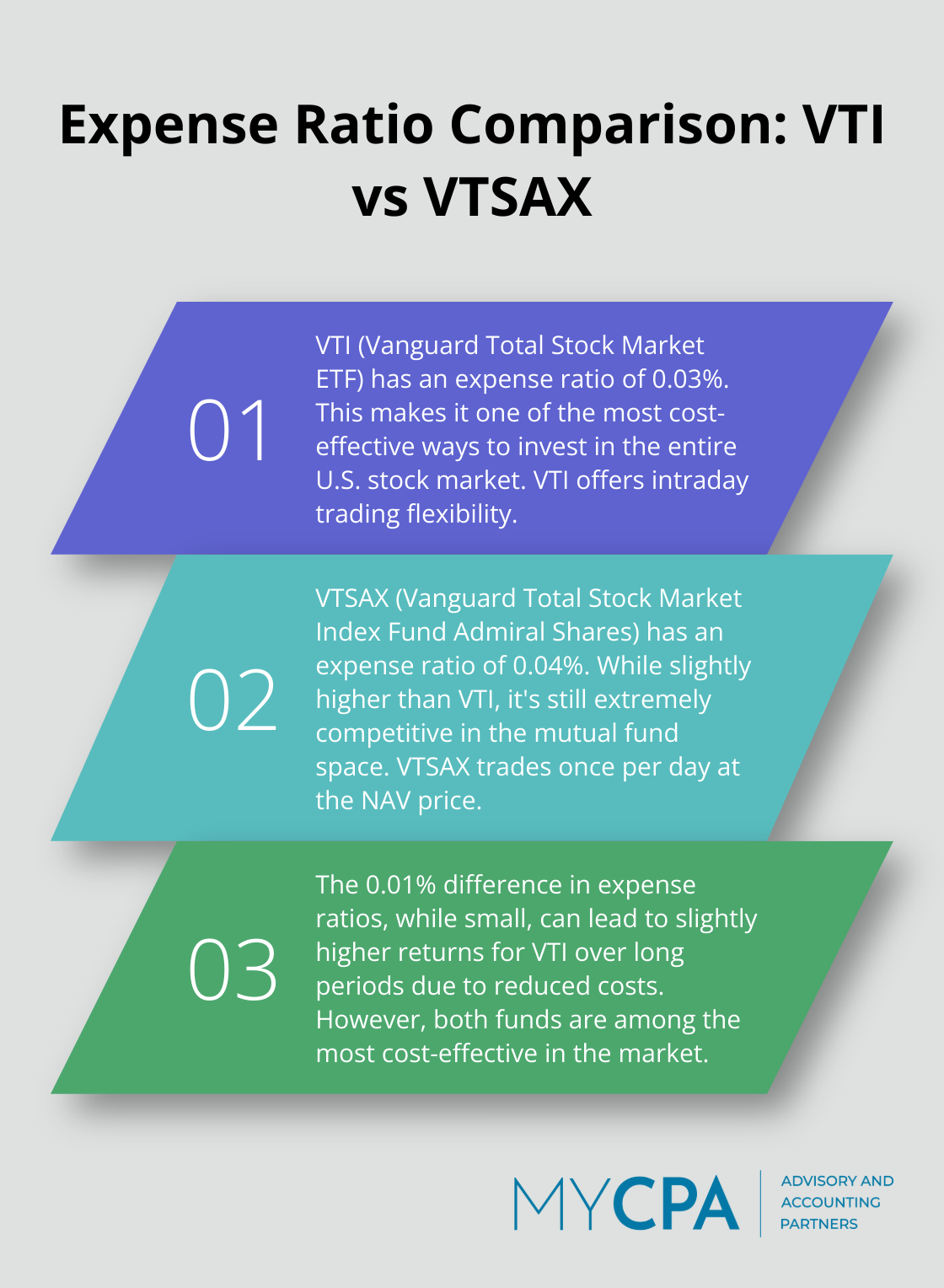
Vanguard is renowned for its commitment to low-cost investing, and VTI is a prime example of this philosophy in action. VTI boasts an ultra-low expense ratio, which is the annual fee charged as a percentage of your investment. This minimal fee significantly impacts your long-term returns, as every dollar saved in fees is a dollar that remains invested and can compound over decades. Compared to actively managed mutual funds, which can charge 1% or more annually, VTI’s expense ratio is typically a fraction of that, making it a highly cost-efficient way to gain market exposure.
Simplicity and Ease of Management: Set It and Forget It
VTI is an incredibly simple investment to understand and manage. Once purchased, there’s no need to constantly research individual companies, monitor earnings reports, or make complex trading decisions. The fund automatically rebalances itself to track the underlying index, meaning your investment stays aligned with the overall market without any active intervention from your side. This “set it and forget it” approach makes VTI ideal for busy individuals, those new to investing, or anyone who prefers a hands-off strategy to portfolio management.
Strong Long-Term Growth Potential: Tapping into the U.S. Economy
By encompassing virtually the entire U.S. stock market, VTI inherently benefits from the long-term growth trajectory of the American economy. Over decades, the U.S. market has demonstrated a remarkable ability to generate positive returns, overcoming various economic cycles and geopolitical events. Investing in VTI allows you to participate directly in the innovation, productivity, and expansion of U.S. corporations, offering a reliable pathway to significant capital appreciation over extended periods. It’s a direct stake in the engine of one of the world’s largest economies.
Potential Considerations and Risks of VTI Investment
While VTI presents a compelling investment case, it’s crucial for investors to understand its limitations and inherent risks. No investment is without risk, and VTI is no exception. A balanced perspective requires acknowledging these factors to ensure it aligns with your personal financial situation and risk tolerance.
Inherent Market Risk: The Volatility of Equities
As an equity-based investment, VTI is subject to market risk. The value of your investment will fluctuate with the overall performance of the U.S. stock market. During periods of economic downturns, recessions, or significant market corrections, the value of VTI can decrease, sometimes substantially. While history suggests long-term recovery, there is no guarantee against short-term losses. Investors should be prepared for volatility and have a long-term investment horizon (ideally 5+ years) to ride out market fluctuations.
Lack of Active Management: No Stock Picking or Sector Bets
One of VTI’s strengths—its passive management—can also be viewed as a limitation by some. Because VTI simply tracks an index, it does not attempt to outperform the market through strategic stock selection or sector timing. If certain sectors or individual stocks are expected to perform exceptionally well, VTI will only capture their performance as part of the overall market. It won’t overweight them to exploit perceived opportunities, nor will it underweight struggling companies proactively. For investors who believe they can identify market outperformers, VTI might seem too passive, though empirical evidence suggests active management rarely beats broad index funds after fees.
Concentration in the U.S. Market: Limited International Exposure
VTI provides comprehensive exposure to the U.S. stock market. While this is a significant and diverse market, it means VTI offers no direct exposure to international developed or emerging markets. For a truly globally diversified portfolio, investors would need to complement VTI with international equity ETFs (e.g., VXUS for total international stock market exposure) to mitigate geographic concentration risk and capture growth opportunities outside the U.S. Relying solely on VTI leaves you entirely exposed to the fortunes of a single national economy, albeit a large and diverse one.
Taxation: Understanding Tax Implications
Investing in VTI involves tax considerations. Like all ETFs, VTI may distribute dividends (paid quarterly) which are generally taxable in the year received, unless held in a tax-advantaged account like an IRA or 401(k). Furthermore, if you sell VTI shares for a profit, you’ll incur capital gains taxes. Understanding the difference between short-term and long-term capital gains, and how VTI fits into your overall tax strategy, is crucial. Holding VTI in tax-efficient accounts is often recommended to minimize the impact of these taxes on your returns.
How to Invest in VTI and Integrate it into Your Financial Strategy
Investing in VTI is straightforward, making it accessible to a wide range of investors. Integrating it effectively into your financial plan, however, requires a thoughtful approach to ensure it aligns with your objectives and risk profile.
Opening a Brokerage Account
The first step to investing in VTI (or any ETF) is to open an investment brokerage account. Major brokerage firms like Fidelity, Charles Schwab, E*TRADE, Robinhood, or Vanguard itself offer user-friendly platforms. The process typically involves providing personal information, funding the account via bank transfer, and agreeing to terms and conditions. Choose a broker that offers low or zero commissions on ETF trades and provides the tools and resources you need.
Placing Your Order
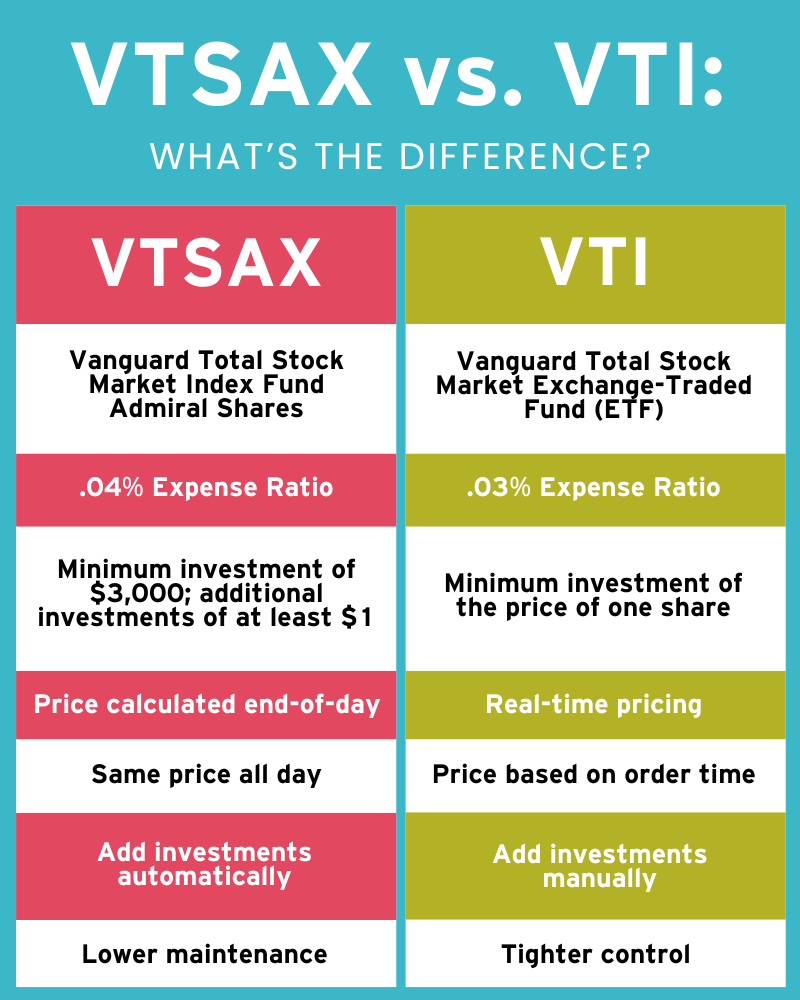
Once your account is funded, you can search for VTI by its ticker symbol. You can place a market order (to buy at the current market price) or a limit order (to buy at a specific price or better). Given VTI’s high liquidity, a market order is often sufficient for most retail investors. You can purchase VTI in whole shares, though many brokers now offer fractional share investing, allowing you to invest a specific dollar amount rather than needing to buy full shares.
Embracing Dollar-Cost Averaging: A Prudent Strategy
For long-term investors, dollar-cost averaging (DCA) is a highly recommended strategy when investing in VTI. DCA involves investing a fixed amount of money at regular intervals (e.g., $200 every month), regardless of the current market price. This strategy helps mitigate the risk of investing a lump sum at an inopportune time (e.g., just before a market downturn). By investing consistently, you buy more shares when prices are low and fewer when prices are high, potentially resulting in a lower average cost per share over time.
Integrating VTI into a Broader Portfolio
VTI can serve as a primary equity holding for the U.S. component of a diversified portfolio. For a truly diversified strategy, consider pairing VTI with:
- International Stocks: ETFs like VXUS (Vanguard Total International Stock Index Fund ETF) or individual country/region-specific ETFs to gain exposure to global markets.
- Bonds: Bond ETFs (e.g., BND for total U.S. bond market) or individual bonds to introduce stability and reduce overall portfolio volatility, especially as retirement approaches.
- Other Asset Classes: Depending on your risk tolerance and goals, you might consider small allocations to real estate investment trusts (REITs) or commodities, though VTI and international stocks, combined with bonds, form a robust core.
The ideal asset allocation (the mix of stocks, bonds, and other assets) will depend on your age, risk tolerance, financial goals, and time horizon. A common rule of thumb is to subtract your age from 110 or 120 to estimate your appropriate stock allocation percentage, with the remainder in bonds.

Conclusion: VTI as a Cornerstone for Long-Term Investors
The Vanguard Total Stock Market Index Fund ETF (VTI) offers a compelling and efficient pathway for investors to participate in the growth of the entire U.S. equity market. Its broad diversification, exceptionally low costs, and passive management make it an ideal choice for those committed to a long-term, buy-and-hold investment strategy. While market risks and the lack of international exposure necessitate a comprehensive portfolio approach, VTI’s simplicity and effectiveness position it as a cornerstone asset for building durable wealth.
For investors who believe in the enduring power of the American economy and seek a disciplined, low-maintenance approach to investing, understanding and utilizing VTI can be a pivotal step toward achieving significant financial goals. It embodies the wisdom of not trying to beat the market, but rather, owning it.
aViewFromTheCave is a participant in the Amazon Services LLC Associates Program, an affiliate advertising program designed to provide a means for sites to earn advertising fees by advertising and linking to Amazon.com. Amazon, the Amazon logo, AmazonSupply, and the AmazonSupply logo are trademarks of Amazon.com, Inc. or its affiliates. As an Amazon Associate we earn affiliate commissions from qualifying purchases.