
In the landscape of modern education and professional development, the medium through which we consume information has undergone a seismic shift. While traditional education long relied on auditory lectures and dense text, the digital era has ushered in the dominance of visual learning. At its core, visual learning is a pedagogical style where individuals process information most effectively when it is presented in a graphic or spatial format. However, in the context of the 21st century, visual learning is no longer just about whiteboards and diagrams; it is a sophisticated intersection of cognitive science and cutting-edge technology.
As we navigate an era defined by “information overload,” technology has stepped in to refine how our brains encode, store, and retrieve data. From the pixel-perfect clarity of high-resolution displays to the immersive environments of the metaverse, technology is not just supporting visual learning—it is reinventing it.
The Technological Evolution of Visual Learning Tools
The transition from static textbook illustrations to dynamic, interactive digital environments represents one of the most significant leaps in educational technology (EdTech). Visual learning thrives on the ability to see relationships between ideas, and modern software has made these relationships more transparent than ever.
From Static Graphics to Interactive Data Visualization
In the early days of digital tech, visual learning was limited to PowerPoints and digitized PDFs. Today, we utilize sophisticated data visualization tools like Tableau, Power BI, and interactive infographics that allow learners to manipulate variables in real-time. This “active” visual learning enables users to see the immediate consequences of data shifts, turning abstract numbers into tangible visual narratives. For a tech-savvy learner, the ability to toggle layers on a digital map or adjust a timeline on a project management tool transforms a flat concept into a multi-dimensional experience.
The Rise of Video-Based Learning Ecosystems
Platforms like YouTube, Coursera, and MasterClass have democratized visual learning. The tech behind these platforms—such as adaptive bitrate streaming and AI-generated captioning—ensures that high-quality visual instruction is accessible globally. Short-form video tech, popularized by TikTok and Reels, has also introduced “micro-learning,” where complex technical concepts are distilled into 60-second visual bursts. This aligns with the “Goldilocks zone” of cognitive load, providing just enough visual stimuli to maintain engagement without overwhelming the viewer’s processing capacity.
AI and Machine Learning: Personalizing the Visual Experience
Artificial Intelligence (AI) is the current frontier of visual learning. It is moving us away from a “one-size-fits-all” visual approach toward personalized, adaptive interfaces that respond to how a specific user interacts with imagery.
Adaptive Learning Algorithms and Visual Feedback
Modern EdTech platforms use machine learning algorithms to track user engagement. If a student lingers on a diagram but skips a text block, the AI identifies a visual preference and adjusts the curriculum accordingly. This tech-driven personalization ensures that visual learners are fed a steady stream of diagrams, videos, and flowcharts. Furthermore, AI-powered “smart boards” and digital ink technology can now recognize hand-drawn shapes and instantly convert them into clean, professional vectors, bridging the gap between tactile creation and digital organization.
Computer Vision and Augmented Reality (AR)
Computer vision—the field of AI that enables computers to “see” and interpret the world—is a game-changer for visual learning. AR applications, such as Google Lens or specialized medical training software, overlay digital information onto the physical world. For a technician learning to repair a complex circuit board, AR glasses can highlight exactly which wire to pull. This is the pinnacle of visual learning: the integration of digital instruction directly into the user’s field of vision, eliminating the need to look away from the task at hand to consult a manual.
Essential Software and Hardware for the Visual Learner
To truly harness the power of visual learning, one must look at the specific tools that facilitate “spatial thinking” and “knowledge mapping.” The hardware we use is just as important as the software it runs.
Collaborative Digital Canvas and Mind Mapping
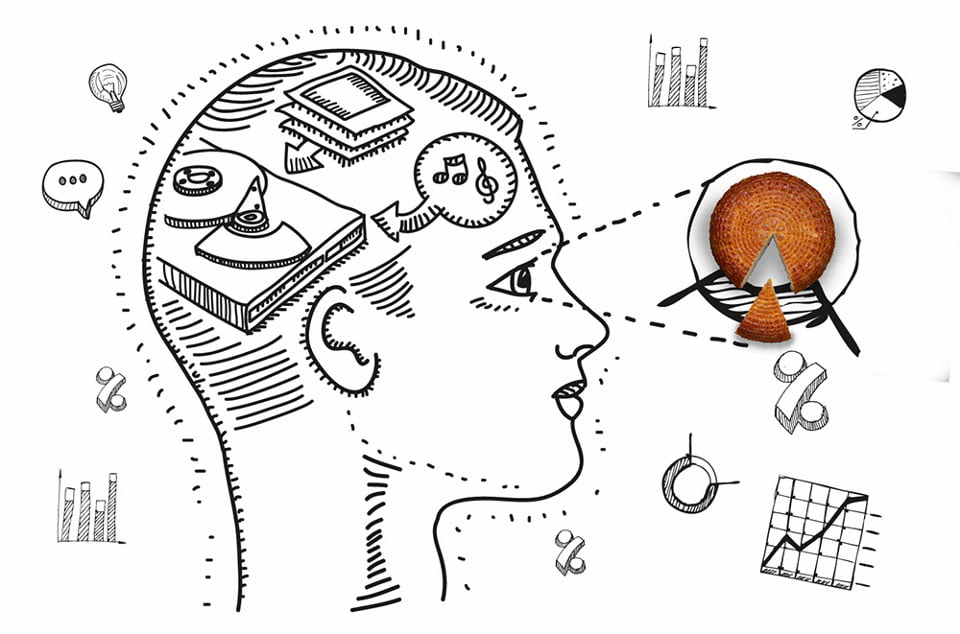
Tools like Miro, Lucidchart, and Mural have redefined how teams and individuals visualize ideas. These platforms provide an infinite digital canvas where users can build complex mind maps, kanban boards, and wireframes. For a visual learner, these tools act as an “external hard drive” for the brain. The ability to zoom out to see the “big picture” and zoom in on granular details caters perfectly to the spatial-temporal reasoning skills that visual learners typically possess.
The Role of High-Refresh Rate Displays and Stylus Tech
The hardware used for visual learning has seen massive improvements in latency and color accuracy. Devices like the iPad Pro with Apple Pencil or the Microsoft Surface Pro have turned the act of “notetaking” into a visual art form. Low-latency stylus technology allows for a “pen-to-paper” feel, which is crucial for the kinesthetic-visual connection. When a learner draws a concept map by hand on a digital screen, they are utilizing tactile movements to reinforce visual memory, a process greatly enhanced by the 120Hz refresh rates of modern screens that make the digital ink appear to flow effortlessly.
The Future of Visual Learning: Spatial Computing and the Metaverse
As we look toward the future, the definition of visual learning is expanding to include three-dimensional immersion. We are moving from looking at a screen to being inside the data.
Spatial Computing and 3D Modeling
With the advent of spatial computing devices like the Apple Vision Pro and Meta Quest 3, visual learning is entering a 3D era. In fields like architecture, engineering, and medicine, learners can walk through a 3D render of a building or rotate a digital twin of a human heart. This spatial awareness is the ultimate form of visual learning, as it engages the brain’s navigation centers. The tech allows for “learning by doing” in a risk-free, visually stimulated environment.
The Metaverse as a Visual Classroom
The metaverse promises a persistent, shared virtual space where visual learning is the primary mode of interaction. In these environments, abstract concepts can be literalized. For example, rather than reading about the scale of the solar system, students can fly through a digitally rendered galaxy, observing the relative sizes and distances of planets visually. This level of immersion creates “episodic memories”—the brain remembers the experience of being in the virtual space, which is far more durable than the semantic memory of reading a text.
UI/UX Design: The Invisible Architecture of Visual Learning
Finally, we must consider how the design of technology itself facilitates learning. User Interface (UI) and User Experience (UX) design are rooted in the principles of visual learning.
Gestalt Principles in Software Design
Tech designers use Gestalt principles—such as proximity, similarity, and continuity—to organize digital information in a way that the human eye can easily parse. A well-designed app uses color coding, consistent iconography, and hierarchical layouts to guide the user’s eye. This reduces “cognitive friction,” allowing the user to focus on the content rather than how to navigate the tool. For a visual learner, a clean, intuitive UI is the difference between deep focus and total frustration.
The Impact of Dark Mode and Visual Ergonomics
Even small tech features like “Dark Mode” or “Blue Light Filters” play a role in visual learning. By reducing eye strain during long study or work sessions, these technologies allow visual learners to sustain attention for longer periods. Accessibility tech, such as high-contrast modes for the visually impaired, ensures that the benefits of visual learning are inclusive, leveraging software to compensate for physical limitations.

Conclusion: The Synergy of Sight and Silicon
What is visual learning in the modern age? It is a symbiotic relationship between the human brain’s most powerful sense—vision—and the most sophisticated tools ever created. Technology has elevated visual learning from a simple preference into a high-performance methodology for mastering complex information.
As AI continues to personalize our visual feeds, and as AR and VR blur the lines between the digital and physical worlds, the potential for visual learning is limitless. We are no longer confined by the borders of a page or the limits of a classroom. Through the lens of technology, the world itself becomes a canvas for learning, proving that when we can see the information clearly, we can understand it deeply. For the tech-enabled visual learner, the future isn’t just bright—it’s high-definition.
aViewFromTheCave is a participant in the Amazon Services LLC Associates Program, an affiliate advertising program designed to provide a means for sites to earn advertising fees by advertising and linking to Amazon.com. Amazon, the Amazon logo, AmazonSupply, and the AmazonSupply logo are trademarks of Amazon.com, Inc. or its affiliates. As an Amazon Associate we earn affiliate commissions from qualifying purchases.