
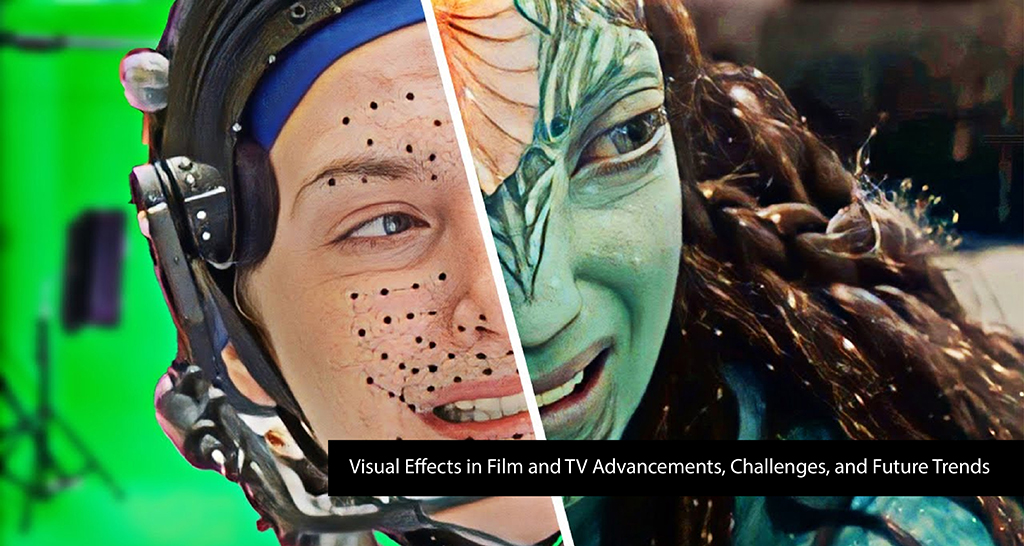
In the modern era of entertainment, the line between reality and digital fabrication has become almost indistinguishable. Whether it is the seamless integration of a superhero into a bustling New York City street or the creation of an entirely alien ecosystem on a distant planet, Visual Effects (VFX) serve as the technological bridge between a creator’s imagination and the viewer’s eye. At its core, VFX is the process by which imagery is created or manipulated outside the context of a live-action shot.
Unlike Special Effects (SFX), which are captured on-set through mechanical rigs or pyrotechnics, VFX are predominantly handled in post-production using sophisticated hardware and software. As technology has advanced, VFX has evolved from a niche tool for science fiction into a fundamental pillar of all digital media, encompassing film, television, gaming, and even corporate advertising. Understanding VFX requires a deep dive into the technology, the software ecosystems, and the emerging trends that define this high-tech industry.
The Evolution of VFX Technology: From Optical Effects to Digital Mastery
The journey of visual effects is a history of technological breakthroughs. In the early days of cinema, “tricks” were performed in-camera or through optical printers. However, the digital revolution of the late 20th century transformed the medium entirely, moving the craft from chemical film labs to powerful computing workstations.
The Transition from Physical Models to CGI
Before the advent of Computer Generated Imagery (CGI), studios like Industrial Light & Magic (ILM) relied on physical miniatures and motion-control cameras. The technological shift began in earnest with films like Jurassic Park (1993), which proved that digitally rendered creatures could achieve a level of photorealism that physical animatronics could not match. This transition necessitated a massive leap in processing power and the development of algorithms capable of simulating light, shadow, and skin texture.
Real-time Rendering and Virtual Production
We are currently witnessing the next great leap in VFX technology: Virtual Production. Popularized by series like The Mandalorian, this tech uses massive LED walls (The Volume) and real-time game engines like Unreal Engine. Unlike traditional green screens, where actors must imagine their surroundings, virtual production allows for real-time background rendering that reacts to camera movement. This reduces the need for extensive post-production and allows cinematographers to see the final “look” of a scene while they are still on set.
The Core Software Ecosystem: Powering the Visual Effects Pipeline
The creation of high-end VFX is an intricate process that requires a suite of specialized software tools. Each stage of the pipeline—modeling, animation, simulation, and compositing—relies on different technological frameworks designed to handle massive amounts of data.
Modeling and Animation: Autodesk Maya and ZBrush
Autodesk Maya is the undisputed industry standard for 3D modeling and animation. Its robust architecture allows technical directors to script custom tools using Python, making it highly adaptable for complex studio environments. Complementing Maya is ZBrush, a digital sculpting tool that allows artists to manipulate millions of polygons as if they were digital clay. This technology is responsible for the incredible detail seen in modern cinematic characters, capturing every pore, wrinkle, and imperfection.
Dynamic Simulations and Particle Effects: SideFX Houdini
When it comes to “procedural” effects—such as water, fire, smoke, or large-scale destruction—SideFX Houdini is the gold standard. Unlike traditional software, Houdini uses a node-based, procedural workflow. This means that instead of manually animating every piece of debris in a falling building, an artist writes a set of rules (algorithms) that dictate how the building should collapse based on physics. The technology behind Houdini’s “Solaris” and “Karma” rendering engines has revolutionized how studios handle complex data sets.
Compositing and Final Polish: Foundry Nuke
The final stage of the VFX pipeline is compositing, where all the individual elements—live-action footage, CG characters, and digital matte paintings—are layered together. Foundry’s Nuke is the primary tool used for this. It utilizes a node-based system that offers unparalleled control over color grading, light matching, and deep compositing. This software ensures that the digital elements do not “float” on top of the footage but instead look like they were captured by the same camera lens.

The Impact of Artificial Intelligence and Machine Learning in VFX
Artificial Intelligence (AI) is no longer a futuristic concept in the VFX world; it is an active tool that is optimizing workflows and enabling effects that were previously impossible or too expensive to produce. Machine learning models are being trained on vast libraries of human movement and facial expressions to automate the most tedious parts of the job.
AI-Driven De-aging and Deepfakes
One of the most visible uses of AI in VFX is digital de-aging. By using generative adversarial networks (GANs), VFX houses can analyze thousands of hours of an actor’s younger performances to “re-skin” their current performance. This technology was famously utilized in The Irishman and various Star Wars projects. Rather than manually animating every frame, the AI assists in “mapping” the younger face onto the older actor, maintaining the nuances of the original performance.
Automating the Rotoscoping Process
Rotoscoping—the process of tracing over live-action footage frame-by-frame to create a mask—is historically the most time-consuming task in VFX. New AI tools are now capable of “Smart Vector” tracking and automated segmentation. These AI-driven apps can identify the edges of a person or object and track them through 3D space with high precision, reducing the time required for rotoscoping from weeks to hours. This allows artists to focus more on the creative aspects of a shot rather than the mechanical ones.
Hardware Requirements: The Engines Behind the Art
The sophisticated software used in VFX requires equally powerful hardware. As resolutions move from 4K to 8K and beyond, the demand for high-speed processing and massive storage capacity has skyrocketed.
GPU vs. CPU Rendering
For years, the Central Processing Unit (CPU) was the king of the VFX studio, handling the complex math required for “Ray Tracing” (calculating how light bounces off surfaces). However, the rise of Graphics Processing Unit (GPU) rendering has changed the game. Companies like NVIDIA have developed RTX technology, which features dedicated cores for real-time ray tracing. GPU rendering is significantly faster than CPU rendering, allowing artists to see previews of their work in seconds rather than waiting hours for a single frame to process.
The Role of Cloud Computing and Render Farms
A single frame of a high-end VFX shot can take anywhere from a few minutes to several days to “render” (the process of the computer calculating all the data into a final image). To manage this, studios use “render farms”—massive clusters of hundreds or thousands of computers working in parallel. Recently, the industry has shifted toward Cloud Computing. Platforms like AWS (Amazon Web Services) and Microsoft Azure offer specialized VFX rendering nodes, allowing smaller studios to access “supercomputer” levels of power on a pay-as-you-go basis, leveling the playing field between boutique shops and giant corporations.
Future Horizons: Where VFX Technology is Heading Next
The future of VFX is inextricably linked to the convergence of different tech sectors. As hardware becomes more portable and software more intuitive, we are seeing VFX move beyond the silver screen and into our daily lives.
Augmented Reality (AR) and Mixed Reality (MR) Integration
As wearable tech like AR glasses becomes more consumer-friendly, the “visual effects” we see in movies will begin to overlay onto our physical world. The technology used to track a camera’s position in a film studio is the same technology that allows an AR app to place a digital furniture model in your living room. The integration of high-fidelity VFX assets into AR and MR environments represents the next frontier for digital designers.

The Democratization of VFX Tools
Perhaps the most exciting trend is the democratization of these high-end technologies. Tools that once cost tens of thousands of dollars are now becoming accessible to independent creators. Blender, an open-source 3D suite, has seen massive adoption due to its powerful feature set and zero-cost entry point. As AI continues to simplify complex tasks, the barrier to entry for creating Hollywood-caliber visual effects is lowering, ushering in a new era of independent digital storytelling.
In conclusion, Visual Effects is a field defined by its relentless pursuit of technological perfection. From the specialized software that simulates the laws of physics to the AI models that recreate human faces, VFX is the ultimate fusion of art and engineering. As computing power continues to grow and real-time rendering becomes the standard, the only limit to what can be visualized will be the limits of our own technological ingenuity.
aViewFromTheCave is a participant in the Amazon Services LLC Associates Program, an affiliate advertising program designed to provide a means for sites to earn advertising fees by advertising and linking to Amazon.com. Amazon, the Amazon logo, AmazonSupply, and the AmazonSupply logo are trademarks of Amazon.com, Inc. or its affiliates. As an Amazon Associate we earn affiliate commissions from qualifying purchases.