
Vintage Story is a sophisticated survival sandbox game that represents a significant leap in the evolution of voxel-based software. While it may superficially resemble other titles in the genre, it is fundamentally distinct due to its custom-built engine, its uncompromising focus on scientific realism, and its robust technical architecture. Built from the ground up in C#, Vintage Story moves away from the limitations of more common platforms to deliver a deep, systemic simulation of nature, technology, and history.
For technology enthusiasts and software developers, Vintage Story is more than a game; it is a case study in how a dedicated development team can optimize procedural generation and environmental physics to create a cohesive, immersive world. It challenges the “simplistic” stigma often associated with voxel graphics by implementing complex systems for thermodynamics, metallurgy, and geological strata.

The Architecture of a Custom Engine: Beyond the Limitations of Java
The most critical technical decision in the development of Vintage Story was the creation of a proprietary engine. Most voxel games are either built within existing frameworks like Unity or Unreal or rely on older, more restrictive environments like Java. Vintage Story’s developers opted to build a bespoke engine using C# and the .NET framework, which provided the necessary flexibility to implement features that are computationally expensive in other environments.
The Transition to C# and .NET
By utilizing C#, the development team gained access to modern memory management and high-level language features that are often more performant than the overhead required by Java Virtual Machines. This choice allows for more efficient garbage collection and better utilization of multi-core processors. In the context of a sandbox game, where the world is essentially an infinite database of block states and entity coordinates, these micro-optimizations are essential for maintaining a stable frame rate during high-demand events like world-loading or complex physics calculations.
Memory Management and Performance Benchmarks
The custom engine allows Vintage Story to handle massive amounts of data with a relatively small memory footprint. Unlike many modern titles that require 16GB of RAM as a baseline, Vintage Story is highly optimized. The engine uses a clever chunk-loading system and data compression techniques to ensure that even with a high render distance, the game remains playable on mid-range hardware. This technical efficiency is a hallmark of the game’s design philosophy: prioritizing stability and depth over superficial graphical density.
Procedural Complexity: World Generation and Environmental Simulation
At the heart of the “Vintage Story” experience is a procedural generation system that mimics the geological and climatic patterns of Earth. This is not merely a random placement of blocks; it is a calculated simulation that governs everything from soil fertility to the types of minerals found miles below the surface.
Climate Modeling and Latitudinal Biomes
In most sandbox games, biomes are placed randomly or based on simple noise maps. Vintage Story implements a comprehensive climate system where temperature and rainfall are influenced by latitude. As a player travels North or South, the environment shifts logically from tropical jungles to temperate forests and eventually to arctic tundras. This system is integrated with the game’s calendar, meaning that the software calculates seasonal changes in real-time. The sun’s angle changes, days become shorter in winter, and the procedural engine adjusts the foliage colors and snowfall patterns accordingly.
Geological Strata and Mineral Distribution
The game’s underground generation is equally complex. The world is built using a “strata” system, where different types of rock (igneous, metamorphic, sedimentary) are layered according to geological principles. This isn’t just an aesthetic choice; certain ores are programmatically tied to specific rock types. For example, a player seeking copper must understand the underlying geology of the region. This adds a layer of “discovery tech” to the game, where players must use tools like the prospecting pick—a device that utilizes a localized scanning algorithm—to identify the density of minerals in a given area.
The Technical Implementation of Realism: Mechanics as Systems
Vintage Story stands out in the tech space for its refusal to use “magic UI” crafting. Instead, it relies on physicalized interactions that require the player to manipulate the world at a granular level.
Micro-Voxel Manipulation and Dynamic Crafting
One of the most impressive technical feats in Vintage Story is its “micro-block” editing system. When a player engages in “knapping” (shaping stone tools) or “clay forming,” they are not simply clicking a recipe in a menu. Instead, the game opens a 3D interface where the player must physically remove or add small voxels to a larger grid. This system requires high-precision collision detection and real-time mesh updating. Each tool produced is unique in its creation process, even if it fits a standard template. This level of granular interaction extends to smithing, where players must use a hammer to move hot metal pixels on an anvil, simulating the actual flow of material under heat.
The Thermodynamics of In-Game Physics
The software includes a detailed thermodynamics engine. Heat in Vintage Story is a dynamic variable that moves through objects and environments. This affects everything from food spoilage to the melting of ores. For instance, the game calculates the ambient temperature of a room based on insulation (the materials the walls are made of) and heat sources (fireplaces). In the forge, the temperature of a crucible is determined by the fuel type and the airflow (bellows). This systemic approach to physics ensures that every action has a logical, predictable consequence based on the game’s internal laws of physics.
An Open Architecture: The Vintage Story API and Extensibility
From its inception, Vintage Story was designed to be a platform for others to build upon. The developers recognized that the longevity of tech-heavy sandbox games often depends on their modding communities. As a result, they built an API (Application Programming Interface) that is remarkably transparent and powerful.
JSON-Based Configuration and Low-Code Modding
A significant portion of the game’s data is stored in human-readable JSON files. This means that even users with limited coding experience can modify the game’s logic, from changing the properties of a material to creating entirely new biomes. The software is designed to “hot-load” many of these changes, allowing for rapid prototyping. For more advanced developers, the C# API allows for deep hooks into the engine’s core, enabling the creation of complex machinery, new rendering techniques, or entirely new gameplay loops.
Server-Side Scalability and Networking
The networking protocol for Vintage Story is built for stability and efficiency. The game uses a dedicated server-client architecture that minimizes latency by only synchronizing the data that is absolutely necessary for the player’s immediate surroundings. This technical foresight makes it possible to host large-scale multiplayer servers where dozens of players can interact with the complex physics and thermodynamics systems simultaneously without crashing the server thread.
Graphical Fidelity and Optimization in Voxel Space
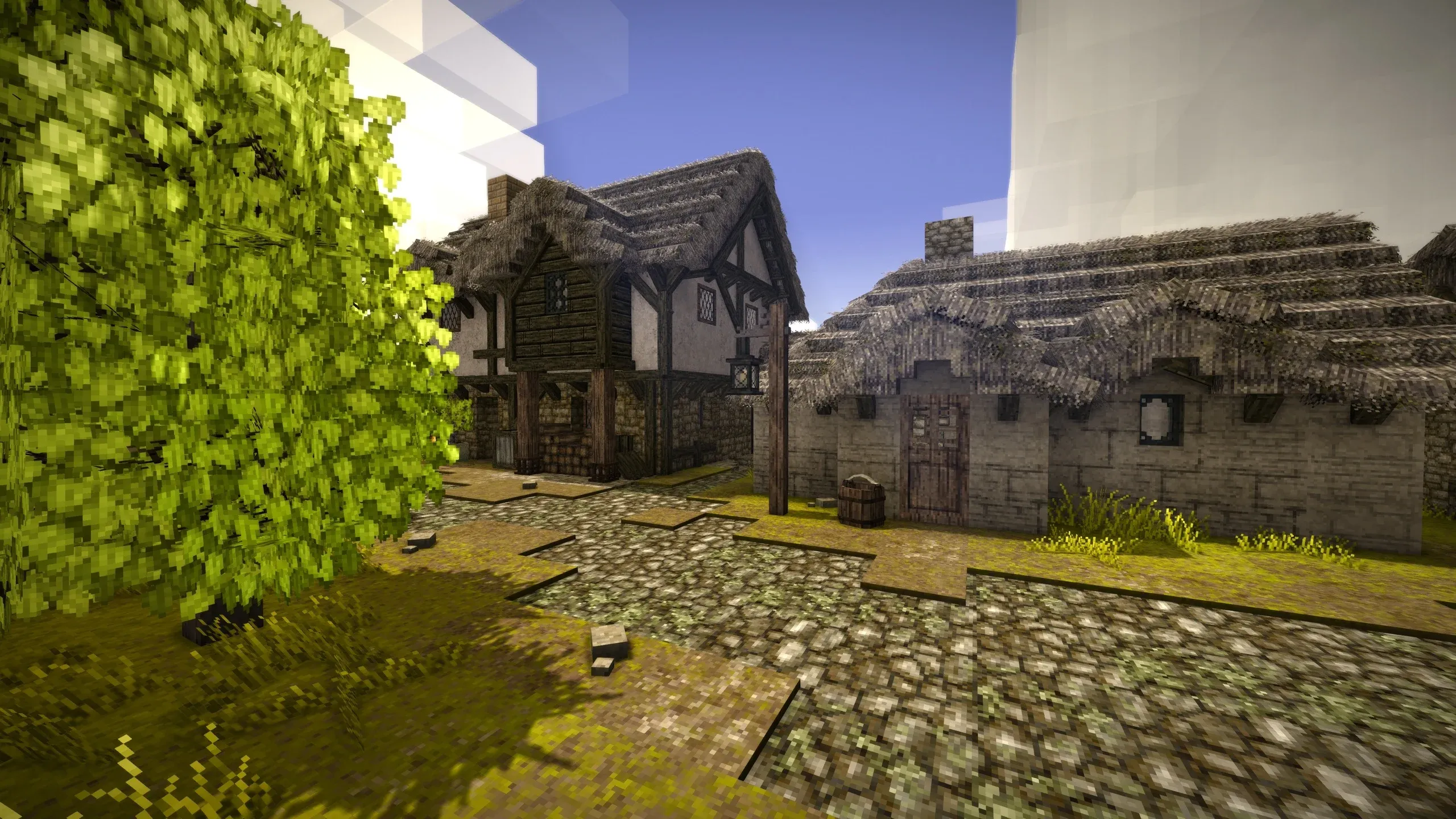
While the game uses a voxel (cube-based) aesthetic, its rendering pipeline is modern and sophisticated. The developers have implemented a variety of post-processing effects and lighting techniques that transform the blocky world into a visually stunning landscape.
Advanced Lighting and Atmospheric Rendering
The engine supports advanced features like Screen Space Ambient Occlusion (SSAO), god rays, and dynamic weather effects. The lighting system is particularly noteworthy; it accounts for light levels through different mediums and calculates how light filters through tree leaves or reflects off water. Because the world is procedurally generated, these lighting calculations must be done on the fly, requiring an optimized shader pipeline that can handle thousands of updates per second as the player moves or as time passes.

Future-Proofing through Iterative Software Design
The development of Vintage Story follows an iterative, feedback-driven model. Because the engine is proprietary, the team is not beholden to the update cycles of third-party software like Unity or Unreal. They can rewrite entire sub-systems—such as the animation engine or the liquid physics—whenever they find a more efficient way to process the data. This agility ensures that the game remains relevant as hardware advances. Recent updates have focused on upgrading to newer versions of the .NET runtime, further improving performance and providing a more stable environment for both players and modders.
In conclusion, Vintage Story is a testament to the power of custom-built software. By focusing on a “systems-first” approach and building a specialized engine, the developers have created a simulation that offers unparalleled depth and technical sophistication in the sandbox genre. It serves as a prime example of how thoughtful architecture and a commitment to realism can push the boundaries of what procedural software is capable of achieving.
aViewFromTheCave is a participant in the Amazon Services LLC Associates Program, an affiliate advertising program designed to provide a means for sites to earn advertising fees by advertising and linking to Amazon.com. Amazon, the Amazon logo, AmazonSupply, and the AmazonSupply logo are trademarks of Amazon.com, Inc. or its affiliates. As an Amazon Associate we earn affiliate commissions from qualifying purchases.