
In the rapidly evolving landscape of spatial computing, extended reality (XR), and high-performance wearable hardware, developers and engineers are increasingly looking toward human physiology to solve the most complex challenges of immersion. At the center of this intersection between biology and technology lies the Vestibulo-Ocular Reflex (VOR). While traditionally a subject of neurology and vestibular science, VOR has become a cornerstone concept for the tech industry, particularly for those building the hardware and software that bridge the gap between our physical movements and digital environments.
The Vestibulo-Ocular Reflex is a physiological mechanism that allows humans to maintain visual stability during head movement. It is the biological “image stabilization” system that keeps the world from blurring or shaking whenever we walk, turn our heads, or shift our posture. For the technology sector, replicating or accounting for this reflex is the difference between a seamless, high-fidelity digital experience and one that induces physical discomfort or breaks the user’s sense of presence.
The Engineering of Stability: Why VOR Matters in Modern Hardware
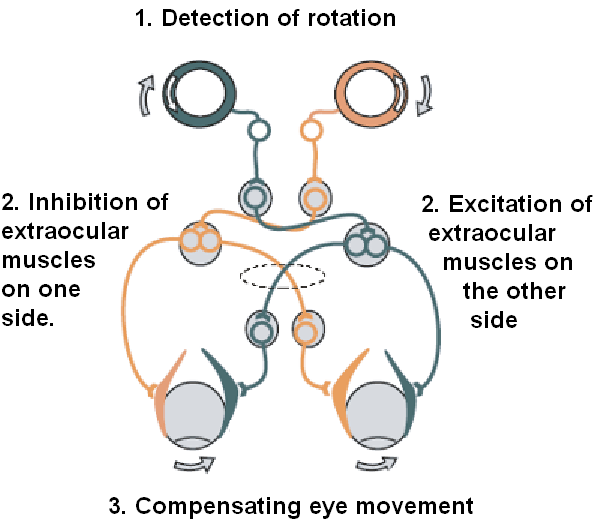
From an engineering perspective, the VOR is an incredibly efficient control system. When your head moves, your inner ear’s vestibular system detects the motion and sends a signal to your eye muscles to move in the opposite direction at the exact same speed. This happens with a latency of less than 10 milliseconds, making it one of the fastest reflexes in the human body.
Sensor Fusion and Low-Latency Tracking
For developers of Virtual Reality (VR) and Augmented Reality (AR) headsets, the goal is to match this biological speed. In tech terms, this is referred to as “motion-to-photon latency.” If a user wearing an Apple Vision Pro or a Meta Quest 3 moves their head and the digital image takes even 20 or 30 milliseconds to update, it lags behind the biological VOR. This delay disrupts the brain’s expectation of stability, leading to a breakdown in the user experience.
To combat this, modern hardware utilizes “sensor fusion.” This involves combining data from Inertial Measurement Units (IMUs)—which include high-speed gyroscopes and accelerometers—with optical tracking data. These sensors act as the digital counterpart to the human inner ear, providing the raw data necessary for the software to predict head position and adjust the display in real-time, effectively mimicking the VOR’s stabilization.
IMUs and the Digital Vestibular System
The precision of current-generation IMUs is a direct response to the requirements of the VOR. In the early days of consumer VR, sensors were too slow or too prone to “drift,” causing the digital world to slowly slide away from the user’s actual orientation. Today, tech companies are investing heavily in MEMS (Micro-Electro-Mechanical Systems) technology to create sensors that can detect micro-movements. By integrating these high-frequency sensors, developers can ensure that the “digital horizon” remains as stable as the physical one, satisfying the strict requirements of our ocular reflexes.
Solving the “Motion Sickness” Problem in VR and AR
One of the greatest hurdles to the mass adoption of immersive technology is simulator sickness. This phenomenon is almost entirely rooted in the Vestibulo-Ocular Reflex—specifically, what happens when there is a mismatch between the signals the brain receives from the eyes and the signals it receives from the vestibular system.
The Vestibular-Ocular Conflict
When you sit in a chair but move through a digital world using a joystick, your eyes perceive movement (the visual flow), but your inner ear (the vestibular system) perceives stasis. This is a sensory conflict. Conversely, if you move your head in the real world but the digital image lags or hitches, your VOR attempts to stabilize an image that is not behaving according to the laws of physics.

Technology companies are addressing this through several software innovations:
- Asynchronous Timewarp (ATW): This is a technique where the software shifts the last rendered frame to match the user’s new head position just before the frame is sent to the display. It acts as a digital safety net for the VOR, ensuring that even if the computer’s frame rate drops, the image remains locked to the user’s movement.
- Vignetting: Many VR applications use a “tunnel vision” effect during movement. By narrowing the field of view during high-speed digital motion, developers reduce the peripheral visual cues that trigger the vestibular conflict, making the experience more palatable for the user’s biological sensors.
Refresh Rates and Photon Latency
The push for 90Hz, 120Hz, and even 144Hz displays in mobile and wearable tech is not just about “smoothness”; it is about biology. Higher refresh rates reduce the time between when a movement occurs and when the screen updates. By lowering this latency, tech companies are moving closer to the sub-10ms threshold of the human VOR. When the hardware operates at this speed, the brain can no longer distinguish between the stability of a digital object and a physical one, achieving “presence.”
VOR-Driven Innovation: Foveated Rendering and Eye Tracking
As we move toward the next generation of gadgets, the focus is shifting from simply reacting to head movement to proactively tracking the eyes themselves. This is where the VOR becomes a data point for optimizing performance.
Optimizing GPU Performance
One of the most significant trends in high-end tech is foveated rendering. This technology uses internal cameras to track where the user is looking. Because the human eye only sees in high resolution at the very center of the gaze (the fovea), a headset only needs to render that specific area in full detail.
Understanding the VOR allows developers to predict where the eye will be during a head turn. Because the VOR dictates that the eyes will move in a specific, predictable way to compensate for head rotation, software can anticipate the eye’s path. This allows the GPU (Graphics Processing Unit) to allocate its resources more efficiently, pushing higher resolutions to the center of the gaze while blurring the periphery without the user ever noticing.
Biometric Integration in Wearables
Beyond gaming and enterprise tools, the VOR is being explored as a metric for digital health. Companies are developing “smart glasses” that can monitor the health of the wearer’s Vestibulo-Ocular Reflex. Since changes in VOR latency or accuracy can be early indicators of fatigue, concussion, or even neurological shifts, the integration of eye-tracking sensors into consumer gadgets turns a standard wearable into a sophisticated diagnostic tool. This represents a major shift in the “Tech-Health” vertical, where software doesn’t just entertain but actively monitors physiological integrity.
The Future of Neural Interfaces and Human-Machine Interaction
The ultimate goal of many tech giants—from Meta to Neuralink—is to create a seamless interface between the human mind and digital systems. The Vestibulo-Ocular Reflex serves as a blueprint for how this interaction should function.
BCI and the Evolution of the User Interface
Brain-Computer Interfaces (BCI) are looking at the VOR as a model for “closed-loop” systems. A closed-loop system is one where the machine adapts to the user’s biological state in real-time. By monitoring the VOR, a BCI could theoretically adjust the user interface of a spatial computer to match the user’s cognitive load or physical comfort level. If the system detects that the user’s VOR is struggling to keep up with digital stimulus, it could automatically dampen motion or increase visual stabilization.

Closing the Loop between Biology and Hardware
As we look toward the future of “ubiquitous computing”—where digital information is overlaid on the physical world via AR glasses—the VOR will be the gatekeeper of usability. If the tech cannot perfectly sync with this reflex, the glasses will be relegated to short-term use due to eye strain. However, as sensor technology approaches the precision of biological systems, we will see a transition where the digital world becomes indistinguishable from reality.
The tech industry’s obsession with the Vestibulo-Ocular Reflex is not merely academic. It is a practical necessity. Whether it is through the development of faster silicon, more sensitive IMUs, or smarter rendering algorithms, the goal remains the same: to build tools that respect and replicate the incredible speed and stability of human biology. In the world of tech, the VOR is more than just a reflex; it is the gold standard for latency, stability, and human-centric design. Over the next decade, as spatial computing becomes the primary medium for work and play, the hardware that masters the VOR will be the hardware that wins the market.
aViewFromTheCave is a participant in the Amazon Services LLC Associates Program, an affiliate advertising program designed to provide a means for sites to earn advertising fees by advertising and linking to Amazon.com. Amazon, the Amazon logo, AmazonSupply, and the AmazonSupply logo are trademarks of Amazon.com, Inc. or its affiliates. As an Amazon Associate we earn affiliate commissions from qualifying purchases.