
In the modern digital economy, the speed of capital movement has become as critical as the capital itself. Venmo, a pioneer in the peer-to-peer (P2P) payment space, has transformed from a niche social tool into a cornerstone of personal finance management. While the platform offers a free “standard” transfer option, many users find themselves reaching for the “Instant Transfer” feature when time is of the essence. However, this convenience comes at a price. Understanding the Venmo Instant Transfer fee—how it is calculated, its limits, and its impact on your overall financial health—is essential for any savvy consumer navigating the fintech landscape.
The Mechanics of Venmo’s Fee Structure
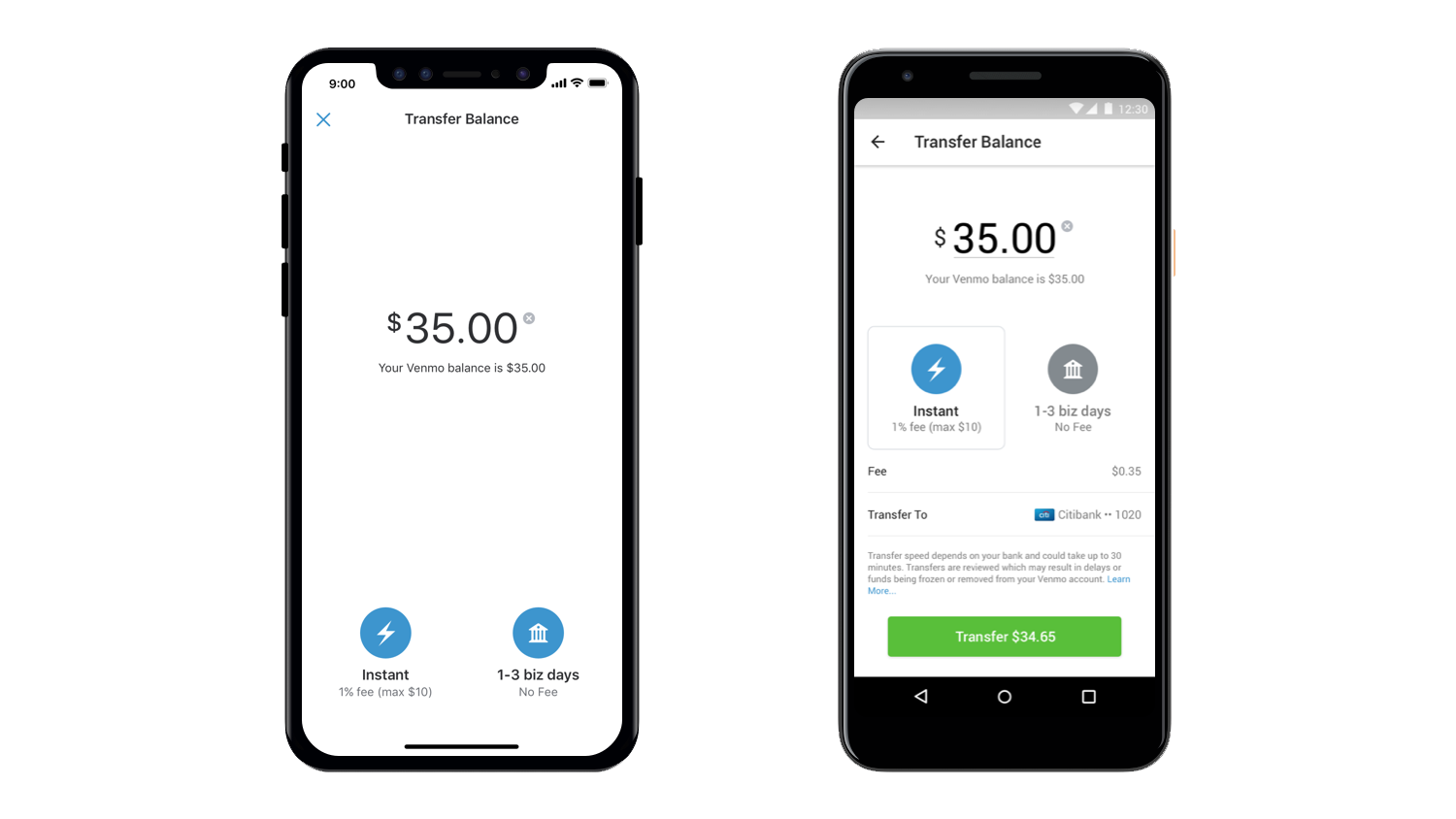
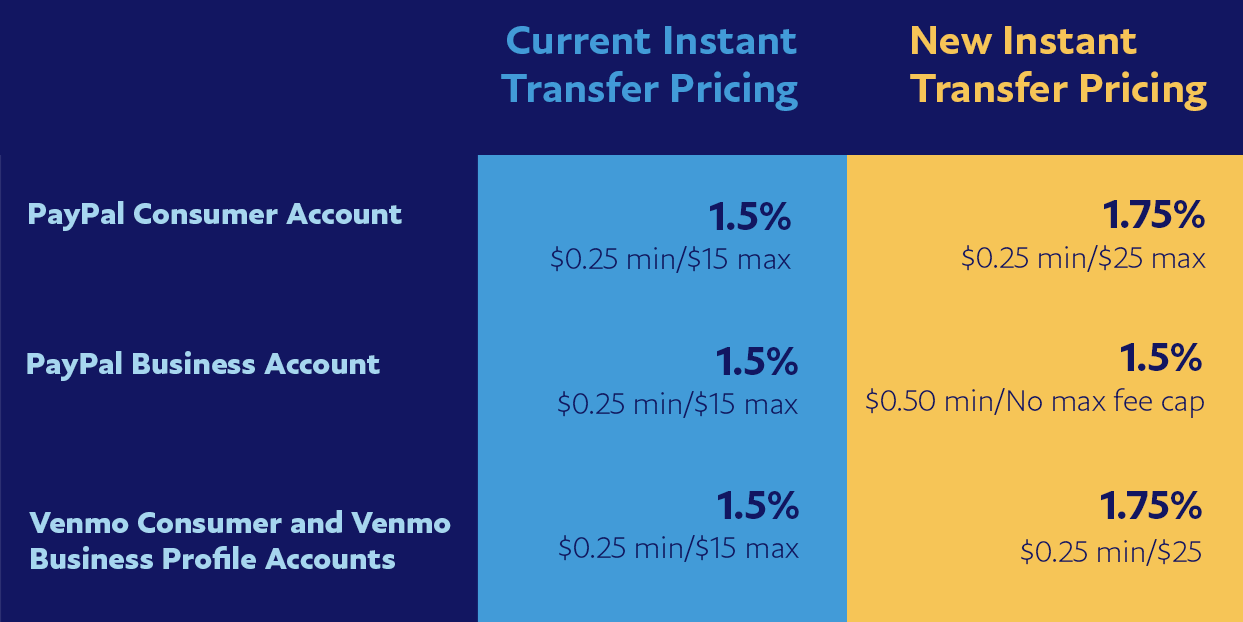
The primary appeal of Venmo is its simplicity, but its revenue model relies heavily on charging for speed. As of the current financial year, the Venmo Instant Transfer fee is set at 1.75% of the total transfer amount. This fee is deducted directly from the balance being transferred to your linked bank account or eligible debit card.
Minimum and Maximum Thresholds
The 1.75% rate does not apply linearly across all amounts due to Venmo’s built-in floor and ceiling. Regardless of how small the transfer is, there is a minimum fee of $0.25. This means if you are transferring $10, you aren’t paying 1.75% ($0.175); you are paying $0.25, which effectively raises your percentage fee to 2.5%.
Conversely, Venmo has capped the maximum fee at $25.00. This is a crucial detail for users moving large sums of money. If you were to transfer $5,000, a flat 1.75% would result in an $87.50 charge. Because of the $25 cap, the effective fee for a $5,000 transfer drops to 0.5%. Understanding these boundaries helps users decide when the convenience is mathematically justifiable.
How It Differs from Standard Transfers
The alternative to the Instant Transfer is the Standard Bank Transfer. This method utilizes the Automated Clearing House (ACH) network. While it is entirely free, it lacks the immediacy of the instant option. Standard transfers typically take one to three business days to arrive in your bank account. For users who do not have an immediate need for liquidity, the standard transfer is the objectively better financial choice, as it preserves 100% of the principal amount.
Evaluating the Price of Convenience: Is It Worth It?
In personal finance, the “convenience tax” is often the silent killer of long-term savings. While $0.25 or even $5.00 might seem negligible in the moment, these costs compound over time. To determine if the Instant Transfer fee is worth it, one must look at the opportunity cost and the necessity of the funds.
The Math of Frequent Usage
Consider a gig economy worker who receives $500 in tips via Venmo every week. If that worker uses the Instant Transfer feature every Friday to access their cash immediately, they are paying $8.75 per week. Over the course of a year, that totals $455. In the context of personal finance, this is nearly a full week’s wages lost to transaction fees. If that same worker opted for the standard transfer, they would have an extra $455 in their savings or investment accounts by year-end.
Scenarios Where Speed Is Essential
Despite the costs, there are legitimate financial scenarios where paying the 1.75% fee is a strategic move.
-
Avoiding Overdraft Fees: If your bank account is near zero and an automated bill payment is due, paying a $2.00 Venmo fee to get funds instantly is far cheaper than the $30 or $35 overdraft fee your bank might charge.
-
Time-Sensitive Opportunities: If a unique investment opportunity or a limited-time sale requires immediate capital that you only have in your Venmo balance, the fee serves as a small cost of entry.
-
Emergency Situations: For unexpected medical costs or urgent repairs, the ability to move money in under 30 minutes is a vital financial safety net.
Comparing Venmo to Other Financial Tools
Venmo does not operate in a vacuum. To understand if you are getting a fair deal, you must compare its instant transfer costs with other major players in the fintech space.
Cash App and PayPal
Venmo’s parent company, PayPal, uses a near-identical fee structure for its own instant transfer service, also charging 1.75% with similar minimums and maximums. Cash App, its primary competitor, currently matches this 1.75% rate for “Instant Deposits.” Because these three giants have synchronized their pricing, users rarely find a cost advantage by switching between them for instant transfers.
The Zelle Advantage
Zelle represents the most significant disruptor to the instant transfer fee model. Because Zelle is integrated directly into the infrastructure of most major American banks, it offers near-instant transfers (often within minutes) for $0.00. For users looking to move money between their own accounts or receive money from others without losing a percentage to fees, Zelle is often the superior financial tool. The limitation, however, is that Zelle requires both the sender and receiver to have accounts at participating banks, whereas Venmo allows for a more flexible social ecosystem.
Strategic Tips for Managing Your Venmo Balance
Optimizing your use of Venmo is a key part of modern cash flow management. By being proactive, you can avoid the “emergency” need for an instant transfer and keep more of your money.
Maintain a “Buffer” in Your Traditional Bank Account
The need for an instant transfer often arises from a lack of liquidity in a primary checking account. By maintaining a small buffer—perhaps $200 to $500—in your bank account, you can afford to wait the three days for a standard Venmo transfer to clear. This buffer acts as a shield against convenience fees.
Use the Venmo Debit Card
For those who rely on their Venmo balance for daily spending, the Venmo Debit Card offers a loophole. By using the card to pay for groceries or gas directly from your Venmo balance, you bypass the need to transfer money to a bank account at all. There are no fees for using the card at retailers, and it provides immediate access to your funds without the 1.75% haircut.
Batch Your Transfers
If you must use the Instant Transfer feature, doing so in large batches is more efficient than multiple small transfers, especially if you are hitting the $25 fee cap. While the 1.75% rate is flat for most, those moving several thousand dollars benefit significantly from the cap. Conversely, avoiding many small transfers prevents the $0.25 minimum from eating away at your balance.
The Future of Instant Payments and Fee Structures
The landscape of American banking is currently undergoing a shift that may eventually make the Venmo Instant Transfer fee obsolete. The Federal Reserve recently launched “FedNow,” a real-time payment (RTP) infrastructure designed to allow banks to process transfers instantly, 24/7.
The Impact of FedNow
As more banks adopt FedNow or the private sector equivalent, the Clearing House’s RTP network, the standard “three business days” for ACH transfers will likely disappear. When standard transfers become instant by default at the banking level, third-party apps like Venmo will face immense pressure to eliminate their instant transfer fees to remain competitive.
Fintech Evolution
Until that shift is universal, Venmo will likely continue to leverage the instant transfer fee as a major revenue stream. For the platform, these fees are high-margin income that subsidizes the “free” social features of the app. As a user, staying informed about these industry shifts allows you to choose the most cost-effective way to move your money.
Conclusion: Balancing Speed and Savings
The Venmo Instant Transfer fee is a classic example of a micro-cost that can have a macro-impact on personal finance. While 1.75% may seem like a small price to pay for the psychological relief of seeing money hit your bank account instantly, it represents a leak in your financial bucket.
By understanding that the fee is capped at $25 and has a floor of $0.25, you can make more informed decisions about when to click “Instant” and when to click “Standard.” In the grand scheme of personal wealth building, every dollar saved on unnecessary fees is a dollar that can be put to work in a high-yield savings account or an investment portfolio. Use instant transfers as a tool for emergencies, but treat the standard transfer as your default to ensure your money stays where it belongs—with you.
aViewFromTheCave is a participant in the Amazon Services LLC Associates Program, an affiliate advertising program designed to provide a means for sites to earn advertising fees by advertising and linking to Amazon.com. Amazon, the Amazon logo, AmazonSupply, and the AmazonSupply logo are trademarks of Amazon.com, Inc. or its affiliates. As an Amazon Associate we earn affiliate commissions from qualifying purchases.