
In the realm of brand strategy and corporate identity, the visual representation of a company is its most valuable silent ambassador. A logo is not merely a creative mark; it is a strategic asset that must perform flawlessly across a staggering array of mediums—from the tiny favicon in a browser tab to the massive vinyl wrap on a corporate jet. To achieve this level of versatility without sacrificing quality, the “vector format” is not just a technical preference; it is a professional necessity.
Understanding what a vector format is—and why it is superior to the alternative for logo design—is fundamental for business owners, marketing managers, and designers alike. At its core, the vector format ensures that your brand’s visual integrity remains intact, regardless of the scale or the application.
The Mathematical Difference: Vector vs. Raster
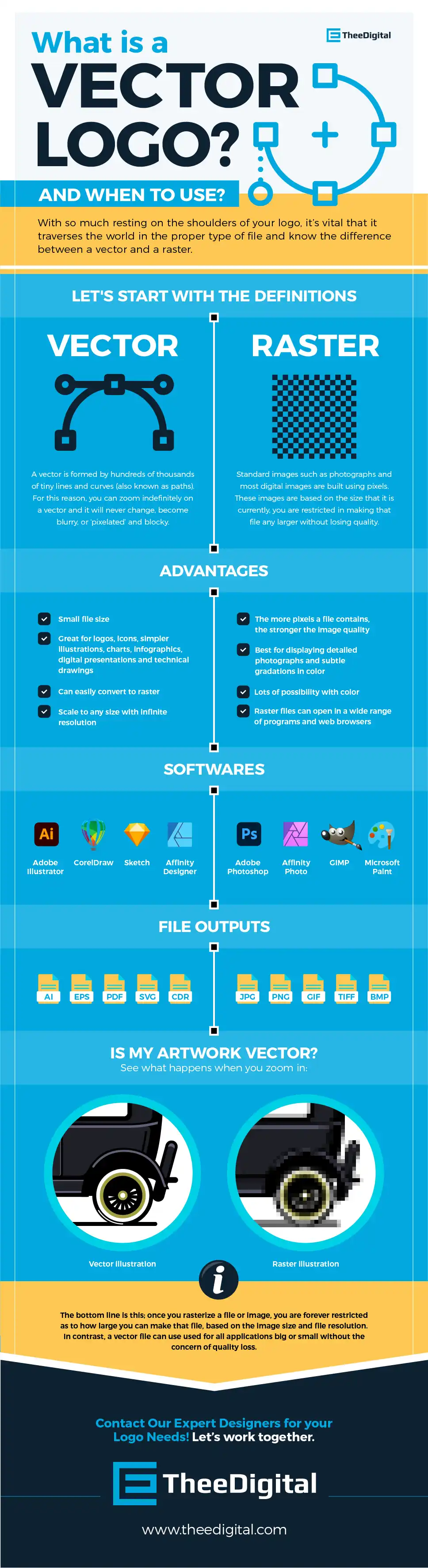
To appreciate the value of a vector logo, one must first understand the fundamental difference between the two primary types of digital images: raster and vector. This distinction is the cornerstone of professional design and brand management.
The Limitation of Raster Graphics
Most common images we encounter daily, such as photographs (JPEGs) or web graphics (PNGs and GIFs), are raster images. These are composed of a fixed grid of colored pixels. When you view a raster image at its intended size, it appears crisp and clear. However, because the number of pixels is static, scaling the image upward causes significant problems. As the image grows, the software must “guess” how to fill the gaps between pixels, resulting in a blurred, blocky, or “pixelated” appearance. For a brand, a pixelated logo conveys a lack of professionalism and attention to detail, which can subconsciously erode consumer trust.
The Precision of Vector Graphics
In contrast, vector graphics do not rely on pixels. Instead, they are built using mathematical formulas that define paths, points, lines, curves, and shapes. When you open a vector file, the software calculates the relationship between these mathematical coordinates in real-time.
This “resolution independence” is the defining characteristic of a vector logo. Because the image is based on math rather than a fixed grid, it can be scaled infinitely. You can enlarge a vector logo to the size of a skyscraper or shrink it to the size of a postage stamp, and the edges will remain perfectly sharp and defined. This mathematical precision ensures that the geometry of your brand—the specific curves of a font or the exact proportions of an icon—never changes.
Why Vector Formats are Crucial for Brand Strategy
From a brand management perspective, the choice of file format has long-term implications for marketing efficiency, cost-effectiveness, and visual consistency. A vector-first approach is a strategic hedge against future technical requirements.
Consistency Across Diverse Media
A successful brand must exist in a multi-channel environment. On any given day, your logo might need to appear on an Instagram post, an embroidered polo shirt, a laser-engraved glass award, and a high-resolution television advertisement.
Vector files provide the flexibility needed for these diverse applications. Because they are easily manipulated without quality loss, a single vector source file serves as the “master” from which all other versions are derived. This ensures that the brand looks identical whether it is printed on a business card or etched into a metal sign. Consistency is the bedrock of brand recognition; if your logo looks slightly different or degraded in various contexts, the brand’s authority is diluted.
Technical Versatility and Production
Many physical branding processes require vector paths to function. For example:
- Signage and Vinyl Cutting: Machines that cut shapes out of vinyl or metal follow the mathematical paths defined in a vector file.
- Embroidery: Digital embroidery machines use vector data to determine the direction and placement of stitches.
- Specialty Printing: Processes like foil stamping, embossing, and spot UV coating require precise vector outlines to create the physical plates or dies used in the printing press.
Without a vector version of your logo, these production methods become significantly more expensive and time-consuming, often requiring a designer to manually recreate the logo from scratch—a process that introduces the risk of human error and brand deviation.
Small File Sizes and Digital Performance
Despite their infinite scalability, vector files are often much smaller than high-resolution raster files. A high-resolution JPEG of a complex logo might be several megabytes, while the vector equivalent might be only a few hundred kilobytes. In the digital space, this contributes to faster website loading times and better overall user experience. As page speed is a factor in both SEO and consumer retention, the efficiency of vector formats like SVG (Scalable Vector Graphics) provides a measurable competitive advantage.
Common Vector File Formats Every Brand Manager Should Know
Not all vector files are created equal, and different formats serve different purposes within a corporate identity toolkit. Understanding these extensions allows brand managers to communicate effectively with vendors and agencies.
AI (Adobe Illustrator)
The .AI format is the industry standard for original logo creation. Developed by Adobe, these files contain the most comprehensive data about layers, colors, and effects. While .AI files are the “gold standard” for designers, they typically require specialized software to open. This is your “master file”—the one you should keep backed up in multiple locations.
EPS (Encapsulated PostScript)
For decades, .EPS was the primary format for high-quality print production. It is a universal vector format that can be opened by almost any professional design software. While it is being gradually replaced by modern formats, many commercial printers still prefer .EPS because of its reliability in handling complex color data and transparency for large-scale printing.
SVG (Scalable Vector Graphics)
The .SVG format has revolutionized how brands appear on the web. Unlike other vector formats, SVGs are XML-based, meaning the “image” is actually a piece of code that web browsers can read and render. This makes them perfectly sharp on Retina displays and mobile devices. Furthermore, because they are code, SVGs can be animated or manipulated via CSS, allowing for interactive brand experiences that were previously impossible.
PDF (Portable Document Format)
While often used for text documents, a .PDF can also be a powerful vector container. If a logo is saved as a “Press Quality” PDF from a vector program, it retains all the mathematical path data. This makes it an excellent format for sharing brand assets with non-designers, as it can be viewed in free software like Adobe Acrobat while still being usable by a professional printer.
Maintaining Your Brand Identity: The Vector Workflow
To ensure that your brand remains cohesive as it grows, your organizational workflow must revolve around the vector format. This involves more than just having the files; it involves knowing how to manage them.
Building a Brand Style Guide
Every professional brand strategy should include a style guide that specifies which file formats to use for specific applications. A robust guide will instruct employees to use PNGs for internal Word documents or PowerPoint presentations, but insist on vector formats (AI or EPS) for any external marketing collateral or physical production. This prevents the “telephone game” of design, where a low-quality screenshot of a logo is passed from person to person until the brand’s visual quality is unrecognizable.
Collaborating with Agencies and Printers
When onboarding a new creative agency or partnering with a vendor for signage, the first thing they will ask for is “the vector art.” Providing a high-quality vector file immediately establishes your company as a professional entity. It eliminates the need for the vendor to bill you for “cleanup” or “re-vectorization” services, which are often costly and can result in subtle changes to the logo’s appearance that you didn’t authorize.
Future-Proofing the Corporate Image
Design trends change, and technology evolves. However, the mathematical principles behind vectors remain constant. By maintaining a library of vector assets, a brand ensures that it is ready for whatever the next technological shift might be—whether that is ultra-high-definition displays, 3D printing applications, or new digital environments like augmented reality (AR). A vector logo is an investment in the longevity of the brand’s visual identity.

Conclusion: The Professional Standard
In the competitive landscape of modern business, where first impressions are often made in a fraction of a second, the technical quality of your logo is a direct reflection of your brand’s standards. A vector format is not merely a file type; it is the infrastructure of your corporate identity.
By prioritizing vector formats, you ensure that your logo is resilient, versatile, and always presented in the highest possible quality. This commitment to technical excellence allows the brand to scale effortlessly, moving from the screen to the physical world without losing its essence. For any organization serious about its brand strategy, the vector format is the only acceptable standard for its most important visual asset.
aViewFromTheCave is a participant in the Amazon Services LLC Associates Program, an affiliate advertising program designed to provide a means for sites to earn advertising fees by advertising and linking to Amazon.com. Amazon, the Amazon logo, AmazonSupply, and the AmazonSupply logo are trademarks of Amazon.com, Inc. or its affiliates. As an Amazon Associate we earn affiliate commissions from qualifying purchases.