
In the landscape of modern personal finance, few names carry as much weight as Vanguard. When investors search for “Vanguard S,” they are typically navigating toward one of the most significant financial innovations of the last century: the Vanguard S&P 500 index products. Whether referring to the Admiral Shares mutual fund (VFIAX) or the exchange-traded fund (ETF) equivalent (VOO), the “S” represents the S&P 500—the gold standard of American equity performance.
Understanding what Vanguard’s S-series offerings represent requires more than just looking at a ticker symbol. it requires an understanding of a philosophy that prioritized the individual investor over institutional profit. By providing a vehicle to own the 500 largest companies in the United States at a fraction of the cost of traditional management, Vanguard has redefined how wealth is built in the 21st century.
The Foundation of Vanguard’s Investment Philosophy
To understand the value of Vanguard’s S&P 500 offerings, one must first understand the unique structure of the company itself. Founded by John C. Bogle in 1975, Vanguard was built on a revolutionary “mutually owned” premise. Unlike other investment firms that are owned by outside shareholders or a small group of partners, Vanguard is owned by its funds, which are in turn owned by their investors.
The Pioneer of Passive Management
Before Vanguard, the prevailing wisdom in the “Money” niche was that investors needed high-priced “experts” to pick winning stocks. Bogle challenged this, arguing that most active managers fail to beat the market average over the long term, especially after accounting for their high fees. The “S” products—tracking the S&P 500—were the first manifestation of this “passive” philosophy. By simply matching the market rather than trying to beat it, Vanguard allowed investors to capture the full trajectory of American corporate growth.
The Ownership Structure Advantage
Because Vanguard is owned by its investors, it does not need to generate profits for a separate set of shareholders. This structural advantage is the primary reason why Vanguard’s S&P 500 funds have some of the lowest expense ratios in the industry. Every dollar saved in management fees is a dollar that remains in the investor’s account, where it can compound over decades. This “at-cost” model is the bedrock of the firm’s fiduciary appeal.
Demystifying the Expense Ratio
In the world of personal finance, the “expense ratio” is the most critical number an investor should watch. For many Vanguard S-series products, this ratio is as low as 0.03%. This means that for every $10,000 invested, the investor pays only $3 per year in management fees. Compared to the industry average for actively managed funds, which can exceed 1.0%, the cost savings of the Vanguard S-series are not just marginal—they are transformative for long-term wealth accumulation.
The Core of the “S”: Exploring the Vanguard S&P 500 ETF (VOO)
When people ask “What is Vanguard S,” they are most often encountering the Vanguard S&P 500 ETF, known by its ticker symbol, VOO. This fund is designed to track the Standard & Poor’s 500 Index, which comprises approximately 500 of the largest, most stable companies listed on U.S. stock exchanges.
What the S&P 500 Represents
The S&P 500 is often cited as the best single gauge of large-cap U.S. equities. It includes industry leaders across all sectors, from technology giants like Apple and Microsoft to consumer staples like Procter & Gamble. When you invest in a Vanguard S product, you are essentially buying a small slice of the entire American economy. This provides instant diversification, as your investment is spread across hundreds of different business models and revenue streams.
Key Performance Metrics
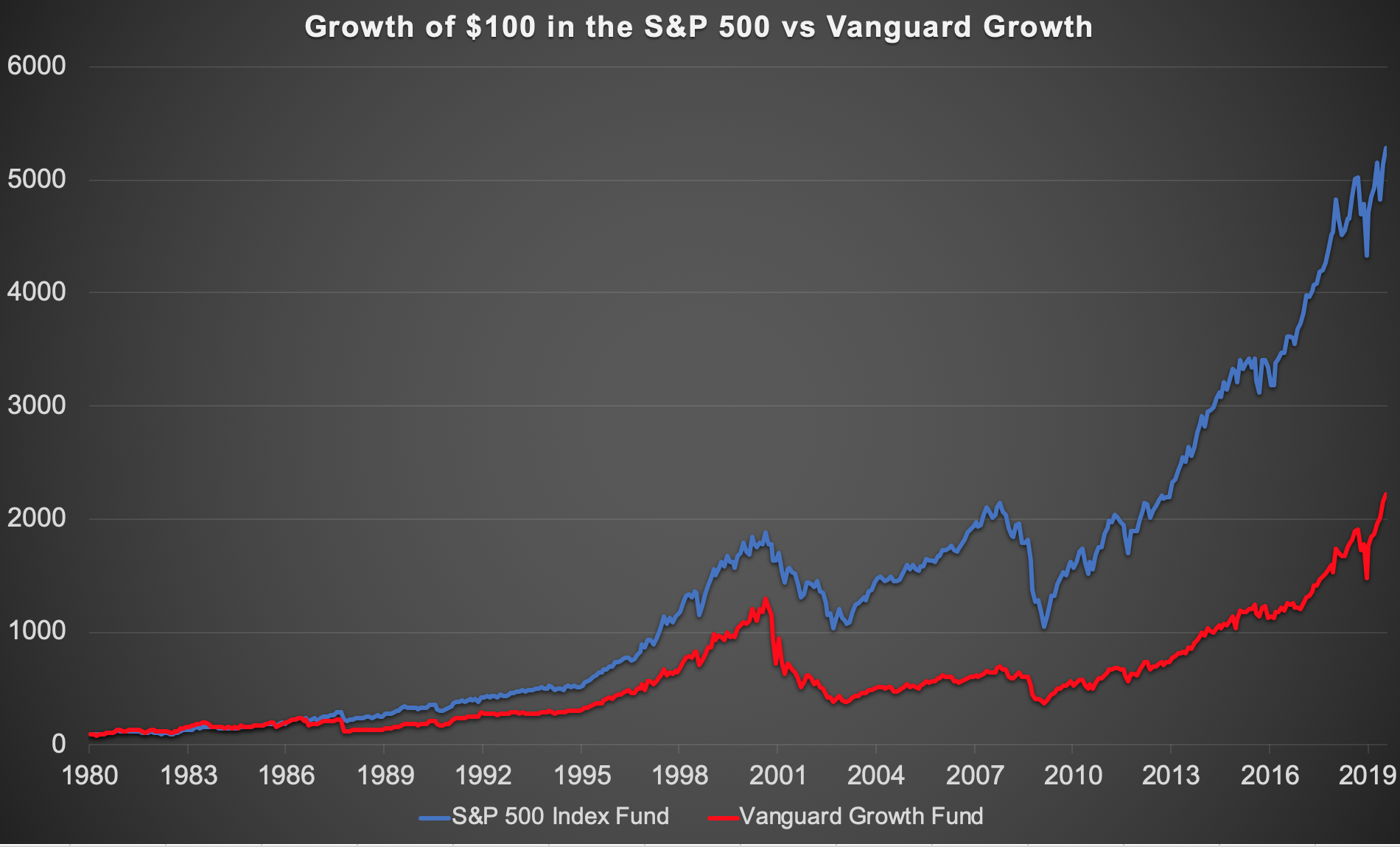
Historically, the S&P 500 has delivered an average annual return of approximately 10% before inflation. While the market experiences volatility in the short term, the long-term trend of the “S” has been consistently upward. Vanguard’s implementation of this index is noted for its “tracking error” precision—meaning the fund stays remarkably close to the actual performance of the index itself, ensuring that investors get exactly what they paid for.
Dividend Yields and Reinvestment
A significant portion of the total return from the Vanguard S&P 500 comes from dividends. The 500 companies in the index frequently distribute a portion of their profits to shareholders. Vanguard’s platform makes it seamless to participate in a Dividend Reinvestment Plan (DRIP). By automatically using these dividends to purchase more shares of the fund, investors harness the power of “compounding on steroids,” accelerating their path to financial independence.
Strategic Benefits of Vanguard S-Series and Index Funds
Investing in a Vanguard S-style fund is more than a simple transaction; it is a strategic move that addresses several pillars of financial planning: diversification, tax efficiency, and risk mitigation.
Broad Market Exposure and Risk Mitigation
One of the greatest risks in “Money” management is “single-stock risk”—the danger that a single company’s failure will ruin your portfolio. By holding 500 companies simultaneously, the Vanguard S-series effectively eliminates this risk. While the entire market may go down during a recession, it is highly unlikely that all 500 of America’s largest corporations will vanish. This makes VOO or VFIAX a “core” holding for both aggressive growth seekers and conservative retirees.
Tax Efficiency in an ETF Structure
For those concerned with digital wealth and tax-advantaged growth, the ETF version of the Vanguard S&P 500 (VOO) is particularly attractive. Due to the way ETFs are structured, they typically trigger fewer capital gains distributions than traditional mutual funds. This means investors have more control over when they pay taxes, allowing their money to grow unhindered by the “tax drag” that often plagues actively managed portfolios.
Liquidity and Accessibility
Vanguard’s S-series products are highly liquid. This means they can be bought or sold instantly during market hours. Whether you are a retail investor using a smartphone app or a institutional treasurer managing millions, the “S” products offer the flexibility to move in and out of the market with minimal friction. This accessibility has democratized high-level investing, making it available to anyone with as little as the price of a single share.
How to Incorporate Vanguard S into a Long-Term Portfolio
Integrating a Vanguard S&P 500 fund into your financial strategy requires a look at your overall asset allocation and time horizon. It is rarely the only fund an investor needs, but it is often the most important.
Matching Risk Tolerance with Index Funds
While the S&P 500 is diverse, it is still 100% equities. This means it can be volatile. A professional approach to “Money” management involves balancing the “S” with other asset classes, such as total bond market funds or international stocks. For a young investor, the Vanguard S might make up 70-80% of their portfolio. For someone nearing retirement, that percentage might drop to 40-50% to protect against market swings.
Dollar-Cost Averaging (DCA) into Vanguard S
The most successful Vanguard investors rarely try to “time the market.” Instead, they use a strategy called Dollar-Cost Averaging. By investing a fixed amount of money into the Vanguard S fund every month—regardless of whether the market is up or down—you end up buying more shares when prices are low and fewer when prices are high. Over time, this lowers your average cost per share and removes the emotional stress of investing.
Complementary Assets: Beyond the S&P 500
While the “S” covers large-cap companies, a truly holistic portfolio might also include Vanguard’s small-cap or mid-cap funds. Some investors prefer the Vanguard Total Stock Market Index (VTI), which includes the S&P 500 but adds thousands of smaller companies. However, the S&P 500 remains the “engine” of the American market, and for many, the Vanguard S product is the only equity exposure they feel they need to achieve their financial goals.
The Enduring Legacy of the Vanguard “S”
The question “What is Vanguard S?” ultimately leads to the heart of what it means to be a disciplined investor. It represents a shift away from the “get rich quick” schemes of stock picking and toward a “get rich surely” mindset. By capturing the growth of the 500 largest companies in the world’s largest economy, and doing so at the lowest possible cost, Vanguard has provided a blueprint for generational wealth.
For the modern investor, the Vanguard S&P 500 offerings are more than just financial tools; they are a testament to the power of simplicity. In an era where financial products are often designed to be complex and expensive, the Vanguard S stands as a beacon of transparency and efficiency. Whether you are just starting your journey into personal finance or you are looking to optimize a multi-million dollar portfolio, understanding and utilizing the “S” is a fundamental step toward long-term fiscal success. Through low costs, broad diversification, and the relentless power of compounding, the Vanguard S remains the cornerstone of the intelligent investor’s toolkit.
aViewFromTheCave is a participant in the Amazon Services LLC Associates Program, an affiliate advertising program designed to provide a means for sites to earn advertising fees by advertising and linking to Amazon.com. Amazon, the Amazon logo, AmazonSupply, and the AmazonSupply logo are trademarks of Amazon.com, Inc. or its affiliates. As an Amazon Associate we earn affiliate commissions from qualifying purchases.