
In the vast and often complex world of personal finance and investing, few names resonate with as much clarity and influence as Vanguard. More than just an investment company, Vanguard represents a paradigm shift, a deliberate rebellion against the traditional Wall Street model that prioritized corporate profits over investor returns. Understanding “what is Vanguard Investments” isn’t merely about recognizing a financial institution; it’s about grasping a philosophy that has democratized investing, empowered millions of everyday savers, and fundamentally reshaped the landscape of wealth building.
Founded on the radical principle of putting investors first, Vanguard pioneered the concept of low-cost index investing, advocating for a simple, disciplined, and long-term approach to wealth accumulation. This article delves into the core tenets of Vanguard, exploring its unique structure, diverse offerings, and the enduring impact of its mission to give investors “the best chance for investment success.”

The Vanguard Philosophy: A Low-Cost Revolution
At the heart of Vanguard’s identity lies a revolutionary philosophy, born from a deep conviction that the financial industry was failing ordinary investors. This philosophy, meticulously crafted and relentlessly pursued, hinges on the power of low costs, diversification, and long-term perspective.
The Vision of John C. Bogle
The genesis of Vanguard is inextricably linked to its visionary founder, John C. “Jack” Bogle. In 1975, Bogle launched Vanguard with an audacious idea: to create a mutual fund company structured differently, one that would serve its fund shareholders directly rather than outside owners. His core belief was simple yet profound: investment returns are finite, and what an investor earns, a financial intermediary often subtracts. Therefore, keeping costs – fees, commissions, and expenses – as low as possible was paramount to maximizing investor wealth. Bogle often quoted Shakespeare, saying, “Enough is enough,” implying that the financial industry was extracting far too much from its clients. His unwavering commitment to this principle laid the groundwork for a movement that would transform investing forever.
The Mutual Structure Advantage
Perhaps the most distinctive feature of Vanguard is its unique corporate structure. Unlike virtually every other asset manager, Vanguard is not publicly traded, nor is it privately owned by a small group of partners. Instead, it is owned by its funds, which, in turn, are owned by their investors. This mutual structure creates a direct alignment of interests: any profits generated by Vanguard are reinvested into the company or used to lower costs for its fund shareholders, rather than being distributed to external shareholders or partners. This structural advantage is the bedrock of Vanguard’s ability to consistently offer some of the lowest expense ratios in the industry, truly putting the investor first. It means that as Vanguard grows, its investors directly benefit from economies of scale.
The Power of Index Investing
While Bogle’s cost-cutting crusade was revolutionary, his other great contribution was popularizing index investing. In 1976, Vanguard launched the First Index Investment Trust (now the Vanguard 500 Index Fund), the first index fund available to individual investors. At the time, it was derided by critics as “Bogle’s folly.” However, Bogle understood a fundamental truth of financial markets: consistently beating the market through active management is exceedingly difficult, often impossible after factoring in fees and taxes.
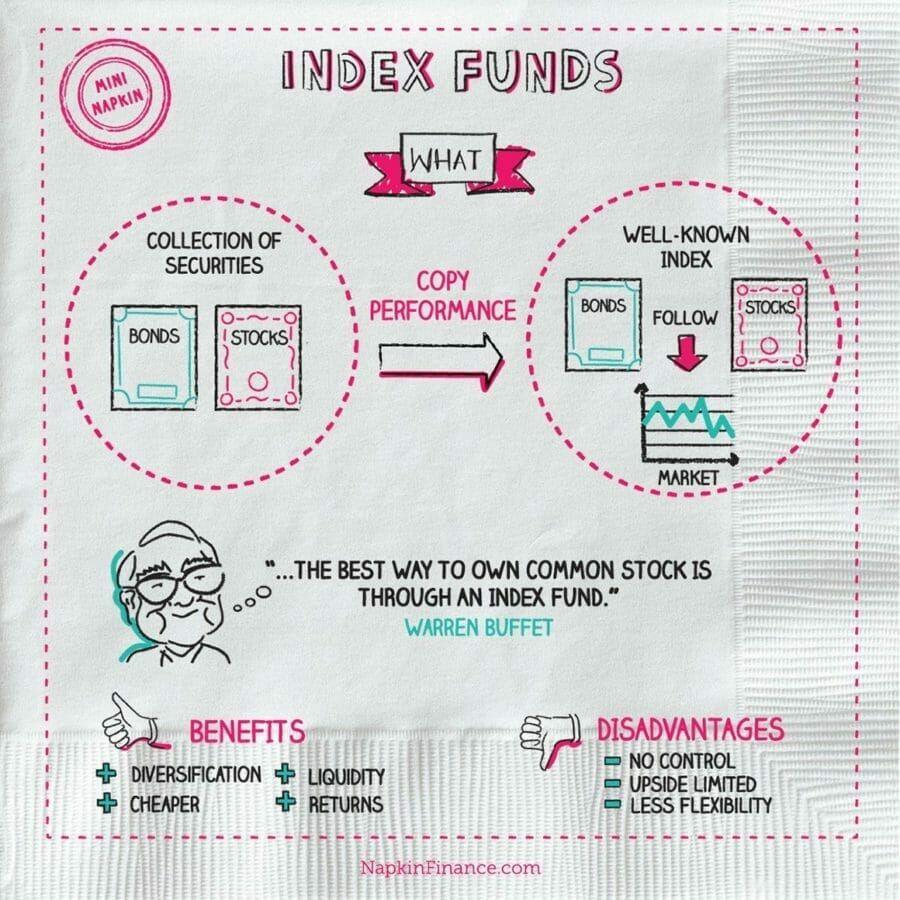
Index investing simply involves buying a broad basket of securities (like the S&P 500) that mirrors a specific market index. This strategy offers several powerful advantages:
-
Diversification: An index fund instantly provides exposure to hundreds or thousands of companies, significantly reducing company-specific risk.
-
Low Costs: Because index funds don’t require expensive research analysts or active trading, their management fees are dramatically lower than actively managed funds.
-
Long-Term Performance: Over long periods, broad market indexes have historically outperformed the vast majority of actively managed funds.
-
Simplicity: It removes the need for stock picking or market timing, allowing investors to focus on their long-term goals.
Vanguard’s relentless advocacy for index investing, combined with its unique cost-cutting structure, has made it synonymous with smart, low-cost, and effective wealth building.
Key Investment Offerings from Vanguard
Vanguard’s product lineup is designed to cater to a broad spectrum of investors, from novice savers to seasoned professionals, all while upholding its core principles of low cost and broad diversification.
ETFs and Mutual Funds: Passive Investing at its Core
The bedrock of Vanguard’s offerings consists of its vast array of exchange-traded funds (ETFs) and traditional mutual funds. These funds primarily track market indexes, offering investors exposure to everything from the total U.S. stock market (e.g., Vanguard Total Stock Market Index Fund) and international markets (e.g., Vanguard Total International Stock Index Fund) to specific sectors, bonds, and real estate.
-
Mutual Funds: These are professionally managed portfolios of stocks, bonds, or other investments. Vanguard’s mutual funds are renowned for their low expense ratios, especially their Admiral Shares, which offer even lower costs for investors meeting higher minimum investment thresholds.
-
ETFs (Exchange-Traded Funds): Similar to mutual funds, but they trade on stock exchanges like individual stocks throughout the day. Vanguard ETFs offer the same low-cost, diversified exposure as their mutual fund counterparts, often with even lower expense ratios and the flexibility of intraday trading. Many of Vanguard’s ETFs are simply lower-cost share classes of their existing index mutual funds, offering seamless convertibility and identical underlying portfolios.
These offerings are foundational for building diversified, low-cost portfolios suitable for long-term growth.
Target-Date Funds: Simplicity for Retirement
For investors seeking a “set-it-and-forget-it” solution, especially for retirement planning, Vanguard’s Target-Date Funds are incredibly popular. Known as Vanguard Target Retirement Funds, these are “funds of funds” that automatically adjust their asset allocation over time. They start with a more aggressive mix of stocks when the investor is young and gradually shift to a more conservative allocation of bonds as the target retirement date approaches.
-
Automatic Rebalancing: The funds are automatically rebalanced, removing the need for investors to manage their asset allocation.
-
Diversification: Each fund invests in a diversified portfolio of underlying Vanguard index funds, providing broad market exposure.
-
Simplicity: They offer a straightforward, single-fund solution for a comprehensive retirement portfolio, ideal for those who prefer minimal active management.
These funds simplify complex investment decisions, making retirement savings accessible and efficient for millions.
Brokerage Services and Financial Advice
Beyond its funds, Vanguard also offers a comprehensive suite of brokerage services, allowing investors to buy and sell individual stocks, bonds, and ETFs from Vanguard and other providers. Its platform is geared towards self-directed investors, providing tools and resources for portfolio management.
Recognizing that some investors desire professional guidance, Vanguard also provides various levels of financial advisory services, including:
-
Vanguard Personal Advisor Services: A hybrid model combining automated advice with access to human financial advisors, offering personalized financial plans, ongoing portfolio management, and goal-based guidance. This service is also known for its extremely competitive advisory fees, aligning with Vanguard’s low-cost ethos.
-
Traditional Financial Advisors: For more complex situations, Vanguard offers access to traditional financial planners.
These services demonstrate Vanguard’s commitment to supporting investors at various stages of their financial journey, whether they prefer a DIY approach or seek professional assistance.
ESG and Specialized Funds
Keeping pace with evolving investor demands, Vanguard has expanded its offerings to include Environmental, Social, and Governance (ESG) funds. These funds allow investors to align their portfolios with their values by investing in companies that meet specific sustainability and ethical criteria. Additionally, Vanguard offers specialized funds that focus on particular sectors, geographies, or investment styles for investors seeking more targeted exposure, albeit still within a low-cost framework.
Understanding Vanguard’s Unique Ownership Structure
The “mutual” structure of Vanguard is not merely a legal technicality; it is the driving force behind its enduring commitment to low costs and investor-centricity. This fundamental difference sets Vanguard apart from nearly every other financial services company.
Client-Owned, Not Shareholder-Owned
To reiterate, The Vanguard Group is unique in that it is client-owned. Its individual mutual funds and ETFs are owned by their respective shareholders (the investors). These funds, in turn, collectively own The Vanguard Group, Inc., the company that manages them. This creates a circular ownership structure where the ultimate beneficiaries are the investors themselves. There are no external stockholders or private partners who expect a share of the profits. This contrasts sharply with publicly traded asset managers like BlackRock or Fidelity, whose primary responsibility is to generate profits for their external shareholders.
The Direct Impact on Expense Ratios
The most tangible benefit of Vanguard’s mutual structure is its direct impact on expense ratios. Without the pressure to generate profits for external shareholders, Vanguard can operate at cost. When the company achieves economies of scale or manages its operations more efficiently, those savings are typically passed directly back to investors in the form of lower expense ratios. This continuous downward pressure on fees means that investors keep a larger share of their investment returns, compounding their wealth more effectively over time. Even a small difference in expense ratios, when compounded over decades, can amount to hundreds of thousands of dollars in foregone returns for an investor.
Aligning Interests with Investors
This unique ownership model creates an unparalleled alignment of interests between the company and its clients. Vanguard’s success is directly tied to its investors’ success. When investors achieve their financial goals, Vanguard fulfills its mission. This intrinsic alignment fosters a culture of transparency, integrity, and a relentless focus on improving investor outcomes. Every decision, from product development to operational efficiency, is filtered through the lens of what is best for the end investor, rather than what will maximize quarterly profits for outside owners.
Who Should Consider Investing with Vanguard?
Vanguard’s approach isn’t for everyone, but it resonates strongly with a particular type of investor who values prudence, efficiency, and long-term vision.
Long-Term Investors Seeking Low Costs
If your investment horizon is measured in years, even decades, and you understand the corrosive effect of high fees on long-term returns, Vanguard is an excellent choice. Its emphasis on low-cost index funds and ETFs ensures that more of your money stays invested and works for you. This makes it ideal for retirement savings (IRAs, 401(k)s), college savings (529 plans), and general wealth accumulation.
Beginners and DIY Investors
For those new to investing or who prefer to manage their own portfolios without constant intervention from a financial advisor, Vanguard offers a straightforward and robust platform. Its focus on simple, diversified index funds removes much of the complexity and emotional decision-making often associated with active investing. The availability of clear educational resources further empowers self-directed investors.
Those Prioritizing Diversification and Simplicity
Investors who believe in the power of broad market exposure rather than trying to pick winning stocks or time the market will find Vanguard’s philosophy and product suite perfectly aligned. Target-date funds, in particular, offer unparalleled simplicity for comprehensive, diversified portfolios that automatically adjust over time.
Retirement Savers
Given its deep roots in retirement planning and its suite of target-date funds, Vanguard is an exceptionally strong choice for individuals saving for retirement. The low costs, diversified portfolios, and focus on long-term growth are perfectly suited for the decades-long journey of building a retirement nest egg.
Getting Started with Vanguard: A Practical Guide
Embarking on your investment journey with Vanguard is a relatively straightforward process, designed to be accessible and user-friendly.
Opening an Account
The first step is to open an investment account. Vanguard offers a variety of account types to suit different needs:
-
Individual or Joint Brokerage Accounts: For general investment goals.
-
Retirement Accounts: Traditional IRA, Roth IRA, SEP IRA, SIMPLE IRA, and Solo 401(k) for tax-advantaged retirement savings.
-
Education Savings Accounts: 529 plans for college savings.
-
Custodial Accounts: For investing on behalf of a minor.
You can open an account online through Vanguard’s website, which typically involves providing personal information, funding details, and selecting your desired account type.
Choosing Your Investments
Once your account is open, the next crucial step is selecting your investments. For most long-term investors, particularly beginners, a diversified portfolio of low-cost index funds or ETFs is often recommended.
-
Target-Date Funds: If you prefer a hands-off approach, choose a target-date fund corresponding to your approximate retirement year (e.g., Vanguard Target Retirement 2050 Fund).
-
Core Index Funds/ETFs: For a more customized approach, consider a combination of a total U.S. stock market fund (e.g., VTSAX/VTI), a total international stock market fund (e.g., VTIAX/VXUS), and a total bond market fund (e.g., VBTLX/BND). The specific allocation between stocks and bonds will depend on your risk tolerance and time horizon.
-
Vanguard Personal Advisor Services: If you prefer professional guidance, consider enrolling in their advisory service, which will help build and manage a personalized portfolio for you.
Building a Diversified Portfolio
A well-diversified portfolio is key to long-term success. This typically means spreading your investments across different asset classes (stocks and bonds), different geographies (U.S. and international), and different company sizes. Vanguard’s core index funds make this easy to achieve with just a few holdings, providing broad market exposure at minimal cost. Regularly review your asset allocation to ensure it still aligns with your goals and risk tolerance.

Automated Investing and Rebalancing
To maintain discipline and reduce emotional decision-making, consider setting up automated contributions to your Vanguard account. This “dollar-cost averaging” strategy involves investing a fixed amount regularly, regardless of market fluctuations. Over time, this can smooth out returns and remove the temptation to time the market. Additionally, you may want to periodically rebalance your portfolio to bring it back to your desired asset allocation, which can be done manually or automatically through certain Vanguard services or funds.
In conclusion, Vanguard is more than an investment firm; it’s a movement built on a powerful, investor-first philosophy. By prioritizing low costs, promoting diversified index investing, and operating under a unique client-owned structure, Vanguard has empowered millions to take control of their financial futures. For those seeking a disciplined, efficient, and cost-effective path to long-term wealth accumulation, understanding and utilizing Vanguard’s offerings can be a profoundly rewarding decision.
aViewFromTheCave is a participant in the Amazon Services LLC Associates Program, an affiliate advertising program designed to provide a means for sites to earn advertising fees by advertising and linking to Amazon.com. Amazon, the Amazon logo, AmazonSupply, and the AmazonSupply logo are trademarks of Amazon.com, Inc. or its affiliates. As an Amazon Associate we earn affiliate commissions from qualifying purchases.