
In the vast and often complex landscape of personal finance and investing, the name Vanguard stands as a beacon for millions of investors worldwide. When one refers to a “Vanguard account,” they are generally talking about an investment account held with The Vanguard Group, Inc., one of the largest and most respected investment management companies globally. But a Vanguard account is far more than just a place to hold investments; it represents an embrace of a distinct investment philosophy rooted in low costs, broad diversification, and an investor-centric ownership structure.
Founded by the legendary John Bogle in 1975, Vanguard revolutionized the investment industry by popularizing index funds and prioritizing shareholder interests above all else. Unlike most financial firms that are publicly traded or privately owned for profit, Vanguard is structured as a mutual company, meaning the funds themselves own the company. This unique setup directly aligns Vanguard’s interests with those of its investors, fostering a commitment to lowering costs and maximizing long-term returns for its clients. This article will delve into what constitutes a Vanguard account, exploring its core principles, the various account types available, how to open and manage one, and the benefits and considerations of choosing Vanguard for your financial journey.
Vanguard’s Core Philosophy and Offerings
At the heart of every Vanguard account lies a distinctive investment philosophy that has shaped modern investing. This philosophy emphasizes long-term growth through cost-efficiency and broad market exposure, a direct legacy of its founder, John Bogle.
The Vanguard Difference: Investor-Owned Structure
Perhaps the most defining characteristic of Vanguard is its unique corporate structure. Vanguard is a mutual company, which means it is owned by the Vanguard funds, which, in turn, are owned by their shareholders—the investors. This “mutual” structure is a profound differentiator. In traditional asset management firms, profits are siphoned off to external shareholders or private owners. At Vanguard, any profits generated by the company are instead reinvested back into the business, primarily by lowering expense ratios and improving services for its fund shareholders.
This inverted structure means there is no inherent conflict of interest between Vanguard and its investors. The company’s primary goal is not to maximize its own profit but to serve the long-term interests of its fund shareholders by providing investment products and services at the lowest possible cost. This commitment to cost efficiency has translated into Vanguard consistently offering some of the lowest expense ratios in the industry, allowing more of an investor’s money to remain invested and compound over time. This foundational principle is what underpins the value proposition of every Vanguard account.
Emphasis on Low-Cost Index Funds and ETFs
Vanguard is synonymous with index investing. John Bogle pioneered the retail index fund in 1976 with the creation of the First Index Investment Trust (now the Vanguard 500 Index Fund). The premise is elegantly simple yet powerfully effective: instead of trying to beat the market (which most active managers fail to do consistently after fees), an index fund aims to mirror the performance of a specific market index, such as the S&P 500, by holding all or a representative sample of its constituent securities.
The advantages are manifold. Index funds offer instant diversification across a broad segment of the market, reducing the risk associated with individual stock picking. More importantly, their passive management style results in significantly lower operating costs (expense ratios) compared to actively managed funds. Over decades, these lower costs translate into substantial outperformance for index investors, as every dollar saved in fees is a dollar that remains invested and can grow. Vanguard offers an extensive array of low-cost index funds and exchange-traded funds (ETFs) covering various asset classes, geographies, and market capitalizations, forming the backbone of most Vanguard accounts. These products allow investors to build highly diversified portfolios tailored to their risk tolerance and financial goals without incurring prohibitive fees.
A Diverse Array of Investment Products
While known for index funds, Vanguard’s offerings extend beyond them. Investors with a Vanguard account can access a comprehensive suite of investment products designed to meet diverse financial needs. This includes:
-
Actively Managed Funds: Vanguard also offers a selection of actively managed mutual funds, typically employing a conservative, long-term approach with a focus on value and quality, and still striving for competitive expense ratios.
-
Bond Funds: A wide range of fixed-income funds, from short-term Treasury funds to long-term corporate bond funds, enabling investors to incorporate stability and income into their portfolios.
-
Money Market Funds: For short-term cash management and liquidity, Vanguard provides several money market options.
-
Target-Date Funds: These “all-in-one” funds automatically adjust their asset allocation over time, becoming more conservative as the investor approaches their target retirement date, offering a convenient, hands-off approach to retirement planning.
-
Individual Stocks and ETFs from Other Providers: While Vanguard primarily promotes its own funds, a Vanguard brokerage account allows investors to buy and sell individual stocks and ETFs from other providers, offering flexibility for those with specific investment preferences.
This broad selection ensures that whether you’re a novice investor or an experienced one, you can find suitable investment vehicles within your Vanguard account to construct a well-rounded portfolio.
Types of Vanguard Accounts and Their Purposes
A “Vanguard account” isn’t a single entity but rather an umbrella term for various types of investment accounts, each designed to serve specific financial goals and benefit from different tax treatments. Understanding these distinctions is crucial for effective financial planning.
Retirement Accounts: Securing Your Future
Vanguard is a popular choice for retirement savings due to its low-cost structure, which significantly impacts long-term wealth accumulation. The most common types of retirement accounts offered include:
-
Individual Retirement Accounts (IRAs):
-
Traditional IRA: Contributions may be tax-deductible, and earnings grow tax-deferred until retirement, when withdrawals are taxed as ordinary income.
-
Roth IRA: Contributions are made with after-tax money, but qualified withdrawals in retirement are entirely tax-free. This is often preferred by those who expect to be in a higher tax bracket in retirement.
-
SEP IRA (Simplified Employee Pension): Designed for self-employed individuals and small business owners, offering higher contribution limits than Traditional or Roth IRAs.
-
SIMPLE IRA (Savings Incentive Match Plan for Employees): Another option for small businesses, allowing both employer and employee contributions.
-
-
Rollover IRAs: When you leave a job, you can “roll over” your old 401(k) or other employer-sponsored retirement plan into a Rollover IRA at Vanguard. This allows you to maintain tax-deferred growth and often access a wider range of investment options with lower fees than your old plan.
-
401(k)s and Other Employer-Sponsored Plans: While you might not directly open a 401(k) account with Vanguard (as it’s managed by your employer’s plan administrator), Vanguard is a leading provider of investment options within many 401(k) plans. If your workplace plan offers Vanguard funds, you’re indirectly investing with them.
These accounts provide powerful tax advantages, whether through upfront deductions or tax-free growth and withdrawals, making them indispensable tools for building a secure retirement.
Taxable Brokerage Accounts: Flexibility and Growth
For savings beyond retirement limits or for shorter-term financial goals, taxable brokerage accounts offer unparalleled flexibility.
-
Individual Brokerage Accounts: This is a standard investment account where you can buy and sell a wide array of investments. There are no contribution limits, but earnings (dividends, interest, capital gains) are subject to taxation in the year they are realized. These accounts are ideal for general savings, down payments on homes, or any goal that doesn’t fit the strictures of retirement accounts.
-
Joint Brokerage Accounts: Similar to individual accounts but owned by two or more individuals (e.g., spouses), offering shared ownership and typically rights of survivorship.
-
Trust Accounts: For more complex estate planning, Vanguard allows for the establishment of investment accounts held within a trust, providing control over assets and potential tax advantages or estate planning benefits.
These accounts provide liquidity and direct access to your funds, albeit without the tax benefits of retirement vehicles. They are crucial for building wealth outside of tax-advantaged wrappers.
Specialized Accounts: Education and More
Vanguard also facilitates accounts designed for specific, often long-term, financial objectives beyond retirement.
-
529 Plans: These state-sponsored savings plans are specifically designed to help families save for education expenses. Contributions grow tax-free, and qualified withdrawals for tuition, room and board, books, and other educational costs are also tax-free. Vanguard manages 529 plans for several states, offering a selection of low-cost funds.
-
Custodial Accounts (UGMA/UTMA): Uniform Gifts to Minors Act (UGMA) and Uniform Transfers to Minors Act (UTMA) accounts allow an adult to hold and manage assets (investments) for the benefit of a minor. The assets technically belong to the minor, but the custodian controls them until the minor reaches the age of majority (typically 18 or 21, depending on the state). These accounts can be excellent tools for gifting and teaching financial responsibility.
By offering a diverse range of account types, Vanguard empowers investors to tailor their savings and investment strategies to their unique life stages and financial aspirations, ensuring they have the right tools for every goal.
Opening and Managing a Vanguard Account
Embarking on your investment journey with Vanguard is a straightforward process, designed to be accessible to a wide range of investors. Understanding how to open, fund, and manage your account effectively is key to maximizing its potential.
The Account Opening Process
Opening a Vanguard account typically involves a few simple steps, largely performed online:

-
Choose Your Account Type: As discussed, the first step is to decide which type of account best suits your financial goals (e.g., Roth IRA for retirement, individual brokerage for general savings, 529 for education).
-
Gather Necessary Information: You’ll need standard personal information, including your Social Security number, date of birth, mailing address, and employment details. For funding, you’ll also need your bank account and routing number.
-
Complete the Application: Vanguard’s website offers an intuitive online application process. You can also apply by phone or by mailing in a paper application, though the online method is generally the fastest.
-
Fund Your Account: After your account is opened, you’ll need to make an initial deposit. Minimum investment requirements vary depending on the specific fund or account type, but many popular Vanguard index funds and ETFs require as little as $3,000 for mutual funds or the price of one share for ETFs. Some starter options, like Vanguard Digital Advisor, have even lower minimums.
The process is designed to be user-friendly, guiding you through each step and ensuring you provide all necessary details for compliance and security.
Funding Your Vanguard Account
Once your account is open, there are several convenient ways to add money:
-
Electronic Bank Transfers (ACH): This is the most common method, allowing you to link your bank account for one-time or recurring automatic investments. It’s convenient for dollar-cost averaging.
-
Wire Transfers: For larger, more immediate transfers, wire transfers are an option, though they may incur fees from your bank.
-
Check Deposits: You can mail a check to Vanguard for deposit into your account.
-
Account Rollovers: If you’re consolidating old retirement accounts, you can initiate a direct rollover from your previous custodian to your new Vanguard IRA.
-
Direct Deposit: You can set up a portion of your paycheck to be directly deposited into your Vanguard account, making saving automatic.
Establishing regular contributions, even small ones, is a powerful strategy for long-term wealth building, thanks to the magic of dollar-cost averaging and compounding.
Investment Selection and Portfolio Construction
After funding, the next step is to choose your investments. Vanguard offers various levels of assistance depending on your comfort level:
-
Self-Directed Investing: For hands-on investors, you can browse Vanguard’s extensive catalog of mutual funds and ETFs, selecting individual investments to build a diversified portfolio based on your risk tolerance and goals. This requires a good understanding of asset allocation and diversification.
-
Target-Date Funds: For a “set it and forget it” approach, target-date funds offer a professionally managed, diversified portfolio that automatically adjusts its asset allocation to become more conservative as you approach a specific retirement year.
-
Vanguard Digital Advisor: This is Vanguard’s robo-advisor service, offering automated portfolio management and financial planning guidance at a low cost. You provide your financial goals, and the platform creates and manages a personalized portfolio using Vanguard ETFs.
-
Vanguard Personal Advisor Services: For investors with higher asset levels (typically $50,000 or more), this service combines automated investing with access to human financial advisors. It offers personalized financial planning, portfolio management, and ongoing guidance for a competitive advisory fee.
Vanguard provides ample resources, educational materials, and tools to help you make informed investment decisions, whether you choose to manage your portfolio independently or seek professional guidance.
Navigating the Vanguard Platform
Managing your Vanguard account is primarily done through its robust online platform and mobile app:
-
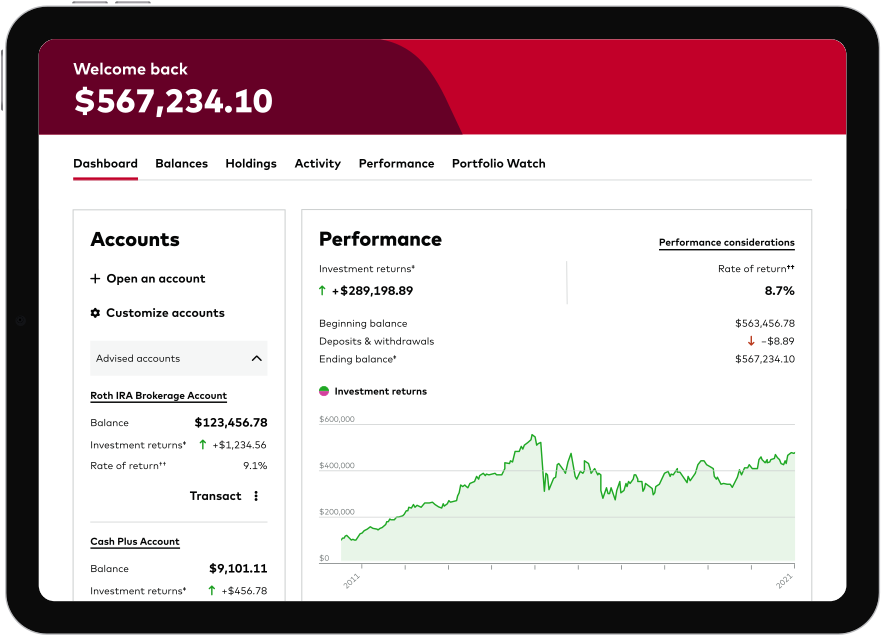
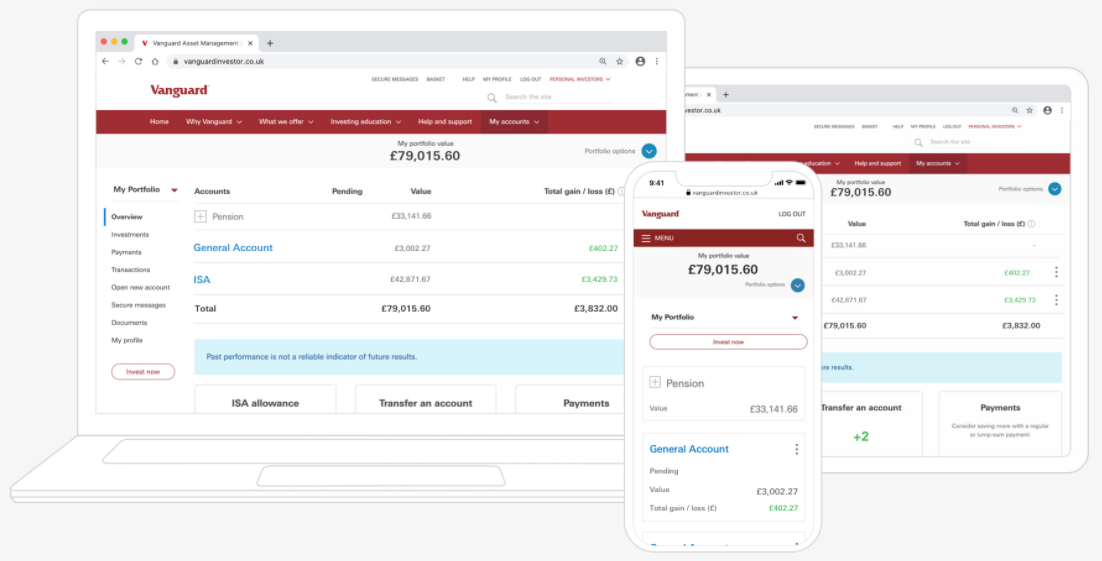
Online Portal: The Vanguard website provides a secure dashboard where you can view your account balances, portfolio performance, transaction history, statements, and tax documents. You can also place trades, set up automatic investments, update personal information, and access a wealth of research and educational content.
-
Mobile App: The Vanguard mobile app offers convenient access to your accounts on the go, allowing you to check balances, monitor performance, and make quick trades from your smartphone or tablet.
-
Customer Support: Vanguard offers comprehensive customer support via phone and secure messaging. While some users historically reported long wait times, Vanguard has invested significantly in improving its client service channels.
The platform is designed for functionality and clarity, prioritizing ease of use for long-term investors rather than complex trading features.
The Benefits and Considerations of Investing with Vanguard
Choosing where to invest your hard-earned money is a significant decision. Understanding the strengths and potential areas for improvement with a Vanguard account can help you determine if it aligns with your financial strategy.
Advantages: Why Investors Choose Vanguard
Vanguard has cultivated a loyal investor base due to several compelling advantages that stem directly from its unique structure and philosophy:
-
Unrivaled Low Costs: This is arguably Vanguard’s most significant differentiator. Its investor-owned structure means lower expense ratios on its funds compared to virtually all competitors. Over decades, these seemingly small differences in fees can translate into hundreds of thousands of dollars more in an investor’s pocket due to the power of compounding. More of your money stays invested, working for you.
-
Broad Diversification: Vanguard’s emphasis on index funds and ETFs provides investors with instant, broad market diversification. This reduces idiosyncratic risk associated with individual stock picking and provides exposure to thousands of companies across various sectors and geographies, aligning with modern portfolio theory.
-
Strong Reputation and Stability: As one of the largest asset managers globally, with trillions under management, Vanguard boasts an exceptional track record and a reputation for stability and trustworthiness. This provides peace of mind for long-term investors.
-
Investor-Friendly Approach: Vanguard’s culture is deeply rooted in serving its investors. This manifests in clear, transparent communication, a focus on investor education, and a consistent message about the benefits of long-term, disciplined investing.
-
Extensive Educational Resources: Vanguard provides a wealth of free educational content, research papers, and tools on its website, empowering investors to make informed decisions and understand fundamental investment principles. This is invaluable for both novice and experienced investors.
These advantages collectively make a Vanguard account an incredibly powerful tool for disciplined, long-term wealth accumulation, especially for those who prioritize efficiency and broad market exposure.
Potential Considerations and Drawbacks
While Vanguard offers many benefits, it’s also important to acknowledge potential areas that might not appeal to every type of investor:
-
Customer Service Wait Times: Historically, one of the most common complaints about Vanguard has been long phone wait times for customer service, especially during peak market activity. While Vanguard has reportedly made efforts to improve this, it can still be a point of frustration for some users.
-
Platform Interface (Historically): Compared to some newer fintech platforms that prioritize sleek, highly graphical interfaces and advanced trading tools, Vanguard’s platform has sometimes been perceived as more utilitarian or less “flashy.” While it’s robust and functional for long-term investing, it might not appeal to those seeking a highly dynamic or gamified trading experience. However, Vanguard has continuously been updating and modernizing its digital experience.
-
Less Focus on Individual Stock Trading: While a Vanguard brokerage account allows for individual stock purchases, their core focus and strength lie in funds and ETFs. Investors primarily interested in frequent, active individual stock trading, complex options strategies, or penny stocks might find other brokers with more specialized tools and research better suited to their needs.
-
Proprietary Funds: While Vanguard offers many third-party ETFs, its strength and cost advantages largely come from its own proprietary mutual funds and ETFs. Investors looking for a wider selection of funds from other specific providers might find more options at other brokerage firms.
-
Minimum Investment Requirements: Some of Vanguard’s traditional mutual funds have initial minimum investment requirements (e.g., $3,000). While their ETFs and robo-advisor options have lower barriers to entry, this can sometimes be a hurdle for absolute beginner investors with very limited capital.
These considerations are typically minor for the long-term, cost-conscious investor Vanguard targets, but they are worth noting for those with different preferences or investment styles.
Is a Vanguard Account Right for You?
The decision to open a Vanguard account ultimately depends on your individual financial goals, investment philosophy, and personal preferences. However, based on its core strengths, Vanguard is particularly well-suited for certain types of investors.
Ideal Investors for Vanguard
A Vanguard account is an excellent choice for:
-
Long-Term Investors: If your investment horizon spans years or decades (e.g., for retirement, college savings, or general wealth building), Vanguard’s low-cost, broadly diversified approach is designed to maximize compounding returns over time.
-
Cost-Conscious Investors: Those who understand the profound impact of fees on long-term investment performance will appreciate Vanguard’s unwavering commitment to minimizing expense ratios.
-
Investors Seeking Diversification through Index Funds/ETFs: If you believe in the efficiency of market indexes and the benefits of passive investing, Vanguard offers an unparalleled selection of high-quality, low-cost index funds and ETFs to build a robust portfolio.
-
Investors Who Prefer a Less Hands-On Approach: Vanguard’s target-date funds and Digital Advisor service provide convenient, automated portfolio management solutions for those who prefer to “set it and forget it” or need some guidance without full human advisory costs.
-
Those Who Value Simplicity and Transparency: Vanguard’s straightforward approach and clear communication resonate with investors who appreciate clarity over complex strategies or flashy interfaces.
If you align with these characteristics, a Vanguard account could be a cornerstone of your financial planning.
When to Explore Other Options
While Vanguard serves a vast segment of the investing public, it might not be the optimal fit for everyone:
-
Frequent Active Traders: If you engage in frequent buying and selling of individual stocks, options, or other complex securities, or rely heavily on advanced charting and real-time data, other brokers specializing in active trading might offer more tailored tools and lower per-trade costs.
-
Those Needing Highly Personalized, High-Touch Financial Planning from a Dedicated Advisor: While Vanguard Personal Advisor Services offers a hybrid approach, investors seeking a very hands-on, deeply personalized relationship with a local financial planner for comprehensive wealth management might prefer independent Registered Investment Advisors (RIAs).
-
Investors Primarily Interested in Individual Stock Picking or Niche Investments: While you can buy individual stocks, Vanguard’s platform and research are primarily geared towards funds. If your portfolio is dominated by a diverse range of individual stocks, sector-specific plays, or alternative investments, other platforms might offer more specialized research and trading features.
-
Those Seeking a “Gamified” or Social Trading Experience: Newer investment apps often aim to make investing feel like a game or incorporate social features. Vanguard’s platform is more traditional and focuses on the serious business of long-term investing.
In conclusion, a Vanguard account is more than just a brokerage service; it’s an embodiment of a powerful, investor-first philosophy that has transformed how millions approach wealth building. By prioritizing low costs, broad diversification, and a unique ownership structure, Vanguard offers a compelling pathway for long-term investors to achieve their financial goals. Whether you’re planning for retirement, saving for education, or simply building general wealth, understanding what a Vanguard account entails and how it aligns with your objectives is a critical step towards securing your financial future.
aViewFromTheCave is a participant in the Amazon Services LLC Associates Program, an affiliate advertising program designed to provide a means for sites to earn advertising fees by advertising and linking to Amazon.com. Amazon, the Amazon logo, AmazonSupply, and the AmazonSupply logo are trademarks of Amazon.com, Inc. or its affiliates. As an Amazon Associate we earn affiliate commissions from qualifying purchases.