
In the complex machinery of global finance, few levers are as powerful or as closely watched as the United States interest rate. While the term is often used in the singular, it primarily refers to the federal funds rate—the target interest rate set by the Federal Reserve. This single percentage point serves as the heartbeat of the American economy, dictating the cost of borrowing, the incentive for saving, and the overall tempo of economic growth. For investors, business owners, and everyday consumers, understanding the nuances of the US interest rate is not merely an academic exercise; it is a fundamental necessity for sound financial planning.

The Mechanics of the Federal Funds Rate
To understand what the US interest rate is, one must first understand the role of the Federal Reserve, often referred to as “the Fed.” As the central bank of the United States, the Fed operates under a “dual mandate” established by Congress: to promote maximum employment and to maintain stable prices (control inflation). The federal funds rate is the primary tool used to achieve these goals.
The Federal Open Market Committee (FOMC)
The specific level of the interest rate is determined by the Federal Open Market Committee (FOMC). This group of economists and bank presidents meets eight times a year to review economic data, including inflation reports, employment figures, and GDP growth. Based on this data, they decide whether to raise, lower, or maintain the target range for the federal funds rate.
Technically, the federal funds rate is the interest rate at which commercial banks and credit unions lend their excess reserves to each other overnight. While the Fed does not “set” the exact rate every bank uses for every loan, by adjusting the target range for these overnight loans, it influences the entire “yield curve”—from the interest you earn on a savings account to the rate you pay on a 30-year mortgage.
Monetary Policy: Hawking vs. Dovish Stances
When the FOMC raises rates, it is often described as a “hawkish” move intended to “cool down” an overheating economy. High interest rates make borrowing more expensive, which slows down spending and investment, eventually lowering inflation. Conversely, when the Fed lowers rates, it is a “dovish” move intended to “stimulate” growth. Lower rates make it cheaper for businesses to expand and for consumers to buy homes and cars, thereby injecting liquidity into the market.
How Interest Rates Shape Personal Finance
The ripple effects of a change in the federal funds rate are felt almost immediately in the personal finance sector. Because the federal funds rate serves as the benchmark for the “prime rate”—the rate banks charge their most creditworthy corporate customers—it directly dictates the terms of consumer debt.
The Cost of Borrowing: Mortgages and Auto Loans
For most Americans, the most significant impact of interest rate fluctuations is seen in the housing market. While mortgage rates are not tied directly to the federal funds rate (they are more closely linked to the yield on the 10-year Treasury note), they move in the same general direction. A 1% or 2% increase in interest rates can add hundreds of dollars to a monthly mortgage payment, significantly reducing a buyer’s purchasing power and slowing down the real estate market.
Similarly, auto loans and personal loans become more expensive as rates rise. When the Fed embarks on a rate-hiking cycle, the cost of financing a vehicle increases, which can lead to a decrease in consumer demand for durable goods.
The Evolution of Credit Card Debt
Credit cards are perhaps the most sensitive to Fed policy. Most credit cards have a variable Annual Percentage Rate (APR) that is tied directly to the prime rate. When the Fed raises the federal funds rate by 0.25%, credit card APRs typically follow suit within one or two billing cycles. For individuals carrying significant revolving balances, these incremental increases can lead to a compounding debt trap, making it essential to prioritize debt repayment during high-rate environments.
The Silver Lining: Savings and Fixed Income
While high interest rates are a burden for borrowers, they are a boon for savers. For over a decade following the 2008 financial crisis, interest rates on traditional savings accounts were near zero. However, in a higher-rate environment, High-Yield Savings Accounts (HYSAs), Certificates of Deposit (CDs), and Money Market Accounts offer meaningful returns. For retirees or those living on fixed incomes, higher US interest rates provide a way to generate “safe” yield without venturing into the volatility of the stock market.
The Relationship Between Interest Rates and the Investment Landscape
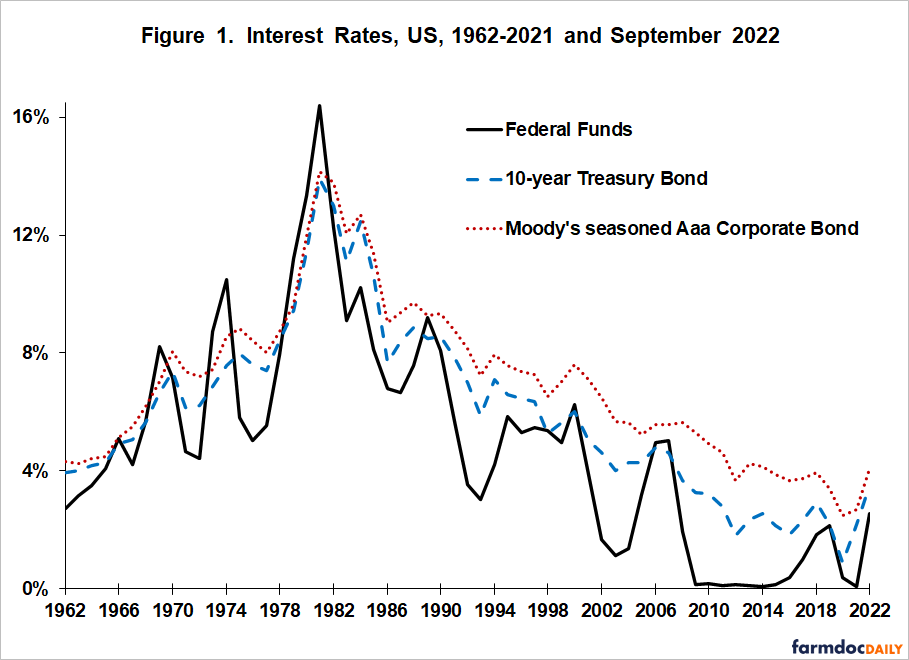
In the world of investing, interest rates act like gravity on asset prices. As interest rates rise, the “gravity” increases, pulling down the valuations of various asset classes. Conversely, when rates fall, asset prices tend to float higher.
The Stock Market and Valuations
Interest rates influence the stock market in two primary ways: corporate profitability and valuation models. First, higher rates increase the cost of doing business. Companies with high debt loads must spend more on interest payments, which eats into their net income.
Second, analysts use “discounted cash flow” (DCF) models to value companies. These models calculate the present value of a company’s future earnings. Because a higher interest rate increases the “discount rate,” those future earnings are worth less in today’s dollars. This is why growth stocks—companies that are expected to generate the bulk of their profits far into the future—often see their share prices drop sharply when interest rates rise.
The Inverse Relationship of Bonds
The bond market is perhaps the most direct reflection of interest rate movements. There is an immutable inverse relationship between bond prices and interest rates. When new bonds are issued with higher interest rates, existing bonds with lower rates become less attractive, causing their market price to fall. Investors must understand “duration risk”—the sensitivity of a bond’s price to changes in interest rates—to navigate a changing rate environment successfully.
Alternative Assets and Opportunity Cost
Interest rates also define the “opportunity cost” of holding non-yielding assets like gold or Bitcoin. Since gold pays no dividends or interest, it becomes less attractive when an investor can earn a guaranteed 5% yield on a US Treasury bill. Therefore, high-interest rate environments often put downward pressure on precious metals and speculative assets.
The Macroeconomic Ripple Effect: Inflation and the US Dollar
Beyond individual bank accounts and stock portfolios, the US interest rate is the primary tool for managing the health of the national economy and maintaining the US Dollar’s status as the world’s reserve currency.
Controlling Inflation
The Fed’s most urgent reason for raising interest rates is usually to combat inflation. Inflation erodes purchasing power, making goods and services more expensive for everyone. By raising rates, the Fed reduces the money supply and slows down demand. The goal is a “soft landing”—slowing the economy enough to curb inflation without triggering a recession. This is a delicate balancing act that requires constant adjustment of the interest rate.
The Strength of the US Dollar
Interest rates play a pivotal role in international currency markets. When US interest rates are higher than those in other developed nations, the US Dollar tends to strengthen. This happens because global investors seek the higher yields offered by US dollar-denominated assets, such as Treasuries.
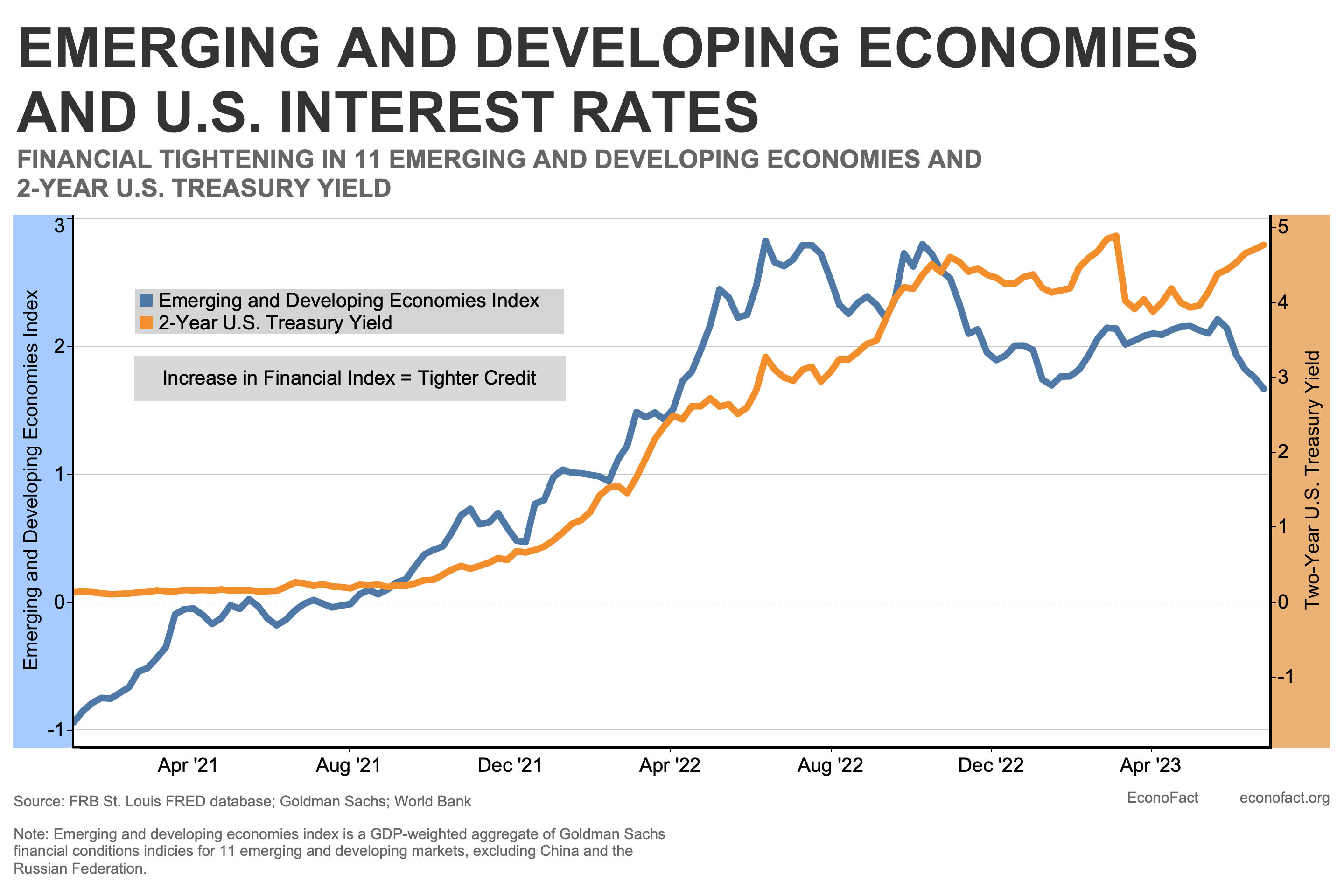
A strong dollar is a double-edged sword. It makes foreign goods cheaper for American consumers (which helps lower inflation), but it makes American exports more expensive for the rest of the world, potentially hurting US manufacturers. Furthermore, many emerging market nations have debt denominated in US dollars; when US rates rise and the dollar strengthens, the cost for these nations to service their debt increases, which can lead to global financial instability.
Strategic Financial Planning in a Shifting Rate Environment
Given that interest rates are cyclical, successful financial management requires a proactive approach to both debt and investment.
- For Borrowers: In a rising rate environment, it is prudent to lock in fixed-rate debt whenever possible. Refinancing an adjustable-rate mortgage or consolidating high-interest credit card debt into a fixed-rate personal loan can save thousands of dollars. In a falling rate environment, the strategy flips; it may be wise to wait for lower rates before committing to long-term financing.
- For Investors: Diversification is key. While rising rates can hurt stocks, they often improve the yields on “cash equivalents.” A “laddered” approach to bonds or CDs—where investments mature at different intervals—allows an investor to reinvest capital at higher rates as they become available, mitigating the risk of being locked into a low yield.
- For Business Owners: Capital expenditure (CapEx) should be timed with interest rate cycles in mind. Expanding operations or purchasing heavy equipment is significantly more cost-effective when borrowing costs are low. When rates are high, businesses should focus on maintaining lean operations and optimizing cash flow to avoid the need for expensive external financing.
The US interest rate is more than just a number on a news ticker; it is the fundamental price of money. By influencing everything from the cost of a loaf of bread to the valuation of a multi-billion dollar tech giant, the federal funds rate remains the most significant variable in the global financial equation. Whether we are in an era of “easy money” or “monetary tightening,” those who monitor and adapt to the movements of the Federal Reserve are best positioned to protect and grow their wealth.
aViewFromTheCave is a participant in the Amazon Services LLC Associates Program, an affiliate advertising program designed to provide a means for sites to earn advertising fees by advertising and linking to Amazon.com. Amazon, the Amazon logo, AmazonSupply, and the AmazonSupply logo are trademarks of Amazon.com, Inc. or its affiliates. As an Amazon Associate we earn affiliate commissions from qualifying purchases.