
In the landscape of American commerce, the US District Court serves as the primary arena where high-stakes financial disputes are adjudicated. For business owners, investors, and financial professionals, understanding the function of these courts is not merely a legal necessity but a fundamental component of risk management. The US District Court system represents the trial level of the federal judiciary, acting as the gatekeeper for cases involving federal law, constitutional issues, and significant multi-state commercial conflicts.
When a corporation faces a multi-million dollar breach of contract claim or a group of shareholders files a class-action lawsuit for securities fraud, the battleground is almost always the US District Court. Understanding its mechanics is essential for any entity looking to protect its assets, manage its liabilities, and navigate the complex regulatory environment of the United States.

The Structural Role of District Courts in the Economic Landscape
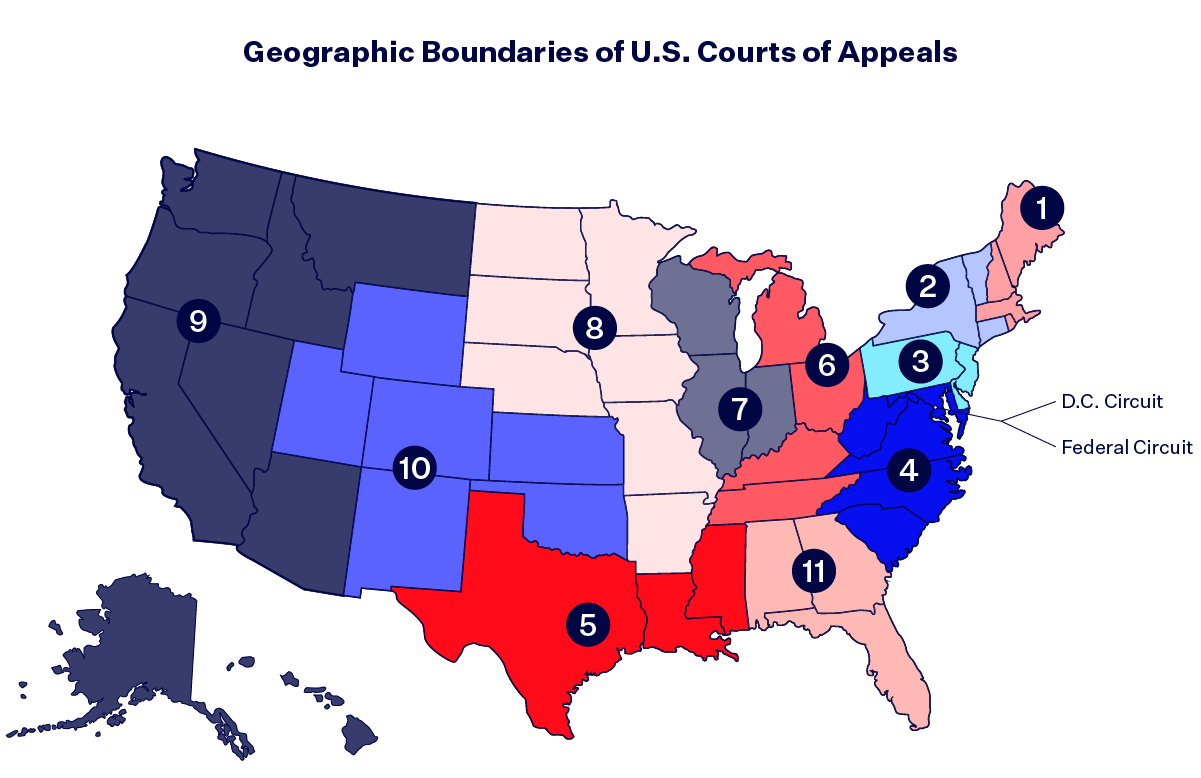
The United States is divided into 94 federal judicial districts. Each state has at least one district court, while more populous states like California, Texas, and New York have several. From a financial perspective, these courts are the “fact-finders.” They are where evidence is presented, witnesses are cross-examined, and the initial valuation of damages is determined.
Jurisdiction and the $75,000 Threshold
One of the most critical aspects of the US District Court for the business community is “diversity jurisdiction.” Under federal law, the district courts have the authority to hear civil cases between parties from different states where the “amount in controversy” exceeds $75,000.
For a business operating nationally, this is a vital safeguard. It allows a company based in Delaware to move a lawsuit out of a potentially biased local state court and into a federal district court. Financially, this often results in a more predictable legal environment, as federal courts follow standardized rules of evidence and procedure, which can be easier to account for in a corporate legal budget.
Federal Question Jurisdiction and Financial Regulation
Beyond diversity of citizenship, district courts handle cases involving “federal questions.” This includes any matter arising under the US Constitution, federal laws, or treaties. For the “Money” niche, this is where the majority of regulatory enforcement happens. Cases involving the Securities and Exchange Commission (SEC), the Federal Trade Commission (FTC), and the Internal Revenue Service (IRS) are litigated here. When a financial institution is accused of violating the Dodd-Frank Act or the Sarbanes-Oxley Act, the US District Court is the venue where the financial consequences—often reaching into the billions of dollars—are decided.
Commercial Litigation: Where High-Stakes Financial Decisions are Made
The US District Court is the primary venue for complex commercial litigation. These cases are not just legal hurdles; they are significant financial events that can affect a company’s stock price, its credit rating, and its overall valuation.
Securities Litigation and Shareholder Rights
Perhaps the most impactful financial cases in the district courts are securities class actions. When a public company is accused of making misleading statements that artificially inflated its stock price, shareholders may sue in federal court. These cases are governed by the Private Securities Litigation Reform Act (PSLRA), and the outcomes are monumental.
Settlements in these cases often reach hundreds of millions of dollars. For investors, the US District Court is the mechanism through which they recoup losses caused by corporate malfeasance. For the corporation, a district court filing of this nature requires immediate financial disclosure (8-K filings) and the setting aside of significant legal reserves, which can impact quarterly earnings reports.
Intellectual Property as a Financial Asset
In the modern economy, intellectual property (IP) is often a company’s most valuable asset. Patent infringement, trademark violations, and trade secret thefts are almost exclusively handled in US District Courts because they involve federal statutes.
A “permanent injunction” issued by a district court judge can effectively shut down a competitor’s product line, resulting in a massive shift in market share and revenue. Conversely, a district court’s decision to invalidate a patent can lead to a sudden drop in a company’s valuation. The financial stakes of IP litigation in federal court are so high that “patent litigation funding” has become its own asset class, where investors provide the capital for lawsuits in exchange for a percentage of the final judgment or settlement.
Bankruptcy Appeals and Restructuring
While the US Bankruptcy Court is a separate unit of the district court, the district court itself plays a pivotal role in the financial restructuring of distressed companies. Under certain circumstances, a US District Court judge may “withdraw the reference” and take over a bankruptcy case, or they may act as the first level of appeal for bankruptcy court decisions. For creditors looking to recover pennies on the dollar, the legal interpretations made at the district court level regarding the priority of claims can mean the difference between a total loss and a partial recovery.

The Economic Cost of Federal Legal Proceedings
Litigating in the US District Court is an expensive endeavor. For a business, a federal lawsuit is a liability that must be managed with the same rigor as any other operational cost.
Legal Fees and the Discovery Process
The most significant financial drain in a US District Court case is the “discovery” phase. This is the period where both parties exchange documents, take depositions, and gather evidence. In the era of “E-Discovery,” where companies must search through millions of emails, Slack messages, and server logs, the costs can escalate into the millions before a trial even begins.
From a financial management standpoint, companies must perform a cost-benefit analysis at every stage of the district court process. The billable hours of high-end corporate law firms, combined with the cost of expert witnesses—who may charge upwards of $1,000 per hour to testify on financial modeling or market impact—make the US District Court an expensive forum.
Settlement Dynamics and Risk Assessment
Because the costs and risks of a trial are so high, the vast majority of civil cases in US District Courts settle before reaching a jury. Business finance professionals often work closely with legal counsel to determine a “settlement value.” This value is calculated by multiplying the probability of an adverse judgment by the potential total loss, then adding the projected legal fees.
The US District Court facilitates this through mandatory mediation and settlement conferences. Effectively, the court acts as a catalyst for a financial transaction: the “purchase” of a release from liability to provide the business with financial certainty and to stop the “burn rate” of legal expenses.
Regulatory Enforcement and White-Collar Financial Crimes
The US District Court is also the venue for criminal prosecutions involving financial crimes. The Department of Justice (DOJ) brings cases here involving money laundering, wire fraud, insider trading, and violations of the Foreign Corrupt Practices Act (FCPA).
The Role of the SEC and DOJ
When the SEC brings an enforcement action against a financial firm, it often seeks “disgorgement” (the return of ill-gotten gains) and significant civil penalties. These cases are filed in the US District Court. For a financial professional, a judgment in such a case can lead to a “bar,” preventing them from ever working in the securities industry again—a total loss of future earning potential.
Furthermore, the district court has the power to appoint “receivers.” A receiver is a neutral third party who takes control of a business’s finances to protect assets for creditors or victims of fraud. This effectively strips the owners of their financial control, highlighting the absolute power the district court holds over private commerce.
Compliance as a Financial Mitigation Tool
The threat of US District Court litigation has birthed a massive “compliance” industry. Banks, hedge funds, and corporations spend billions annually on compliance software and personnel to ensure they never end up as a defendant in federal court. In the eyes of a Chief Financial Officer, a robust compliance program is an insurance policy. It is a proactive financial strategy designed to avoid the astronomical costs associated with district court trials and the subsequent damage to the corporate brand.
Strategic Financial Management in the Face of Federal Lawsuits
Navigating the US District Court requires a blend of legal strategy and financial foresight. Companies must be prepared for the “long game,” as federal cases can drag on for years.
D&O Insurance and Indemnification
Directors and Officers (D&O) insurance is a critical financial tool for those navigating the federal court system. This insurance covers the legal costs and potential settlements for executives sued in US District Court for breaches of fiduciary duty or securities violations. Without this financial backstop, the personal wealth of corporate leaders would be at constant risk, making it nearly impossible to recruit high-level talent.
Impact on Corporate Valuation and M&A
When a company is involved in a significant case in a US District Court, it must be disclosed during “due diligence” in any merger or acquisition (M&A). A pending federal lawsuit is a “contingent liability.” It can lead to a lower purchase price, or the buyer may require an “escrow” where a portion of the sale price is held back until the district court case is resolved.
In conclusion, the US District Court is much more than a legal institution; it is a central pillar of the American financial system. It defines the boundaries of corporate behavior, provides a venue for the resolution of massive economic disputes, and imposes significant financial consequences on those who violate federal law. For anyone involved in the world of money—from the individual investor to the CEO of a multinational corporation—the US District Court is an entity that demands constant attention and strategic planning. Understanding its role is not just about staying out of trouble; it is about protecting wealth and ensuring the long-term viability of a business in a highly litigious global economy.
aViewFromTheCave is a participant in the Amazon Services LLC Associates Program, an affiliate advertising program designed to provide a means for sites to earn advertising fees by advertising and linking to Amazon.com. Amazon, the Amazon logo, AmazonSupply, and the AmazonSupply logo are trademarks of Amazon.com, Inc. or its affiliates. As an Amazon Associate we earn affiliate commissions from qualifying purchases.