
In the landscape of computer science, few concepts are as foundational yet misunderstood as “Turing completeness.” It is a term frequently tossed around in software engineering circles, blockchain whitepapers, and discussions about the limits of Artificial Intelligence. At its core, Turing completeness is the yardstick by which we measure the power of a computational system. It defines what a machine can and cannot do, setting the boundaries for every piece of software ever written. To understand Turing completeness is to understand the DNA of the digital world.
The Foundations: Alan Turing and the Universal Machine
The journey toward understanding modern computing begins not with silicon chips, but with a theoretical paper published in 1936 by the British mathematician Alan Turing. In his landmark work, On Computable Numbers, Turing introduced a thought experiment known as the “Turing Machine.” This was not a physical device, but a mathematical model designed to define the limits of what could be calculated.

The Mechanics of the Turing Machine
A Turing machine consists of an infinite strip of tape divided into squares, a “head” that can read and write symbols on that tape, and a set of rules (a state table) that tells the head what to do based on the symbol it sees. While deceptively simple, Turing proved that such a machine could simulate any algorithmic logic. If a problem can be solved via a step-by-step process, a Turing machine can solve it, given enough time and tape.
The Church-Turing Thesis
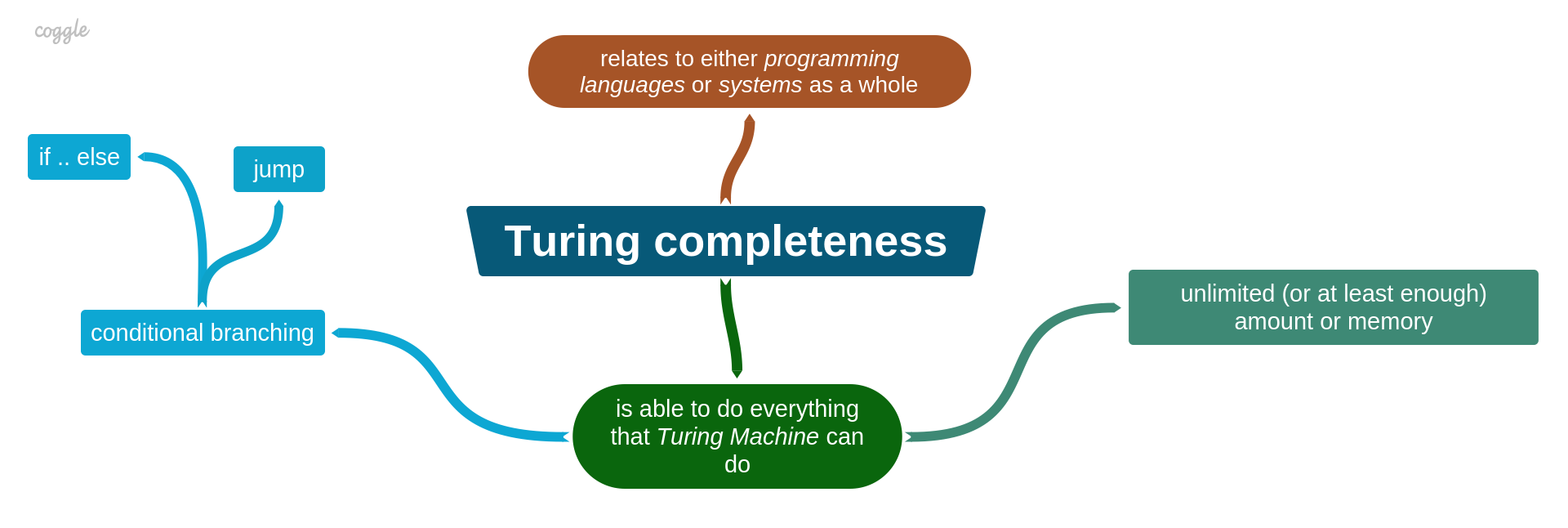
Collaborating conceptually with Alonzo Church, Turing helped establish what is now known as the Church-Turing Thesis. This principle suggests that any function that can be calculated by an algorithm can be calculated by a Turing machine. Consequently, a system is deemed “Turing complete” if it can perform any calculation that a Universal Turing Machine can. In the realm of technology, this means the system is capable of universal computation—it can run any program, provided it has sufficient memory and time.
Defining Turing Completeness in Modern Computing
In the practical world of 21st-century technology, Turing completeness refers to the ability of a programming language or a piece of hardware to simulate the logic of a Turing machine. Most modern programming languages, from Python and C++ to JavaScript and Rust, are Turing complete. This universality is why we can use the same general-purpose computer to browse the web, edit high-definition video, and train neural networks.
The Requirements for a Turing Complete System
For a system to achieve this status, it must possess two primary capabilities:
-
Conditional Branching: The ability to make decisions (e.g., “If X is true, do Y; otherwise, do Z”).
-
Arbitrary Memory/Iteration: The ability to store data and repeat a process indefinitely (loops or recursion).
Without these, a system is “Turing incomplete.” While Turing incomplete systems are limited—for instance, a simple calculator that only performs basic arithmetic—they are often safer and more predictable because they are guaranteed to finish their tasks.
The Trade-off Between Power and Predictability
While Turing completeness offers infinite flexibility, it introduces a significant challenge known as the “Halting Problem.” Alan Turing proved that it is impossible to create an algorithm that can determine, for any arbitrary program and input, whether the program will eventually stop or run forever. This is why software can “freeze” or enter infinite loops. In high-security or mission-critical tech environments, developers sometimes intentionally use Turing-incomplete languages to ensure that a program will always conclude within a specific timeframe.
The Practical Implications for Software Development and AI
For software developers, Turing completeness is the reason for the “Write Once, Run Anywhere” philosophy. Because most modern hardware and languages are Turing complete, they are computationally equivalent. A complex algorithm written in Java can, in theory, be translated and run in Python or even assembly language, as they all share the same logical ceiling.
The Role of Turing Completeness in Language Selection
When a tech architect chooses a language for a new tool, they aren’t usually worried about whether the language is Turing complete—they assume it is. Instead, they focus on “Turing tar-pits.” This term refers to languages that are Turing complete but offer so little abstraction that they are nearly impossible to use for practical work (like the esoteric language “Brainfuck”). The goal of modern software tools is to provide a “user-friendly” interface to the underlying universal power of Turing completeness.
Turing Completeness and Artificial Intelligence
The rise of AI and Large Language Models (LLMs) has brought a new dimension to this discussion. Is a neural network Turing complete? Recent research suggests that when LLMs are given an external “scratchpad” (memory) and the ability to loop their thoughts back into the system, they can exhibit Turing-complete behavior. This means that AI is evolving from a simple pattern-matching tool into a universal reasoning engine capable of executing complex, multi-step algorithmic logic.
Turing Completeness in the Web3 and Blockchain Era
One of the most intense modern debates regarding Turing completeness has occurred within the blockchain and cryptocurrency space. This niche provides a perfect case study on why a technology might—or might not—want to be “complete.”
Ethereum vs. Bitcoin: Two Philosophical Paths
Bitcoin was designed with a intentionally limited, Turing-incomplete scripting language. This was a security choice; by limiting the complexity of scripts, Satoshi Nakamoto ensured that the network would not be vulnerable to infinite loops or complex “logic bombs” that could crash the nodes.
In contrast, Ethereum was built as a “World Computer.” By introducing Solidity, a Turing-complete programming language for smart contracts, Ethereum allowed developers to build decentralized applications (dApps) of arbitrary complexity. This enabled the birth of Decentralized Finance (DeFi) and Non-Fungible Tokens (NFTs), but it also introduced the need for “Gas”—a fee mechanism used to prevent infinite loops from clogging the network.
The Risks of “Logic Errors” in Smart Contracts
Because Ethereum is Turing complete, it is susceptible to the Halting Problem. A poorly written smart contract could theoretically run forever. To solve this, the “Gas” limit acts as a physical constraint; once a program runs out of pre-paid “fuel,” it is forced to stop. This is a fascinating example of how a technical theory from 1936 dictates the economic structure of modern multi-billion-dollar digital assets.
Beyond Logic: Accidental Turing Completeness
Perhaps the most intriguing aspect of this topic is “Accidental Turing Completeness.” This occurs when a system designed for a specific, limited purpose is found to be capable of universal computation through clever exploitation of its features.
Hidden Computing Power in Everyday Tools
Tech enthusiasts have discovered Turing completeness in the most unlikely places:
-
Microsoft Excel: With the introduction of LAMBDA functions, Excel is now a Turing-complete language, meaning you could theoretically build a fully functional operating system inside a spreadsheet.
-
PowerPoint: Through complex interactions of animations and triggers, researchers have demonstrated that PowerPoint is Turing complete.
-
Magic: The Gathering: The popular card game has been proven to be Turing complete. If you set up a specific board state with the right cards, the game’s mechanics can simulate any computer program.
The Future: Quantum and Biological Computing
As we look toward the future of technology, we are moving beyond traditional binary systems. Quantum computing and biological computing represent the next frontier. While these systems operate on different physical principles—qubits instead of bits—the goal remains the same: achieving “Universal Quantum Turing Completeness.” These machines will not necessarily compute more than a Turing machine, but they will compute certain types of complex logic (like prime factorization or molecular simulation) exponentially faster.

Conclusion: The Universal Language of Tech
Turing completeness is more than just a dry academic definition. It is the bridge between human imagination and machine execution. It tells us that our digital world is not limited by the laws of logic, but only by our ability to write the code and provide the energy to run it.
Whether you are a software developer building the next great app, a cybersecurity expert protecting against recursive exploits, or an AI researcher pushing the boundaries of machine reasoning, you are working within the house that Alan Turing built. By understanding Turing completeness, we gain a deeper appreciation for the sheer universality of the tools at our fingertips. Every smartphone, every server, and every smart device is a testament to the idea that a simple set of rules can unlock the infinite possibilities of the universe.
aViewFromTheCave is a participant in the Amazon Services LLC Associates Program, an affiliate advertising program designed to provide a means for sites to earn advertising fees by advertising and linking to Amazon.com. Amazon, the Amazon logo, AmazonSupply, and the AmazonSupply logo are trademarks of Amazon.com, Inc. or its affiliates. As an Amazon Associate we earn affiliate commissions from qualifying purchases.