
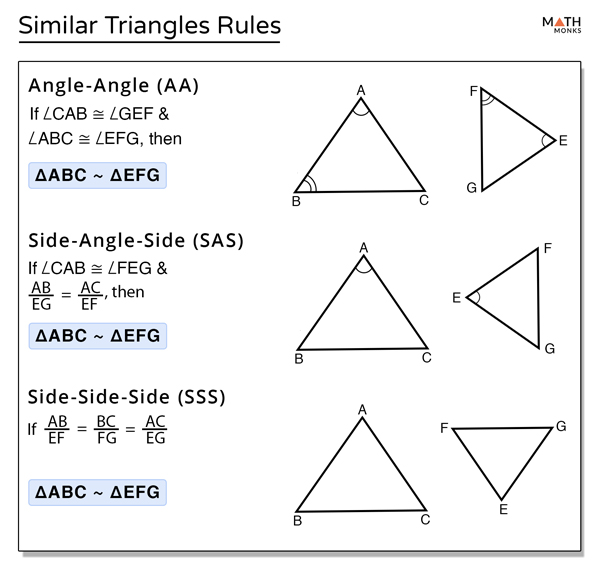
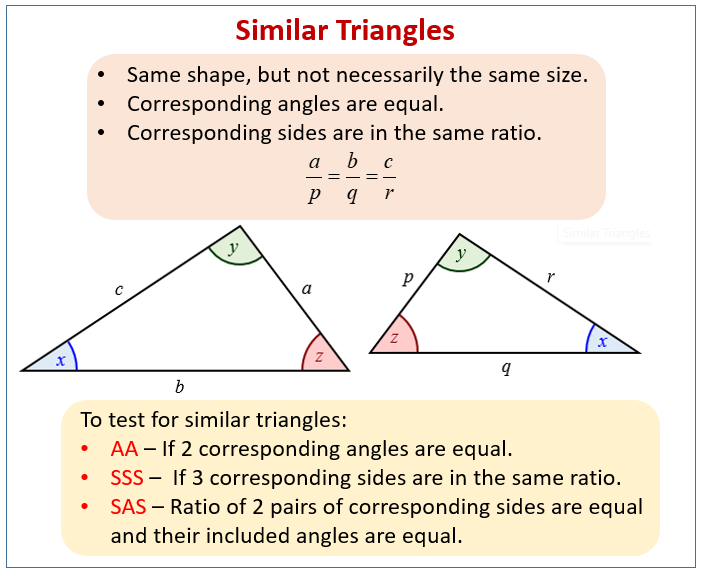
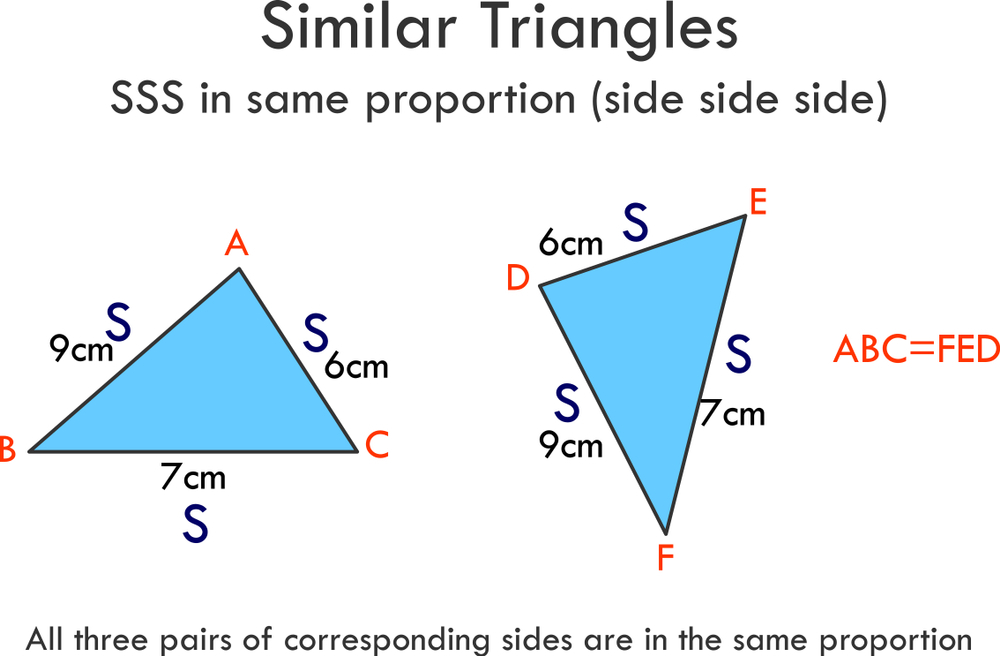
In the realm of pure mathematics, triangle similarity is a fundamental theorem taught in secondary education. It dictates that two triangles are similar if their corresponding angles are congruent and their corresponding sides are in proportion. While this may seem like an abstract academic exercise, triangle similarity is actually the silent engine driving some of the most sophisticated technological advancements of the 21st century.
From the hyper-realistic environments of modern video games to the spatial awareness of self-driving cars, the principles of similarity allow software and hardware to interpret 3D space, render complex textures, and calculate distances with pinpoint accuracy. In the world of technology, triangle similarity is not just a geometric concept; it is a vital algorithm for spatial computation.
The Architectural Blueprint: Triangle Similarity in Computer Graphics
At its core, every digital 3D object—whether it is a character in a cinematic masterpiece or a CAD model for a new engine—is composed of a “triangle mesh.” Because triangles are the simplest polygons that can define a flat plane in three-dimensional space, they are the “atoms” of the digital world.
The Role of Proportional Scaling in 3D Modeling
In software development and 3D design, scaling is a constant requirement. When a designer increases the size of a digital asset, the software uses the principles of Side-Side-Side (SSS) and Side-Angle-Side (SAS) similarity to ensure that the object maintains its structural integrity. If the triangles forming the mesh were not scaled proportionally, the model would warp, creating visual artifacts and “tearing” in the digital fabric.
By maintaining similarity, graphics engines ensure that a model looks identical in shape whether it represents a tiny icon on a smartphone screen or a massive projection on an IMAX theater. This consistency is essential for cross-platform compatibility, allowing developers to build once and deploy across devices with varying resolutions and aspect ratios.
Level of Detail (LOD) and Performance Optimization
One of the most ingenious applications of triangle similarity in tech is the “Level of Detail” (LOD) optimization. Modern GPUs (Graphics Processing Units) face the challenge of rendering millions of polygons in real-time. To save processing power, developers use similarity algorithms to create “simplified” versions of 3D models.
When a character in a game is far away from the camera, the engine replaces the high-resolution mesh with a lower-resolution version. These two meshes are geometrically similar; they share the same proportions and silhouettes, but the distant model contains fewer, larger triangles. This allows the system to maintain a high frame rate without the user noticing the reduction in detail, as the geometric similarity preserves the visual “essence” of the object.
The Visionary Edge: Triangulation and Depth Perception
Beyond rendering, triangle similarity is the backbone of how machines “see” the physical world. This field, known as Computer Vision, relies heavily on the geometric relationship between cameras, light, and objects.
Stereo Vision and Distance Calculation
Human depth perception works because our eyes are set slightly apart, creating two different angles of view. Technology mimics this through stereo vision. By using two cameras (as seen in high-end smartphones and autonomous vehicles), the software creates a triangle between the two lenses and a specific point on an object.
The system knows the distance between the two lenses (the base of the triangle) and the angles at which each camera perceives the object. By applying triangle similarity, the software can calculate the height of the triangle—which represents the distance of the object from the device. This is the fundamental math behind “Portrait Mode” on iPhones and the obstacle detection systems in Tesla vehicles.
LiDAR and Time-of-Flight Sensors
Advanced gadgets now use LiDAR (Light Detection and Ranging) or Time-of-Flight (ToF) sensors. These devices pulse light at a surface and measure how it bounces back. The sensor creates millions of microscopic “similarity triangles” every second to map the topography of a room. In augmented reality (AR) applications, such as IKEA’s furniture placement app or Pokémon GO, this geometric mapping allows digital objects to stay “anchored” to a real-world surface by ensuring the digital triangles of the 3D model align perfectly with the spatial triangles detected by the sensor.
Ray Tracing: The Physics of Light and Geometric Proportions
One of the most significant breakthroughs in recent GPU technology is real-time “Ray Tracing.” Historically, lighting in software was faked using pre-rendered shadows. Ray tracing, however, simulates the actual physical behavior of light.
Simulating Reflection and Refraction
When a ray of light hits a digital surface, it bounces off at a specific angle. To calculate where that light goes next, the engine constructs a geometric path. If the light is reflecting off a flat mirror, the incident ray and the reflected ray form two similar right-angled triangles with the surface normal.
By utilizing similarity theorems, the graphics card can quickly calculate the trajectory of billions of light rays without having to solve heavy, non-linear equations for every single bounce. This efficiency is what allows modern games to feature realistic puddles, glass reflections, and atmospheric lighting that reacts dynamically to the environment.
Shadow Mapping and Perspective
Shadows are essentially projections. When a light source is blocked by an object, it creates a shadow that is a “similar” shape to the object itself, but scaled and distorted based on the angle of the light. Tech developers use “Similarity Matrices” to project these shapes onto the ground. Understanding the proportional relationship between the height of the object and the length of the shadow allows for the rendering of realistic, “soft” shadows that blur as they get further from the source—a key component in achieving visual immersion.
The Intersection of AI and Geometric Similarity
As we move further into the era of Artificial Intelligence (AI), triangle similarity is finding a home in data structure and pattern recognition. Machine learning models often deal with “high-dimensional space,” but the principles of geometry remain a primary tool for organization.
Geometric Deep Learning
A rising subfield of AI called “Geometric Deep Learning” focuses on training neural networks to recognize patterns in non-Euclidean data, such as 3D meshes or social graphs. In these models, the AI looks for “similarity invariants”—properties of a shape that stay the same even if the shape is moved, rotated, or scaled. By identifying similar triangular patterns within a mesh, an AI can recognize a “hand” or a “face” regardless of what pose the 3D character is in.
Facial Recognition and Biometrics
Digital security systems, such as FaceID, do not just look at a photo of your face; they create a 3D topographic map. The software identifies “landmark points” (the corners of the eyes, the tip of the nose, the edges of the mouth) and connects them to form a network of triangles.
When you attempt to unlock your device, the AI compares the triangle network it currently sees with the one stored in its encrypted memory. It uses similarity algorithms to determine if the proportions match. Because triangle similarity is based on ratios rather than absolute sizes, the system can still recognize you if you are closer or further from the camera, or if you have aged slightly, as the fundamental geometric proportions of your bone structure remain constant.
Future Horizons: From Digital Twins to Metaverse Infrastructure
As we look toward the future of the “Metaverse” and “Digital Twins” (digital replicas of physical cities or factories), the importance of triangle similarity will only grow. Creating a 1:1 digital replica of a physical environment requires an immense amount of spatial data.
Simultaneous Localization and Mapping (SLAM)
Robots and AR glasses use a technology called SLAM to navigate unknown environments. As the device moves, it identifies points of interest and uses them as vertices for triangles. By constantly calculating the similarity between the triangles it saw a millisecond ago and the triangles it sees now, the device can estimate its own movement through space. This geometric “triangulation” is what prevents a VR headset from making the user feel motion sick; the digital world must move in perfect geometric proportion to the user’s physical head movements.
Compression and Data Transmission
In a world where we stream high-resolution 3D data over 5G and 6G networks, data compression is vital. Developers use “geometric compression” to send only the essential vertices of a model. The receiving device then uses similarity-based algorithms to “reconstruct” the full-scale model. This reduces the amount of data that needs to travel across the wire, making high-fidelity cloud gaming and remote robotic surgery possible.
Conclusion
While triangle similarity might begin as a simple concept of “proportions and angles” in a classroom, its technological applications are vast and profound. It is the language that allows software to translate the three-dimensional physical world into a two-dimensional digital interface.
Whether it is the way light glimmers on a digital ocean, the way a self-driving car perceives a pedestrian, or the way your phone recognizes your face, the math of similarity is the foundation of our digital experience. As hardware becomes more powerful and AI becomes more integrated into our lives, our reliance on these ancient geometric principles will only deepen, proving that the most advanced tech of tomorrow is built on the timeless logic of the triangle.
aViewFromTheCave is a participant in the Amazon Services LLC Associates Program, an affiliate advertising program designed to provide a means for sites to earn advertising fees by advertising and linking to Amazon.com. Amazon, the Amazon logo, AmazonSupply, and the AmazonSupply logo are trademarks of Amazon.com, Inc. or its affiliates. As an Amazon Associate we earn affiliate commissions from qualifying purchases.