
In the modern digital landscape, we often take for granted the seamless transition of data from one side of the globe to the other. Whether you are sending an urgent business email, streaming a high-definition video, or conducting a secure financial transaction, there is a complex architecture of protocols working behind the scenes to ensure that information arrives intact and in the correct order. At the very heart of this architecture lies the Transmission Control Protocol, more commonly known as TCP.
TCP is one of the foundational pillars of the Internet Protocol Suite (TCP/IP). While the “IP” (Internet Protocol) is responsible for routing data to the correct address, TCP is responsible for the delivery and integrity of that data. It is a connection-oriented protocol, meaning it establishes a formal link between two devices before any data is exchanged, ensuring that the communication is reliable, ordered, and error-checked.
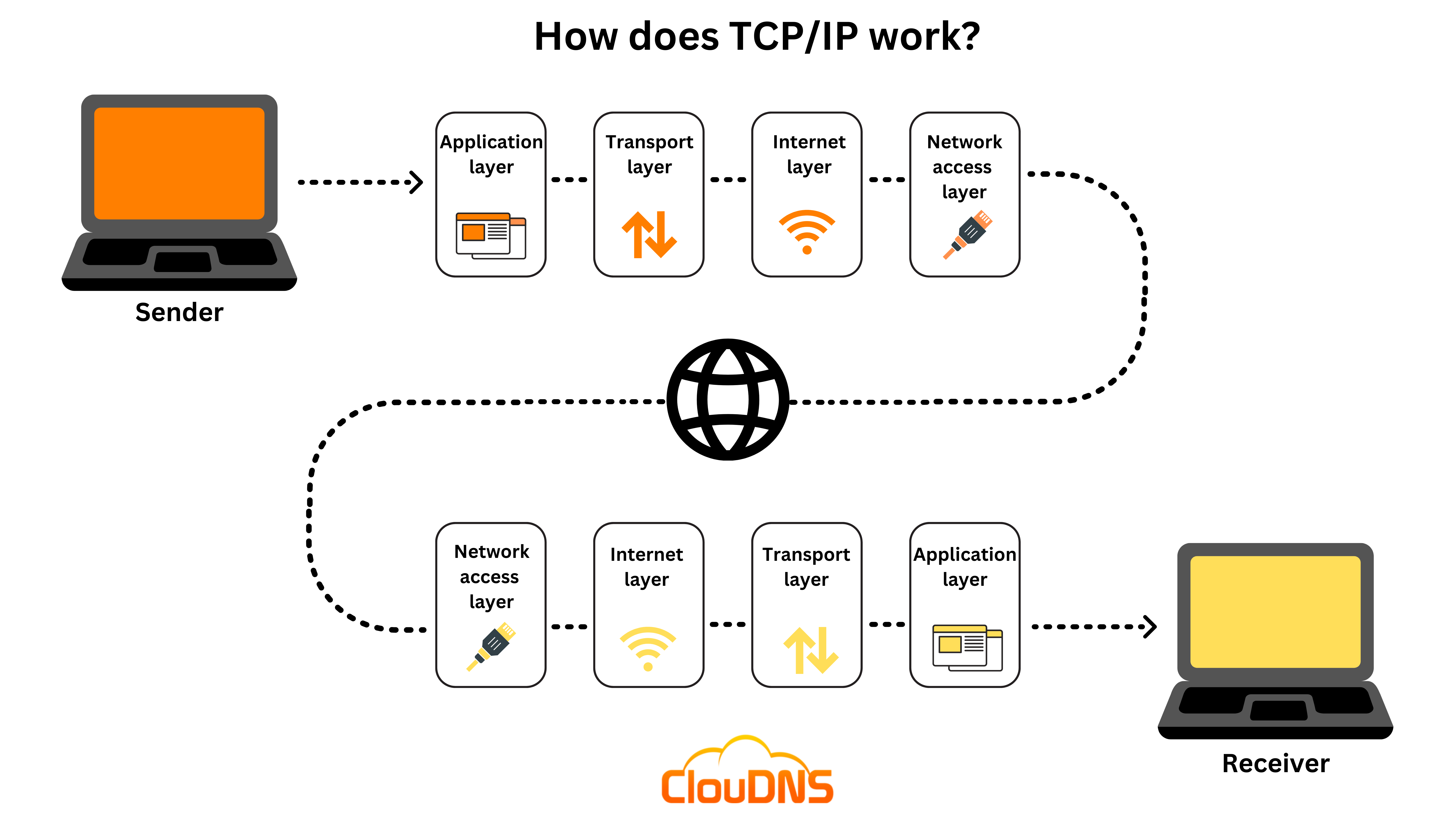
The Mechanics of Reliability: How TCP Works
To understand why TCP is indispensable to modern technology, one must look at its operational mechanics. Unlike simpler protocols that “fire and forget” data packets, TCP operates on a principle of meticulous accountability. It breaks down large files into smaller units called segments, tracks them individually, and reassembles them at the destination.
The Three-Way Handshake
Before a single byte of data is transmitted, TCP performs a “Three-Way Handshake.” This is a critical synchronization process that ensures both the sender and the receiver are ready to communicate.
-
SYN (Synchronize): The client sends a SYN packet to the server to initiate a connection, including a random sequence number.
-
SYN-ACK (Synchronize-Acknowledgment): The server receives the SYN and responds with a SYN-ACK packet, acknowledging the client’s request and sending its own sequence number.
-
ACK (Acknowledgment): The client sends a final ACK packet back to the server.
Once this “handshake” is complete, a virtual connection is established, and data transfer can begin. This process prevents data from being sent into a void and ensures that both ends of the communication are synchronized.
Segmentation and Reassembly
Data on the internet does not travel as one giant block. If you are downloading a 50MB image, TCP breaks that image into thousands of small segments. Each segment is assigned a unique sequence number. Because data packets can take different physical routes across the internet, they often arrive at the destination out of order. TCP uses these sequence numbers to reassemble the data in the exact order it was sent, ensuring the final file is not corrupted or garbled.
Error Detection and Retransmission
One of TCP’s most vital features is its ability to handle packet loss. The internet is a “best-effort” medium; sometimes, packets are dropped due to network congestion or hardware issues. TCP handles this through a system of acknowledgments. If the sender does not receive an acknowledgment (ACK) for a specific segment within a set timeframe, it assumes the packet was lost and automatically retransmits it. This ensures 100% data integrity, which is why TCP is the preferred choice for applications where accuracy is non-negotiable, such as web browsing and file transfers.
TCP vs. UDP: Choosing the Right Tool for the Task
In the realm of networking technology, TCP is frequently compared to its counterpart, the User Datagram Protocol (UDP). While both operate at the Transport Layer of the OSI model, they serve very different purposes. Understanding the trade-offs between these two is essential for software developers and network architects.
Reliability vs. Speed
TCP is built for reliability. Because of the overhead required for the three-way handshake, sequence tracking, and retransmission, TCP is inherently slower than UDP. UDP is a “connectionless” protocol; it does not establish a handshake or check if the data was received. It simply streams packets as fast as possible. In tech terms, TCP is like a registered letter that requires a signature, whereas UDP is like a postcard thrown into the wind.

Flow and Congestion Control
TCP is “intelligent” regarding network conditions. It employs sophisticated algorithms like “Slow Start” and “Congestion Avoidance” to prevent network collapse. If TCP detects that the network is congested (signified by dropped packets), it will automatically reduce its transmission rate to allow the congestion to clear. UDP does not have this capability; it will continue to blast data at the same rate, regardless of how crowded the network is.
Specific Tech Use Cases
The choice between TCP and UDP depends entirely on the application:
-
TCP Use Cases: Web browsers (HTTP/HTTPS), Email (SMTP/IMAP), and File Transfers (FTP/SFTP). In these scenarios, losing even a single bit of data can break the entire file or render a webpage unreadable.
-
UDP Use Cases: Online gaming, Live video streaming, and VoIP (Voice over IP). In these scenarios, speed is more important than perfect accuracy. If a single frame of a video stream is lost, it is better to skip it and move to the next frame rather than pausing the entire stream to wait for a retransmission.
TCP in Digital Security: Vulnerabilities and Protections
Because TCP is the standard for most internet communication, it is also a primary target for cyberattacks. Understanding the protocol’s vulnerabilities is a cornerstone of modern digital security.
The SYN Flood Attack
One of the most common types of Denial of Service (DoS) attacks is the “SYN Flood.” In this scenario, an attacker sends a massive volume of SYN requests to a server from spoofed IP addresses. The server responds with SYN-ACKs and waits for the final ACK to complete the handshake. However, the attacker never sends the final ACK. This leaves the server with thousands of “half-open” connections, consuming memory and CPU resources until the server crashes or can no longer accept legitimate traffic.
Sequence Number Prediction and Hijacking
In the early days of the internet, sequence numbers were often predictable. This allowed sophisticated attackers to guess the next sequence number in a TCP stream and inject malicious data packets into a legitimate session—a process known as TCP Session Hijacking. Modern operating systems have mitigated this by using cryptographically secure random number generators for sequence numbering, making it nearly impossible for an outsider to intercept and “blindly” inject data.
Enhancing Security with TLS
While TCP ensures that data arrives reliably, it does not inherently ensure that the data is private. By default, TCP traffic is sent in “plain text,” meaning anyone sitting between the sender and receiver can read the data. To secure TCP, it is almost always paired with Transport Layer Security (TLS). This is what creates the “HTTPS” you see in your browser. The TLS handshake happens immediately after the TCP handshake, encrypting the data stream so that even if the packets are intercepted, they cannot be read.
The Evolution of TCP: From IPv4 to the Modern Era
As global internet traffic grows exponentially and we move toward 5G and satellite-based internet, TCP has had to evolve to meet new demands. The protocol that worked for a few interconnected universities in the 1970s must now support billions of high-speed mobile devices.
TCP Congestion Control Algorithms (Cubic and BBR)
Standard TCP algorithms sometimes struggle with high-speed, long-distance connections (known as “Long Fat Pipes”). Tech giants like Google and Microsoft have developed new congestion control algorithms to optimize performance. For instance, Google’s BBR (Bottleneck Bandwidth and Round-trip propagation time) focuses on maximizing throughput by analyzing the actual speed of the network rather than just reacting to packet loss. This has led to significantly faster load times for YouTube and Google Search.
The Rise of QUIC and HTTP/3
While TCP has been the king of the internet for decades, a new challenger called QUIC (Quick UDP Internet Connections) is beginning to take over certain roles. Developed by Google and now standardized as HTTP/3, QUIC actually runs on top of UDP but incorporates the reliability features of TCP.
Why the change? TCP is part of the operating system kernel, meaning it takes a long time to update or change. QUIC exists in the “application space,” allowing for faster updates. More importantly, QUIC eliminates the “Head-of-Line Blocking” problem in TCP, where one lost packet halts the entire stream. In HTTP/3, multiple streams can happen simultaneously, so a lost packet in one stream doesn’t slow down the others.

Conclusion: Why TCP Remains Essential
Despite the emergence of newer protocols like QUIC, TCP remains the most widely used and trusted protocol on the planet. Its rigorous approach to data integrity, its ability to manage network congestion, and its battle-tested reliability make it the fundamental building block of the global tech ecosystem. As we move deeper into the age of Artificial Intelligence and the Internet of Things (IoT), the principles established by TCP—coordination, acknowledgment, and error correction—will continue to be the standard by which we judge successful digital communication. Understanding TCP is not just for network engineers; it is for anyone who wants to grasp how the modern world stays connected.
aViewFromTheCave is a participant in the Amazon Services LLC Associates Program, an affiliate advertising program designed to provide a means for sites to earn advertising fees by advertising and linking to Amazon.com. Amazon, the Amazon logo, AmazonSupply, and the AmazonSupply logo are trademarks of Amazon.com, Inc. or its affiliates. As an Amazon Associate we earn affiliate commissions from qualifying purchases.