
In an era defined by rapid scientific advancement, few biotechnological innovations have sparked as much discussion, controversy, and promise as transgenic plants. Often referred to broadly as Genetically Modified Organisms (GMOs), transgenic plants represent a monumental leap in our ability to manipulate the fundamental building blocks of life, offering solutions to some of humanity’s most pressing challenges, from food security and nutrition to sustainable agriculture and medicine. But what exactly defines a transgenic plant, and how does this technology reshape our understanding of nature’s capabilities?
At its core, a transgenic plant is an organism that contains genetic material (DNA) artificially introduced from an unrelated species, or from the same species but in a way that wouldn’t occur naturally through traditional breeding. This process, known as genetic engineering or genetic modification, allows scientists to bestow new traits upon a plant that it wouldn’t otherwise possess, or to enhance existing ones, by directly inserting specific genes. Unlike conventional breeding, which relies on sexual reproduction and the often unpredictable shuffling of thousands of genes, genetic engineering offers a precise, targeted approach to modifying an organism’s genetic makeup.

Understanding the Core Concept: Genetic Engineering in Plants
To fully grasp the significance of transgenic plants, it’s essential to delve into the foundational concepts of genetic engineering and how they apply specifically to the plant kingdom. This field of biotechnology harnesses our understanding of genetics to directly alter an organism’s DNA, moving beyond the slower, less precise methods of selective breeding.
Defining Transgenic Organisms: What Does ‘Transgenic’ Truly Mean?
The term “transgenic” specifically denotes the transfer of a gene (or genes) from one organism to another, across different species or genera, creating a new genetic combination that would not naturally occur. For instance, a common example is inserting a gene from a bacterium (like Bacillus thuringiensis, or Bt) into a corn plant to confer insect resistance. This bacterium naturally produces a protein that is toxic to certain insect pests but harmless to mammals and other organisms. When the gene for this protein is incorporated into the corn plant’s genome, the plant itself begins producing the protein, effectively becoming resistant to these pests. This cross-species gene transfer is the hallmark of a transgenic organism.
The ‘Gene’ in Genetic Engineering: The Building Blocks of Life
A gene is a segment of DNA that contains instructions for making a specific protein or functional RNA molecule, which in turn carries out particular functions within the cell. These functions dictate an organism’s traits – from the color of a flower to a plant’s ability to resist disease. In genetic engineering, scientists identify a gene responsible for a desirable trait in one organism, isolate it, and then introduce it into the genome of another organism. The aim is for the recipient organism to express this new gene, thereby acquiring the desired trait. This targeted approach allows for the introduction of specific characteristics without the undesirable side effects often associated with the broad genetic mixing of traditional breeding.
From Lab to Field: A Brief Historical Context
The concept of genetic engineering emerged in the 1970s, with the first successful genetic modification of a plant achieved in 1983. Scientists were able to introduce a gene conferring antibiotic resistance into tobacco plants. This pioneering work paved the way for the development of commercially viable transgenic crops in the 1990s, with the introduction of herbicide-tolerant soybeans and insect-resistant corn. Since then, the technology has rapidly advanced, leading to a wide array of transgenic plants designed to address various agricultural and societal needs, fundamentally altering modern farming practices and food production.
The Science Behind Transgenesis: How it Works
Creating a transgenic plant is a sophisticated multi-step process that requires a deep understanding of molecular biology and plant physiology. It involves identifying a gene of interest, introducing it into plant cells, regenerating those cells into whole plants, and then selecting for the successfully modified individuals.
Gene Isolation and Selection: Identifying Desirable Traits
The first critical step is to identify and isolate the gene that encodes the desired trait. This involves extensive research to understand the genetic basis of specific characteristics, whether it’s pest resistance from a bacterium, enhanced nutritional content from a different plant species, or drought tolerance from a specific variety. Once identified, the gene is precisely extracted and prepared for insertion. This preparation often includes attaching regulatory DNA sequences (promoters and terminators) that ensure the gene is expressed correctly and at the right time within the plant cell.
Common Transformation Methods: Delivering the New Gene
After the gene is prepared, it needs to be delivered into the plant cells and integrated into their genome. Two primary methods dominate plant transformation:
-
Agrobacterium-mediated Transformation: Nature’s Genetic Engineer: Agrobacterium tumefaciens is a naturally occurring soil bacterium that has a unique ability to transfer a part of its DNA (called T-DNA) into plant cells, causing tumors. Scientists have cleverly disarmed this bacterium, replacing its tumor-inducing genes with the desired gene of interest. The modified Agrobacterium is then used as a vector to deliver the foreign gene into plant cells. This method is highly efficient for many plant species, particularly dicots (like soybeans, tomatoes, and potatoes).
-
Gene Gun (Biolistic Method): High-Velocity Delivery: Also known as biolistics, this method involves coating microscopic gold or tungsten particles with the desired DNA and then “shooting” them into plant cells at high velocity using a device called a gene gun. The high speed allows the particles to penetrate the cell walls and membranes, delivering the DNA directly into the cell, where it can then integrate into the plant’s genome. This method is often preferred for monocots (like corn, rice, and wheat) and for plant species that are difficult to transform with Agrobacterium.
-
Other Techniques: While less common for commercial applications, other methods include protoplast fusion (fusing cells from different species), electroporation (using electric pulses to create temporary pores in cell membranes for DNA uptake), and microinjection (directly injecting DNA into individual cells).
Regeneration and Selection: Ensuring Successful Integration and Plant Development
Once plant cells have been exposed to the foreign DNA, only a small percentage will successfully integrate the new gene into their own chromosomes. These transformed cells then need to be identified and regenerated into whole plants. This is typically done through tissue culture techniques, where individual cells are grown on special nutrient media containing selective agents (e.g., antibiotics or herbicides) that only allow the genetically modified cells to survive and proliferate. The surviving cells are then induced to differentiate and develop into complete plants, which are subsequently screened to confirm the presence and expression of the new gene.
Applications and Benefits of Transgenic Plants
The ability to precisely modify plant genomes has opened up a vast array of possibilities, leading to the development of crops with enhanced traits that offer significant agricultural, nutritional, and industrial benefits.
Enhanced Agronomic Traits: Boosting Productivity and Resilience
-
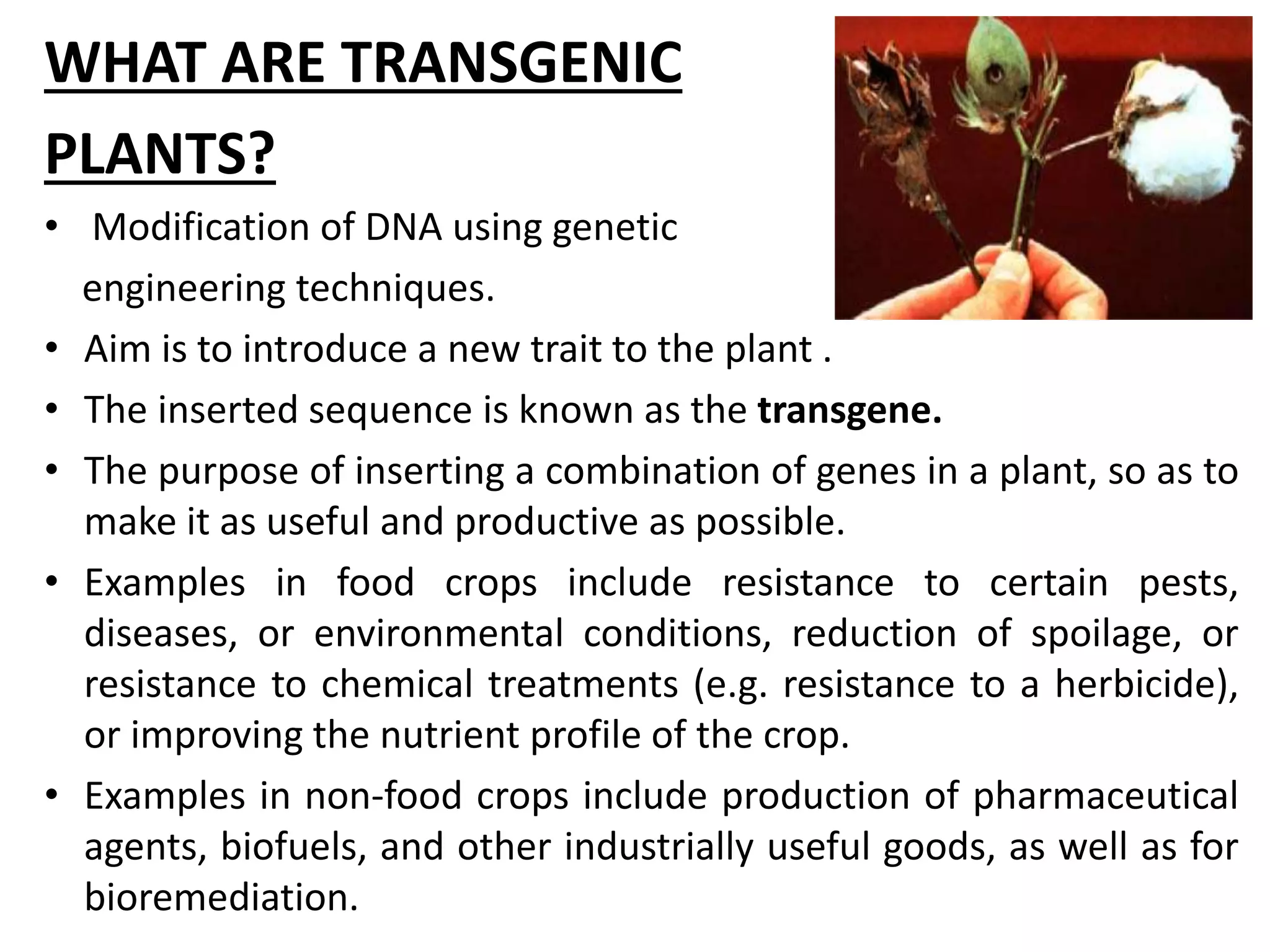
Pest Resistance: Bt Crops: One of the most widespread applications is the introduction of genes from Bacillus thuringiensis (Bt) into crops like corn, cotton, and soybeans. These Bt crops produce proteins that are toxic to specific insect pests, reducing the need for chemical pesticides and improving yields.
-
Herbicide Tolerance: Glyphosate-Resistant Crops: Crops engineered to tolerate specific broad-spectrum herbicides, such as glyphosate (e.g., Roundup Ready crops), allow farmers to use these herbicides to control weeds without harming the crop. This simplifies weed management, reduces soil tillage, and potentially lowers fuel consumption.
-
Disease Resistance: Virus-Resistant Papayas: Transgenic plants have been developed to resist various plant diseases caused by viruses, bacteria, and fungi. A notable example is the Rainbow papaya, engineered to resist the papaya ringspot virus, which saved Hawaii’s papaya industry.
-
Stress Tolerance: Drought and Salinity Resistance: Efforts are ongoing to develop crops that can withstand environmental stresses like drought, salinity, and extreme temperatures, which are becoming increasingly prevalent due to climate change. These crops could enable farming in marginal lands, expanding food production.
Improved Nutritional Value: Addressing Malnutrition
-
Biofortification: Golden Rice (Vitamin A): Perhaps one of the most celebrated examples of nutritional enhancement is “Golden Rice,” engineered to produce beta-carotene, a precursor to Vitamin A. This aims to combat Vitamin A deficiency, a major public health problem in many developing countries, leading to blindness and increased mortality.
-
Enhanced Protein and Healthy Fats: Researchers are also working on developing crops with improved protein quality, higher levels of essential amino acids, and healthier fat profiles to provide more complete nutrition.
Industrial and Pharmaceutical Applications (Biopharming): Beyond Food
Transgenic plants are also being explored for non-food applications, turning them into “bioreactors” for producing valuable compounds.
-
Producing Vaccines and Antibodies: Plants can be engineered to produce vaccines, antibodies, and therapeutic proteins. These “plant-made pharmaceuticals” (PMPs) offer a potentially cheaper, safer, and more scalable alternative to traditional pharmaceutical production methods.
-
Bioplastics and Biofuels: Transgenic plants can be designed to produce precursors for bioplastics or to accumulate higher levels of oils and biomass suitable for biofuel production, contributing to more sustainable industrial processes.
Challenges, Concerns, and Regulatory Landscape
Despite their significant potential, transgenic plants have been a subject of intense debate and scrutiny. Concerns span environmental, health, socio-economic, and ethical dimensions, necessitating robust regulatory frameworks.
Environmental Concerns: Unintended Consequences
-
Gene Flow: One of the primary environmental concerns is the potential for transgenic plants to cross-pollinate with wild relatives or conventional crops, leading to the unintended spread of engineered genes (gene flow). This could potentially create “superweeds” with herbicide resistance or impact biodiversity.
-
Impact on Non-Target Organisms: While Bt crops are designed to be specific, there are concerns about their potential impact on beneficial insects or other non-target organisms in the ecosystem.
-
Herbicide Resistance Development in Weeds: The widespread use of herbicide-tolerant crops has led to increased reliance on specific herbicides, accelerating the evolution of herbicide-resistant weeds, posing a new challenge for farmers.
Health and Safety Debates: Public Assurance
-
Allergenicity and Toxicity: A common concern is whether the newly introduced proteins in transgenic plants could be allergenic or toxic to humans or animals. Regulatory bodies require rigorous testing to address these safety aspects before commercialization.
-
Long-term Consumption Effects: The long-term health effects of consuming genetically modified foods are a recurring debate, despite scientific consensus that currently approved GM foods are as safe as their conventional counterparts.
Socio-economic and Ethical Considerations: Access and Equity
-
Intellectual Property and Seed Monopolies: The proprietary nature of transgenic seeds, often protected by patents, raises concerns about seed monopolies and the financial burden on farmers, particularly in developing countries.
-
Access and Equity for Small Farmers: Critics argue that the technology may not be accessible or affordable for small-scale farmers, potentially widening socio-economic disparities.
-
Consumer Acceptance and Labeling: Public perception varies widely across different regions, with strong demands for mandatory labeling of GM foods in many parts of the world to allow informed consumer choices.
Regulatory Frameworks and Risk Assessment: Ensuring Safe Deployment
To address these concerns, most countries have established rigorous regulatory frameworks for assessing the safety of transgenic plants. These frameworks typically require extensive testing for environmental impact, food and feed safety, and agricultural performance before a transgenic crop can be approved for cultivation or consumption. Risk assessments are conducted on a case-by-case basis, considering the specific gene, crop, and intended environment.
The Future of Transgenic Plants: Beyond First-Generation GMOs
The landscape of genetic engineering in plants is continuously evolving, with new technologies promising even greater precision and addressing some of the limitations of earlier methods.
Precision Gene Editing (CRISPR-Cas9): A New Era of Genetic Modification
The advent of powerful gene-editing tools like CRISPR-Cas9 has revolutionized the field. Unlike traditional transgenesis, which often involves inserting large chunks of foreign DNA, CRISPR allows for highly precise, targeted changes to a plant’s existing DNA. This includes knocking out specific genes, altering single nucleotides, or inserting small gene segments, often without introducing foreign DNA. This precision blurs the lines between traditional breeding and genetic engineering and may sidestep some regulatory hurdles faced by older GMOs.
Stacked Traits and Complex Engineering: Addressing Multiple Challenges
Future transgenic plants are likely to feature “stacked traits,” meaning they will be engineered to possess multiple beneficial characteristics simultaneously, such as resistance to several pests and diseases combined with drought tolerance and enhanced nutrition. This complex engineering aims to provide comprehensive solutions to the multifaceted challenges of modern agriculture.

Public Perception and Education: Bridging the Knowledge Gap
As technology advances, so too must public understanding. Effective communication and transparent engagement are crucial to bridge the knowledge gap, address public concerns, and foster informed discussions about the role of transgenic plants in building a sustainable and food-secure future. The ongoing evolution of genetic technologies, coupled with robust scientific validation and thoughtful societal discourse, will determine the trajectory and acceptance of transgenic plants in the decades to come.
In conclusion, transgenic plants stand as a testament to humanity’s ingenuity and our capacity to harness scientific understanding to meet global needs. While challenges and debates persist, the precision and potential offered by this technology continue to drive innovation, offering a powerful toolkit for shaping the future of agriculture and biotechnology within the complex ecosystem of our planet.
aViewFromTheCave is a participant in the Amazon Services LLC Associates Program, an affiliate advertising program designed to provide a means for sites to earn advertising fees by advertising and linking to Amazon.com. Amazon, the Amazon logo, AmazonSupply, and the AmazonSupply logo are trademarks of Amazon.com, Inc. or its affiliates. As an Amazon Associate we earn affiliate commissions from qualifying purchases.