
Understanding the Gross Vehicle Weight Rating (GVWR) for your trailer is not just a technical detail; it’s a cornerstone of safe and legal operation, crucial for anyone involved in hauling goods, equipment, or recreational vehicles. While it might sound like a niche topic within the automotive world, the GVWR is fundamentally a financial and operational consideration, directly impacting purchasing decisions, operational costs, and ultimately, the profitability or enjoyment derived from owning and using a trailer. This concept bridges the gap between mechanical specifications and practical financial implications, making it a vital component of responsible vehicle ownership and business management.
The Financial Implications of GVWR
The GVWR is far more than just a number; it’s a critical financial determinant that influences multiple aspects of trailer ownership and operation. From the initial purchase price to ongoing insurance premiums, registration fees, and even the potential for costly fines, understanding and respecting the GVWR translates directly into sound financial management. Mismanaging this crucial specification can lead to unexpected expenses, operational limitations, and even significant liabilities, all of which have a tangible impact on your bottom line or personal budget.
Initial Purchase and Load Capacity Decisions
The GVWR of a trailer is a primary factor in its initial cost and its suitability for intended use. When you’re in the market for a trailer, the GVWR dictates the maximum weight the trailer is designed to safely carry. This directly influences the type of trailer you can purchase and the subsequent investment required. For businesses, this means selecting a trailer that can handle the volume and weight of goods being transported, ensuring operational efficiency without exceeding capacity, which could lead to costly downtime or damage. For individuals, it means choosing a trailer appropriate for recreational activities, such as hauling boats, ATVs, or camping gear, without compromising safety or potentially voiding warranties. The initial investment should align with your anticipated maximum load, preventing the need for an upgrade later, which would incur additional costs. Furthermore, trailers with higher GVWRs often incorporate more robust construction, heavier-duty axles, and stronger frames, contributing to their higher initial price point. This upfront investment, however, should be viewed in the context of long-term reliability and operational capability.
Insurance Premiums and Financial Risk
Insurance providers heavily consider the GVWR when determining premiums for trailers. A higher GVWR generally signifies a greater potential risk, as it implies the trailer is designed to carry heavier loads, which can lead to more significant damage in the event of an accident. Consequently, trailers with higher GVWRs will typically incur higher insurance costs. This is a direct financial consequence that needs to be factored into the overall cost of ownership. Beyond the potential for damage, exceeding a trailer’s GVWR can also void your insurance policy altogether. This means that if an accident occurs while the trailer is overloaded, you would be personally responsible for all damages, including property damage, medical expenses, and potential legal costs. This financial exposure can be catastrophic, far outweighing any perceived savings from overloading a trailer. Proactive understanding and adherence to GVWR limits act as a financial safeguard, ensuring you remain adequately covered and protected from unforeseen liabilities.
Registration, Licensing, and Legal Compliance
In many jurisdictions, a trailer’s GVWR plays a significant role in determining registration fees and licensing requirements. Heavier trailers, those with higher GVWRs, often fall into different registration classes, necessitating higher annual fees. For commercial operations, this can represent a substantial operating expense. Failing to register a trailer correctly based on its GVWR can result in hefty fines and penalties. Furthermore, exceeding the GVWR is a serious traffic violation that can lead to on-the-spot fines, mandatory inspections, and even the impoundment of your vehicle and trailer. These legal consequences represent a direct financial burden and can cause significant operational disruptions, especially for businesses relying on timely deliveries. Ensuring your trailer is properly registered and operated within its GVWR is a non-negotiable aspect of legal and financially responsible trailer ownership.
Operational Efficiency and Cost Management
The Gross Vehicle Weight Rating (GVWR) is intrinsically linked to the operational efficiency and cost-effectiveness of using a trailer. Operating within these limits ensures longevity of the equipment, optimizes fuel consumption, and minimizes the risk of costly breakdowns and repairs, all of which directly impact operational budgets and profitability.
Fuel Consumption and Vehicle Wear
Operating a trailer at or near its GVWR significantly impacts fuel efficiency. A heavier load requires the towing vehicle to work harder, consuming more fuel. This is a direct operating cost that accumulates over time, especially for commercial fleets. Furthermore, the increased strain on the towing vehicle’s engine, transmission, brakes, and suspension can lead to accelerated wear and tear. This translates into more frequent maintenance, higher repair bills, and a shorter lifespan for the towing vehicle, all of which represent significant financial outlays. By adhering to the GVWR, operators can optimize fuel consumption, reduce wear on their towing vehicle, and defer costly repairs, thereby extending the operational life of their assets and managing expenses more effectively.
Maintenance and Repair Costs
Overloading a trailer puts immense stress on its components, including the axles, tires, brakes, and chassis. This excessive strain can lead to premature component failure, resulting in unexpected and often expensive repairs. For instance, overloaded axles can bend or break, overloaded tires can blow out, and overloaded brakes can overheat and fail, leading to dangerous situations and significant damage. These breakdowns not only incur direct repair costs but also result in downtime, which for commercial operations, means lost revenue and missed deadlines. Investing in proper load management, by respecting the GVWR, is a proactive approach to minimizing maintenance and repair costs, ensuring the reliability and longevity of both the trailer and the towing vehicle.
Longevity and Resale Value
Trailers that are consistently operated within their GVWR will generally experience less stress and wear. This results in a longer operational lifespan and, consequently, a higher resale value. A well-maintained trailer, free from the signs of chronic overloading such as bent frames or damaged axles, will be more attractive to potential buyers. For businesses, this can mean a better return on investment when it’s time to upgrade their fleet. For individuals, it means recouping more of their initial investment when selling a recreational trailer. Conversely, trailers that have been frequently overloaded often show visible signs of stress and damage, significantly diminishing their market value and potentially making them unsellable at a reasonable price.
Understanding and Determining GVWR
Accurately identifying and understanding the Gross Vehicle Weight Rating (GVWR) of a trailer is a foundational step in ensuring safe and legal operation, and by extension, sound financial management. Without this knowledge, it’s impossible to effectively manage load capacities, avoid potential financial penalties, and protect your investments.
Locating the GVWR Information
The GVWR is a crucial specification and is typically displayed on a federal certification label or compliance plate affixed to the trailer. This label is usually found on the trailer’s frame, tongue, or a prominent vertical surface. The exact location can vary depending on the trailer manufacturer and type. It’s essential to locate this plate as it will clearly state the GVWR, often alongside other critical information such as the Gross Axle Weight Rating (GAWR) for individual axles, the trailer’s manufactured date, and the VIN (Vehicle Identification Number). In some cases, particularly with older or custom-built trailers, this information might be found in the owner’s manual or documentation provided at the time of purchase. If the information is obscured or missing, it’s advisable to contact the manufacturer directly or consult with a qualified trailer professional to obtain the correct specifications.
Calculating the Actual Trailer Weight
To effectively utilize the GVWR, you need to know the actual weight of your trailer. This is achieved through weighing. The most accurate way to determine your trailer’s weight is to take it to a certified weigh station, such as those found at truck stops or some public scales. When weighing, it’s important to weigh the trailer with its intended load. This means if you’re using the trailer for a specific purpose, such as hauling a car, a boat, or equipment, you should have those items loaded onto the trailer when you go to the scales. For accurate measurement, the entire rig – towing vehicle and trailer – will be weighed first. Then, the towing vehicle will be weighed separately. The difference between these two weights will give you the Gross Trailer Weight (GTW). Alternatively, for a more precise breakdown of axle weights (which is also important for safety), weigh each axle individually. This process provides the actual weight of your loaded trailer, allowing you to compare it directly against the GVWR.
Understanding the GVWR vs. Other Weight Ratings
It’s critical to differentiate the GVWR from other weight ratings to avoid confusion and ensure proper operation.
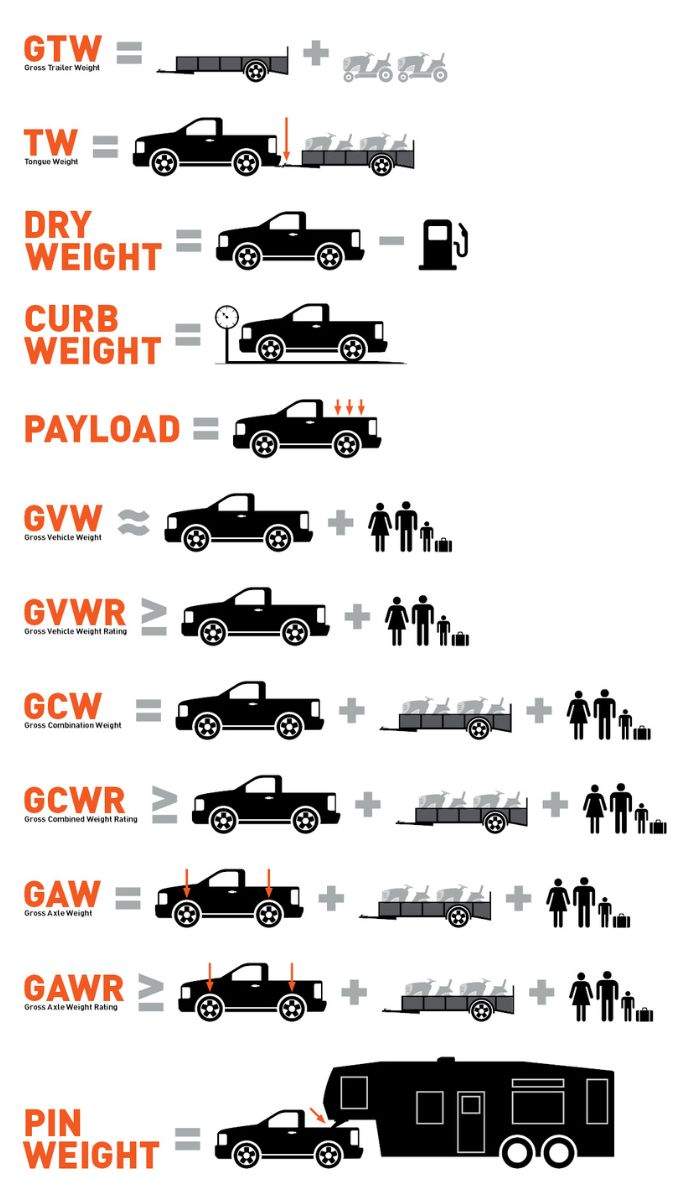
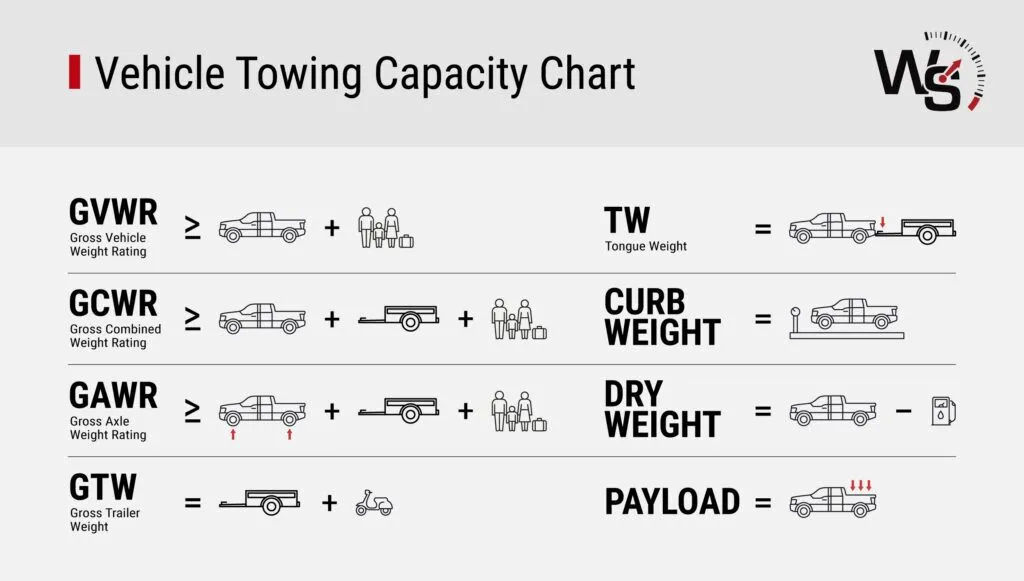
- Gross Vehicle Weight Rating (GVWR): This is the maximum allowable weight of a fully loaded trailer, including the trailer’s own weight (tare weight) and its cargo. It’s the absolute upper limit.
- Gross Trailer Weight (GTW): This is the actual weight of the trailer and its cargo at any given time. This is what you measure at a weigh station. You must ensure GTW is always less than or equal to GVWR.
- Gross Axle Weight Rating (GAWR): This refers to the maximum weight that a single axle or a group of axles is designed to carry. Each axle on a trailer has a GAWR, and the sum of all GAWRs is often, but not always, equal to the GVWR. It’s essential to ensure that the weight distributed on each axle does not exceed its GAWR, as this can lead to uneven tire wear, tire blowouts, and trailer instability.
- Tongue Weight: This is the downward force the trailer exerts on the hitch ball of the towing vehicle. It’s typically expressed as a percentage of the GTW (often 10-15%). Proper tongue weight is crucial for stability and safe towing.
Confusing these ratings can lead to improper loading, unsafe towing conditions, and potential damage to the trailer and towing vehicle. Understanding the distinction is vital for making informed decisions about load distribution and ensuring you remain within all specified limits.
Consequences of Exceeding GVWR
Operating a trailer beyond its Gross Vehicle Weight Rating is not merely a technical oversight; it carries significant and potentially severe consequences that impact safety, legality, and finances. These repercussions are designed to prevent the dangerous situations that arise from overloading and to enforce responsible vehicle operation.
Safety Hazards and Reduced Control
The most immediate and critical consequence of exceeding a trailer’s GVWR is a severe compromise to safety. When a trailer is overloaded, its handling characteristics change dramatically. Braking distances increase significantly, making it harder to stop in an emergency. Steering becomes less responsive, increasing the risk of losing control, especially during turns or evasive maneuvers. The increased weight can also cause the trailer to sway or fishtail, a phenomenon known as “trailer sway,” which can lead to a loss of control and potentially a jackknife accident. Furthermore, overloaded tires are more prone to blowouts, which can be catastrophic, leading to sudden loss of control and a high risk of a serious accident. This directly endangers the driver, passengers, and other road users.
Legal Penalties and Fines
Exceeding a trailer’s GVWR is a violation of traffic laws in virtually all jurisdictions. Law enforcement officers are authorized to weigh vehicles and trailers, and if they determine that a trailer is overloaded, the penalties can be substantial. These can include significant fines, which can add up quickly, especially for commercial operators. In addition to fines, overloaded vehicles may be immediately taken out of service until the excess weight is removed, leading to costly delays and missed delivery schedules for businesses. In some cases, especially with egregious overloading, the vehicle and trailer can be impounded, incurring towing and storage fees. Repeated offenses can lead to increased penalties, suspension of driving privileges, and even criminal charges in extreme cases.
Damage to Trailer and Towing Vehicle
As discussed previously, overloading puts immense stress on every component of the trailer and towing vehicle. This excessive strain can lead to:
- Trailer Damage: Bent or broken axles, damaged frames, tire blowouts, brake system failure, and premature wear on suspension components.
- Towing Vehicle Damage: Overstressed engine and transmission, worn brakes, damaged suspension, and potential frame damage.
These damages can be incredibly expensive to repair and can significantly shorten the lifespan of both the trailer and the towing vehicle. For commercial entities, this translates into increased maintenance budgets, more frequent equipment replacement, and reduced profitability. For individuals, it means unexpected and substantial repair bills that can strain personal finances.

Insurance Invalidation and Liability
One of the most financially devastating consequences of exceeding a trailer’s GVWR is the potential for your insurance policy to be invalidated. Most insurance policies contain clauses that exclude coverage for accidents that occur when a vehicle or trailer is operated illegally or outside of its designed specifications, including being overloaded. If you are involved in an accident while your trailer is overloaded, your insurance company may deny your claim entirely. This means you would be personally responsible for all damages, including:
- Damage to your own property (trailer and towing vehicle).
- Damage to other people’s property.
- Medical expenses for injuries sustained by yourself and others.
- Legal fees if you are sued by those who were injured or whose property was damaged.
The financial exposure in such a scenario can be astronomical, potentially leading to bankruptcy. Therefore, adhering to the GVWR is not just a matter of safety and legality, but a crucial financial protection measure.