
In our hyper-connected digital era, the question “What is Toronto time?” serves as more than a simple inquiry for a traveler or a remote worker. It represents a fundamental challenge in computer science, network infrastructure, and global synchronization. While a resident might glance at a wristwatch and see 2:00 PM, the underlying technology required to ensure that every server, smartphone, and IoT device in the Greater Toronto Area—and those interacting with it globally—reflects that exact same moment is a feat of modern engineering.
Toronto, the technological heartbeat of Canada, operates on Eastern Time (ET). However, translating that geographical reality into digital precision involves a complex stack of protocols, hardware, and global standards. Understanding Toronto time through a technical lens requires us to look past the clock face and into the algorithms that govern our digital world.
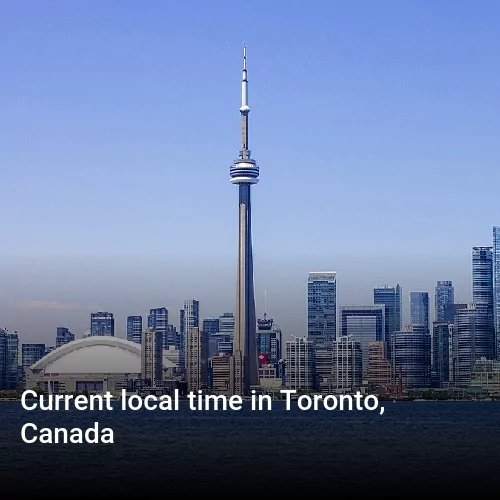
The Science of Synchronization: Understanding Eastern Time (ET)
At its core, “Toronto Time” is a variable derived from Universal Coordinated Time (UTC). To understand how a computer determines the time in Toronto, we must first look at the astronomical and mathematical foundations that provide the baseline for all modern computing environments.
From UTC to EST/EDT: The Digital Logic
Toronto fluctuates between two distinct offsets: Eastern Standard Time (EST), which is UTC-5, and Eastern Daylight Time (EDT), which is UTC-4. This transition is not merely a social convention but a programmed event within every operating system’s kernel.
When a system queries “What is Toronto time?”, it doesn’t just look for a number; it references a time zone database. This logic is essential for distributed systems. If a server in London (UTC+0) sends a timestamped packet to a data center in Toronto, the receiving machine must calculate the offset instantly to ensure data integrity. Without this digital logic, logs would be unreadable, and transaction orders would become incoherent.
The Role of Atomic Clocks in Modern Timekeeping
The precision of Toronto’s digital time is anchored by atomic clocks, specifically those utilizing the vibrations of cesium atoms. These clocks are the “Stratum 0” sources. National research facilities, such as the National Research Council (NRC) in Canada, maintain these primary references.
For tech professionals, the realization is that Toronto time isn’t “set” by a person; it is a synchronized pulse distributed via GPS satellites and terrestrial fiber optics. Every nanosecond of drift in these atomic sources could lead to catastrophic failures in high-frequency environments, making the physical hardware of timekeeping the silent backbone of the city’s tech infrastructure.
Technical Architecture: How Devices Calculate “Toronto Time”
When you search for the time on a smartphone in downtown Toronto, a sophisticated handshake occurs between your device and a hierarchy of time servers. This process ensures that your device doesn’t rely on its own internal quartz crystal, which is prone to “drift” due to temperature and age.
Network Time Protocol (NTP) and Server Hierarchies
The Network Time Protocol (NTP) is one of the oldest and most critical Internet protocols still in widespread use. It operates in a hierarchical fashion known as “strata.”
-
Stratum 0: The high-precision timekeeping devices (atomic clocks, GPS).
-
Stratum 1: Servers directly connected to Stratum 0 devices.
-
Stratum 2: Servers that synchronize with Stratum 1 servers over a network.
Most devices in Toronto connect to Stratum 2 or 3 servers. Companies like Google, Apple, and Microsoft maintain massive NTP pools. When a device asks for Toronto time, it sends a packet to an NTP server, which returns a timestamp. The device then calculates the “round-trip time” to subtract network latency, ensuring the local clock is accurate to within milliseconds of the reference source.
OS-Level Time Management: Windows, macOS, and Linux
Operating systems handle Toronto’s time zone through specific libraries. In the world of Linux and macOS, this is often handled by the tz (timezone) database, also known as the Olson database. This database contains a historical record of every time zone change, leap second, and daylight saving shift for Toronto dating back decades.
When a developer writes code in Python or Java to “get local time,” the environment calls these libraries. If the tz database is not updated, a server might fail to “spring forward,” causing a one-hour discrepancy that could break scheduling APIs, automated backups, and authentication tokens (like TOTP) that rely on temporal alignment.
The Daylight Saving Dilemma: Algorithms vs. Astronomy

Perhaps the most technically complex aspect of Toronto time is the biannual shift for Daylight Saving Time (DST). While humans simply move their clocks, software engineers must account for the “missing hour” in the spring and the “duplicated hour” in the autumn.
Hard-coding Time Zone Databases (IANA)
The Internet Assigned Numbers Authority (IANA) manages the time zone database used by almost all computer systems. Toronto is identified in this database as America/Toronto.
The technical challenge arises because the rules for DST are political, not mathematical. The Canadian government could, in theory, change the dates of DST with a legislative vote. When this happens, tech companies must push urgent updates to the IANA database, which then trickles down to operating systems and browsers. For a system architect, “Toronto Time” is a moving target that requires constant maintenance of these underlying configuration files.
The Impact of DST on Distributed Systems and Databases
In a distributed database environment (like a cloud cluster spread across Toronto, Vancouver, and New York), handling the switch to Eastern Daylight Time is a classic “edge case” that causes bugs.
If a system records a log at 1:59 AM and another at 1:01 AM during the autumn “fall back,” the timestamps might appear out of sequence or identical if the system is not using UTC internally. Professional tech standards dictate that all backend logic should operate in UTC, with “Toronto Time” acting only as a localized “view” or “presentation layer” for the end-user. This separation of concerns is vital for maintaining the chronological “source of truth.”
Digital Security and Temporal Integrity
One of the most overlooked aspects of time in Toronto is its role in cybersecurity. Time is a fundamental component of encryption and authentication. If a device’s concept of Toronto time is off by even a few minutes, the digital world effectively “locks it out.”
Why Milliseconds Matter in Cybersecurity
Most modern security protocols, such as Kerberos and SSL/TLS, rely on timestamps to prevent “replay attacks.” If a hacker intercepts a login packet, they might try to resend it later to gain access. However, because the packet is timestamped to the exact millisecond of Toronto time, the server will reject it if the time doesn’t match the current window.
Furthermore, SSL certificates have strict “not before” and “not after” dates. If a server in Toronto has a drifted clock, it might mistakenly believe a valid certificate has expired or is not yet valid, leading to site-wide outages. In this context, maintaining Toronto time is not about convenience—it is a prerequisite for a secure handshake.
Blockchain and Temporal Integrity
As Toronto becomes a hub for blockchain and decentralized finance (DeFi), the technical definition of time has evolved further. Blockchains like Ethereum or Bitcoin use “Block Time” or “Median Past Time.” However, the nodes running these networks in Toronto still rely on synchronized system clocks to validate headers.
In decentralized systems, “Toronto Time” contributes to the consensus. If a significant number of nodes in a geographic region have desynchronized clocks, it can lead to forks or delays in block finality. This has pushed the tech industry toward even more precise protocols, such as the Precision Time Protocol (PTP), which can synchronize clocks within microseconds, far surpassing the capabilities of standard NTP.
The Future of Global Time Tech: Toward a “Leap-less” Future
As we look toward the future of technology in Toronto, the way we define and distribute time is undergoing a revolution. The tech community is currently debating the removal of “leap seconds,” which are occasionally added to UTC to account for the slowing of the Earth’s rotation.
Hyper-accurate Latency and the Rise of PTP
In the world of 5G and high-frequency trading (HFT), milliseconds are no longer fast enough. The Toronto Stock Exchange and local telecommunications providers are increasingly moving toward hardware-stamped PTP.
Unlike software-based NTP, PTP uses hardware assistance in network interface cards and switches to account for the tiny delays that occur as data travels through wires. For the next generation of Toronto tech—including autonomous vehicles and remote robotic surgery—the “Toronto Time” they use will be synchronized to a degree of precision that was once the exclusive domain of physics laboratories.

Conclusion: More Than a Clock on a Wall
To the average observer, Toronto time is a simple metric of the day’s progress. But through the lens of technology, it is a masterpiece of collaborative engineering. It is a synthesis of atomic physics, global networking protocols, historical databases, and security algorithms.
Whether it is a developer in a King Street startup ensuring their API handles EDT transitions, or a security engineer at a major bank auditing NTP synchronization, the tech industry treats “Toronto Time” as a critical infrastructure component. It is the invisible pulse that keeps the city’s digital heart beating in perfect rhythm with the rest of the world.
aViewFromTheCave is a participant in the Amazon Services LLC Associates Program, an affiliate advertising program designed to provide a means for sites to earn advertising fees by advertising and linking to Amazon.com. Amazon, the Amazon logo, AmazonSupply, and the AmazonSupply logo are trademarks of Amazon.com, Inc. or its affiliates. As an Amazon Associate we earn affiliate commissions from qualifying purchases.