
The landscape of personal and business finance is governed by a few critical figures, but none carry as much weight for the average borrower as the prime interest rate. Often referred to simply as “the prime,” this benchmark serves as the foundation for a vast array of lending products, ranging from credit cards and home equity lines of credit to small business loans. Understanding today’s prime interest rate requires more than just looking at a single percentage point; it necessitates an exploration of the economic engines that drive it and the ways it dictates the cost of capital across the globe.
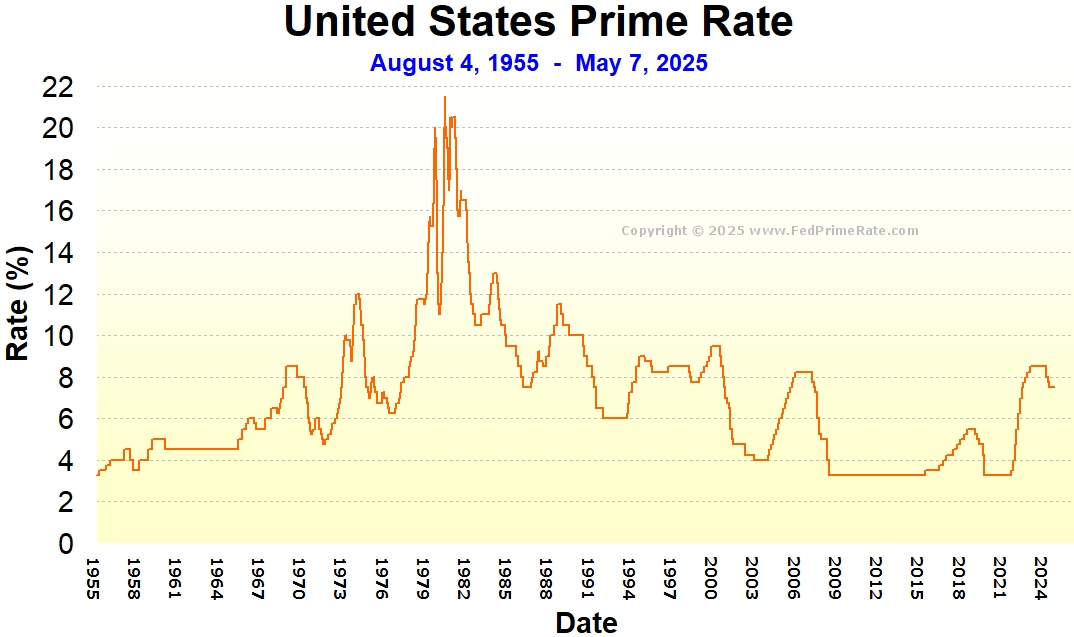
As of the current economic cycle, the prime rate is fundamentally a reflection of the Federal Reserve’s monetary policy. When the central bank adjusts the federal funds rate—the rate at which commercial banks lend to one another overnight—the prime rate typically follows suit almost instantly. For consumers and investors alike, this number is the pulse of the economy, indicating whether it is time to borrow and expand or to save and consolidate.
The Mechanics Behind the Prime Interest Rate
The prime interest rate is defined as the base interest rate that commercial banks charge their most creditworthy corporate customers. While it may seem like a figure reserved for “big business,” it actually functions as the “base” for consumer lending. To understand where today’s rate comes from, one must understand the relationship between the Wall Street Journal (WSJ) Prime Rate and the Federal Reserve.
The 300 Basis Point Rule
In the United States, the prime rate is generally calculated as the federal funds target rate plus 3.00% (or 300 basis points). For example, if the Federal Open Market Committee (FOMC) sets the target range for the federal funds rate at 5.25% to 5.50%, the prime rate will typically be set at 8.50%. This 3% spread represents the margin banks require to cover operational costs, manage risk, and generate profit while lending to their highest-quality borrowers.
The Role of the Wall Street Journal
While individual banks can technically set their own prime rates, the industry adheres to a consensus. The Wall Street Journal surveys the 30 largest banks in the United States. When at least 23 of these 30 banks (75%) change their prime rate, the WSJ updates its published prime rate, which then becomes the official benchmark for the financial industry. This synchronization ensures stability in the market and prevents massive discrepancies in borrowing costs across different institutions.
How Today’s Prime Rate Affects Your Wallet
The prime rate is not just an abstract economic indicator; it has a direct, tangible impact on the monthly expenses of millions of households. Most variable-interest debt is “indexed” to the prime rate. When the prime rate moves, the interest you pay on your debt moves in lockstep.
Credit Cards and Variable APRs
The most common point of contact for the prime rate is the credit card. Most credit card agreements specify an Annual Percentage Rate (APR) that is calculated as “Prime + Margin.” For instance, if your credit card agreement states your rate is “Prime + 15.99%” and the prime rate is 8.50%, your effective APR is 24.49%. When the Fed raises rates, your credit card interest increases automatically, often within one or two billing cycles, making it more expensive to carry a balance.
Home Equity Lines of Credit (HELOCs)
Unlike traditional 30-year fixed-rate mortgages, HELOCs are almost always tied to the prime rate. For homeowners using their equity to fund renovations or consolidate debt, a rising prime rate can significantly increase the cost of those funds. This makes the prime rate a crucial factor in long-term financial planning for property owners. If the prime rate climbs by 2% over a year, a homeowner with a $50,000 HELOC balance could see their annual interest costs rise by $1,000.
Small Business and Commercial Loans
For entrepreneurs, the prime rate is the primary determinant of the cost of doing business. Many small business loans, including SBA 7(a) loans, use the prime rate as their base. When the prime rate is high, the cost of expansion, equipment financing, and inventory acquisition increases. This can lead to a cooling of the economy as businesses become more cautious about taking on new debt to fuel growth.
The Federal Reserve’s Influence and Economic Strategy
To understand why the prime rate is at its current level, one must look at the Federal Reserve’s “dual mandate”: maintaining price stability (controlling inflation) and promoting maximum sustainable employment. The prime rate is the primary tool used to achieve these goals, albeit indirectly.

Combatting Inflation
When inflation rises above the Fed’s target of 2%, the central bank typically increases the federal funds rate to “cool” the economy. By making borrowing more expensive (which raises the prime rate), the Fed discourages spending and investment. This decrease in demand eventually leads to a slowdown in price increases. Therefore, today’s prime rate is often a direct indicator of how concerned the Federal Reserve is about the current rate of inflation.
Stimulating Growth
Conversely, during periods of economic stagnation or recession, the Fed lowers rates. A lower prime rate makes it cheaper for consumers to buy cars and homes and for businesses to invest in new projects. By lowering the cost of capital, the Fed hopes to jumpstart economic activity. Those tracking the prime rate today are essentially tracking the Fed’s confidence in the economy’s strength.
The Impact of “Dot Plots” and Forward Guidance
Investors and financial analysts don’t just look at today’s rate; they look at where the rate is going. Through “forward guidance” and the “dot plot” (a chart showing where each Fed official expects interest rates to be in the future), the market receives signals about future moves. If the Fed signals that it will keep rates “higher for longer,” the prime rate remains elevated, and the market adjusts its expectations for everything from stock valuations to mortgage rates.
Strategies for Navigating a High Prime Rate Environment
When the prime rate is high, as it has been in recent inflationary cycles, consumers and business owners must adapt their financial strategies to protect their cash flow and minimize interest expenses.
Debt Consolidation and Fixed-Rate Conversions
In a rising rate environment, the most effective move is often to move away from variable-rate debt. Consumers may look into personal loans with fixed interest rates to pay off high-interest credit card balances. Unlike credit cards, which fluctuate with the prime rate, a fixed-rate personal loan locks in the cost of borrowing for the duration of the term, providing protection against future rate hikes.
Improving Credit Scores
Since the prime rate is the rate offered to the most creditworthy customers, those with lower credit scores are charged a higher “margin” above prime. By improving a credit score—through timely payments and reducing credit utilization—a borrower can potentially negotiate a lower margin, effectively offsetting an increase in the prime rate.
Strategic Savings
While a high prime rate is a burden for borrowers, it is a boon for savers. High-yield savings accounts (HYSAs) and Certificates of Deposit (CDs) tend to offer better returns when the prime rate is elevated. For those with excess cash, a high-rate environment offers a rare opportunity to earn significant passive income through low-risk banking products.
The Future Outlook: Predicting Prime Rate Shifts
Predicting the future movement of the prime rate involves monitoring a complex web of economic indicators. No single factor determines the path of interest rates, but several “leading indicators” provide clues to what the next FOMC meeting might bring.
Consumer Price Index (CPI) and PCE
The Consumer Price Index (CPI) and the Personal Consumption Expenditures (PCE) price index are the primary measures of inflation. If these numbers come in higher than expected, it puts pressure on the Federal Reserve to keep the prime rate high or even increase it. If they show a steady decline toward 2%, the market begins to price in “rate cuts,” which would eventually lower the prime rate.
The Labor Market and Unemployment
The Fed also watches the labor market. If unemployment is very low and wages are rising rapidly, it can contribute to “wage-price spirals” that drive inflation. A cooling labor market often signals to the Fed that the economy has slowed down enough to warrant a pause in rate hikes or a transition to lowering rates to prevent a recession.

Global Economic Conditions
In an interconnected global economy, the prime rate is also influenced by international events. Geopolitical instability, supply chain disruptions, and the monetary policies of other major central banks (like the European Central Bank) can all influence U.S. inflation and, by extension, the prime rate. Investors must stay informed about global shifts to understand the long-term trajectory of borrowing costs.
Ultimately, today’s prime interest rate is more than just a number on a banking statement. It is a reflection of the current health of the economy, a tool for social and economic engineering, and a deciding factor in the financial health of individuals and corporations. By staying informed about the prime rate and the forces that shape it, you can make more strategic decisions about when to borrow, when to save, and how to navigate the ever-shifting tides of the financial world.
aViewFromTheCave is a participant in the Amazon Services LLC Associates Program, an affiliate advertising program designed to provide a means for sites to earn advertising fees by advertising and linking to Amazon.com. Amazon, the Amazon logo, AmazonSupply, and the AmazonSupply logo are trademarks of Amazon.com, Inc. or its affiliates. As an Amazon Associate we earn affiliate commissions from qualifying purchases.