
The landscape of professional sports broadcasting has undergone a seismic shift, moving away from traditional linear cable and satellite television toward the high-bandwidth, data-driven world of over-the-top (OTT) streaming. For fans asking, “What is Thursday Night Football streaming on?” the answer is a testament to the dominance of big tech in the modern media ecosystem. Since 2022, Amazon Prime Video has served as the exclusive home for Thursday Night Football (TNF), marking a historic transition where a major sports package moved entirely to a digital platform.
This transition is not merely a change of channel; it is a technological overhaul of how live content is delivered, processed, and consumed. For the tech-savvy viewer, understanding the infrastructure, hardware requirements, and digital features of the TNF stream is essential for optimizing the viewing experience.
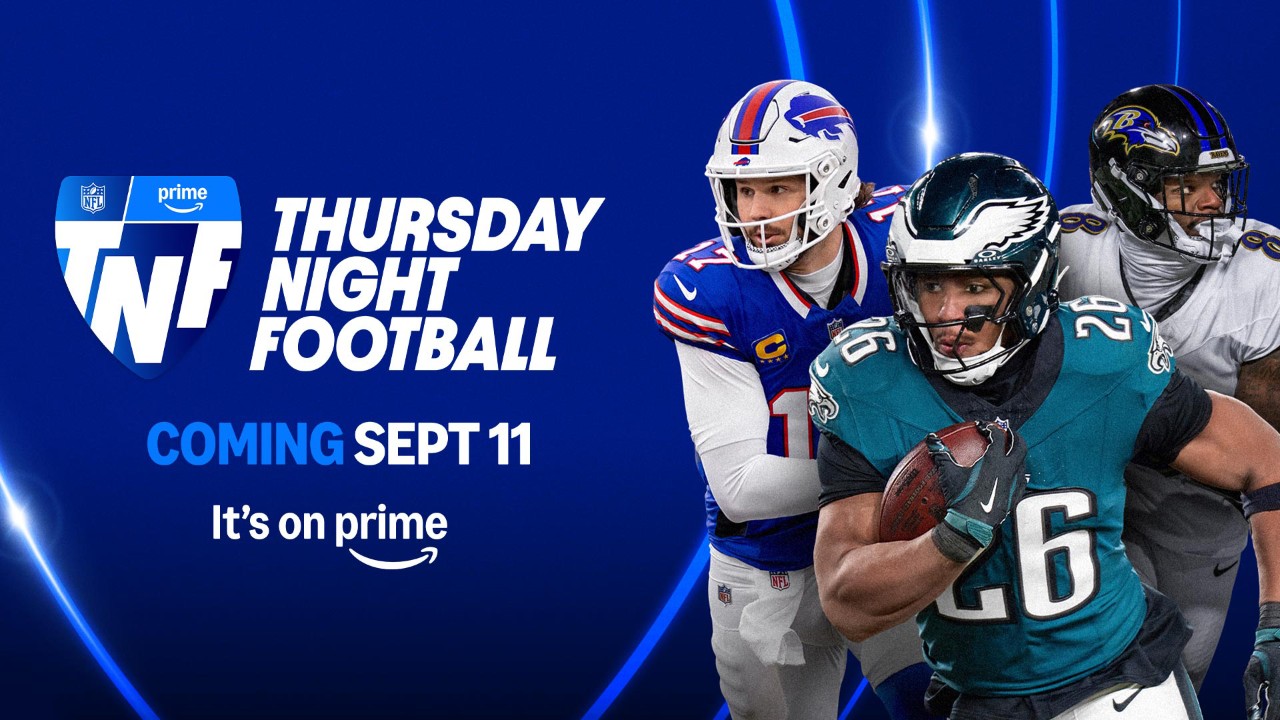
The Exclusive Digital Home: Amazon Prime Video and AWS Infrastructure
Amazon Prime Video is the primary platform for Thursday Night Football, accessible via the Prime Video app on a multitude of devices or through a web browser. Unlike previous years where games were simulcast on networks like NBC, CBS, or FOX, the exclusive digital rights mean that, with the exception of local over-the-air broadcasts in the participating teams’ home markets, the game exists solely in the cloud.
The technological backbone of this massive streaming undertaking is Amazon Web Services (AWS). Handling millions of concurrent high-definition streams requires an unprecedented level of cloud infrastructure to prevent buffering and latency. AWS utilizes a global network of edge locations—servers positioned close to the end-user—to deliver video data with minimal delay. This is a critical component of live sports tech, where even a ten-second delay can lead to “spoiler” notifications from social media or sports apps arriving before the play is seen on screen.
For viewers, accessing the stream requires a Prime membership or a standalone Prime Video subscription. From a software perspective, the Prime Video interface has been redesigned to prioritize live events, featuring dedicated “Live” rows and integrated DVR-like controls that allow users to pause, rewind, or start from the beginning—features that were once the exclusive domain of physical set-top boxes but are now executed via cloud-side time-shifting technology.
The Role of Twitch in the Tech Ecosystem
Interestingly, Amazon also leverages its subsidiary, Twitch, to stream Thursday Night Football. This serves a different technological and social demographic. While the Prime Video stream focuses on a traditional broadcast experience, the Twitch stream often features “co-streaming,” where popular creators provide alternative commentary. Technically, this demonstrates the flexibility of modern RTMP (Real-Time Messaging Protocol) streams, allowing the same base video feed to be wrapped in different interactive overlays and chat environments to suit various audience segments.
Hardware and Connectivity: Optimizing the Digital Gridiron
To truly answer what Thursday Night Football is streaming on, one must look at the hardware layer. Because the broadcast is delivered via the internet, the quality of the image is heavily dependent on the viewer’s local network and playback device.
Compatible Streaming Devices
The Prime Video app is ubiquitous, but not all hardware is created equal. For the best technical performance, users typically rely on:
-
Dedicated Streaming Sticks: Devices like the Fire TV Stick 4K Max, Roku Ultra, and Apple TV 4K are optimized for high-bitrate video decoding. These devices feature dedicated processors for handling HEVC (High-Efficiency Video Coding), which allows for 4K resolution at lower bandwidths.
-
Smart TV Platforms: WebOS (LG), Tizen (Samsung), and Android TV / Google TV platforms host native Prime Video apps. However, internal TV processors can sometimes lag behind dedicated external streamers in terms of UI snappiness and buffer management.
-
Gaming Consoles: The PlayStation 5 and Xbox Series X offer significant computational power, making them excellent nodes for streaming live sports with high frame rates.
Network Requirements and Bitrate Management
Streaming live sports in 1080p or 4K at 60 frames per second (fps) requires significant bandwidth. While Amazon recommends a minimum of 5 Mbps for HD and 25 Mbps for 4K, tech enthusiasts know that “overhead” is necessary. A stable connection utilizing Wi-Fi 6 (802.11ax) or, ideally, a hardwired Gigabit Ethernet connection is the gold standard for avoiding “resolution switching”—the process where an adaptive bitrate algorithm drops the video quality to prevent the stream from stopping entirely during network congestion.
Amazon’s implementation of Adaptive Bitrate Streaming (ABR) is a marvel of software engineering. The player constantly monitors the user’s “last mile” connection and selects the highest possible quality segment for the next few seconds of footage. This ensures that even if a home network fluctuates, the game continues, albeit occasionally at a lower resolution.
Next Gen Stats and Interactive Software Features
The most significant advantage of Thursday Night Football moving to a tech-first platform like Prime Video is the integration of data and interactivity that linear TV cannot replicate. This is where “Next Gen Stats” and “X-Ray” technology come into play.
Prime Video X-Ray
Originally developed for identifying actors in movies, Amazon’s X-Ray tech has been repurposed for live sports. By tapping a button or swiping up on a remote, viewers can access real-time data overlays. This system is powered by SMT (Sports Media Technology) and RFID chips embedded in players’ shoulder pads and the ball itself.
The software calculates:
-
Real-time Speed: How fast a wide receiver is running during a route.
-
Separation Distance: The exact yardage between a defender and a ball carrier.
-
Probability Metrics: The likelihood of a catch or a successful field goal based on historical data and current environmental conditions.
This data is processed in the cloud and synced with the video timecode with millisecond precision, ensuring that the stats on the screen match the action in the frame.
Multiple Audio Feeds and AI-Driven Commentary
The tech stack also allows for “customizable” broadcasts. Through the audio settings menu, users can toggle between the main broadcast team, a Spanish-language feed, or specialized “Prime Vision” feeds. These alternative feeds often use AI-driven graphics to highlight open receivers or defensive blitz paths in real-time, effectively turning the broadcast into a live-action coaching tape. This level of personalization is a direct result of moving the broadcast into a digital environment where multiple data streams can be multiplexed over a single video feed.
Digital Security and Content Protection
Streaming a multi-billion dollar asset like the NFL requires sophisticated digital rights management (DRM). When you stream TNF, the platform employs high-level encryption—such as Widevine, FairPlay, or PlayReady—to ensure that the stream cannot be easily intercepted or restreamed illegally.
This security layer operates in the background, but it impacts the tech ecosystem significantly. It is the reason why certain older browsers or “rooted” mobile devices might struggle to play the stream at full resolution. The handshake between the Amazon server and the client device must be secure to authorize the high-definition feed. Furthermore, geofencing technology ensures that the stream complies with international broadcast rights, using IP-based geolocation and GPS data (on mobile) to verify the user’s location.

The Future of Sports Tech: Beyond the Screen
As we look at what Thursday Night Football is streaming on today, we are seeing the blueprint for the future of all media. The integration of 5G technology is the next frontier. With 5G’s ultra-low latency and high capacity, the “mobile” experience of TNF is becoming indistinguishable from a home fiber connection. This allows for innovations like multi-camera angles where the viewer, not the director, chooses the perspective.
Additionally, the data gathered from millions of viewers during these digital-exclusive broadcasts provides Amazon with a wealth of telemetry data. From a tech development standpoint, this data is used to optimize future app updates, improve load balancing across AWS regions, and refine the AI algorithms that power the interactive stats.
The shift of Thursday Night Football to a streaming-exclusive model is more than a convenience; it is a full-scale digital transformation. By leveraging cloud computing, advanced video codecs, and real-time data analytics, Amazon has turned a weekly football game into a showcase of what modern technology can achieve in the realm of live entertainment. For the viewer, the “channel” is now an app, the “signal” is now a series of data packets, and the “broadcast” is an interactive, personalized tech experience.
aViewFromTheCave is a participant in the Amazon Services LLC Associates Program, an affiliate advertising program designed to provide a means for sites to earn advertising fees by advertising and linking to Amazon.com. Amazon, the Amazon logo, AmazonSupply, and the AmazonSupply logo are trademarks of Amazon.com, Inc. or its affiliates. As an Amazon Associate we earn affiliate commissions from qualifying purchases.