
Thresholding stands as a foundational technique across numerous technological domains, acting as a crucial bridge between raw data and actionable insights. At its core, it is a method of partitioning data based on a predefined value, or “threshold,” to simplify information, highlight significant features, or make binary decisions. While its most intuitive applications often appear in digital image processing, its principles extend widely into fields like data science, machine learning, signal processing, and even cybersecurity. Understanding thresholding is key to appreciating how complex data is often refined into the discrete, interpretable forms necessary for automated systems and human analysis.
The Core Concept of Thresholding
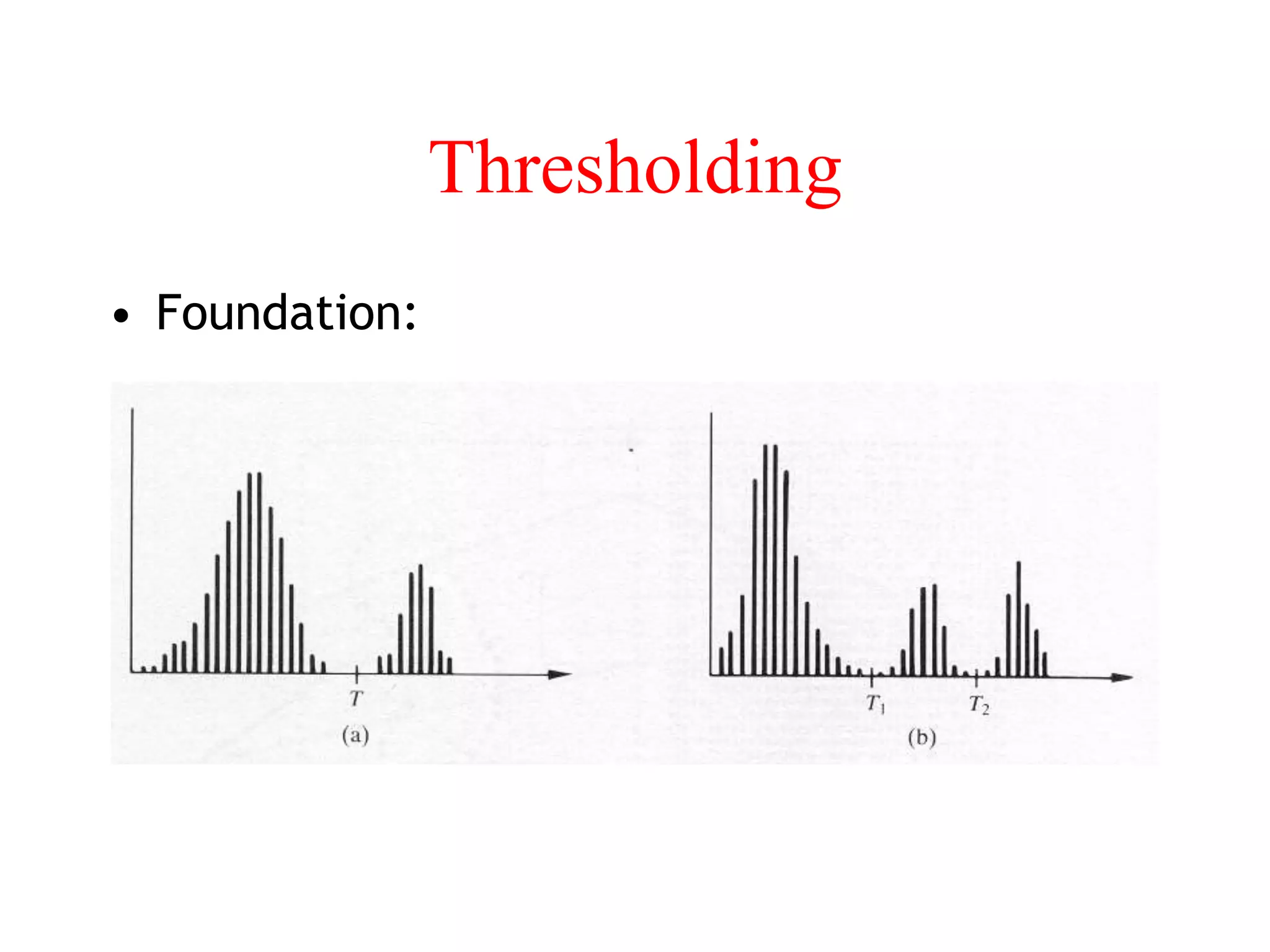
Thresholding, in its simplest form, involves comparing each data point in a dataset against a specific value. If the data point meets or exceeds this value, it’s assigned to one category or state; otherwise, it’s assigned to another. This binary categorization fundamentally simplifies data, making it easier to process, analyze, and react to. It transforms continuous data into discrete outputs, which is vital for decision-making algorithms and feature extraction.
Analogy for Understanding
Consider a security system designed to detect intruders based on movement. A motion sensor constantly measures the level of activity in a room. The system isn’t interested in the exact numerical value of motion, but rather whether the motion is significant enough to warrant an alert. A low, constant background “motion” from air currents or subtle vibrations is ignored. The system has a threshold: if the detected motion value exceeds this threshold (e.g., a person walking through the room), an alarm is triggered; if it stays below the threshold, no action is taken. This is thresholding in action: converting a continuous input (motion level) into a binary output (alarm ON/OFF).
Binary Decision Making
This concept of binary decision-making is central. Thresholding is often employed when the precise magnitude of a signal or feature is less important than whether it crosses a certain relevance boundary. For instance, in quality control, a component might be deemed “acceptable” or “defective” not based on a continuous spectrum of quality, but on whether a measured parameter (like resistance or dimension) falls within or outside a permissible range defined by thresholds. This transformation from a continuum to a binary state is incredibly powerful for simplifying complex data landscapes, allowing for efficient computational processing and clear interpretive outcomes.
Thresholding in Digital Image Processing
Perhaps the most recognized application of thresholding is in digital image processing, particularly in converting a grayscale image into a binary (black and white) image. This process is fundamental for tasks like object segmentation, text recognition, and feature extraction, where distinguishing foreground from background is critical.
Global Thresholding
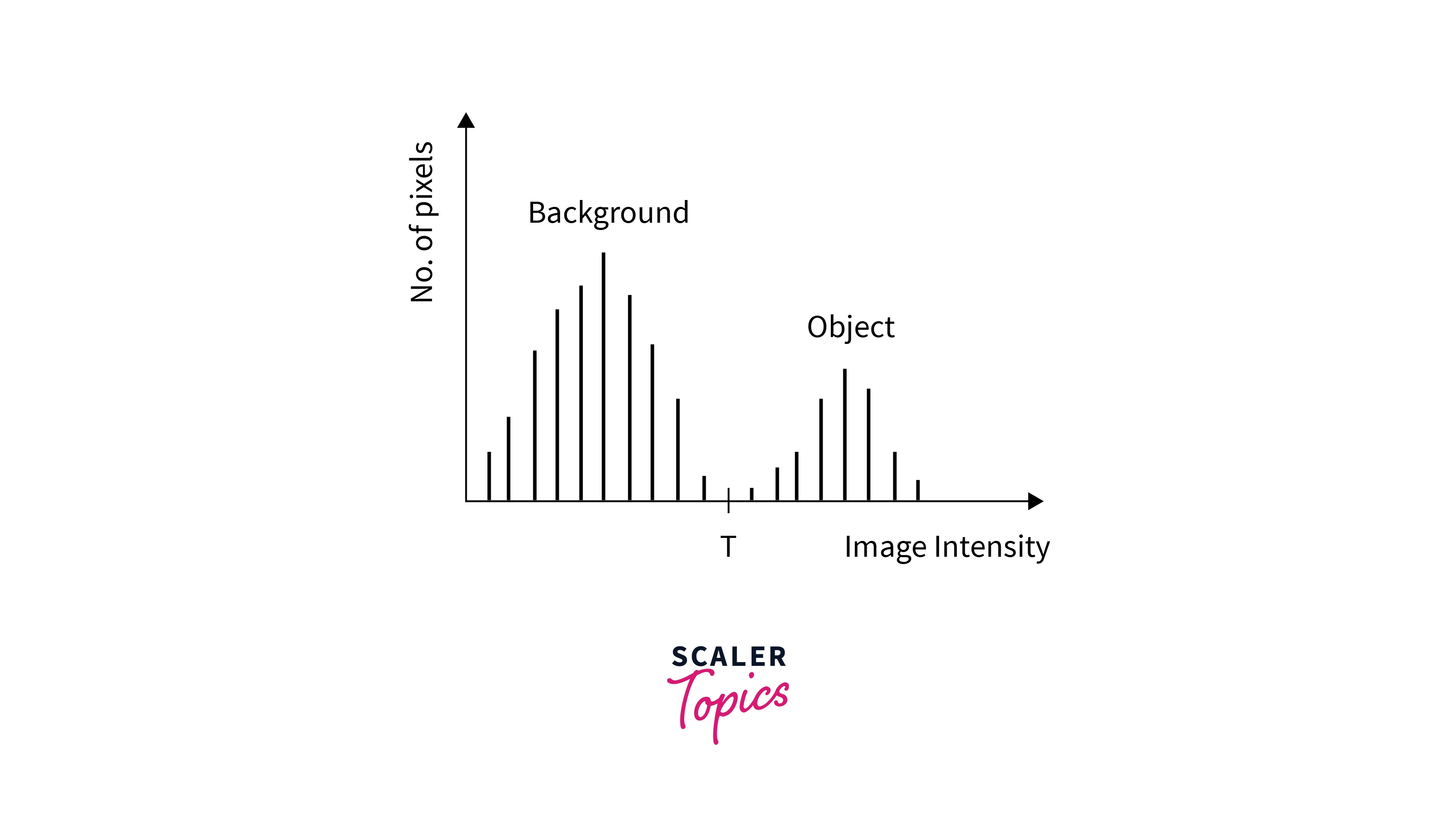
The most straightforward approach is global thresholding. Here, a single, fixed threshold value is applied uniformly across the entire image. Every pixel in the image is compared to this global threshold. If a pixel’s intensity value is greater than the threshold, it’s set to white (or 255); otherwise, it’s set to black (or 0). This method is effective for images with clear separation between foreground and background intensity levels and uniform illumination. However, its simplicity is also its limitation: it struggles with images that have varying lighting conditions across different regions or where the foreground and background intensities are not consistently distinct.
Adaptive (Local) Thresholding
To overcome the challenges of non-uniform illumination and varying image characteristics, adaptive or local thresholding was developed. Instead of a single global value, adaptive thresholding calculates a unique threshold for different regions (sub-sections) of the image. This is typically done by considering a small neighborhood of pixels around each pixel. The threshold for a pixel might be the mean, median, or a Gaussian-weighted sum of the intensity values in its local neighborhood. This localized approach allows the algorithm to adjust dynamically to changes in lighting and contrast within different parts of the image, leading to much better segmentation results for complex images. Popular adaptive methods include local mean, local median, and Gaussian adaptive thresholding.
Otsu’s Method: An Intelligent Approach
Otsu’s method is an ingenious technique for automatically determining the optimal global threshold for an image. Instead of requiring a predefined threshold, Otsu’s algorithm exhaustively searches for the threshold that minimizes the intra-class variance (the variance within the two classes – foreground and background) or, equivalently, maximizes the inter-class variance (the variance between the two classes). It operates on the image’s histogram, treating the pixels falling into each side of the threshold as two separate classes. The algorithm then iterates through all possible threshold values, calculating the weighted sum of variances of the two classes for each value, and selects the threshold where this sum is minimal. Otsu’s method is widely used because it’s robust, fully automatic, and often produces excellent results when the image histogram exhibits a clear bimodal distribution (two distinct peaks).
Applications in Computer Vision
The utility of thresholding in computer vision is vast. It’s used in:
- Document Scanning: Separating text from the page background for optical character recognition (OCR).
- Medical Imaging: Segmenting specific tissues or anomalies in X-rays, MRIs, or CT scans.
- Industrial Inspection: Identifying defects on manufacturing lines, such as scratches or foreign particles, by differentiating them from the product surface.
- Security Systems: Isolating objects of interest (e.g., people, vehicles) from static backgrounds in surveillance footage.
Thresholding Beyond Images: Data Science and Machine Learning
While image processing offers vivid examples, the underlying principle of thresholding extends robustly into data science and machine learning, forming the basis for numerous algorithms and decision-making processes.
Classification and Prediction
In machine learning, many classification algorithms output a probability score rather than a direct class label. For example, a logistic regression model might predict a 0.75 probability that an email is spam. To convert this probability into a definitive “spam” or “not spam” label, a threshold is applied. Commonly, this threshold is 0.5: if the probability is greater than 0.5, it’s classified as spam; otherwise, it’s not. Adjusting this threshold allows data scientists to fine-tune the balance between false positives and false negatives, which is crucial in applications like medical diagnosis (minimizing false negatives) or fraud detection (minimizing false negatives, but also managing false positives).
Anomaly Detection
Thresholding plays a pivotal role in anomaly detection systems. In network security, for instance, the amount of data traffic, login attempts, or error rates might be continuously monitored. If any of these metrics exceed a predefined threshold within a specific timeframe, it could signal a potential security breach or a denial-of-service attack. Similarly, in industrial equipment monitoring, temperature, vibration, or pressure readings might be constantly checked. A sudden spike or drop beyond an established threshold can indicate an impending equipment failure, prompting preventative maintenance.
Signal Processing and Noise Reduction
In signal processing, thresholding is a common technique for noise reduction. For example, in audio processing, low-amplitude signals below a certain threshold might be considered noise and filtered out, preserving only the more prominent, meaningful parts of the audio. In sensor data, small fluctuations that fall below a noise threshold are often discarded to extract cleaner, more reliable data points for analysis. This is particularly important in fields like seismology or biomedical signal analysis (e.g., EEG, ECG), where separating meaningful biological signals from background noise is critical for accurate diagnosis and research.
Key Considerations and Challenges
Despite its widespread utility, effective thresholding is not always a trivial task. Several factors influence its performance and pose significant challenges.
Selecting the Right Threshold
The most critical aspect of thresholding is choosing the appropriate threshold value. An incorrectly chosen threshold can lead to significant errors:
- Too Low: If the threshold is set too low, it might include too much noise or irrelevant data, leading to false positives or an inability to properly isolate the desired features. In image processing, this could mean background elements are erroneously classified as foreground.
- Too High: Conversely, if the threshold is too high, it might exclude essential information, leading to false negatives or incomplete feature extraction. In image segmentation, parts of the actual object might be missed.
The “optimal” threshold often depends heavily on the specific application, the characteristics of the data, and the desired balance between sensitivity and specificity. Manual tuning, automated methods like Otsu’s, or statistical analysis are frequently employed to determine effective thresholds.
Sensitivity to Noise and Lighting
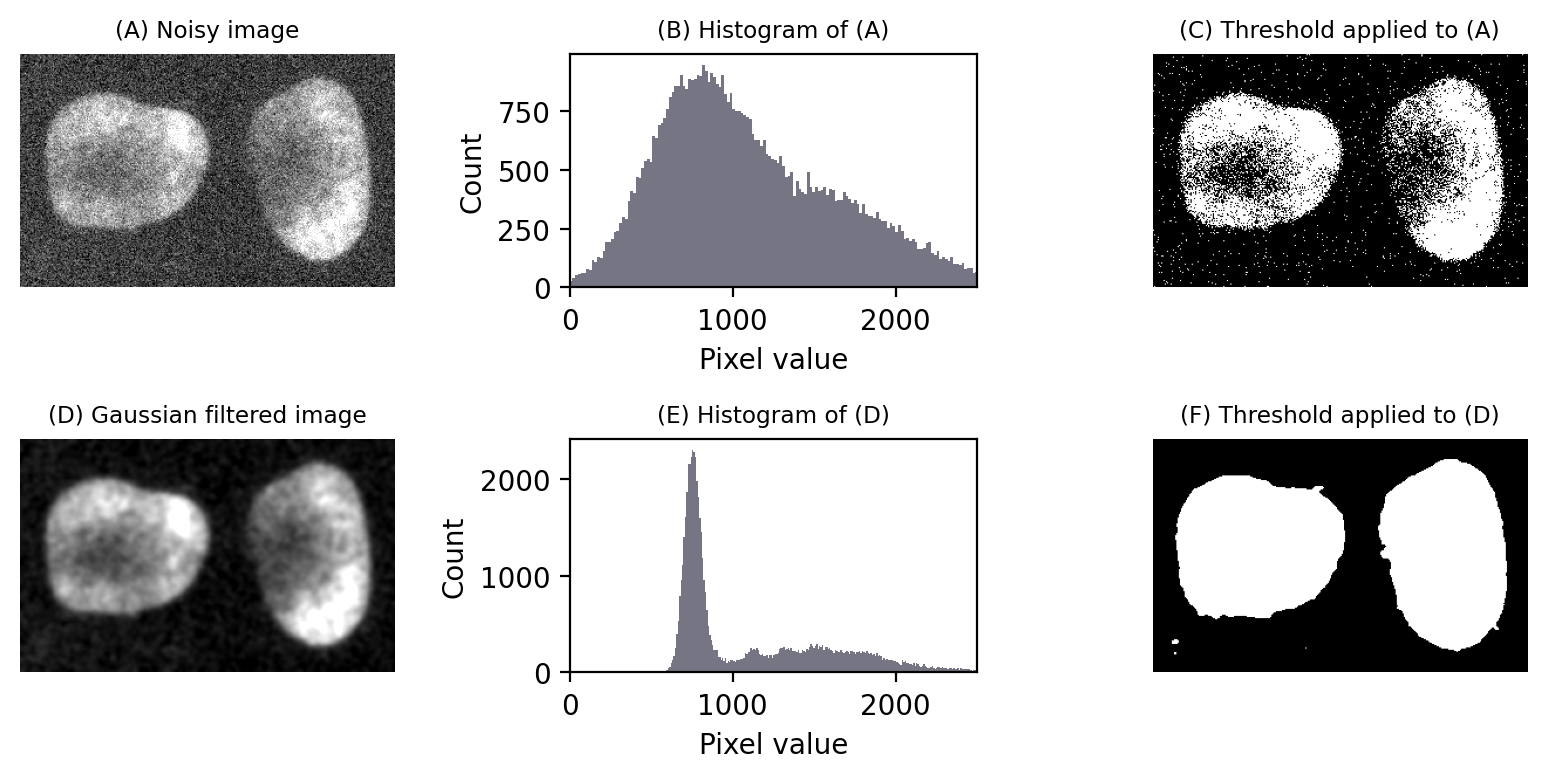
Thresholding techniques, especially global ones, are highly sensitive to noise and variations in lighting or data distribution. A noisy image with random bright or dark pixels can cause incorrect segmentation. In scenarios with uneven illumination, a single global threshold will invariably perform poorly, either missing parts of the foreground in darker regions or including background in brighter areas. Adaptive thresholding mitigates this but introduces its own computational overhead and requires careful selection of local neighborhood parameters.
Computational Efficiency
While simple global thresholding is computationally inexpensive, more sophisticated methods like adaptive thresholding or iterative techniques (e.g., Otsu’s method, which scans through all possible thresholds) can demand more processing power, especially for large datasets or high-resolution images. In real-time applications, striking a balance between accuracy and computational efficiency is crucial. Hardware acceleration or optimized algorithms are often necessary to maintain performance requirements.
The Future of Thresholding: AI and Automation
As technology evolves, the role of thresholding continues to adapt, particularly with advancements in artificial intelligence and machine learning. While traditional thresholding relies on explicit rules or statistical optimization, modern approaches integrate more complex learning paradigms.
Deep Learning and Semantic Segmentation
Deep learning, especially convolutional neural networks (CNNs), has revolutionized image processing and segmentation. While CNNs perform far more complex operations than simple thresholding, the final layer of many segmentation networks often involves a form of learned thresholding. For instance, in semantic segmentation, each pixel is assigned a probability of belonging to a certain class. These probabilities are then “thresholded” (often implicitly by selecting the class with the highest probability, which is a form of thresholding at 0.5 if it’s a binary choice) to produce the final segmented image. This represents a learned, highly adaptive form of thresholding, where the “thresholds” are dynamically determined by the features extracted through layers of neural networks, leading to superior accuracy in highly complex and varied scenes.
Self-Optimizing Algorithms
The trend is towards algorithms that can automatically determine optimal thresholds based on context and data characteristics, potentially even learning from feedback loops. Reinforcement learning or advanced statistical models could dynamically adjust thresholds in real-time for systems dealing with continuously changing environments, such as autonomous vehicles or dynamic manufacturing processes. This would move beyond static or even semi-adaptive thresholding to truly intelligent, self-optimizing systems that continually refine their decision boundaries, making thresholding an even more powerful and adaptable tool in the technological landscape of the future. The core concept of dividing data, however, remains timeless and essential.
aViewFromTheCave is a participant in the Amazon Services LLC Associates Program, an affiliate advertising program designed to provide a means for sites to earn advertising fees by advertising and linking to Amazon.com. Amazon, the Amazon logo, AmazonSupply, and the AmazonSupply logo are trademarks of Amazon.com, Inc. or its affiliates. As an Amazon Associate we earn affiliate commissions from qualifying purchases.