
In the hierarchy of technological infrastructure, few components are as foundational yet as overlooked as the power supply. While the world focuses on the latest silicon chips, generative AI models, and ultra-fast 6G connectivity, none of these innovations could function without a stable and efficient delivery of electrical energy. This is where the concept of a “Three Phase Supply” becomes critical.
Far more than a simple electrical term, three-phase power is the silent engine driving our global digital economy. From the massive data centers that host our cloud services to the manufacturing plants producing modern hardware, three-phase supply provides the consistency and high-load capacity that standard residential power simply cannot match. To understand the future of technology, one must first understand the sophisticated power systems that make it possible.
The Engineering Fundamentals: How Three-Phase Power Works
At its core, a three-phase supply is a type of polyphase system used by electrical grids worldwide to transfer power. To understand it, we must first distinguish it from the single-phase power used in most homes.
The Contrast Between Single-Phase and Three-Phase Systems
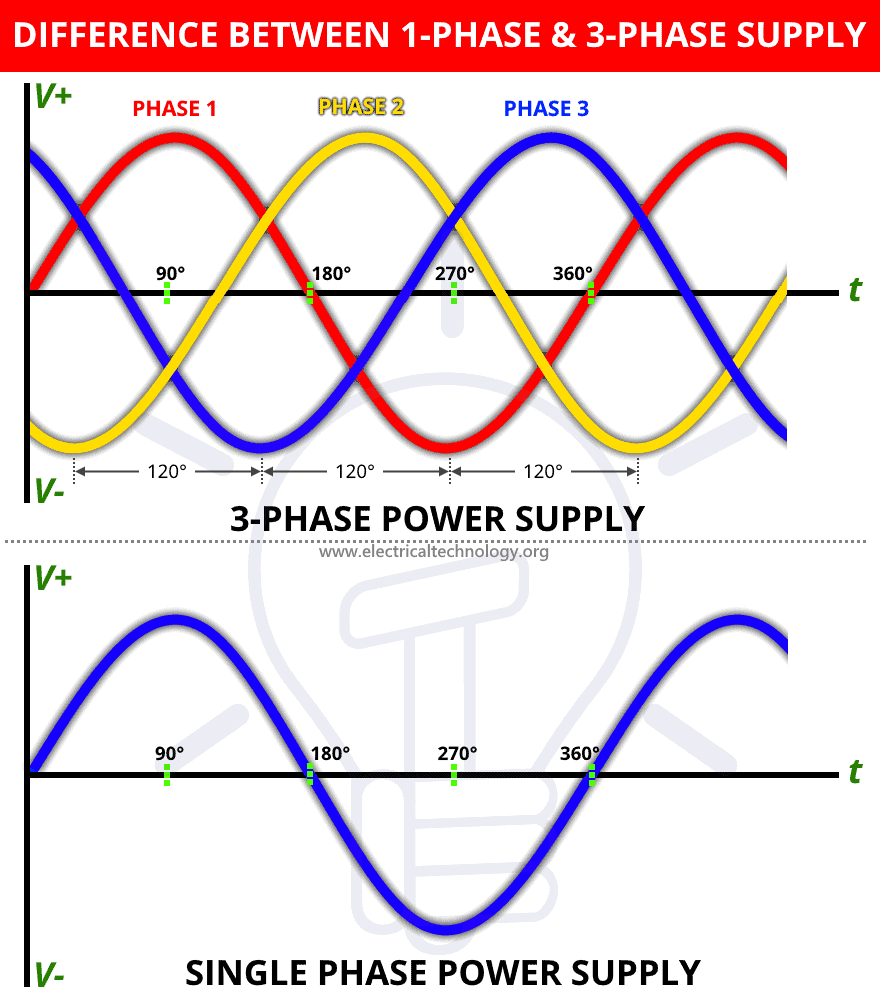
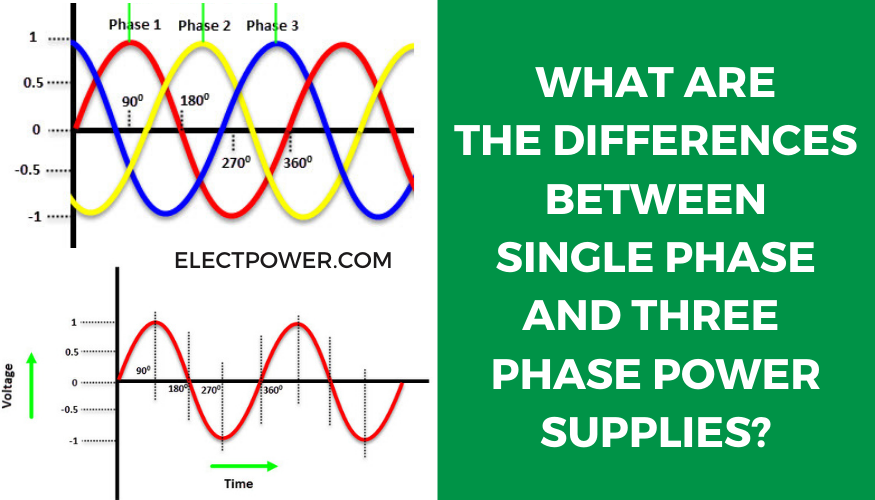
Single-phase electricity is akin to a single cylinder in an engine. There is one wave of power that peaks and then drops to zero twice in every cycle. While this is sufficient for lighting, laptops, and small appliances, it creates a “pulsating” delivery of energy. In high-performance tech environments, these pulses can lead to inefficiencies and mechanical vibrations.
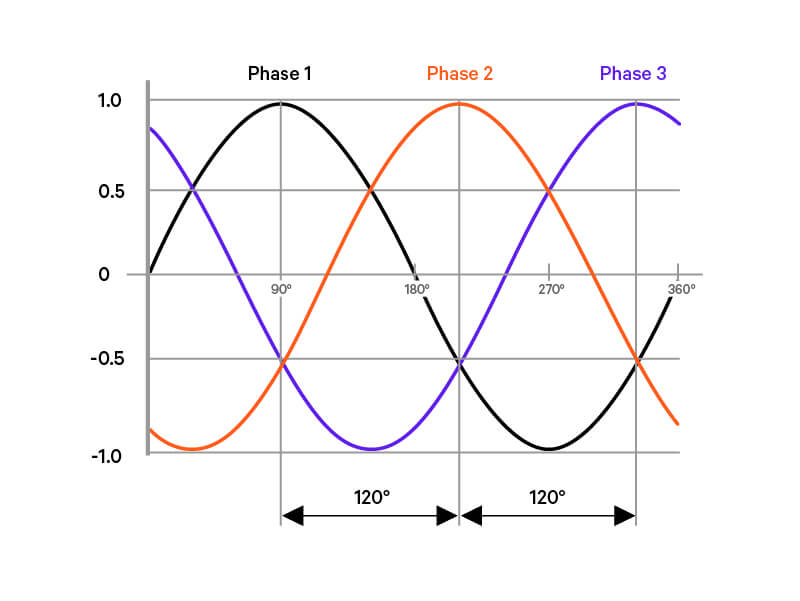
Three-phase power, conversely, uses three separate alternating currents (AC) that are offset in time by 120 degrees. Imagine three people pedaling a single bicycle: as one person’s foot reaches the bottom of the stroke, the others are at different positions, ensuring that force is constantly applied to the pedals. In a three-phase system, power never drops to zero; it is a constant, unwavering stream of energy.
The Mechanics of the Rotating Magnetic Field
One of the most significant technological breakthroughs of the three-phase system is its ability to create a rotating magnetic field. Because the phases are offset by 120 degrees, they naturally generate a field that rotates in a specific direction. This is vital for industrial technology, as it allows electric motors—used in everything from server cooling fans to robotic assembly lines—to start and run more efficiently without the need for complex starting capacitors or auxiliary windings.
Why Three-Phase is the Standard for Modern Tech Infrastructure
The tech industry does not use three-phase supply by accident. It is a calculated choice driven by the need for massive power density, operational efficiency, and material conservation.
Maximizing Power Density for Data Centers
In the realm of Big Tech, space is money. Data centers aim to pack as much computing power as possible into every square foot of floor space. Three-phase power allows for significantly higher power density than single-phase. By utilizing three-phase circuits, engineers can deliver three times the power using only 1.5 times as many wires. This efficiency allows server racks to handle the immense workloads required by modern cloud computing and massive database management.
Reliability and Constant Power Delivery
For mission-critical technology, downtime is not an option. Because the power delivery in a three-phase system is constant, it places less strain on the internal components of tech hardware. Servers, routers, and storage arrays benefit from a smoother voltage profile, which reduces the wear and tear on sensitive electronic components. This stability is a cornerstone of digital security and infrastructure uptime, ensuring that the services we rely on—from banking apps to healthcare systems—remain online 24/7.
Powering the AI Revolution and Advanced Hardware
The recent explosion in Artificial Intelligence (AI) has placed unprecedented demands on power grids. AI training models require thousands of high-end GPUs (Graphics Processing Units) working in tandem, creating energy requirements that were unthinkable a decade ago.
GPU Clusters and the Demand for Stable Energy
Modern AI hardware, such as NVIDIA’s H100 clusters, consumes an enormous amount of wattage. A single AI server rack can now require upwards of 100kW of power. Standard single-phase power is physically unable to support this level of draw without utilizing massive, inefficient cabling. Three-phase supply allows these AI clusters to receive the high-amperage current they need with minimal heat loss and maximum efficiency. It is the literal “fuel” for the AI revolution.
Thermal Management and Power Stability
High-performance computing generates intense heat. Effective cooling systems—including liquid cooling and high-velocity air units—are essential to prevent hardware throttling or failure. These cooling systems themselves are heavy-duty technological tools that require the high torque and efficiency of three-phase motors. By using a three-phase supply, tech facilities can run both the computation and the cooling on the same robust infrastructure, ensuring that hardware remains at optimal operating temperatures even under “crunch” workloads.
Implementing Three-Phase Systems in Tech Environments
Transitioning to or managing a three-phase environment requires specialized hardware and a deep understanding of load balancing. In the tech world, this implementation happens at the rack and room level.
Intelligent Power Distribution Units (PDUs)
In a tech-focused three-phase setup, power enters the facility at high voltage and is stepped down via transformers. From there, it is distributed to “Smart PDUs.” These are not your average power strips; they are sophisticated IoT devices that monitor energy consumption in real-time. They take the three-phase input and distribute it across different server components, ensuring that the “load” is balanced. If one phase is drawing significantly more power than the others, it can lead to inefficiencies and potential hardware failure. Intelligent PDUs allow technicians to monitor these balances through digital dashboards.
The Role of Uninterruptible Power Supplies (UPS)
For data-sensitive tech companies, the three-phase UPS is the ultimate safeguard. These systems sit between the grid and the hardware. Because they operate on a three-phase input, they can charge large battery arrays and provide an instantaneous transition to backup power during a grid failure. The seamless nature of three-phase AC makes the conversion from AC to DC (for battery storage) and back to AC much more efficient than in single-phase systems, providing a cleaner signal to the connected technology.
The Future of Energy Tech: Smart Grids and Sustainability
As we look toward the next decade of technology, the role of three-phase supply is evolving to meet the demands of sustainability and decentralization.
Integration with Renewable Energy Technology
The tech industry is under increasing pressure to go “green.” Solar arrays and wind turbines inherently produce power that is more easily integrated into three-phase systems. Modern “Smart Grids” use AI to manage the distribution of three-phase power from renewable sources, ensuring that tech hubs can run on carbon-neutral energy without sacrificing the stability that industrial-grade power provides.
The Rise of Edge Computing and EV Infrastructure
As technology moves out of centralized data centers and into the “edge” (closer to the user), we are seeing three-phase supply being implemented in smaller, localized tech hubs. Furthermore, the rise of Electric Vehicle (EV) fleets for tech-driven logistics companies relies entirely on three-phase fast-charging stations. The ability to move large amounts of energy quickly and safely is the common thread between the future of transportation and the future of computing.
Conclusion
The question “What is three phase supply?” may seem like a matter for electricians, but in reality, it is a fundamental question for anyone interested in the trajectory of modern technology. It is the backbone of our digital existence, providing the heavy-duty energy required to sustain AI, the cloud, and the global communication network.
As hardware becomes more powerful and data demands grow exponentially, the efficiency and reliability of three-phase power will remain the “invisible” tech trend that makes all others possible. By bridging the gap between raw electrical energy and sophisticated digital performance, three-phase supply ensures that the gears of the technological world keep turning without interruption.
aViewFromTheCave is a participant in the Amazon Services LLC Associates Program, an affiliate advertising program designed to provide a means for sites to earn advertising fees by advertising and linking to Amazon.com. Amazon, the Amazon logo, AmazonSupply, and the AmazonSupply logo are trademarks of Amazon.com, Inc. or its affiliates. As an Amazon Associate we earn affiliate commissions from qualifying purchases.