
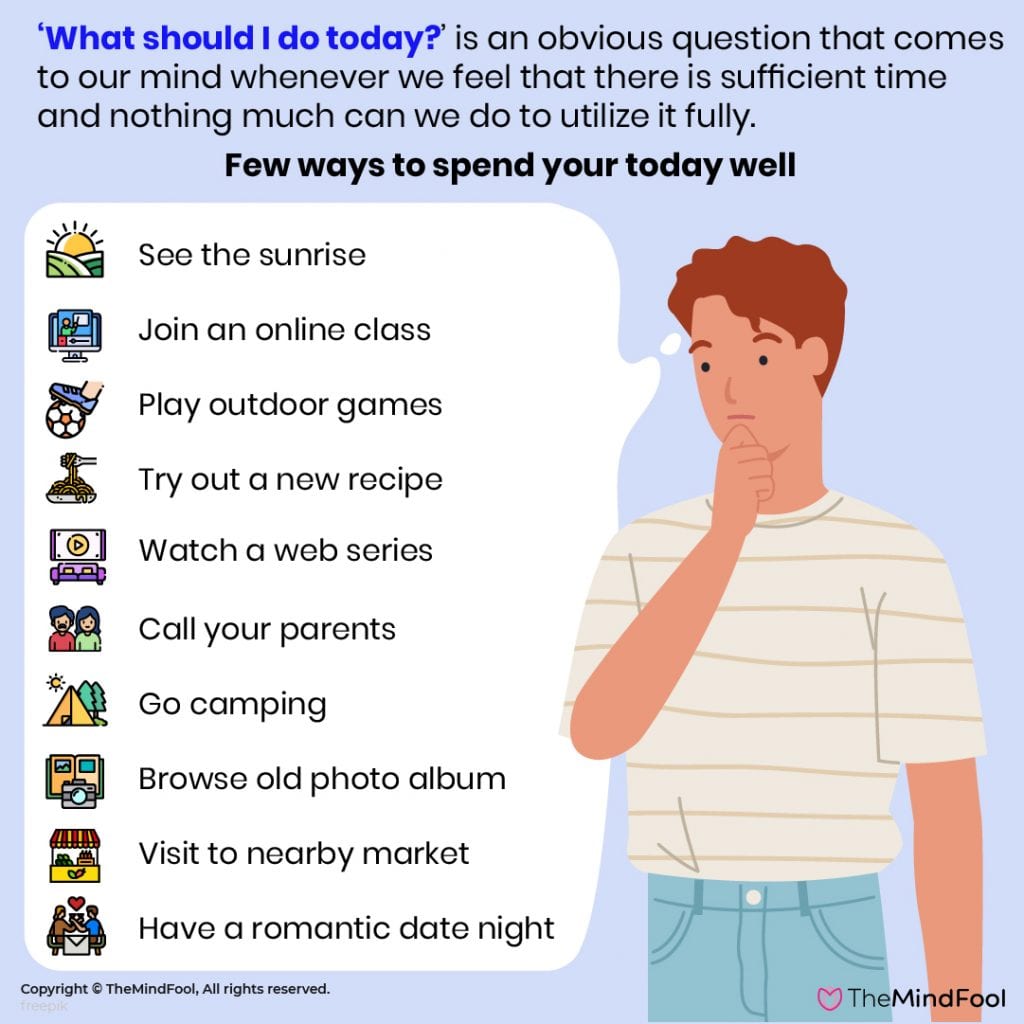
For decades, the question “What is there to do today?” was answered by local newspapers, community bulletin boards, or word-of-mouth recommendations. In the modern era, this query has undergone a digital transformation. It is no longer a simple question of local availability; it is a complex data problem solved by sophisticated algorithms, real-time geolocation, and predictive analytics. As we move deeper into the decade, technology has evolved from a tool we use to find activities into an active participant that suggests, curates, and even creates our daily experiences.
The Rise of AI-Driven Personal Discovery
The fundamental shift in how we answer the question of daily activity lies in the transition from reactive search to proactive suggestion. Traditional search engines required the user to have a vague idea of what they wanted. Today, Artificial Intelligence (AI) and Machine Learning (ML) have flipped this dynamic, analyzing our past behaviors to predict our future desires.
Predictive Analytics and Your Social Calendar
Modern personal assistants—powered by Large Language Models (LLMs) and integrated with our digital footprints—do more than just set reminders. They analyze patterns. If your data indicates a preference for outdoor activities on sunny Saturday mornings and a habit of visiting specialty coffee shops, an AI-driven system doesn’t wait for you to ask “What is there to do today?” Instead, it synthesizes weather data, local event APIs, and your personal taste profile to suggest a specific hiking trail followed by a visit to a newly opened roastery nearby.
This level of predictive curation relies on “Deep Learning” models that process thousands of variables simultaneously. By leveraging historical data, these systems reduce the “paradox of choice,” providing a streamlined selection of activities that have a high statistical probability of satisfying the user.
Machine Learning: Beyond the Basic Search Query
The “discovery” phase of any day is increasingly managed by recommendation engines similar to those used by streaming giants. However, applying these to the physical world requires a higher degree of complexity. Advanced ML models now incorporate “contextual awareness.” This means the technology understands not just who you are, but where you are and what the environment is like.
For example, if the tech detects high traffic congestion or a sudden change in weather, it will dynamically alter its suggestions. The sophistication of these systems ensures that the answer to “What is there to do today?” is never static; it is a fluid response generated by a neural network that values both relevance and real-time feasibility.
Geolocation and Augmented Reality: Transforming Your Immediate Environment
While AI handles the “why” and “what,” geolocation and Augmented Reality (AR) technologies handle the “where.” The integration of Global Positioning Systems (GPS) with hyper-local databases has turned every smartphone into a sophisticated scouting tool.
Hyper-Local Tech: Discovering Hidden Gems in Real-Time
The evolution of Geographic Information Systems (GIS) has allowed developers to create apps that offer granular insights into a user’s immediate surroundings. We are seeing a move toward “Hyper-Localism,” where tech platforms focus on a radius of just a few hundred meters.
Beacon technology and Low Power Bluetooth (BLE) are being utilized by districts to “ping” users with activities as they walk by. Whether it is a pop-up art gallery or a flash sale at a boutique, the tech ensures that “what there is to do” is presented to you based on your physical proximity. This level of technical integration bridges the gap between the digital and the physical, making the city itself a programmable interface for entertainment and engagement.
AR Overlays: The Digital Layer of Physical Activities
Augmented Reality is perhaps the most visual answer to our daily question. Through AR-enabled glasses or even standard smartphone cameras, the physical world is being “skinned” with digital information. Imagine walking through a historic downtown and seeing digital markers that signify a “scavenger hunt” or a historical reenactment taking place via your lens.
For the tech-savvy user, the world is no longer just a collection of buildings; it is an interactive playground. AR allows for “Gamified Exploration,” where daily chores or simple walks are transformed into digital quests. This technology ensures that even on a day where “nothing is happening” in the traditional sense, the digital layer provides a wealth of interactive content to engage with.

The Evolution of Event Tech and Virtual Participation
When we ask what there is to do, we are no longer limited by physical boundaries. The “Tech” niche has expanded the definition of presence, allowing for high-fidelity experiences that occur entirely within a digital or hybrid framework.
Hybrid Experiences: From Physical Presence to Global Access
The technology behind event management has seen a massive overhaul. “What is there to do today?” might result in an invitation to a hybrid seminar or a concert where the physical venue is in London, but the immersive digital experience is accessible from a home office in San Francisco.
High-bandwidth 5G connectivity and edge computing have made it possible to stream 360-degree, low-latency video, allowing users to “attend” events with a level of immersion previously reserved for those physically present. This democratization of access means that “doing something” today can involve global participation without the need for travel, powered by robust cloud infrastructure and real-time streaming protocols.
Ticketing Ecosystems and Seamless Integration
Behind every “thing to do” is a complex stack of Fintech and event-management software. The integration of blockchain technology in ticketing is a burgeoning trend that solves the issues of fraud and scalping. When you find an activity today, the “tech stack” involved in securing your spot is more secure than ever.
Smart contracts allow for dynamic pricing and verified ownership, ensuring that the process of finding and committing to an activity is frictionless. The use of Near Field Communication (NFC) for entry further streamlines the experience, turning the smartphone into a universal key for any venue or event discovered through a digital platform.
Digital Wellness and the Ethics of Algorithmic Suggestion
As technology becomes the primary curator of our daily lives, we must consider the implications of allowing algorithms to dictate our experiences. The “Tech” world is currently grappling with how to balance helpful suggestions with the need for serendipity and privacy.
Breaking the Filter Bubble in Daily Activities
One of the technical challenges for developers of discovery apps is the “Filter Bubble.” If an algorithm only suggests activities it knows you will like based on past data, you lose the opportunity for growth and unexpected joy.
Engineers are now working on “Serendipity Algorithms”—code specifically designed to introduce outliers into your recommendation feed. By intentionally suggesting things slightly outside of your comfort zone, tech can foster a more diverse and enriching daily schedule. This involves “Exploration vs. Exploitation” logic in machine learning, where the system “exploits” known preferences while “exploring” new territories to keep the user engaged and evolving.
Privacy and Data Security in Activity Tracking
The question of “What is there to do today?” requires the system to know a lot about you: your location, your budget, your interests, and your social circle. This brings digital security to the forefront. The future of discovery tech lies in “Privacy-Preserving Computation” and “On-Device Processing.”
Instead of sending your sensitive location data to a central cloud server, modern apps are increasingly performing the heavy lifting on the device itself. This ensures that while you get the benefits of personalized suggestions, your data remains under your control. Digital security is no longer an afterthought; it is a core feature of any reputable platform that aims to answer the question of daily activity.

Conclusion: The Future of Discovery
Technology has fundamentally redefined the scope of the human day. We have moved from a world of limited options to one of infinite digital and physical possibilities, curated by the most advanced systems ever built. As AI becomes more intuitive, AR becomes more immersive, and our digital security becomes more robust, the answer to “What is there to do today?” will continue to become more personalized, efficient, and exciting. In this tech-driven landscape, the only limit to what we can do is the battery life of our devices and our willingness to explore the digital horizons presented to us.
aViewFromTheCave is a participant in the Amazon Services LLC Associates Program, an affiliate advertising program designed to provide a means for sites to earn advertising fees by advertising and linking to Amazon.com. Amazon, the Amazon logo, AmazonSupply, and the AmazonSupply logo are trademarks of Amazon.com, Inc. or its affiliates. As an Amazon Associate we earn affiliate commissions from qualifying purchases.