
Determining the value of Tesla (TSLA) stock is one of the most contentious exercises in modern finance. For some, it is a quintessential “bubble” stock, trading at multiples that defy traditional automotive logic. For others, it is a generational technology play that happens to produce cars, deserving of a valuation that reflects its dominance in energy, artificial intelligence, and autonomous software. To understand what Tesla stock is actually worth, an investor must look beyond the daily price tickers and analyze the convergence of fundamental financials, macroeconomic pressures, and the speculative value of its future roadmap.
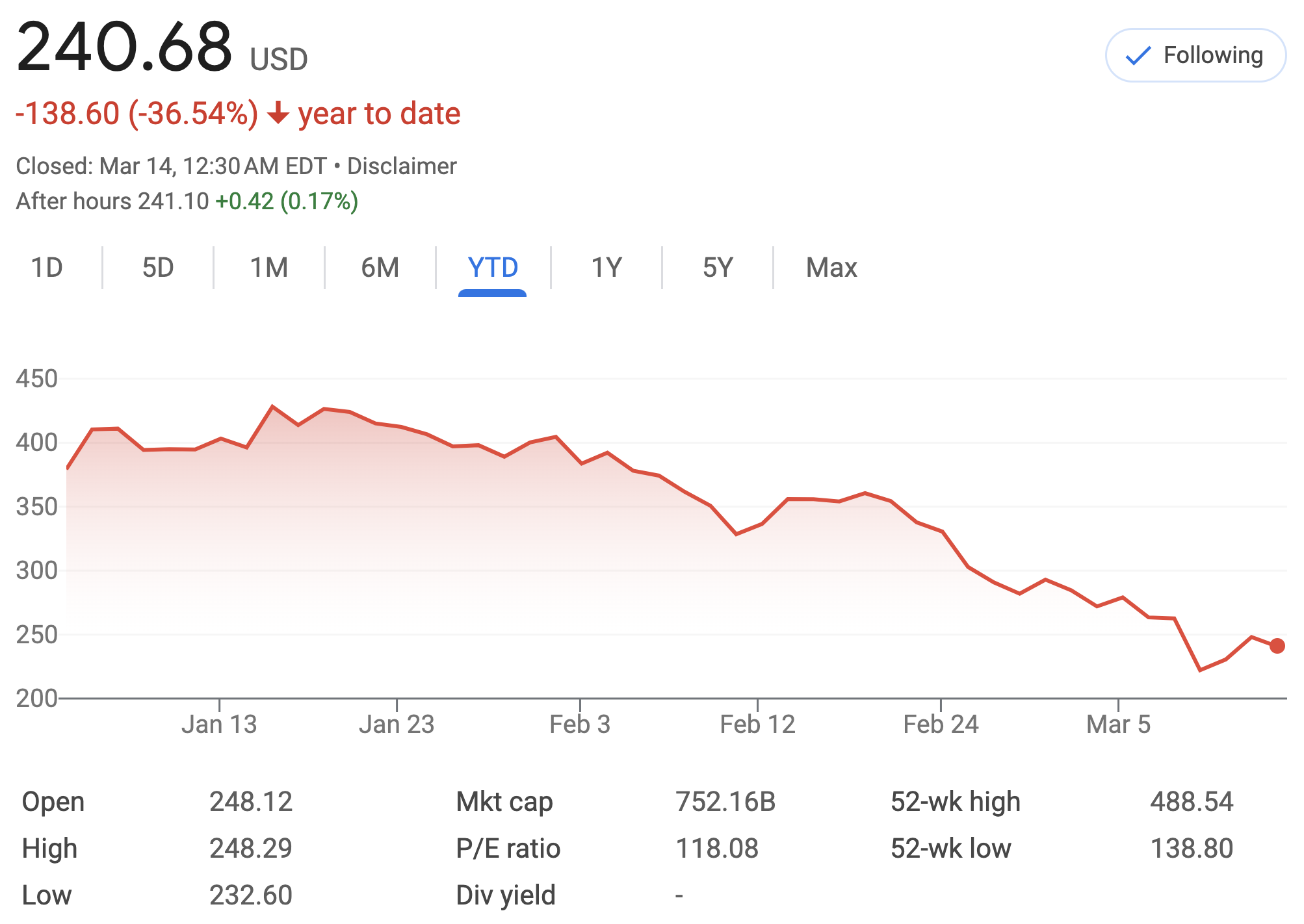
Understanding Tesla’s Market Valuation: Beyond the Numbers
Tesla’s valuation has historically fluctuated between the realms of a traditional manufacturing company and a high-growth Silicon Valley software firm. This duality is the primary reason for the stock’s extreme volatility. To assess its value, one must first distinguish between market capitalization and intrinsic value.
Market Capitalization vs. Intrinsic Value
Market capitalization—the total dollar market value of a company’s outstanding shares—often reflects what the crowd thinks Tesla is worth today. However, intrinsic value is an estimate of the actual true value of a company, based on its ability to generate future cash flows. Tesla often trades at a market cap that exceeds the combined value of several of its largest competitors, including Toyota, Volkswagen, and Ford. Skeptics argue this is a misalignment of value, while bulls suggest that Tesla’s vertical integration and software margins justify the disparity.
Price-to-Earnings (P/E) Ratio: The Growth Premium
One of the most cited metrics in the Tesla valuation debate is the Price-to-Earnings (P/E) ratio. For most of its history, Tesla has traded at a P/E ratio significantly higher than the S&P 500 average. This “growth premium” indicates that investors are paying for future earnings rather than current profits. When the P/E ratio contracts, it usually suggests the market is becoming more cautious about Tesla’s growth trajectory or that the company’s earnings are finally catching up to its ambitious valuation.
Key Financial Drivers Influencing Tesla’s Stock Value
The underlying value of any stock is ultimately rooted in the company’s financial health. Tesla’s balance sheet has evolved from a state of perennial cash-burn to one of the most robust in the industry, yet new challenges have emerged regarding its profit margins.
Revenue Streams: Automotive, Energy, and Services
Tesla’s value is derived from three primary segments: Automotive, Energy Generation and Storage, and Services. While the sale of Model 3, Y, S, and X vehicles accounts for the lion’s share of revenue, the Energy segment—comprising solar and Megapack batteries—is growing at a rapid clip. Many analysts believe the Energy division could eventually rival the automotive side in terms of valuation contribution, as the global shift toward renewable grids accelerates. Additionally, the Services segment, which includes Supercharging fees and insurance, provides a recurring revenue stream that adds a layer of stability to the stock’s value.
Profitability and Margin Compression
For several years, Tesla enjoyed industry-leading operating margins, often exceeding 15% to 20%. However, as competition from Chinese manufacturers like BYD and legacy automakers like Hyundai increased, Tesla engaged in a series of price cuts to maintain market share. These price cuts have led to “margin compression,” where the profit per vehicle decreases. For investors, the value of the stock is highly sensitive to these margins. If Tesla can maintain its volume while stabilizing its margins through manufacturing efficiencies, its valuation remains high. If margins continue to slide, the stock may be revalued closer to a traditional automaker.
Cash Flow and Capital Expenditures
Tesla’s ability to generate Free Cash Flow (FCF) is a critical indicator of its value. Despite massive “CapEx” (Capital Expenditures) required to build new Gigafactories in Texas, Berlin, and Mexico, Tesla has maintained a positive cash flow position. This financial independence allows the company to self-fund its R&D and expansion without needing to dilute shareholders through frequent secondary offerings, which is a major value-add for long-term holders.
The Macroeconomic Landscape and Interest Rates

No stock exists in a vacuum, and Tesla is particularly sensitive to the global macroeconomic environment. Because Tesla vehicles are high-ticket items and the company is viewed as a “growth” stock, it is disproportionately affected by the cost of capital.
The Impact of Fed Policy on Growth Stocks
When the Federal Reserve raises interest rates, the “discount rate” used to value future earnings also rises. Since a large portion of Tesla’s perceived value lies in earnings expected five to ten years from now, higher rates make those future dollars worth less in today’s terms. Furthermore, higher interest rates make auto loans more expensive for consumers, directly impacting Tesla’s demand. Investors must weigh the value of Tesla stock against the “risk-free” rate of return offered by Treasury bonds; when bonds pay 5%, the appetite for a volatile stock like Tesla often diminishes.
Global Competitive Pressure and Geopolitics
The valuation of Tesla is also tied to its performance in China, the world’s largest EV market. Tesla’s Gigafactory Shanghai is its most productive plant, but local competition is fierce. Geopolitical tensions between the U.S. and China, or changes in Chinese subsidies for domestic automakers, represent a “risk discount” that must be factored into the stock’s value. A successful Tesla must win in China to justify a trillion-dollar valuation.
The “Elon Musk Premium” and Brand Equity as a Financial Asset
Tesla’s stock price often includes what analysts call the “Musk Premium.” The value of the company is inextricably linked to the personal brand, vision, and public perception of its CEO, Elon Musk.
Leadership Stability and Key Person Risk
From a financial perspective, “Key Person Risk” is a significant factor in Tesla’s valuation. Musk’s involvement in other ventures—X (formerly Twitter), SpaceX, and xAI—leads to concerns about his focus on Tesla. Any perception that Musk is distracted or that his public statements are damaging the brand can lead to a sharp decline in the stock’s value. Conversely, his track record of achieving “impossible” engineering feats provides a sentiment-driven floor for the stock that few other CEOs can replicate.
Retail Investor Sentiment and Momentum Trading
Tesla is unique in its massive following of retail investors. Unlike many blue-chip stocks dominated by institutional “smart money,” Tesla has a cult-like following that often ignores traditional valuation metrics in favor of “HODLing” (Holding On for Dear Life). This creates a momentum-driven environment where the stock can overshoot its fair value during rallies and undershoot during corrections. Understanding the value of Tesla requires acknowledging that it is a “story stock” driven by narrative as much as it is by spreadsheets.
Future Growth Catalysts: FSD, Robotaxis, and AI
To justify its current and future valuation, Tesla must transition from being a car company to a software and AI powerhouse. This is where the “bull case” for Tesla’s value truly resides.
Valuation of Software-as-a-Service (SaaS) Potential
The Holy Grail for Tesla investors is Full Self-Driving (FSD). If Tesla can successfully solve Level 4 or Level 5 autonomy, it could transition to a high-margin SaaS model. Instead of a one-time profit from selling a car, Tesla could earn recurring monthly subscription fees or a percentage of every mile driven in a “Robotaxi” network. Financial analysts model this potential by assigning a much higher multiple to software revenue than hardware revenue. If FSD succeeds, the current value of the stock might actually be considered “cheap.”

The Long-term Investment Thesis: Optimus and Beyond
Finally, Tesla’s development of the Optimus humanoid robot adds a speculative but massive potential value to the company. While currently in the prototype stage, the financial promise of a general-purpose robotic labor force is almost incalculable. Investors who view Tesla as an AI and robotics company see the automotive business as merely the “cash cow” that funds these more ambitious, high-value projects.
In conclusion, the value of Tesla stock is not a fixed number but a moving target influenced by delivery numbers, profit margins, and the success of its autonomous software. It is a high-risk, high-reward asset that requires investors to balance the cold reality of manufacturing challenges against the visionary potential of an AI-driven future. Whether the stock is overvalued or undervalued depends entirely on one’s conviction in Tesla’s ability to evolve beyond the steering wheel.
aViewFromTheCave is a participant in the Amazon Services LLC Associates Program, an affiliate advertising program designed to provide a means for sites to earn advertising fees by advertising and linking to Amazon.com. Amazon, the Amazon logo, AmazonSupply, and the AmazonSupply logo are trademarks of Amazon.com, Inc. or its affiliates. As an Amazon Associate we earn affiliate commissions from qualifying purchases.