
While the U.S. murder rate is most frequently discussed through the lenses of sociology, public safety, and politics, it carries a profound and often overlooked weight in the world of finance and economics. From the micro-level of individual property values to the macro-level of federal budget allocations, the rate of violent crime—specifically homicide—acts as a significant economic indicator. It functions as a “hidden tax” on the American economy, draining resources from productive sectors and redirecting them toward the maintenance of security, healthcare, and the legal system.

To understand the U.S. murder rate from a financial perspective is to look beyond the raw data points provided by the FBI’s Uniform Crime Reporting (UCR) program. It requires an analysis of how these numbers influence investment decisions, insurance premiums, and the long-term fiscal health of municipalities.
The Direct Financial Burden: National and State Expenditures
The most immediate financial impact of the murder rate is seen in the direct costs associated with the criminal justice system and emergency response. When a homicide occurs, it triggers a chain of expensive administrative and operational events that are funded almost entirely by taxpayer dollars.
The Cost of the Criminal Justice System
Each homicide investigation involves an extensive array of high-cost resources. This includes forensic specialists, specialized detective units, legal counsel for both the prosecution and the defense, and the massive overhead of the court system. According to various economic studies on the “cost of crime,” a single homicide can cost a municipality anywhere from $5 million to $15 million when accounting for the entire lifecycle of the case.
These costs extend into the corrections system. If a perpetrator is convicted and sentenced to life without parole or a lengthy prison term, the state must bear the cost of housing, feeding, and providing medical care for that individual for decades. In states like California or New York, the annual cost of incarceration per inmate can exceed $80,000 to $100,000. For the financial planner or the taxpayer, these figures represent a significant diversion of funds that could otherwise be invested in infrastructure or education.
Healthcare and Emergency Response Costs
The financial trail begins the moment an incident is reported. The dispatch of emergency medical services (EMS), the activation of trauma centers, and the intensive care required in the moments preceding a death represent millions of dollars in medical billing. In cases where the victim is uninsured, these costs are often absorbed by the public health system, putting additional strain on local and federal budgets. This creates a ripple effect in the healthcare market, contributing to the rising costs of medical services for the general population.
Indirect Economic Fallout: Property Values and Local Businesses
For real estate investors and business owners, the murder rate is a critical metric for assessing risk. A spike in violent crime within a specific ZIP code can have a more immediate impact on portfolio performance than a shift in national interest rates.
Real Estate Market Volatility in High-Crime Areas
There is a direct inverse correlation between the murder rate and residential property values. Studies in urban economics suggest that even a small increase in a neighborhood’s homicide rate can lead to a significant percentage drop in home equity. When a high-profile violent crime occurs, prospective buyers are deterred, and current residents may look to exit the market quickly, leading to a surplus of inventory and a downward pressure on prices.
For the personal investor, this means that the “murder rate” is not just a statistic—it is a threat to their primary asset. Conversely, cities that successfully implement strategies to lower their murder rates often see a “safety dividend,” where property values appreciate at a rate that outpaces the national average, attracting institutional capital and high-net-worth individuals.
Business Operating Costs and Insurance Premiums
The “cost of doing business” in high-crime areas is significantly higher than in safer districts. Retailers and commercial enterprises must invest heavily in “hard security”—surveillance systems, private security guards, and reinforced storefronts. These are non-productive expenses that eat into profit margins and discourage entrepreneurship.
Furthermore, insurance companies use crime statistics, including the murder rate, to calculate premiums for commercial property and liability insurance. In areas with elevated rates of violence, businesses may find themselves unable to secure affordable coverage, leading to “business deserts.” When businesses flee an area due to the financial burden of crime, the local tax base erodes, creating a cycle of disinvestment that is difficult to reverse.

Human Capital and Lost Productivity
From a macroeconomic standpoint, the most devastating financial loss associated with the murder rate is the loss of human capital. Every victim of homicide represents a loss of future earnings, tax contributions, and economic participation.
Quantifying the Value of a Statistical Life (VSL)
Economists and federal agencies, such as the Environmental Protection Agency (EPA) and the Department of Transportation (DOT), use a metric known as the “Value of a Statistical Life” (VSL) to perform cost-benefit analyses on regulations. As of the early 2020s, the VSL in the United States is typically pegged at approximately $10 million per person.
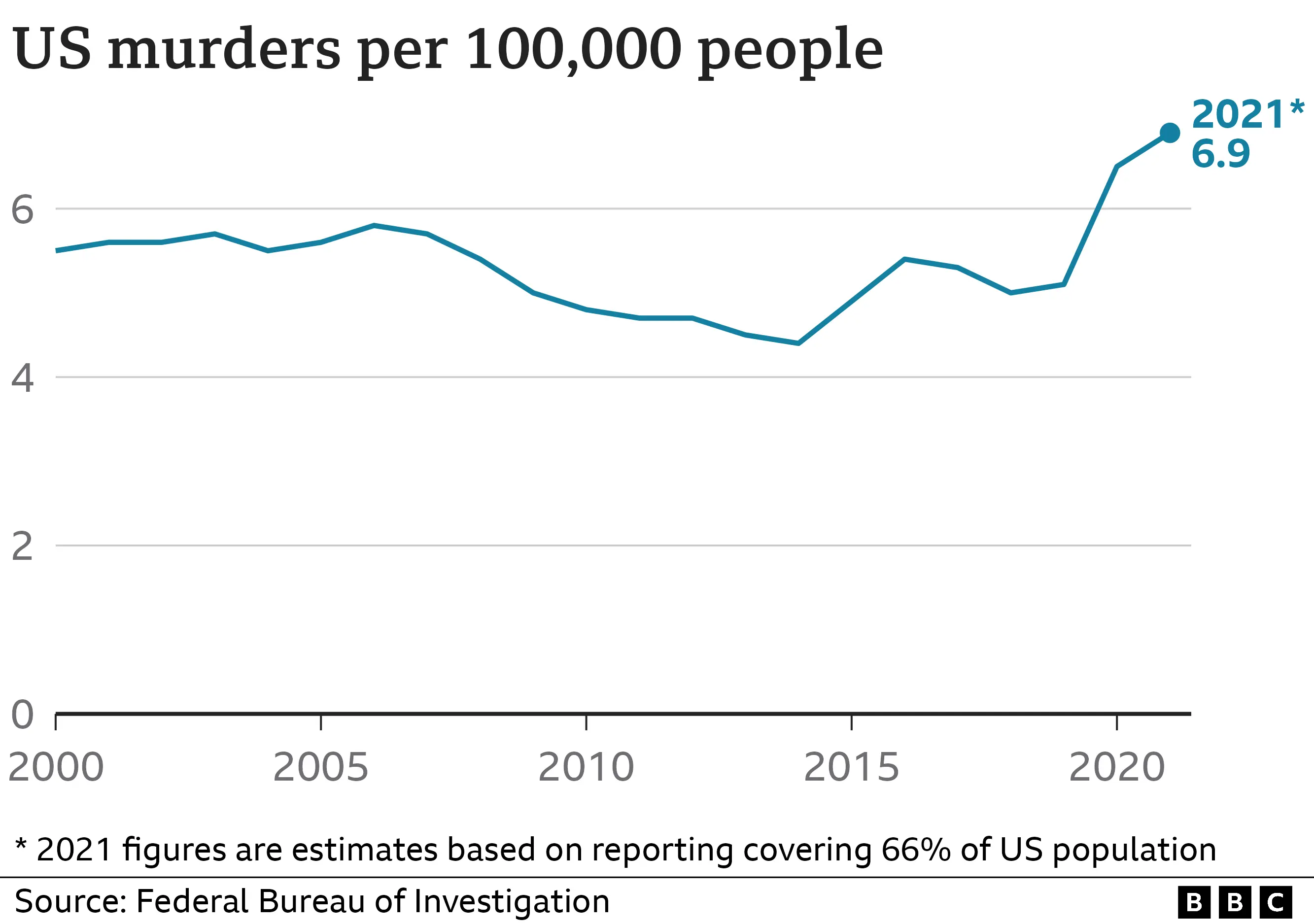
When you apply this figure to the annual murder rate—which has fluctuated between 15,000 and 22,000 deaths per year in recent years—the economic loss is staggering. If the U.S. records 20,000 homicides in a year, the “cost” in terms of lost human life value exceeds $200 billion. This is wealth that is effectively erased from the future economy, impacting everything from Social Security contributions to consumer spending.
Impact on Labor Participation and Corporate Recruitment
High murder rates in specific cities also act as a barrier to corporate recruitment. Large-scale employers and tech hubs prioritize locations where their employees feel safe. If a city is perceived as dangerous, companies may have to offer significantly higher “hardship” salaries to attract top talent, or they may choose to relocate their operations entirely. This movement of labor and capital shifts the economic dominance from one region to another, as seen in the recent migration of financial firms from high-crime urban centers to safer “pro-business” environments.
Investment Strategies and Economic Stability
The murder rate even influences the bond market and municipal financing. For institutional investors, crime rates are a proxy for the stability and management quality of a city government.
How Crime Data Influences Municipal Bonds
Municipal bonds are a staple of many conservative investment portfolios. However, the credit rating of a city can be negatively impacted by a high or rising murder rate. Credit rating agencies consider social stability when assessing the risk of a bond. If a city is spending a disproportionate amount of its budget on policing and reacting to violent crime, it has less capital available for debt service and infrastructure improvements. Investors may demand higher yields to compensate for the perceived risk of investing in a socially unstable municipality, increasing the cost of borrowing for the city.
Tech-Security as an Investment Sector
While crime is a net negative for the economy, it has birthed a massive “Security-Industrial Complex.” Investors have increasingly turned toward sectors that provide solutions to these societal challenges. This includes companies specializing in AI-driven surveillance, biometric access control, and “smart city” technologies designed to detect gunfire or track criminal activity. For the forward-looking investor, the persistence of the U.S. murder rate has made the security tech sector a defensive hedge within their portfolio.
The ROI of Prevention and Policy
If we view the U.S. murder rate as a financial liability, then crime prevention programs should be viewed as high-yield investments. The return on investment (ROI) for successful violence intervention is often far higher than traditional market investments.
Cost-Benefit Analysis of Social Programs
Financial research into “targeted intervention” programs shows that for every dollar spent on evidence-based violence prevention, society can save between $5 and $20 in future costs. This includes savings in the legal system, healthcare, and the preservation of property taxes. For instance, programs that focus on high-risk individuals or community revitalization can “de-risk” a neighborhood, leading to a surge in private investment that far outweighs the initial public expenditure.
Future Outlook: Economic Resilience in the Face of Crime
As we move further into a data-driven economy, the ability to analyze and react to murder rate trends will be a defining characteristic of successful financial planning. Whether you are a real estate developer looking at the next up-and-coming neighborhood, a corporate executive deciding on a new headquarters, or a taxpayer concerned about the allocation of public funds, the murder rate is a metric that cannot be ignored.
By reframing the conversation from purely social to predominantly financial, it becomes clear that reducing the murder rate is not just a moral imperative—it is an economic necessity. Lowering the rate of violent crime is perhaps the most effective way to unlock latent economic potential, protect personal wealth, and ensure the long-term solvency of the American city. The “safety dividend” is real, and in an increasingly volatile financial landscape, it represents one of the most reliable paths to sustainable economic growth.
aViewFromTheCave is a participant in the Amazon Services LLC Associates Program, an affiliate advertising program designed to provide a means for sites to earn advertising fees by advertising and linking to Amazon.com. Amazon, the Amazon logo, AmazonSupply, and the AmazonSupply logo are trademarks of Amazon.com, Inc. or its affiliates. As an Amazon Associate we earn affiliate commissions from qualifying purchases.