
The fiscal health of the United States is a topic of constant debate, fluctuating economic data, and significant long-term implications for global markets. To understand what the United States deficit is right now, one must look beyond a single number and examine the interplay between federal spending, tax revenue, and the structural mechanics of the American economy. As of the current fiscal period, the federal deficit remains at historically elevated levels, driven by a combination of mandatory spending obligations, rising interest costs on existing debt, and fluctuations in tax receipts.
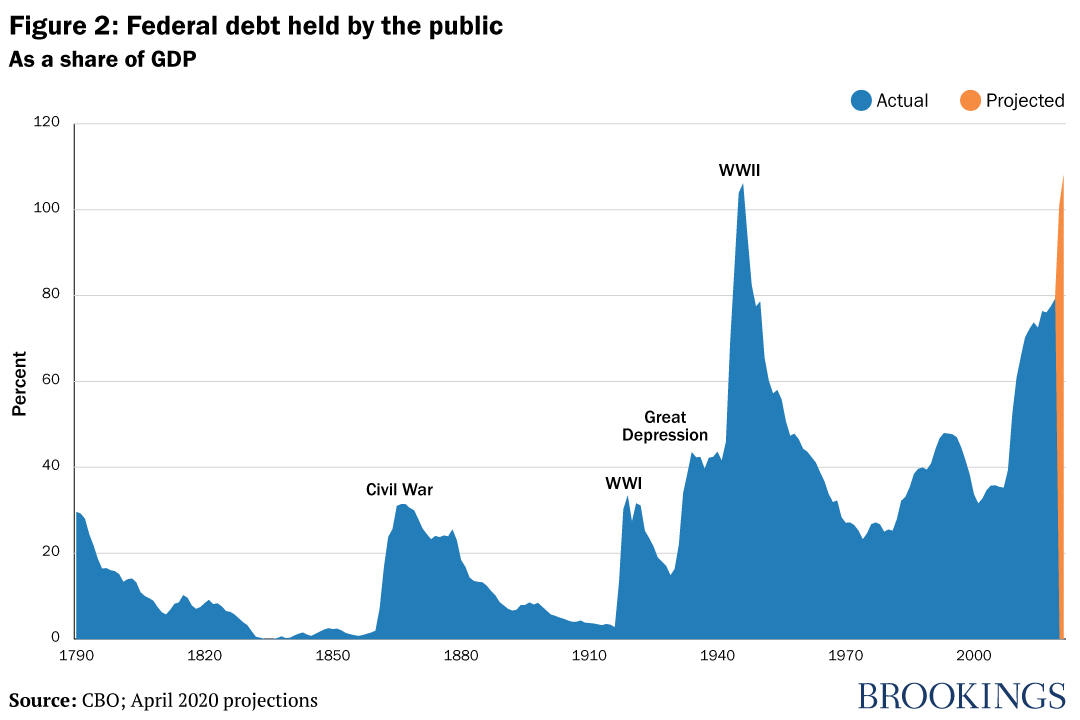
In simple terms, a federal deficit occurs when the government’s outlays—what it spends on everything from infrastructure to social programs—exceed its revenue, which primarily comes from taxes. While the terms “deficit” and “debt” are often used interchangeably in casual conversation, they represent different financial realities. The deficit is the annual shortfall, whereas the national debt is the accumulation of those annual deficits over time. Understanding the current state of the deficit is essential for any investor, business leader, or citizen looking to navigate the modern financial landscape.

The Current State of the Federal Deficit: By the Numbers
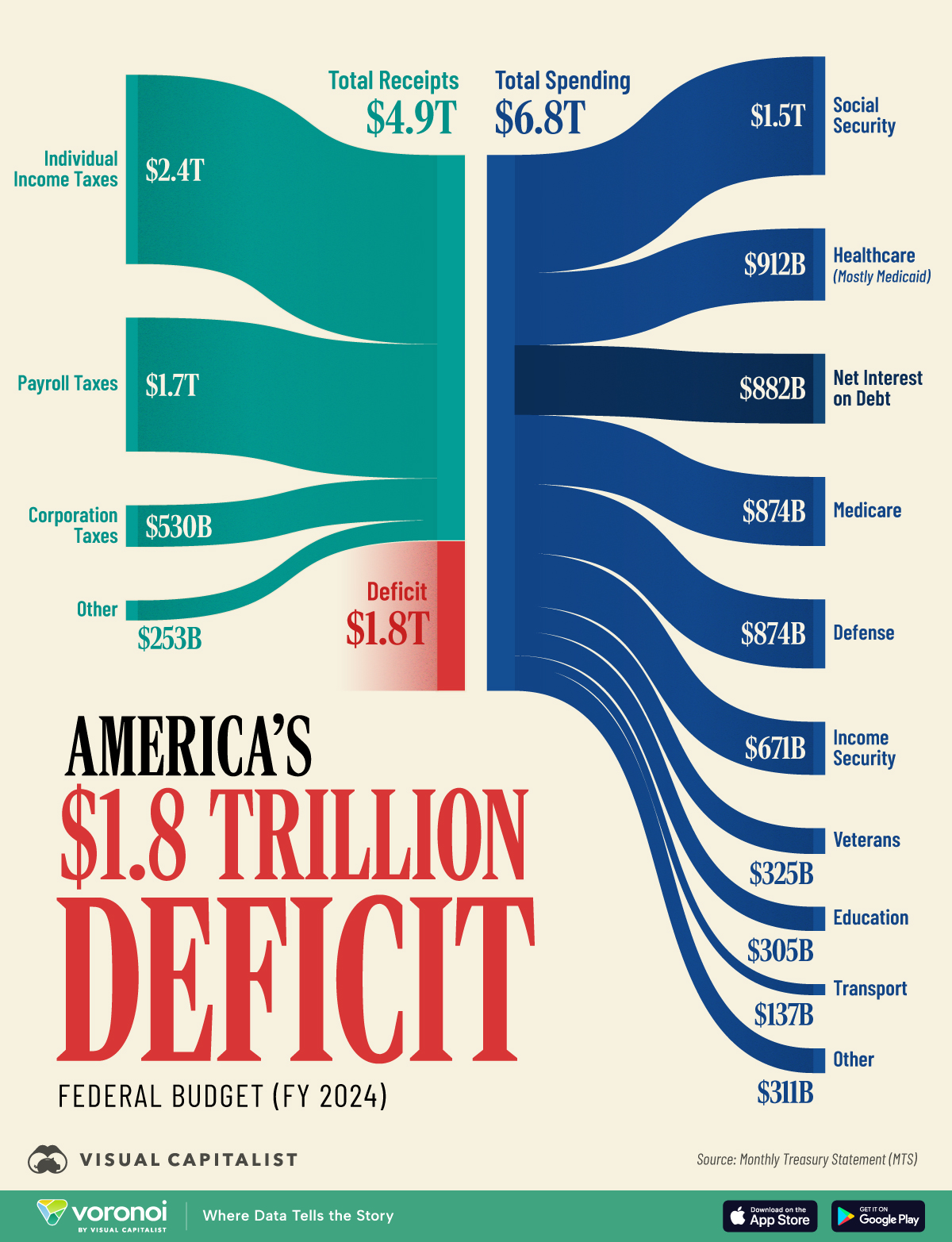
As we move through the current fiscal year, the United States federal deficit is projected to hover between $1.6 trillion and $1.9 trillion. According to data from the Congressional Budget Office (CBO) and the Department of the Treasury, the deficit has seen significant volatility over the last few years. Following the unprecedented spending triggered by the COVID-19 pandemic, which saw deficits peak at over $3 trillion in 2020, the gap narrowed temporarily as emergency measures expired. However, that downward trend has reversed, with the deficit expanding once again due to structural economic shifts.
The Revenue Gap
Federal revenue is primarily derived from individual income taxes, payroll taxes, and corporate taxes. In recent months, tax receipts have faced headwinds. While the labor market remains relatively strong, fluctuations in capital gains realizations and changes in tax policy have led to periods where revenue fails to keep pace with the growing cost of government operations. When tax collections underperform—even slightly—in an economy with a multitrillion-dollar budget, the resulting gap widens the deficit significantly.
Outlays and Expenditure Growth
Government spending, or outlays, is the other side of the equation. Federal spending is generally categorized into mandatory spending, discretionary spending, and interest on the debt. Currently, outlays are being pushed higher by several factors. Inflation has increased the cost of government contracts and services, while the aging population has placed greater demands on “entitlement” programs like Social Security and Medicare. Furthermore, recent legislative initiatives in infrastructure, green energy, and domestic manufacturing have added to the total expenditure profile.
The Role of Interest Payments
One of the most critical developments in the “right now” of the U.S. deficit is the cost of servicing the national debt. For much of the past decade, low interest rates allowed the government to borrow cheaply. However, as the Federal Reserve raised interest rates to combat inflation, the cost of issuing new Treasury securities rose sharply. Net interest outlays have become one of the fastest-growing components of the federal budget, now rivaling the size of the national defense budget. This creates a feedback loop: higher deficits lead to more borrowing, and higher interest rates make that borrowing more expensive, further increasing the deficit.
Primary Drivers Behind the Expanding Deficit
The expansion of the U.S. deficit is not the result of a single policy or event but rather a convergence of several long-term and short-term factors. Identifying these drivers is essential for understanding whether the current deficit is a temporary spike or a permanent fixture of the American fiscal identity.
Mandatory Spending Obligations
Mandatory spending accounts for the largest portion of the federal budget. These are programs authorized by permanent law, meaning they do not require an annual vote from Congress to continue. Social Security and Medicare are the pillars of this category. As the “Baby Boomer” generation continues to retire, the number of beneficiaries is growing faster than the number of workers paying into the system. This demographic shift is a primary driver of the deficit, as the gap between what these programs collect in payroll taxes and what they pay out continues to widen.
Discretionary Spending and Defense
Discretionary spending is the portion of the budget that Congress must approve each year through appropriations bills. This includes everything from the Department of Justice to NASA and, most notably, the Department of Defense. In the current geopolitical climate, defense spending remains a high priority, with budgets reflecting modernization efforts and support for international allies. While discretionary spending as a percentage of the overall economy has remained relatively stable compared to mandatory spending, it remains a significant contributor to the annual shortfall.
Economic Sensitivity and Tax Policy
The deficit is highly sensitive to the state of the economy. In periods of high growth, tax revenues tend to rise, and spending on safety-net programs like unemployment insurance tends to fall. Conversely, during slowdowns, the deficit naturally expands. Current fiscal policy also plays a role; tax cuts implemented in previous years continue to impact the baseline of federal revenue. Without corresponding cuts in spending, any reduction in tax rates or the introduction of new tax credits inherently leads to a larger deficit.
Economic Implications for Businesses and Investors
A persistent and large federal deficit has profound implications for the broader economy. For the business community and individual investors, the deficit influences everything from interest rates to long-term market stability.
The “Crowding Out” Effect
One of the primary concerns among economists regarding a high deficit is the “crowding out” effect. When the government borrows heavily to fund its deficit, it increases the demand for loanable funds. This can lead to higher interest rates across the board, making it more expensive for private businesses to borrow money for expansion, research, and development. While the U.S. has a unique advantage because the dollar is the world’s reserve currency, the sheer volume of Treasury issuance can eventually put upward pressure on yields, impacting corporate bond markets and mortgage rates.
Inflationary Pressures
There is a complex relationship between fiscal deficits and inflation. When the government injects large amounts of money into the economy through spending without a corresponding increase in productivity or taxes, it can lead to an increase in the money supply. If this demand outstrips the supply of goods and services, inflation can occur. For investors, this means the “real” return on investments (after inflation) may be lower, and for businesses, it means rising input costs that can squeeze profit margins.
Market Volatility and Policy Uncertainty
The deficit often leads to political friction, particularly regarding the “debt ceiling”—the legal limit on how much the U.S. government can borrow. These periodic political standoffs create uncertainty in the financial markets. Investors generally dislike uncertainty, and threats of a government default or a credit rating downgrade can lead to significant market volatility. While the U.S. has always met its obligations, the recurring drama surrounding deficit management remains a risk factor for portfolios.
Potential Paths Toward Fiscal Sustainability
Addressing the United States deficit is a monumental task that requires a combination of political will, economic growth, and strategic reform. There is no “silver bullet” solution, but several pathways are frequently discussed by policymakers and economists.
Spending Reform and Entitlement Changes
Because mandatory spending is the largest driver of the deficit, many fiscal hawks argue that long-term sustainability is impossible without reforming Social Security and Medicare. Potential changes could include adjusting the retirement age, means-testing benefits, or changing the way cost-of-living adjustments are calculated. However, these programs are highly popular, making reform a difficult political hurdle.
Revenue Enhancement and Tax Reform
On the other side of the ledger, increasing federal revenue is a common proposal. This could involve closing tax loopholes, increasing corporate tax rates, or implementing new types of taxes, such as a value-added tax (VAT) or a carbon tax. Proponents argue that the U.S. collects less tax revenue as a percentage of GDP than many other developed nations, suggesting there is room for increase without stifling growth.
Growth as a Deficit Reducer
The most optimistic path toward a lower deficit is robust economic growth. If the Gross Domestic Product (GDP) grows faster than the deficit, the “deficit-to-GDP ratio” improves. A larger economy generates more tax revenue even without raising rates. Historically, periods of technological innovation and high productivity have helped the U.S. manage its debt levels. However, relying solely on growth to “solve” the deficit requires a level of sustained expansion that is difficult to guarantee in a globalized, aging economy.
What This Means for Your Personal Finance Strategy
While the federal deficit is a macro-level issue, its effects trickle down to the individual level. Navigating an era of high deficits requires a proactive approach to personal finance and wealth management.
Interest Rate Awareness
Since the deficit influences interest rates, individuals should be mindful of their debt structures. In an environment where the government is borrowing heavily, long-term interest rates may remain higher for longer. This is a critical consideration for those looking to take out a mortgage, refinance debt, or utilize margin for investing. Fixed-rate debt becomes a valuable asset when rates are volatile or rising.
Diversification and Inflation Hedges
To protect against the potential inflationary impacts of high government spending, investors often look toward assets that historically hold value during periods of currency devaluation. This includes diversified equities, real estate, and commodities. Maintaining a global perspective is also beneficial; while the U.S. deficit is significant, other nations are facing similar fiscal challenges, making international diversification a key component of a resilient portfolio.
Tax Planning
As the government seeks ways to narrow the deficit, changes in tax policy are almost inevitable over the long term. This might include higher marginal income tax rates or changes to capital gains treatments. Engaging in tax-advantaged investing—such as utilizing 404(k)s, IRAs, and Health Savings Accounts (HSAs)—remains one of the most effective ways for individuals to mitigate the impact of future tax shifts.
In conclusion, the United States deficit right now is a multifaceted challenge characterized by trillion-dollar shortfalls and complex economic drivers. While the numbers are staggering, the U.S. economy remains the largest and most dynamic in the world. By staying informed about the drivers of the deficit and the resulting market implications, businesses and individuals can better position themselves to thrive, regardless of the fiscal headwinds that may lie ahead. Understanding this “money” topic is not just about tracking government spending; it is about recognizing the fundamental forces that shape the value of currency, the cost of capital, and the future of global investment.
aViewFromTheCave is a participant in the Amazon Services LLC Associates Program, an affiliate advertising program designed to provide a means for sites to earn advertising fees by advertising and linking to Amazon.com. Amazon, the Amazon logo, AmazonSupply, and the AmazonSupply logo are trademarks of Amazon.com, Inc. or its affiliates. As an Amazon Associate we earn affiliate commissions from qualifying purchases.