
In the world of finance, commerce, and personal wealth management, the concept of a “rate” is the heartbeat of every transaction. Whether you are calculating the interest on a high-yield savings account, determining the billable hours for a consultancy project, or analyzing the growth trajectory of a stock portfolio, understanding the “unit of rate” is essential. At its core, a rate is a ratio that compares two different quantities. In the financial niche, these quantities typically involve currency, time, or percentages.
Understanding the specific unit of rate is not merely an academic exercise; it is a fundamental skill for making informed investment decisions and managing business operations. This article explores the various units of rate used in the financial sector, how they are calculated, and why choosing the right metric can determine the success of your financial strategy.

Understanding the Fundamental Units of Rate in Finance
The most common way we encounter a “unit of rate” in money management is through interest. In this context, the rate is usually expressed as a percentage relative to a principal amount over a specific duration.
Interest Rates: The Percentage Unit
In the financial world, the primary unit of rate is the percentage (%). When a bank offers a 5% interest rate on a certificate of deposit (CD), the “unit” is five parts per hundred of the total capital. However, the percentage alone is incomplete without a temporal context. This leads us to the Annual Percentage Rate (APR) and Annual Percentage Yield (APY). APR represents the simple interest rate over a year, while APY accounts for the effect of compounding. For an investor, the “unit” of rate here is the fractional growth of capital per annum.
Time Intervals: Annual, Monthly, and Daily Rates
While “annual” is the standard timeframe, financial rates are often broken down into smaller units. For example, credit card companies often calculate interest using a Daily Periodic Rate (DPR). The unit of rate in this scenario is the percentage of the balance charged per day. Understanding these sub-units is critical because a seemingly small daily rate can compound into a significant annual expense. When analyzing personal finance, one must always align the unit of time with the unit of cost to see the true financial picture.
Basis Points (BPS)
For professionals in bond markets and central banking, the standard percentage point is often too broad. Instead, they use “basis points” as the unit of rate. One basis point is equal to 1/100th of 1% (0.01%). When the Federal Reserve adjusts interest rates by “25 basis points,” they are moving the rate by 0.25%. This precision is the standard unit for measuring changes in interest rates, yields, and financial spreads.
Operational Units of Rate: Productivity and Billing
Beyond investments, the unit of rate is a cornerstone of business operations and the “gig economy.” Here, the rate is often a measurement of value generated per unit of resource—usually time or human labor.
Hourly vs. Project-Based Rates
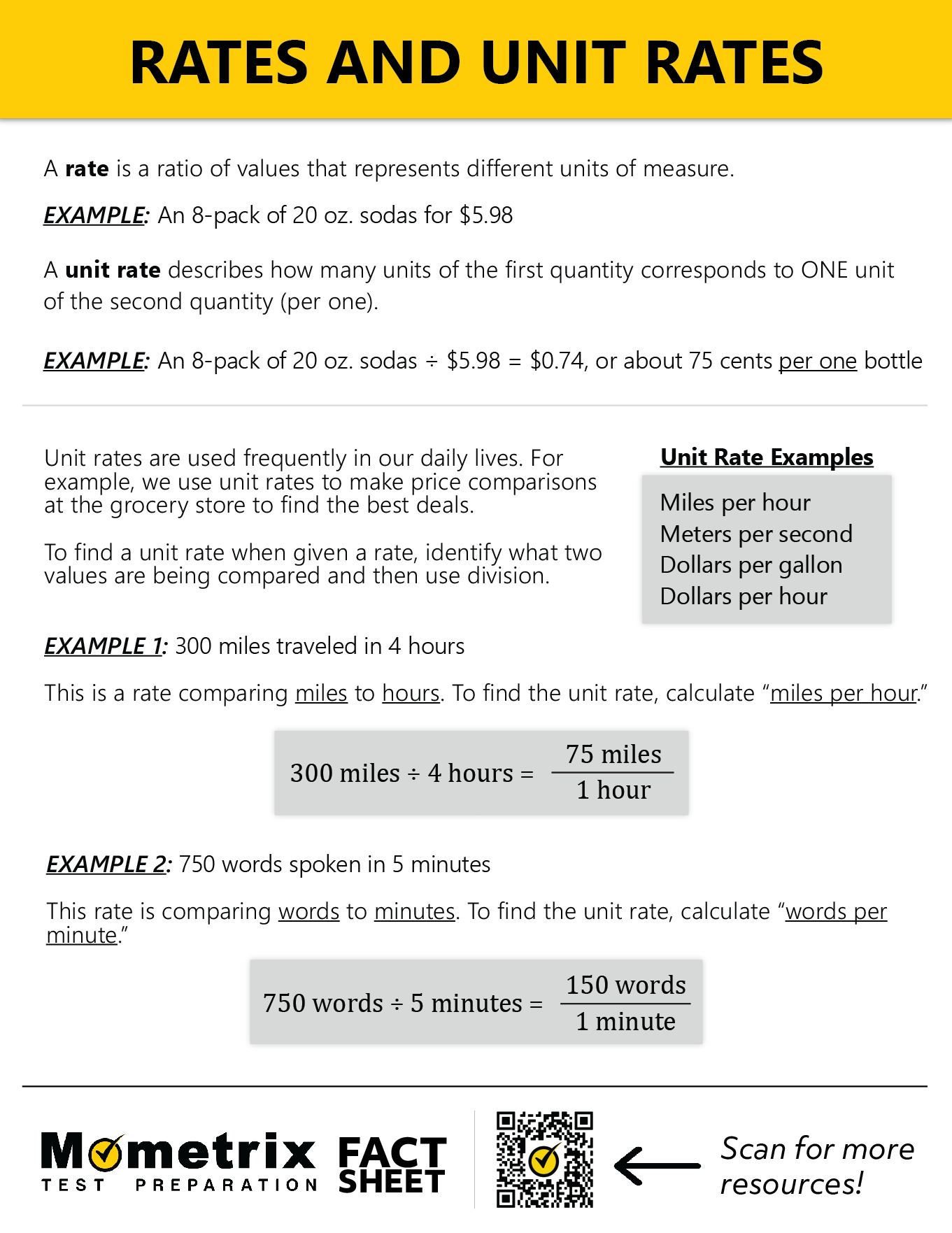
For freelancers and service-based corporations, the “unit of rate” is typically currency per hour ($/hr). This is the most transparent way to value labor. However, many modern businesses are shifting toward “value-based pricing,” where the unit of rate is the completed project or a specific milestone. In this transition, the business must calculate an internal “effective hourly rate” to ensure profitability. If a project pays $5,000 and takes 50 hours, the unit of rate is $100/hour. If it takes 100 hours, the rate drops to $50/hour, potentially jeopardizing the business’s financial health.
Throughput and Efficiency Ratios in Business Finance
In manufacturing and scalable software-as-a-service (SaaS) models, the unit of rate often shifts to “cost per unit” or “revenue per user.” For a factory, the unit of rate might be the cost of production per item. For a tech company, it might be the Average Revenue Per User (ARPU). These units allow financial analysts to measure the efficiency of a business model. A rising ARPU combined with a steady Cost Per Acquisition (CPA) indicates a healthy, scalable financial engine.
Burn Rate: The Unit of Survival
For startups, the “burn rate” is a critical financial metric. The unit of rate here is currency spent per month (e.g., $50,000/month). This metric tells investors and founders how much time (the “runway”) the company has before it needs to become profitable or seek more funding. Understanding the burn rate in these specific units allows for precise cash flow forecasting.
Investment Rates and Market Valuation
When we move into the realm of investing, the unit of rate becomes a tool for comparing disparate opportunities on a level playing field.
Return on Investment (ROI) and Compound Growth
The most universal unit of rate in investing is ROI, expressed as a percentage. However, the most sophisticated unit is the Compound Annual Growth Rate (CAGR). Unlike simple interest, CAGR provides a smoothed annual rate of return over a period of time, accounting for the “ups and downs” of the market. This unit is essential for comparing the performance of a volatile asset, like a tech stock, against a stable one, like a government bond.
Exchange Rates: Currency Pairs and Volatility Units
In the Foreign Exchange (Forex) market, the unit of rate is the “price interest point,” or PIP. When trading currency pairs, such as EUR/USD, the rate is the value of one currency against another. A movement of 0.0001 in the exchange rate is typically one PIP. For traders, this is the fundamental unit of rate used to calculate profit and loss. Because currency values fluctuate in such small increments, the PIP allows for high-leverage trading where tiny changes in the unit of rate result in significant financial outcomes.
Dividend Yields
For income investors, the unit of rate is the dividend yield, calculated as (Annual Dividends per Share / Price per Share). This percentage represents the “cash flow rate” of an investment. It allows an investor to determine how much passive income they are receiving for every dollar of capital deployed.
Advanced Metrics: Risk-Adjusted Units of Rate
In sophisticated financial planning, looking at the rate of return in a vacuum is dangerous. One must also consider the unit of risk.
The Sharpe Ratio and Volatility Measurement
Financial analysts often use the Sharpe Ratio to understand the “risk-adjusted rate of return.” Here, the unit of rate is the excess return per unit of volatility (standard deviation). A high return rate is less impressive if it comes with extreme volatility. By using this unit, investors can determine if they are being adequately compensated for the risks they are taking.
Inflation and Real vs. Nominal Rates
One of the most important distinctions in money management is the difference between nominal and real units of rate. The nominal rate is the “advertised” rate (e.g., a 4% yield on a bond). However, the “real rate” is the nominal rate minus the inflation rate. If inflation is 3%, your real unit of rate is only 1%. In periods of high inflation, failing to distinguish between these units can lead to a “stealth” loss of purchasing power, even if your nominal account balance is growing.
Tax-Equivalent Yields
For those in high tax brackets, the unit of rate must be adjusted for taxes. A municipal bond might offer a 3% interest rate, while a corporate bond offers 4%. However, because municipal bonds are often tax-exempt, their “tax-equivalent yield” might actually be higher than the corporate bond after-tax. In this case, the unit of rate is the net, take-home percentage.
Optimizing Financial Performance through Rate Analysis
To master personal or corporate finance, one must move from observing rates to optimizing them. This requires a granular focus on the units that drive profit and savings.
Tracking Unit Costs for Profitability
Whether you are running a household or a Fortune 500 company, tracking “unit costs” is the key to sustainability. A unit cost is the total expenditure required to produce, store, and sell one unit of a product or service. By reducing the unit cost while maintaining the unit of revenue, a business increases its “margin rate.” In personal finance, this is equivalent to lowering your “cost of living” (the unit of expense per month) while increasing your “earning rate.”
The Future of Real-Time Financial Rate Monitoring
With the rise of FinTech and AI-driven accounting, the ability to monitor every “unit of rate” in real-time has become a reality. Modern apps can track your “savings rate” daily, calculate the “interest rate” impact of your debt in real-time, and suggest shifts in your portfolio based on fluctuating market rates. The precision of these tools allows for “micro-optimizations” that were previously impossible. For example, moving cash between accounts to capture an extra 10 basis points of interest can now be automated, ensuring that every unit of capital is working at its maximum possible rate.
Conclusion: Mastery of the Metric
The question “what is the unit of rate” reveals the underlying structure of the global economy. In money matters, a rate is never just a number—it is a relationship between value and time, risk and reward, or effort and outcome. By identifying whether your unit of rate is a percentage, a basis point, a PIP, or an hourly fee, you gain the clarity needed to navigate complex financial landscapes.
Whether you are an individual saver or a corporate treasurer, the goal is the same: to maximize the rates that build wealth and minimize the rates that erode it. Understanding the unit of measurement is the first and most critical step in that journey toward financial mastery.
aViewFromTheCave is a participant in the Amazon Services LLC Associates Program, an affiliate advertising program designed to provide a means for sites to earn advertising fees by advertising and linking to Amazon.com. Amazon, the Amazon logo, AmazonSupply, and the AmazonSupply logo are trademarks of Amazon.com, Inc. or its affiliates. As an Amazon Associate we earn affiliate commissions from qualifying purchases.