
In the dynamic world of technology, speed is more than just a metric; it’s a fundamental pillar dictating performance, efficiency, and user experience. From the lightning-fast processors in our smartphones to the rapid data transfer across global networks, understanding how speed is quantified is essential for anyone navigating or contributing to the tech landscape. While the underlying physics of speed – distance traveled over time – remains constant, its manifestations and the units used to measure it vary significantly depending on the technological context. This article delves into the diverse units of measurement for speed, exploring their origins, applications, and profound implications within various technological domains. We will uncover why a seemingly simple concept demands such a rich tapestry of specialized terminology, and how mastering these distinctions empowers professionals and enthusiasts alike to better comprehend and innovate in the digital age.
The Fundamental Concept of Speed in Technology
At its core, speed is a measure of how quickly an object or a process changes its position or state over a period. In a technological context, this definition expands to encompass everything from the physical movement of autonomous vehicles to the rate at which data traverses fiber optic cables or a CPU executes instructions. It’s a concept that underpins nearly every aspect of modern technology, making its precise measurement indispensable.
Defining Speed Beyond Basic Physics
While classical physics introduces speed as a scalar quantity (magnitude only) related to velocity (magnitude and direction), in technology, “speed” often takes on more nuanced meanings. It can refer to the rate of operations per second, the frequency of cycles, the latency of a connection, or the throughput of a system. For instance, the “speed” of an internet connection isn’t about how fast the electrons travel (which is close to the speed of light) but about how much data can be transmitted per unit of time. Similarly, the “speed” of a hard drive isn’t just its rotational velocity, but how quickly it can read and write data. These specialized interpretations necessitate an array of specific units to accurately capture and communicate the performance characteristics of diverse technological components and systems.
Why Precision in Measurement Matters in Tech
In technology, imprecision can lead to catastrophic failures, inefficient designs, and frustrating user experiences. Imagine designing an autonomous drone without accurately measuring its ascent rate, descent rate, or maximum horizontal speed—such an oversight could lead to crashes or inability to perform its intended functions. For high-frequency trading platforms, microsecond differences in network latency can mean millions of dollars lost or gained. In software development, understanding the execution speed of algorithms is critical for optimizing performance and scalability. Accurate measurement units provide a common language for engineers, developers, and consumers to compare products, diagnose issues, and predict performance reliably. They are the bedrock upon which benchmarks are built, standards are set, and innovation is fostered. Without a clear understanding of these units, meaningful communication and progress in technology would be severely hampered.
Navigating the Standard International (SI) Unit: Meters Per Second (m/s)
The international system of units (SI) provides a coherent framework for measurement across various scientific and engineering disciplines. For speed, the fundamental SI unit is the meter per second (m/s). This unit serves as a universal baseline, especially crucial in technologies that involve physical motion and precise spatial-temporal calculations.
Origins and Universal Adoption
The meter per second is derived directly from the SI base units for length (meter) and time (second). Its simplicity and directness make it universally understood and easily convertible to other units. Its adoption stems from the need for a standardized, coherent system that minimizes ambiguity and facilitates global scientific and technical collaboration. When scientific papers discuss the speed of light or the velocity of a spacecraft, m/s is the unit of choice, underscoring its foundational role. In an increasingly interconnected world, where technology developed in one country might be deployed globally, the common language provided by SI units like m/s is invaluable.
Practical Applications in Robotics and Autonomous Systems
In the realm of robotics and autonomous systems, m/s is profoundly significant. Consider autonomous vehicles: their navigation systems constantly calculate and adjust speeds in m/s to maintain safe distances, adhere to speed limits, and execute maneuvers precisely. Robotics engineers use m/s to define the operational speed of robotic arms on assembly lines, ensuring efficiency without risking mechanical stress or human safety. Drones, whether for delivery, surveillance, or exploration, rely on accurate m/s measurements for controlled flight, especially in complex environments or when carrying payloads. Even the movement of components within high-tech machinery, such as industrial printers or fabrication tools, is often specified and controlled in terms of m/s to achieve micron-level precision and repeatability. The ability to precisely measure and control speed in m/s is a cornerstone for the reliability and intelligence of these advanced technological applications.
Calculating and Interpreting m/s in Technical Specifications
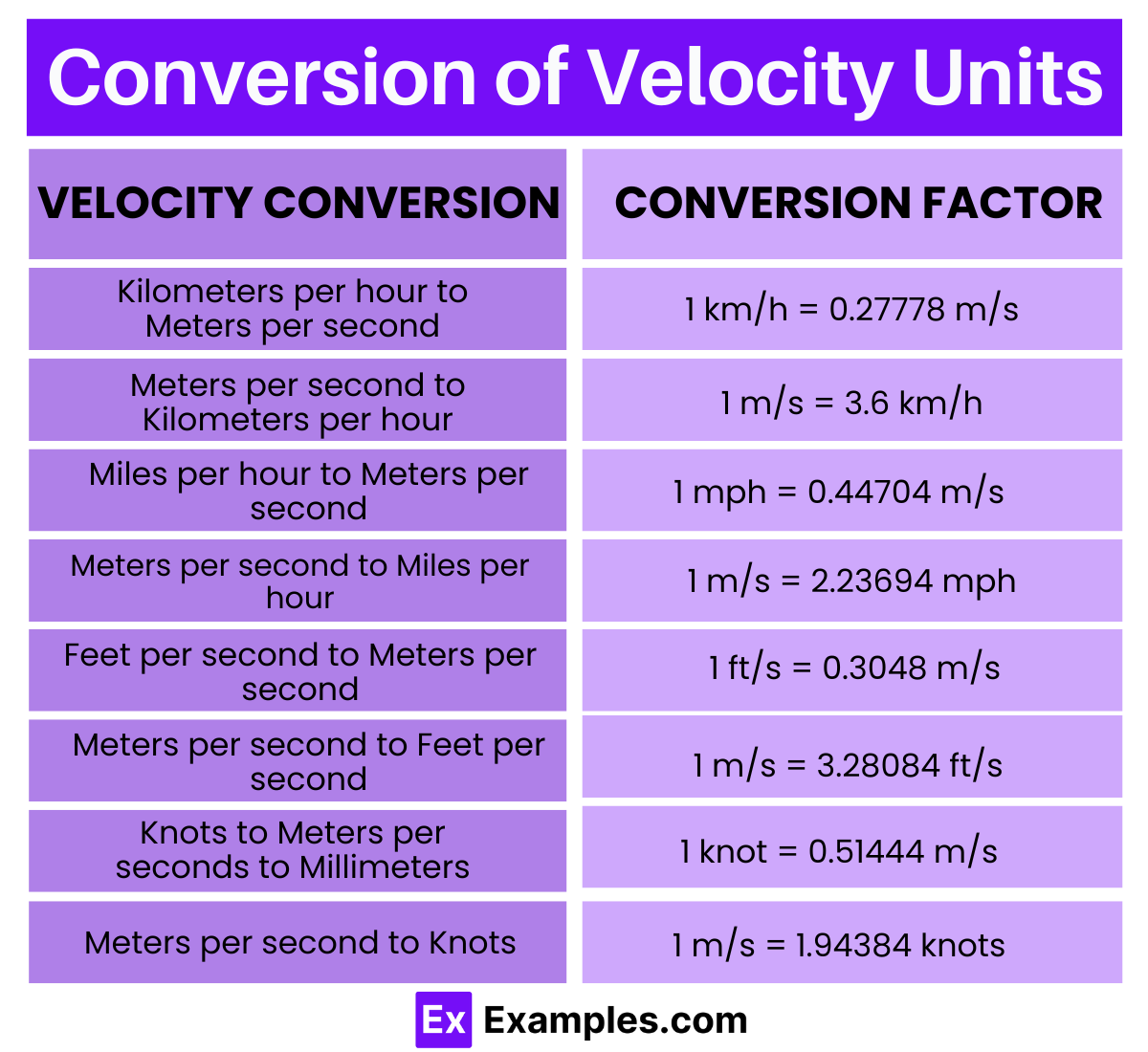
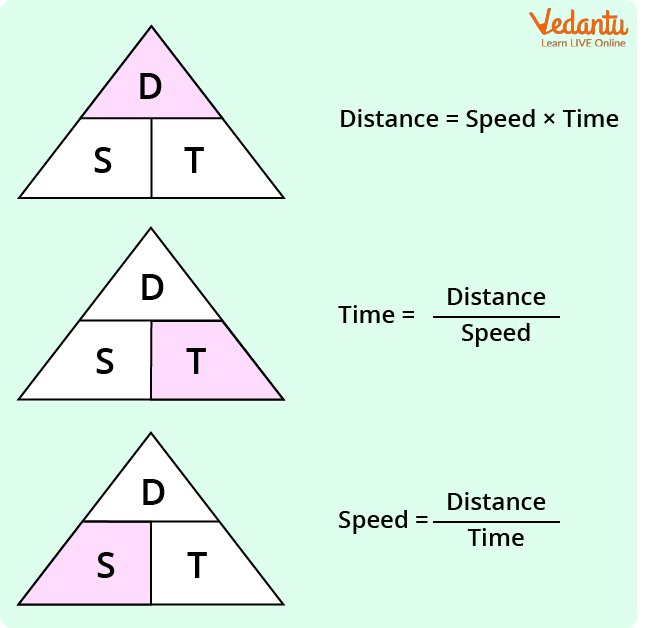
Calculating speed in m/s is straightforward: it’s simply the distance in meters divided by the time in seconds. For example, if a robot travels 10 meters in 2 seconds, its average speed is 5 m/s. Interpreting m/s in technical specifications often involves understanding the context. A maximum speed of 20 m/s for a drone provides crucial information about its operational capabilities, while an acceleration of 5 m/s² tells you how quickly it can achieve that speed. Engineers frequently convert between m/s and other units, such as kilometers per hour (km/h) or miles per hour (mph), depending on regional conventions or specific application requirements. For instance, a vehicle’s speed limit might be displayed in km/h, but its internal control systems could be operating on m/s for greater precision in calculations. Mastering these conversions and understanding the implications of m/s values in various scenarios is a critical skill for anyone involved in the design, development, or operation of technology that incorporates physical movement.
Beyond SI: Diverse Units for Diverse Technologies
While m/s serves as a universal baseline, the sheer variety and specificity of technological applications demand a more diverse set of speed measurement units. Each unit is tailored to describe a particular aspect of performance within its respective domain, providing clarity and efficiency in communication for specialized fields.
Kilometers Per Hour (km/h) and Miles Per Hour (mph) in Transportation Tech
In the context of transportation technology, whether it’s electric vehicles, smart public transit, or air traffic control systems, speeds are predominantly expressed in kilometers per hour (km/h) or miles per hour (mph). These units are favored because they align with human intuition and legal frameworks for road and air travel in different parts of the world. Autonomous driving systems process sensor data and issue commands based on these familiar units, even if their underlying calculations might use m/s. The dashboard displays in modern cars, even those with advanced AI capabilities, present speed in km/h or mph for the human driver, demonstrating the user-centric design approach when selecting units of measurement. Understanding the conversion factors (1 km/h ≈ 0.278 m/s; 1 mph ≈ 0.447 m/s) is crucial for global interoperability and for engineers working on systems deployed in diverse geographical markets.
Bits Per Second (bps) and Bytes Per Second (Bps) for Data Transfer Rates
Perhaps no units are as ubiquitous in modern tech as those for data transfer speed: bits per second (bps) and its derivatives like kilobits per second (Kbps), megabits per second (Mbps), and gigabits per second (Gbps). These units measure the rate at which data, in the form of binary digits (bits), moves through a communication channel. Internet service providers advertise connection speeds in Mbps or Gbps. Network cards, Wi-Fi routers, and fiber optic cables are all rated by their maximum bps throughput. It’s important to distinguish between “bits” and “bytes” per second: a byte is typically 8 bits, so 1 MBps (MegaByte per second) is 8 Mbps (Megabits per second). This distinction is critical for understanding download speeds, as file sizes are usually measured in Bytes (e.g., Megabytes, Gigabytes). A download speed of 100 Mbps might seem fast, but it translates to about 12.5 MBps, meaning a 1 GB file would take roughly 80 seconds to download. This understanding is key for optimizing network performance, cloud computing, and real-time data streaming.

Hertz (Hz) for Processor and Clock Speeds
When discussing the “speed” of a computer’s central processing unit (CPU), graphics processing unit (GPU), or other electronic components, the unit of measurement is Hertz (Hz), and more commonly its multiples like kilohertz (kHz), megahertz (MHz), and gigahertz (GHz). Hertz measures frequency, specifically the number of cycles per second. In the context of a processor, it refers to the clock speed, which indicates how many instruction cycles the CPU can complete per second. A 3.0 GHz processor, for instance, completes 3 billion cycles per second. While clock speed isn’t the sole determinant of overall processor performance (architecture, core count, and cache size also play significant roles), it remains a primary metric. Understanding Hz is also vital for other electronic systems, such as the refresh rate of displays (e.g., 60Hz, 120Hz monitors), where it indicates how many times the screen updates its image per second, directly impacting visual fluidity and responsiveness.
Frames Per Second (fps) in Multimedia and Gaming
In the realms of digital video, animation, and particularly gaming, “frames per second” (fps) is the paramount unit for measuring visual fluidity. It denotes how many unique images (frames) are displayed by a screen or rendered by a graphics card within one second. A higher fps generally translates to a smoother, more realistic, and more immersive visual experience. Cinematic standards often target 24 or 30 fps, while video games typically strive for 60 fps or higher to minimize input lag and provide a more responsive feel. Competitive gamers often seek refresh rates of 144 Hz or even 240 Hz on their monitors, paired with graphics cards powerful enough to render frames at a corresponding fps, highlighting the critical relationship between GPU processing speed, display technology, and user perception of “speed” in interactive media.
Revolutions Per Minute (RPM) in Mechanical and Storage Devices
For mechanical systems that involve rotation, such as hard disk drives (HDDs), fans, or motors, speed is often measured in Revolutions Per Minute (RPM). This unit specifies how many full rotations a component completes in one minute. In HDDs, higher RPMs (e.g., 7200 RPM vs. 5400 RPM) generally correlate with faster data access times, as the read/write heads can access different parts of the spinning platters more quickly. Similarly, the speed of cooling fans in computers and other electronic devices is measured in RPM, indicating their effectiveness in dissipating heat. In industrial automation and robotics, the speed of electric motors driving articulated joints or conveyor belts is also typically specified in RPM, which engineers then translate into linear speed (m/s) based on the gear ratios and radii of the rotating components.
The Impact of Measurement Units on Tech Performance and User Experience
The choice and understanding of speed measurement units have profound implications for both the objective performance of technology and the subjective experience of its users. These units allow for precise engineering, effective marketing, and informed consumer choices.
Optimizing Network Performance: From Megabits to Gigabits
The evolution of internet speeds, largely expressed in Mbps and Gbps, perfectly illustrates this impact. Early broadband connections measured in Kbps offered basic web browsing. As technology advanced, Mbps became the standard, enabling streaming video and more complex online interactions. Today, the rollout of fiber optics and 5G wireless pushes into the Gbps range, transforming possibilities for cloud computing, virtual reality, and instant data access. For businesses, higher network speeds mean faster data syncs, more efficient cloud operations, and improved collaborative tools. For individual users, it means seamless 4K streaming, lag-free online gaming, and near-instantaneous downloads. Engineers meticulously optimize network infrastructure to maximize these data rates, recognizing that every jump in Mbps or Gbps directly translates to enhanced capability and user satisfaction.
Enhancing User Interaction: The Role of Latency and Refresh Rates
Beyond raw throughput, other speed metrics significantly shape user interaction. Latency, often measured in milliseconds (ms), refers to the delay before a transfer of data begins following an instruction. Low latency is critical for real-time applications like online gaming, video conferencing, and remote control systems. A high refresh rate (Hz) for a display, coupled with a high frame rate (fps) from a GPU, creates a fluid and responsive visual experience. This synergy is particularly evident in high-performance gaming monitors, where a 144Hz display combined with a system delivering 144 fps provides a buttery-smooth visual feedback that significantly enhances gameplay. These speed metrics, though distinct from the direct “distance over time” definition, are crucial for gauging how quickly a system responds to input and presents information, directly influencing a user’s perception of a system’s speed and responsiveness.
Future Trends: Quantum Speed and the Evolution of Measurement
As technology continues its relentless march forward, the very nature of “speed” and its measurement is evolving. The advent of quantum computing introduces concepts where traditional clock speeds are less relevant than the speed of quantum state manipulation or entanglement generation, often discussed in terms of coherence times and gate operation speeds. In ultra-low-latency financial networks, the speed of light itself becomes a limiting factor, leading to a focus on reducing physical cable lengths and optimizing signal propagation. Moreover, the increasing integration of AI into complex systems will demand new ways to quantify the “speed” of decision-making, learning, and adaptive response, moving beyond simple computational cycles to metrics that capture the efficiency of intelligence itself. These emerging frontiers signal a continuous evolution in how we define, measure, and ultimately leverage speed in the technologies of tomorrow.
Mastering Speed Metrics for Technical Proficiency
A thorough understanding of the various units of measurement for speed is not merely an academic exercise; it’s a critical component of technical literacy and proficiency in the modern world. It empowers professionals to make informed decisions, accurately assess performance, and effectively communicate complex technical details.
Translating Between Different Speed Units
The ability to seamlessly translate between different speed units is an indispensable skill. An engineer designing a global product needs to understand how a vehicle’s speed limit in mph translates to km/h for different markets, or how m/s can be used internally for precise control algorithms. A network administrator troubleshooting a slow connection must distinguish between Mbps and MBps to accurately diagnose whether the issue lies with the internet service provider’s advertised speed or a local bottleneck. Conversion formulas and online calculators are readily available tools, but a conceptual grasp of the relationships between units is what truly enables intelligent application. This involves knowing that 1 m/s is approximately 3.6 km/h or that 1 Gbps is 125 MBps. Such fluency allows for accurate cross-comparison and problem-solving across diverse technological contexts.
The Importance of Context in Speed Measurement
Perhaps even more important than knowing the units is understanding the context in which they are applied. As discussed, “speed” means vastly different things when talking about a CPU’s clock speed (Hz), an internet connection’s data rate (bps), or a robot’s movement (m/s). Using the wrong unit in the wrong context can lead to severe misunderstandings, misjudgments of performance, and potentially costly errors. A project manager might compare two processors solely on their GHz ratings, overlooking the architectural differences that make one chip significantly faster in real-world applications despite a lower clock speed. Similarly, a consumer might be disappointed with a “fast” internet connection if they misunderstand the difference between megabits and megabytes when downloading large files. Always consider what is being measured and why that particular unit has been chosen, as it provides crucial insight into the aspect of performance being highlighted.
Tools and Techniques for Accurate Speed Assessment
Modern technology provides a wealth of tools and techniques for accurately assessing speed across various domains. For network speeds, tools like Ookla Speedtest or iperf provide precise measurements of bandwidth and latency. System monitoring utilities integrated into operating systems (e.g., Task Manager in Windows, Activity Monitor in macOS) display CPU usage, disk I/O speed, and network activity. For physical speeds, GPS modules, accelerometers, and advanced sensor arrays in autonomous systems provide real-time data for calculation and control. Benchmarking software like 3DMark or Cinebench quantifies GPU and CPU performance in application-specific units (e.g., frames per second for gaming, scores for rendering tasks). Proficiency in using these tools, interpreting their outputs, and understanding the units they employ is fundamental for anyone looking to optimize, troubleshoot, or develop within the technological landscape.
In conclusion, while the fundamental definition of speed remains constant, its measurement in technology is a multifaceted discipline. From the foundational meters per second to the specialized metrics like bits per second, Hertz, and frames per second, each unit serves a specific purpose in quantifying and communicating the performance of our increasingly complex technological world. Mastering these distinctions is not just about memorizing conversions; it’s about developing a deeper understanding of how technology functions, how to optimize its performance, and how to innovate effectively in a rapidly evolving digital ecosystem. As technology continues its relentless march, so too will our methods and units for measuring the very speed of progress.
aViewFromTheCave is a participant in the Amazon Services LLC Associates Program, an affiliate advertising program designed to provide a means for sites to earn advertising fees by advertising and linking to Amazon.com. Amazon, the Amazon logo, AmazonSupply, and the AmazonSupply logo are trademarks of Amazon.com, Inc. or its affiliates. As an Amazon Associate we earn affiliate commissions from qualifying purchases.