
In an era defined by rapid technological innovation, from artificial intelligence to space exploration, the bedrock of our understanding often lies in fundamental scientific principles. Gravity, an omnipresent force dictating everything from the orbit of planets to the simple act of walking, is one such principle. While its effects are undeniable, the precise measurement and understanding of its units are not just academic curiosities; they are critical enablers for countless technological applications. This article delves into the units of gravity, exploring their distinctions, their profound impact on technological development, and how their precise measurement drives the cutting edge of engineering and scientific discovery.
Decoding the Units of Gravity: The Foundational Science for Tech
The question “what is the unit of gravity?” might seem straightforward, but it actually points to two distinct, yet interconnected, concepts, each with specific units crucial for technological understanding and application. These concepts are the acceleration due to gravity and the gravitational constant. Grasping the nuance between these is paramount for engineers, developers, and innovators across various tech sectors.
The Acceleration Due to Gravity (‘g’): A Localized Technological Parameter
When most people refer to “gravity,” especially in an everyday context or within many engineering disciplines, they are often thinking of the acceleration due to gravity, symbolized as ‘g’. This is the acceleration experienced by an object due to the gravitational pull of a massive body, like Earth, in the absence of other forces. It’s a measure of how strongly a planet pulls things towards its center.
On Earth, the average value of ‘g’ at sea level is approximately 9.81 meters per second squared (m/s²). This unit, m/s², is derived from Newton’s second law of motion (Force = mass × acceleration), where force is measured in Newtons (N), and mass in kilograms (kg). Thus, 1 N = 1 kg·m/s². If we consider the force of gravity (weight) as F = m·g, then g must be in m/s².
For technology, ‘g’ is an incredibly vital parameter. Consider aerospace engineering, where calculating thrust needed for launch or re-entry trajectories absolutely depends on the precise local ‘g’. Robotics engineers designing robots for planetary exploration must account for different ‘g’ values on other celestial bodies to ensure stability, movement, and task execution. Even in everyday digital interfaces, game physics engines simulate ‘g’ to make virtual worlds feel realistic. The standard value of ‘g’ is also sometimes expressed in “gravities” or “G’s,” particularly in fields like aviation or space medicine, where 1 G refers to the acceleration equivalent to Earth’s surface gravity. This unit is dimensionless when expressed as a multiple of Earth’s ‘g’, but fundamentally it represents an acceleration.
The Gravitational Constant (‘G’): The Universal Blueprint for Cosmic Tech
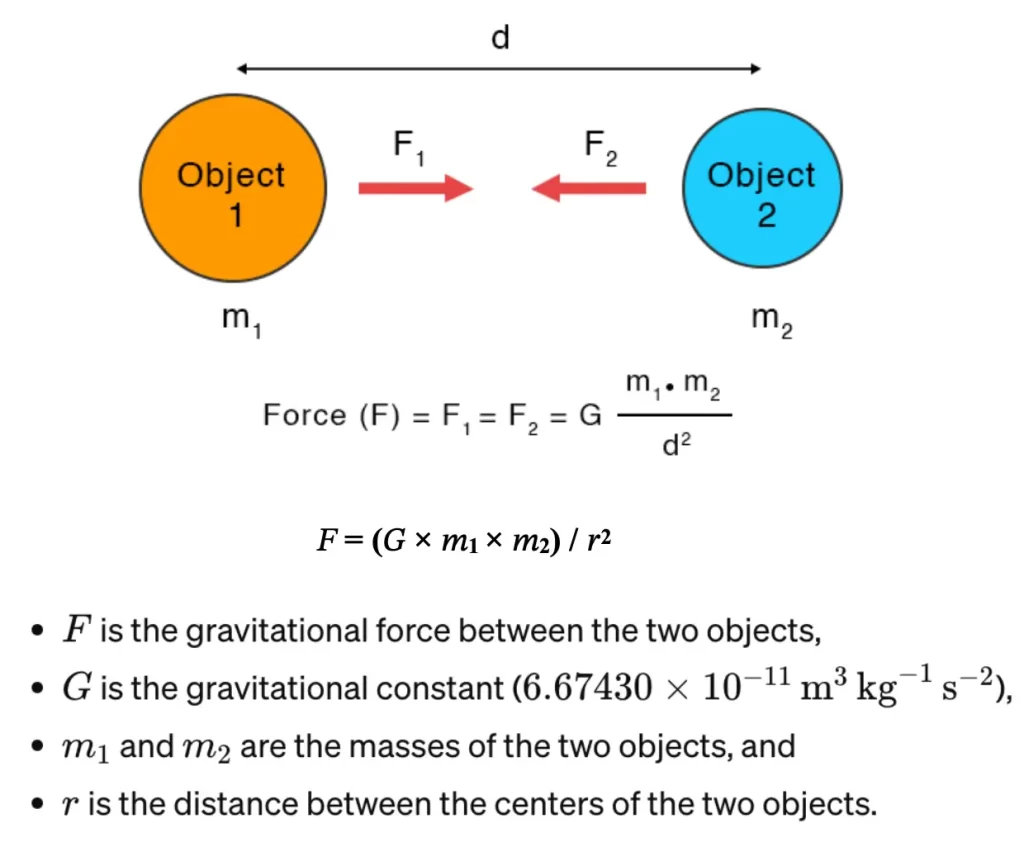
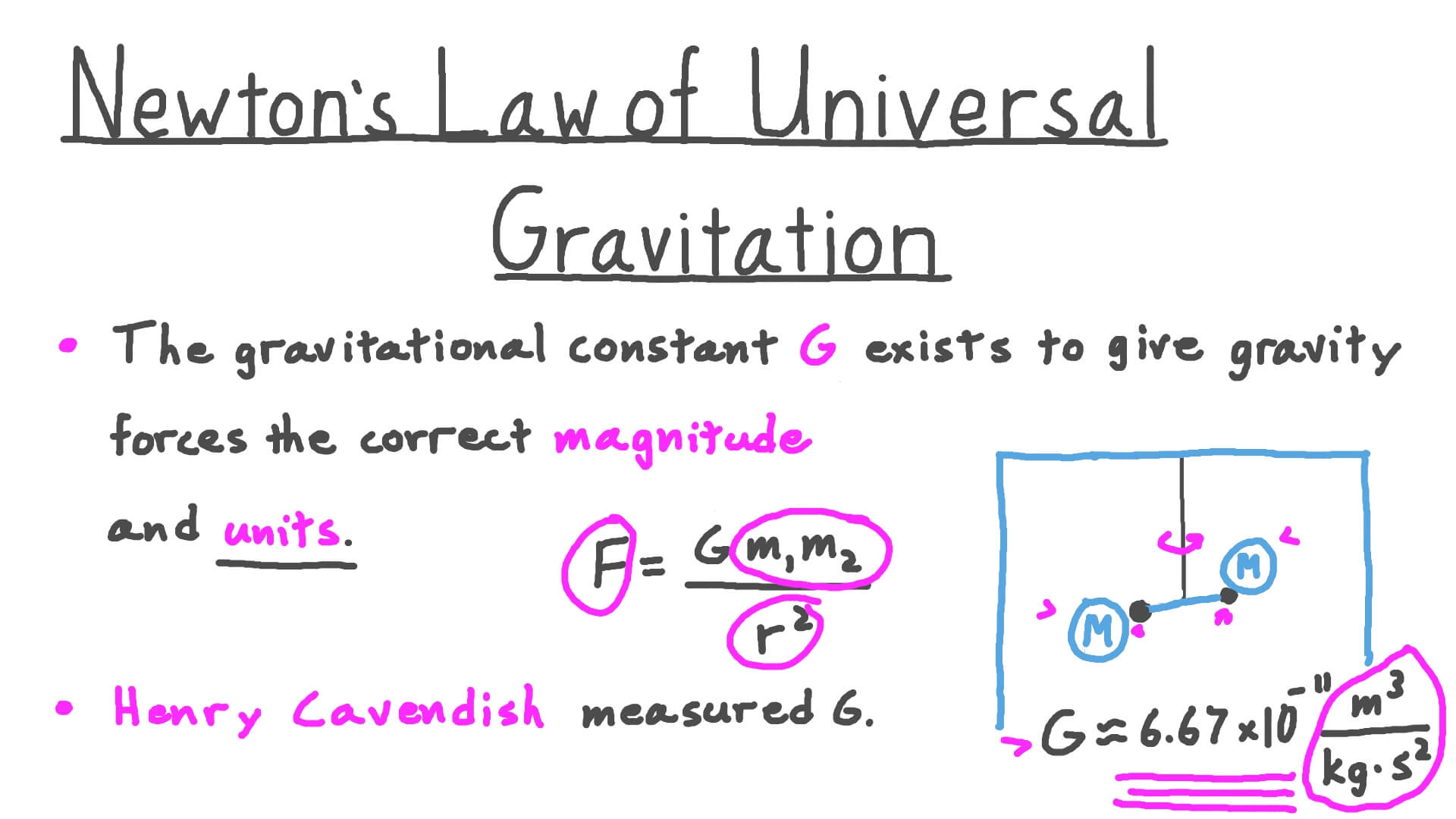
Beyond the localized acceleration due to gravity, there’s a more fundamental constant governing the force of attraction between any two masses in the universe: the Universal Gravitational Constant, symbolized as ‘G’. This constant appears in Newton’s Law of Universal Gravitation: F = G * (m1 * m2) / r², where F is the gravitational force, m1 and m2 are the masses of the two objects, and r is the distance between their centers.
The accepted value for ‘G’ is approximately 6.674 × 10⁻¹¹ Newton meters squared per kilogram squared (N·m²/kg²). The unit of ‘G’ reveals its role in the equation: to convert the product of masses and the inverse square of the distance into a force measured in Newtons.
While ‘G’ might not be directly programmed into a smartphone app, its accurate measurement is crucial for advanced technological endeavors. It underpins our understanding of celestial mechanics, enabling precise satellite navigation systems (like GPS), designing interplanetary missions, and modeling the dynamics of galaxies, which influences the development of high-precision telescopes and deep-space communication technologies. Any tech that relies on understanding the fundamental structure of the cosmos — from gravitational wave detectors to advanced propulsion systems — depends on the precise value and units of ‘G’.
Gravitational Units in Action: Engineering the Future
The precise understanding and application of ‘g’ and ‘G’ are not merely theoretical exercises; they are the backbone of numerous technological marvels that shape our modern world and propel us into the future. From navigating our planet to exploring distant galaxies, gravity’s units are indispensable.
Aerospace and Rocketry: Defying and Harnessing Gravity
Perhaps no field exemplifies the practical application of gravity’s units more than aerospace engineering. The success or failure of a rocket launch, the stability of a satellite in orbit, or the trajectory of an interplanetary probe hinges on a meticulous understanding of ‘g’ and ‘G’.
- Launch and Re-entry: Rocket engineers must calculate the exact thrust required to overcome Earth’s ‘g’ and achieve escape velocity. During re-entry, the forces experienced by a spacecraft are often expressed in ‘G’s, which determines structural integrity and astronaut safety.
- Orbital Mechanics: Satellite designers use Newton’s Law of Universal Gravitation (involving ‘G’) to predict and maintain orbits. Precise orbital insertion and station-keeping maneuvers are critical for everything from weather satellites to global communication networks and GPS systems, all reliant on understanding gravitational interactions.
- Interplanetary Missions: When designing missions to Mars or beyond, engineers must account for the varying ‘g’ values of different celestial bodies and use ‘G’ to calculate gravitational assists (sling-shot maneuvers) to conserve fuel and reach distant targets efficiently.
Robotics and Automation: Grounding Digital Intelligence in the Physical World
In robotics, understanding ‘g’ is fundamental to creating systems that interact effectively with the physical world. A robot’s ability to walk, grasp objects, or maintain balance is directly influenced by gravity.

- Stability and Locomotion: For bipedal robots or robotic arms, algorithms must constantly compensate for the force of ‘g’ to prevent tipping over or to accurately manipulate objects. Understanding the center of gravity and the forces acting upon it is paramount for robust design.
- Sensor Calibration: Accelerometers, common in robotics and consumer electronics (smartphones, fitness trackers), measure acceleration relative to freefall. Their calibration and interpretation of data directly depend on understanding the local ‘g’.
- Material Handling: Automated systems moving heavy loads in factories must factor in the weight (mass × ‘g’) of objects to design appropriate structural supports, motors, and grip mechanisms.
Geospatial Technology and Surveying: Mapping the Earth’s Gravitational Landscape
Gravitational units play a critical role in how we map and understand our planet. Variations in Earth’s gravitational field, though subtle, can provide valuable information for various applications.
- Geodesy: The science of measuring Earth’s shape, orientation, and gravity field relies heavily on measuring local ‘g’ and understanding how it varies across the globe. These measurements help define precise geoids, which are essential for accurate elevation data and reference systems used in mapping and navigation.
- Oil and Gas Exploration: Gravimeters, devices that measure minute variations in ‘g’, are used to detect changes in subsurface rock density, indicating potential deposits of oil, gas, or minerals.
- Natural Hazard Monitoring: Changes in local ‘g’ can indicate shifts in mass distribution, such as the movement of magma before a volcanic eruption or changes in groundwater levels, aiding in the prediction and monitoring of natural hazards.
Measuring the Immeasurable: Sensor Tech and Gravitational Precision
The ability to precisely measure gravity’s effects is a cornerstone of modern technology, leading to the development of sophisticated sensors and instruments that enable everything from inertial navigation to geophysical exploration.
Accelerometers and Inertial Navigation Systems (INS): The Eyes of Motion
Accelerometers are ubiquitous devices that measure non-gravitational acceleration. By understanding and accounting for the local ‘g’, these sensors become incredibly powerful.
- Smartphones and Wearables: Accelerometers in our pockets and on our wrists detect orientation, movement, and even fall detection. They interpret changes in acceleration, often using algorithms that subtract the persistent pull of ‘g’.
- Aircraft and Submarines: INS uses a combination of accelerometers and gyroscopes to continuously calculate the position, orientation, and velocity of a moving object without external references. This is crucial for navigation in environments where GPS signals are unavailable or unreliable, such as underwater or in deep space.
- Automotive Safety: Accelerometers trigger airbags in vehicles by detecting rapid deceleration indicative of a crash. They also contribute to vehicle stability systems.
Gravimeters and Geophysical Exploration: Peering Beneath the Surface
Gravimeters are specialized instruments designed to measure the minute variations in ‘g’ across Earth’s surface. Their precision allows us to infer what lies beneath.
- Resource Mapping: As mentioned, gravimeters are essential in the search for oil, gas, and mineral deposits. Denser materials create a slightly stronger gravitational pull, which these sensitive instruments can detect.
- Geological Research: Scientists use gravimetry to study plate tectonics, mantle convection, and the structure of Earth’s crust, providing insights into seismic activity and volcanic processes.
- Oceanography: Satellite-based gravimeters measure variations in ocean surface height due to gravitational anomalies, helping to map ocean currents and seabed topography.
Atomic Clocks and Time Dilation: The Relativistic Frontier in Tech
While ‘g’ and ‘G’ are rooted in classical mechanics, their implications extend into the realm of general relativity, particularly with the concept of gravitational time dilation. Extremely precise atomic clocks demonstrate that time passes slightly slower in stronger gravitational fields.
- GPS Precision: GPS satellites orbit Earth at an altitude where gravity is weaker than on the surface. Consequently, their onboard atomic clocks run slightly faster than identical clocks on Earth. Without precisely accounting for this relativistic effect (which is a consequence of ‘G’ and the mass of Earth), GPS systems would quickly accumulate errors, rendering them useless. This correction, driven by a deep understanding of gravity’s fundamental units and its relativistic consequences, is a prime example of cutting-edge tech reliant on profound scientific insight.
- Fundamental Physics Research: Ultra-precise atomic clocks are also being used to detect gravitational waves and probe the nature of dark matter and dark energy, pushing the boundaries of our technological capacity to understand the universe.
The Future of Gravity: Pushing Technological Frontiers
The journey to understand and harness the units of gravity is far from over. As technology advances, our ability to measure ‘g’ and ‘G’ with even greater precision unlocks new possibilities and challenges. Innovations in quantum sensing, for instance, are leading to the development of gravimeters based on atomic interferometry, promising unprecedented accuracy in measuring ‘g’ and potentially detecting minute gravitational anomalies that could revolutionize fields from medical imaging to underground mapping.
Furthermore, the aspiration for advanced propulsion systems, such as those theorized to manipulate spacetime or harness exotic gravitational effects, remains a long-term technological frontier. While speculative, any progress in these areas will undeniably be built upon a more profound and precise understanding of the fundamental units of gravity.
In essence, ‘g’ and ‘G’ are not just abstract scientific terms; they are quantifiable keystones that underpin the vast edifice of modern technology. From the smartphone in your hand to the satellites orbiting Earth and the probes exploring distant worlds, the units of gravity are silently, yet powerfully, enabling the innovations that define our technological age and shape our future.
aViewFromTheCave is a participant in the Amazon Services LLC Associates Program, an affiliate advertising program designed to provide a means for sites to earn advertising fees by advertising and linking to Amazon.com. Amazon, the Amazon logo, AmazonSupply, and the AmazonSupply logo are trademarks of Amazon.com, Inc. or its affiliates. As an Amazon Associate we earn affiliate commissions from qualifying purchases.