
In the rapidly evolving landscape of 21st-century technology, we often focus on the macro—the sleek curves of a new smartphone, the sprawling architecture of data centers, or the complex neural networks of artificial intelligence. However, the true frontier of technological innovation is found at the opposite end of the spectrum: the atomic level. To understand the building blocks of the digital age, we must look at the fundamental “unit of atomic mass.” While it may sound like a relic of a chemistry textbook, the Atomic Mass Unit (AMU), or Dalton (Da), is the metric that governs the precision of nanotechnology, the efficiency of semiconductors, and the predictive power of computational biology.

Decoding the Atomic Mass Unit (AMU) in the Digital Age
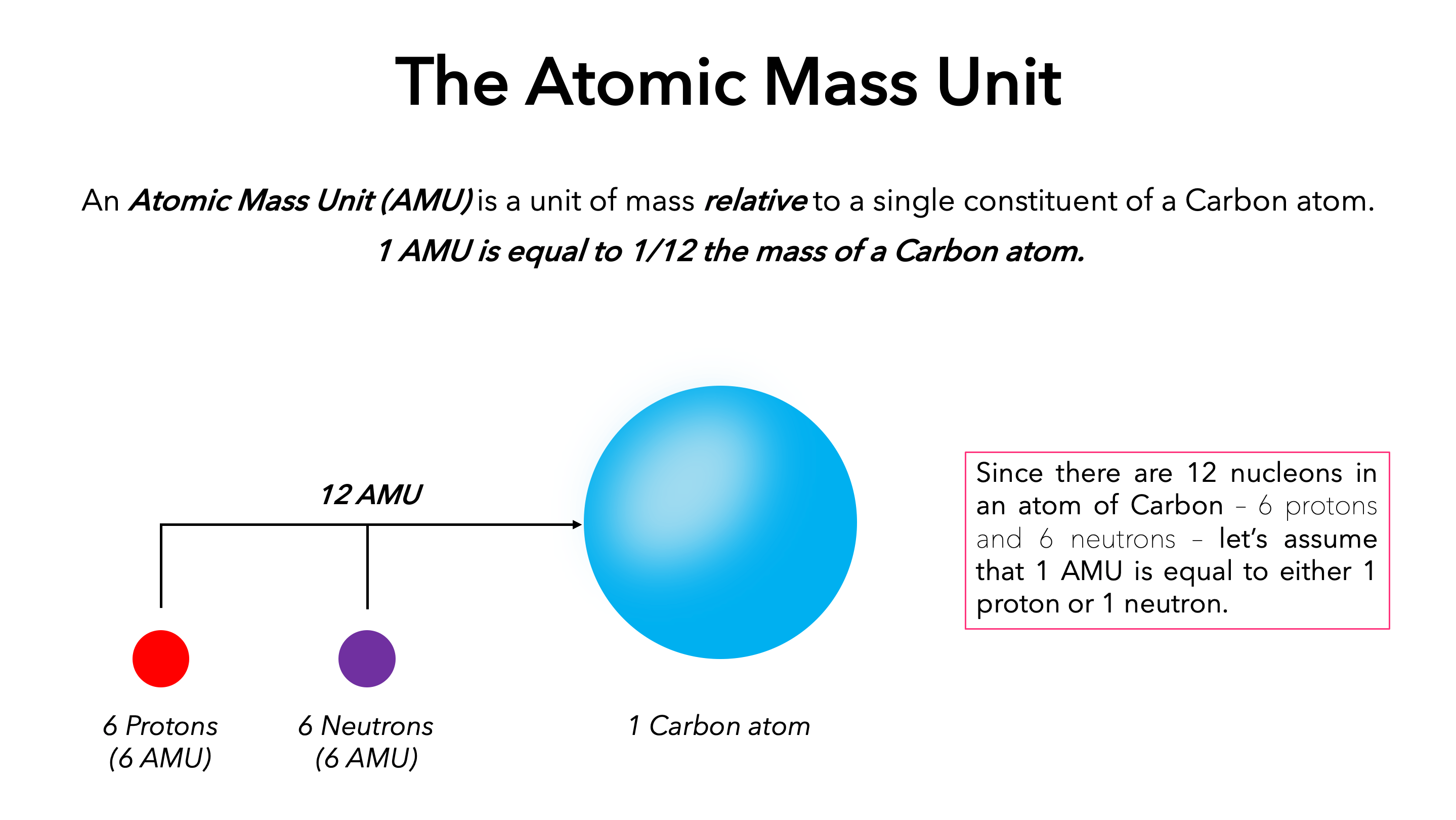
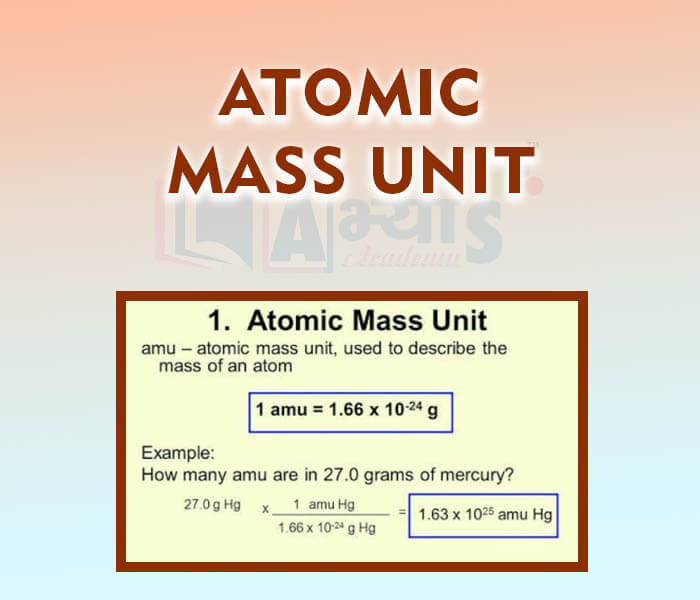
At its core, the atomic mass unit is a standard unit of mass that quantifies the weight of atoms and molecules. Specifically, it is defined as one-twelfth of the mass of an unbound neutral atom of carbon-12 at rest and in its ground state. In the context of modern tech, this unit is not just a theoretical number; it is the calibration point for the most sensitive instruments on the planet.
Defining the Dalton: More Than Just a Number
In contemporary scientific literature and high-tech manufacturing, the term “Dalton” (Da) is increasingly preferred over AMU. This shift reflects a move toward a more unified system of measurement that aligns with the International System of Units (SI). For software engineers and hardware designers working in the realm of materials science, the Dalton represents the resolution of their “digital canvas.” When we talk about engineering materials at the scale of 10^-27 kilograms, the precision of this unit determines whether a microprocessor will function or fail under heat stress.
From Laboratory Scales to Digital Simulation
The transition of the atomic mass unit from a physical measurement to a digital parameter has revolutionized how we develop software for chemistry and physics. High-performance computing (HPC) clusters now run simulations where every “agent” in a virtual environment is assigned a mass based on these units. By accurately inputting the unit of atomic mass into molecular dynamics software, researchers can simulate the behavior of millions of atoms in real-time. This digital twin approach allows tech companies to test new battery chemistries or lightweight alloys before a single physical prototype is ever built.
Nanotechnology and the Precision of Atomic Units
Nanotechnology is perhaps the most direct beneficiary of our precise understanding of atomic mass units. As we shrink our technological footprints, the margin for error becomes nonexistent. In this niche, the “unit” is the tool by which we measure progress.
Semiconductor Engineering at the Atomic Level
The semiconductor industry is currently operating at the 3nm and 2nm process nodes. At this scale, we are no longer just etching silicon; we are manipulating individual atoms. The “unit of atomic mass” becomes a critical variable in Ion Implantation and Extreme Ultraviolet (EUV) lithography. To create transistors that are only a few dozen atoms wide, engineers must account for the mass of every dopant atom. A slight variance in the expected atomic mass of an isotope can lead to “lattice strain,” potentially bricking an entire wafer of high-end CPUs.
Quantum Computing: Where Mass Meets Information
In the realm of quantum computing, the mass of the particles used as qubits—whether they are trapped ions or neutral atoms—is a fundamental constant in the algorithms that maintain coherence. The stability of a quantum state is often tied to the vibrational frequencies of the atoms involved, which are directly proportional to their atomic mass. Tech firms like IBM, Google, and IonQ rely on the absolute precision of these units to calibrate the lasers and magnetic fields that hold these “atomic bits” in place. Without a standardized unit of atomic mass, the synchronization required for quantum supremacy would be impossible.
AI and Machine Learning in Molecular Modeling
The intersection of Artificial Intelligence (AI) and the physical sciences is one of the most exciting trends in technology today. Here, the unit of atomic mass serves as a vital feature in the datasets used to train neural networks.
Predicting Mass through Neural Networks
Machine learning models, such as Graph Neural Networks (GNNs), are now being used to predict the properties of undiscovered molecules. In these models, the atomic mass of each node (atom) is a primary input. By training AI on the periodic table’s mass distributions, software can predict how a new polymer might conduct electricity or dissipate heat. This “In Silico” discovery process is shortening the R&D cycle for new hardware components from years to weeks.
Accelerating Drug Discovery with Precision Metrics
While drug discovery is often associated with biology, it has become a massive vertical within the tech industry, driven by companies like NVIDIA and Alphabet’s Isomorphic Labs. The “unit of atomic mass” is the literal weight of evidence in mass spectrometry—a technique used to identify the chemical composition of a sample. Modern AI software can analyze mass spectrometry data at lightning speed, matching the “mass-to-charge ratio” of particles against vast databases. This allows for the rapid identification of protein structures, which is the key to creating targeted therapies and bio-engineered sensors for wearable tech.
The Future of Digital Metrology and Space Tech
As we look toward the future, the unit of atomic mass is moving beyond Earth-bound laboratories. It is becoming a cornerstone of digital metrology—the science of measurement in an automated, interconnected world—and a vital component of deep-space exploration technology.
Redefining Standards in a Connected World
The “New SI” (International System of Units) redefinition has moved us away from physical artifacts (like a block of platinum-iridium) toward constants of nature. The unit of atomic mass is now linked more closely than ever to the Planck constant. For the tech industry, this means that measurements can be replicated anywhere in the world—or the universe—with the same software-defined precision. This universality is essential for the global supply chain, ensuring that a sensor manufactured in Asia and a motherboard produced in Europe integrate perfectly at the atomic scale.
The Role of the Unified Atomic Mass Unit in Space Tech
In the harsh environment of space, mass is the ultimate constraint. Propulsion systems, such as Hall-effect thrusters (ion engines), rely on accelerating heavy atoms like Xenon. The efficiency of these engines is calculated based on the atomic mass of the propellant. Furthermore, as we look toward “In-Situ Resource Utilization” (ISRU) on Mars or the Moon, autonomous robotic labs will need to identify minerals and gases. These robots will carry miniaturized mass spectrometers that use the unit of atomic mass to tell the difference between oxygen for breathing and methane for fuel. In this context, the unit of atomic mass isn’t just a number; it’s a survival metric for the next generation of aerospace technology.
Conclusion: The Weight of Innovation
The question “what is the unit of atomic mass” may begin in a classroom, but it ends in the cleanest rooms of Silicon Valley and the most powerful supercomputers in the world. Whether we call it the AMU or the Dalton, this unit is the invisible thread that connects our understanding of the physical world to our ability to manipulate it through technology.
As we continue to push the boundaries of what is possible—from AI-driven materials science to the creation of quantum networks—our reliance on this fundamental unit will only grow. In the tech world, we often say that “data is the new oil,” but it is more accurate to say that the precise measurement of the physical world is the engine that burns it. By mastering the unit of atomic mass, we have unlocked the ability to build a future that is faster, smaller, and infinitely more powerful.
aViewFromTheCave is a participant in the Amazon Services LLC Associates Program, an affiliate advertising program designed to provide a means for sites to earn advertising fees by advertising and linking to Amazon.com. Amazon, the Amazon logo, AmazonSupply, and the AmazonSupply logo are trademarks of Amazon.com, Inc. or its affiliates. As an Amazon Associate we earn affiliate commissions from qualifying purchases.