
In the vast world of mechanical engineering, automotive performance, and fluid dynamics, few units of measurement are as ubiquitous yet misunderstood as the “cc.” Standing for “cubic centimeters,” the cc is a volumetric unit of measurement that serves as the universal language for engine capacity, pharmaceutical dosing, and liquid storage. While it may seem like a simple metric derivative, understanding what the cc represents is the key to comprehending how engines generate power, how medical treatments are administered, and how high-performance machinery is categorized.
The Mathematical Foundation of Cubic Centimeters
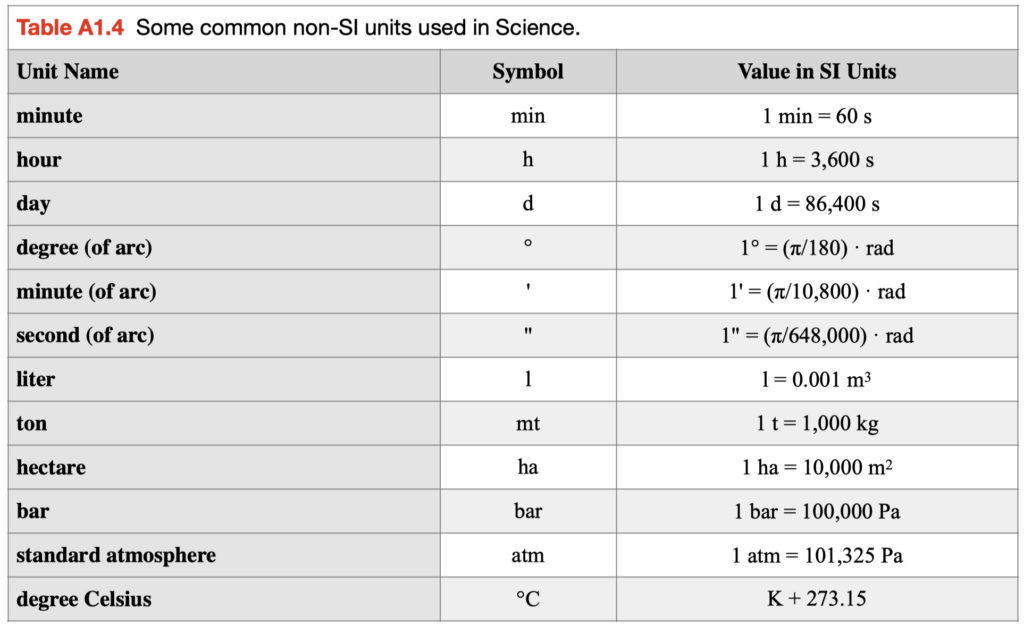
At its core, the cubic centimeter is a unit of volume in the metric system. It is defined as the volume of a cube with edges that are exactly one centimeter in length. Mathematically, it is expressed as 1 cm³. Because the metric system is perfectly aligned, 1 cc is exactly equivalent to 1 milliliter (ml). This interchangeability between solid volume and liquid capacity is one of the primary reasons the cc became the global standard for engineering and medicine.

Volumetric Geometry in Engineering
In mechanical contexts, the cc describes the “displacement” of an engine. When a piston moves inside a cylinder, it travels from the bottom of its stroke (Bottom Dead Center) to the top of its stroke (Top Dead Center). The volume of the space that the piston sweeps through during this movement is the displacement. If an engine has four cylinders, and each cylinder displaces 500 cc of volume, the total engine displacement is 2,000 cc, commonly marketed as a 2.0-liter engine.
Why We Use cc Instead of Liters
While automotive manufacturers often simplify engine sizes into liters (e.g., a 2.0L engine), the cc remains the precise unit used by engineers during the design and testing phases. Using “cc” allows for granular accuracy, especially in small-scale applications like motorcycle engines, chainsaws, or radio-controlled vehicles, where a difference of 50 cc represents a significant percentage of the total power output.
Engines and Performance: The Role of Displacement
The relationship between cubic centimeters and power is perhaps the most discussed aspect of mechanical engineering. Displacement is essentially the “size” of the engine’s lungs. A larger cc count generally means the engine can ingest a larger volume of air and fuel in a single cycle. When this air-fuel mixture is ignited, the resulting expansion of gases exerts pressure on the piston, creating the mechanical work that drives the crankshaft.
The Correlation Between cc and Power
While it is a common misconception that “higher cc always equals more power,” displacement is only one part of the equation. A 1,000 cc engine from a modern sportbike might produce 200 horsepower, while a 1,000 cc engine from an industrial lawnmower might produce only 25 horsepower. The difference lies in engineering variables such as compression ratios, intake and exhaust efficiency, fuel delivery systems, and the ability of the engine to reach high revolutions per minute (RPM).
Power Density and Modern Trends
In the current automotive landscape, manufacturers are practicing “downsizing.” By utilizing turbochargers and advanced direct injection, engineers can squeeze the performance of a traditional 3,000 cc engine out of a 1,500 cc engine. This trend highlights the difference between static displacement (the cc measurement) and dynamic efficiency. While the cc remains the baseline for classifying engine size, it is no longer the sole predictor of a vehicle’s capabilities.

Pharmaceutical and Liquid Applications
Beyond the garage and the racetrack, the cc serves as a critical unit of precision in medicine and chemistry. Because the cc is identical to the milliliter, it provides a bridge between solid-volume measurement and liquid-volume measurement. This is essential for the administration of intravenous fluids and medications.
Precision in Medical Dosing
When a physician prescribes a liquid medication, accuracy is non-negotiable. The standardization of the cc ensures that a dosage calculated in a laboratory translates perfectly to the syringe used by a nurse or a patient. Because the cc is a metric unit, it avoids the complexities and potential conversion errors associated with imperial units like ounces or drams.
Storage and Lab Equipment
In laboratory settings, pipettes, graduated cylinders, and beakers are almost universally calibrated in cc (or ml). The reliability of this unit allows scientists to conduct experiments that are easily replicated across the globe. Whether dealing with volatile chemicals or delicate biological samples, the cc provides a stable, predictable unit of volume that supports global scientific collaboration.
The Evolution of Standards and Global Adoption
The ubiquity of the cubic centimeter is a result of the International System of Units (SI). Before the widespread adoption of metric standards, engineering and medical sectors were plagued by local variations in measurement, which often led to dangerous errors. The standardization of the cc helped eliminate ambiguity in manufacturing, where a part designed in Germany had to fit perfectly into a machine assembled in Japan or the United States.
Manufacturing and Tolerance
In high-precision manufacturing, the “cc” isn’t just an estimation; it is a manufacturing tolerance. Cylinder heads are often measured to ensure their combustion chambers have the exact cc volume required to achieve the intended compression ratio. Even a deviation of a few cc can drastically change the thermal efficiency of an engine, potentially leading to catastrophic failure or performance loss. Consequently, measurement tools—such as burettes and displacement scanners—are used to verify that the manufactured volume matches the design specifications.
The Future of Volumetric Measurement
As technology progresses, the way we measure displacement and liquid volume is becoming increasingly digitized. Sensors and computer-aided design (CAD) software now allow engineers to calculate volume to multiple decimal points of a cubic centimeter before a single piece of metal is cut. Despite this digitization, the fundamental unit remains the cc. It is a testament to the simplicity and utility of the metric system that a unit defined by a simple centimeter-based cube remains the bedrock of modern industry.
Summary of Importance
Whether one is a motorcycle enthusiast comparing the torque curves of a 600 cc and an 800 cc engine, or a medical professional ensuring a patient receives the exact volume of a saline solution, the cubic centimeter is an indispensable tool. It represents the intersection of mathematics and physical reality.
Understanding the cc is more than just knowing a unit of measurement; it is understanding the limitations and the potential of the hardware that powers our world. From the smallest syringe to the largest industrial generator, the cc provides the precision required to drive innovation. It serves as a reminder that even in an age of complex AI-driven design and exotic materials, the fundamental physics of volume remain the cornerstone of how we build, how we heal, and how we move. As we continue to refine our machinery and our medicine, the cubic centimeter will undoubtedly remain the standard by which we define capacity and performance.
aViewFromTheCave is a participant in the Amazon Services LLC Associates Program, an affiliate advertising program designed to provide a means for sites to earn advertising fees by advertising and linking to Amazon.com. Amazon, the Amazon logo, AmazonSupply, and the AmazonSupply logo are trademarks of Amazon.com, Inc. or its affiliates. As an Amazon Associate we earn affiliate commissions from qualifying purchases.