
The Ultimate Fighting Championship (UFC) has transitioned from a fringe spectacle once famously dubbed “human cockfighting” into a global sports powerhouse that serves as a case study in exponential financial growth. When exploring the question, “What is the UFC worth?” one must look beyond the octagon and into the balance sheets of its parent company, TKO Group Holdings. Today, the UFC is not just a sports league; it is a multi-billion dollar media property that has redefined the economics of professional combat sports.
The Financial Evolution of the UFC: From Near-Bankruptcy to a Multi-Billion Dollar Asset
To understand the current valuation of the UFC, it is essential to trace its fiscal trajectory. The organization’s journey is one of the most remarkable stories in the history of business finance, moving from the brink of insolvency to a premier institutional-grade asset.

The Zuffa Era and the $4 Billion Pivot
In 2001, brothers Lorenzo and Frank Fertitta, along with Dana White, purchased the UFC for a mere $2 million. At the time, the brand was toxic, banned from most cable providers, and hemorrhaging cash. Over the next fifteen years, through aggressive marketing and the professionalization of the sport, they built a massive audience.
The true financial “inflection point” occurred in 2016 when WME-IMG (now Endeavor) acquired the UFC for approximately $4 billion. At the time, skeptics questioned whether a sports property could truly be worth such a high multiple of its earnings. However, the deal proved to be a masterstroke of private equity investing, as the UFC’s EBITDA (Earnings Before Interest, Taxes, Depreciation, and Amortization) continued to climb, validating the aggressive valuation.
The Role of Endeavor and the Path to TKO Group Holdings
Under Endeavor’s majority ownership, the UFC’s valuation continued to swell. The company streamlined its operations and leveraged Endeavor’s deep connections in Hollywood and global media. In 2023, the UFC reached its final evolutionary stage in terms of corporate structure. Endeavor merged the UFC with World Wrestling Entertainment (WWE) to form a new, publicly-traded entity called TKO Group Holdings. This merger essentially “unlocked” the UFC’s value, allowing the market to price the organization based on public stock performance. As of late 2023 and into 2024, internal and analyst-led valuations of the UFC specifically—as a standalone component of TKO—hover between $10 billion and $12 billion.
Breaking Down the Revenue Streams: How the UFC Generates Billions
Valuation in the world of professional sports is driven by the consistency and scalability of revenue. The UFC’s multi-billion dollar price tag is supported by a diversified income model that prioritizes guaranteed media income over volatile ticket sales.
Media Rights: The ESPN Partnership as a Financial Cornerstone
The single largest driver of the UFC’s worth is its domestic media rights deal. In 2018, the UFC signed a five-year agreement with ESPN (Disney) worth an estimated $1.5 billion. This deal changed the financial profile of the company, replacing the uncertainty of the old Pay-Per-View (PPV) model with a massive, guaranteed annual floor of revenue.
Because media companies are hungry for “live” content that cannot be easily skipped by DVR or replaced by AI-generated content, the value of these rights has skyrocketed. Financial analysts expect the next round of negotiations (slated for 2025) to potentially double the current annual payout, which significantly inflates the UFC’s present-day enterprise value.
Live Events and Gate Receipts
While media rights are the primary engine, live events remain a high-margin revenue stream. The UFC’s ability to sell out arenas globally—from Las Vegas and New York to London and Abu Dhabi—contributes hundreds of millions in “gate” revenue annually. These events serve as a primary marketing tool for the brand while generating ancillary income through food, beverage, and high-priced VIP “experience” packages. In terms of business finance, these live events act as the “loss leader” or brand-builder that fuels the more lucrative digital and broadcast segments.
Sponsorships and Global Merchandising
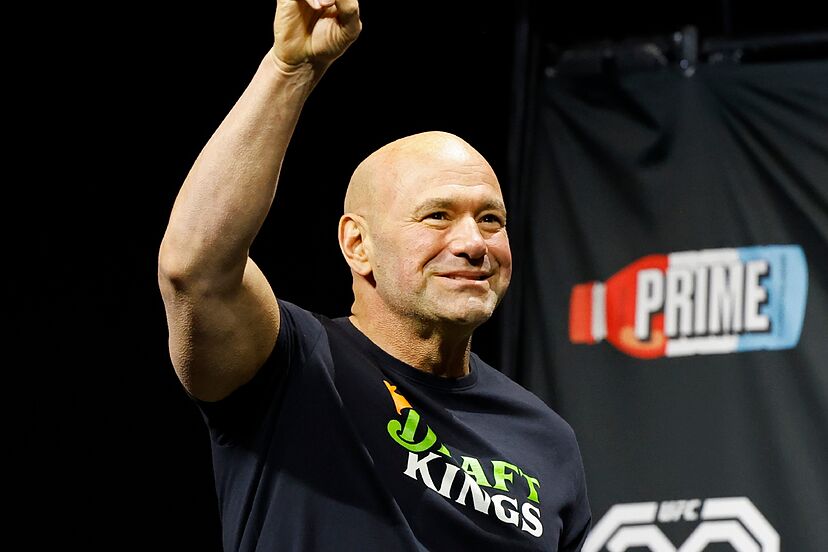
The UFC’s sponsorship portfolio is a “who’s who” of corporate giants. Partnerships with brands like Monster Energy, Crypto.com, Anheuser-Busch, and DraftKings bring in nine-figure sums annually. Unlike team-based sports where sponsorships are split among many franchises, the UFC operates as a centralized entity, meaning it retains the lion’s share of sponsorship dollars. This centralized business model is one reason why the UFC enjoys higher profit margins than leagues like the NBA or NFL, which must contend with complex revenue-sharing agreements and powerful players’ unions.
The Economics of the TKO Merger and Current Market Valuation
The formation of TKO Group Holdings provided a transparent window into the UFC’s financial health. By analyzing the public filings of TKO, investors can see exactly why the UFC is valued at its current premium.
Understanding the $12 Billion Valuation Benchmark
When TKO was formed, the UFC was valued at roughly $12.1 billion. This figure was derived using a “multiple” of the organization’s yearly earnings. In the sports and entertainment world, premium assets often trade at 15x to 25x their EBITDA. Because the UFC has high barriers to entry (it is the undisputed market leader in MMA) and high recurring revenue, it commands a top-tier multiple. For an investor, the UFC is attractive because it possesses “operating leverage”—as revenue grows, costs do not necessarily grow at the same rate, leading to expanding profit margins.
Synergies Between UFC and WWE Under the TKO Umbrella
The UFC’s worth is also bolstered by its relationship with WWE. From a business finance perspective, “synergy” refers to the cost savings and increased bargaining power gained by combining two companies. TKO can now negotiate with host cities for “combat sports weekends” and approach global sponsors with a combined reach that spans two massive, distinct demographics. This administrative efficiency increases the net present value of the UFC by reducing overhead and maximizing the “lifetime value” of each fan across both platforms.
Future Growth Drivers and Risk Factors in Business Valuation
In finance, valuation is inherently forward-looking. To determine what the UFC is worth today, one must project its ability to generate cash in the future. While the trajectory is positive, several variables could influence the organization’s long-term market cap.
International Expansion and Emerging Markets
The UFC has only scratched the surface of its global earning potential. While the U.S. market is relatively mature, regions like China, India, and the Middle East represent massive untapped revenue pools. By establishing “Performance Institutes” in Shanghai and Mexico City, the UFC is investing capital to develop local talent, which in turn drives local media rights value. Financial analysts view this international scalability as a “call option” on the company’s future value—a potential for massive upside that isn’t fully priced into the current valuation.
The Evolving Landscape of Digital Streaming and Pay-Per-View
The shift from traditional cable to direct-to-consumer (DTC) streaming presents both a risk and an opportunity. The UFC Fight Pass—the company’s proprietary streaming service—gives them a direct relationship with their fans and valuable data. However, the decline of traditional PPV platforms means the UFC must continue to innovate its delivery model to ensure that high-margin event revenue doesn’t erode. The “worth” of the UFC is tied to its ability to remain “platform agnostic,” ensuring its content is valuable whether it is on Netflix, Amazon Prime, or a traditional network.
Regulatory Risks and Athlete Compensation Challenges
No financial analysis of the UFC would be complete without addressing its primary liability: athlete compensation and legal challenges. The UFC is currently facing significant antitrust litigation regarding its business practices and how it pays fighters. In business terms, this represents a “tail risk.” If the legal system forces a change in the UFC’s labor model, or if fighters successfully unionize, the company’s profit margins could be compressed. A significant increase in the percentage of revenue shared with athletes would likely lead to a downward revision of the company’s total valuation multiple.
Conclusion: A Premium Asset in a Content-Driven Economy
What is the UFC worth? Based on current market data and the TKO Group’s public standing, the UFC is a $10 to $12 billion asset. Its value is derived from a unique combination of high-margin media rights, a global brand that transcends language barriers, and a centralized business model that maximizes profitability.
For investors and business analysts, the UFC represents the gold standard of “alternative” sports assets. While it faced skepticism for decades, its current valuation reflects its status as a cornerstone of the modern entertainment economy. As long as live sports remain the most valuable “uncancelable” content in the media world, the UFC’s worth is likely to continue its upward trajectory, potentially challenging the valuations of legacy leagues in the decade to come.
aViewFromTheCave is a participant in the Amazon Services LLC Associates Program, an affiliate advertising program designed to provide a means for sites to earn advertising fees by advertising and linking to Amazon.com. Amazon, the Amazon logo, AmazonSupply, and the AmazonSupply logo are trademarks of Amazon.com, Inc. or its affiliates. As an Amazon Associate we earn affiliate commissions from qualifying purchases.