
The digital landscape is no longer a simple frontier of shared information; it has evolved into a complex ecosystem of decentralized finance, autonomous organizations, and global trade. As these digital environments scale, the friction between participants inevitably leads to disputes. Traditional legal systems, anchored by geographic borders and slow-moving bureaucratic processes, are often ill-equipped to handle the speed and technical nuance of the internet. This gap has led to the emergence of “The Tribunal”—a conceptual and technical framework for digital governance and decentralized dispute resolution.
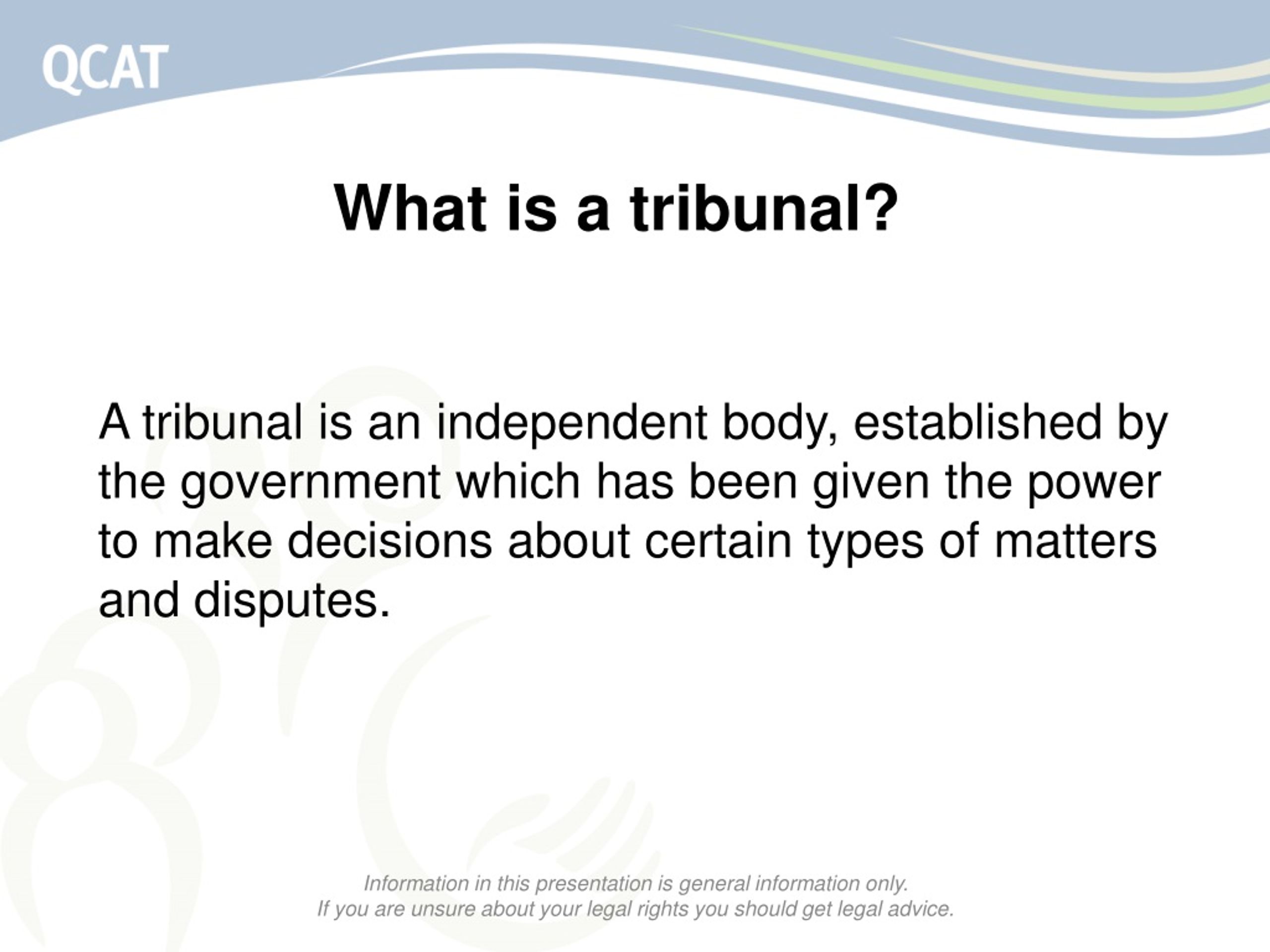
In the realm of modern technology, a Tribunal is not a physical room with a judge and a gavel. Instead, it is a sophisticated layer of software, often built on blockchain infrastructure, utilizing smart contracts and crowdsourced consensus to resolve conflicts. Whether it is a dispute over a freelance contract in a Decentralized Autonomous Organization (DAO) or a challenge to a content moderation decision on a Web3 social platform, these digital tribunals represent the next frontier in software-led adjudication.

The Evolution of the Digital Tribunal: From Traditional Courts to Algorithmic Justice
To understand what the Tribunal is today, we must look at the failure points of the legacy systems it aims to augment or replace. Traditional litigation is prohibitively expensive for small-scale digital transactions. If a developer in Estonia has a dispute with a designer in Brazil over a $2,000 software module, the cost of legal representation and international filing fees would far exceed the value of the claim.
Defining the Modern Tech Tribunal
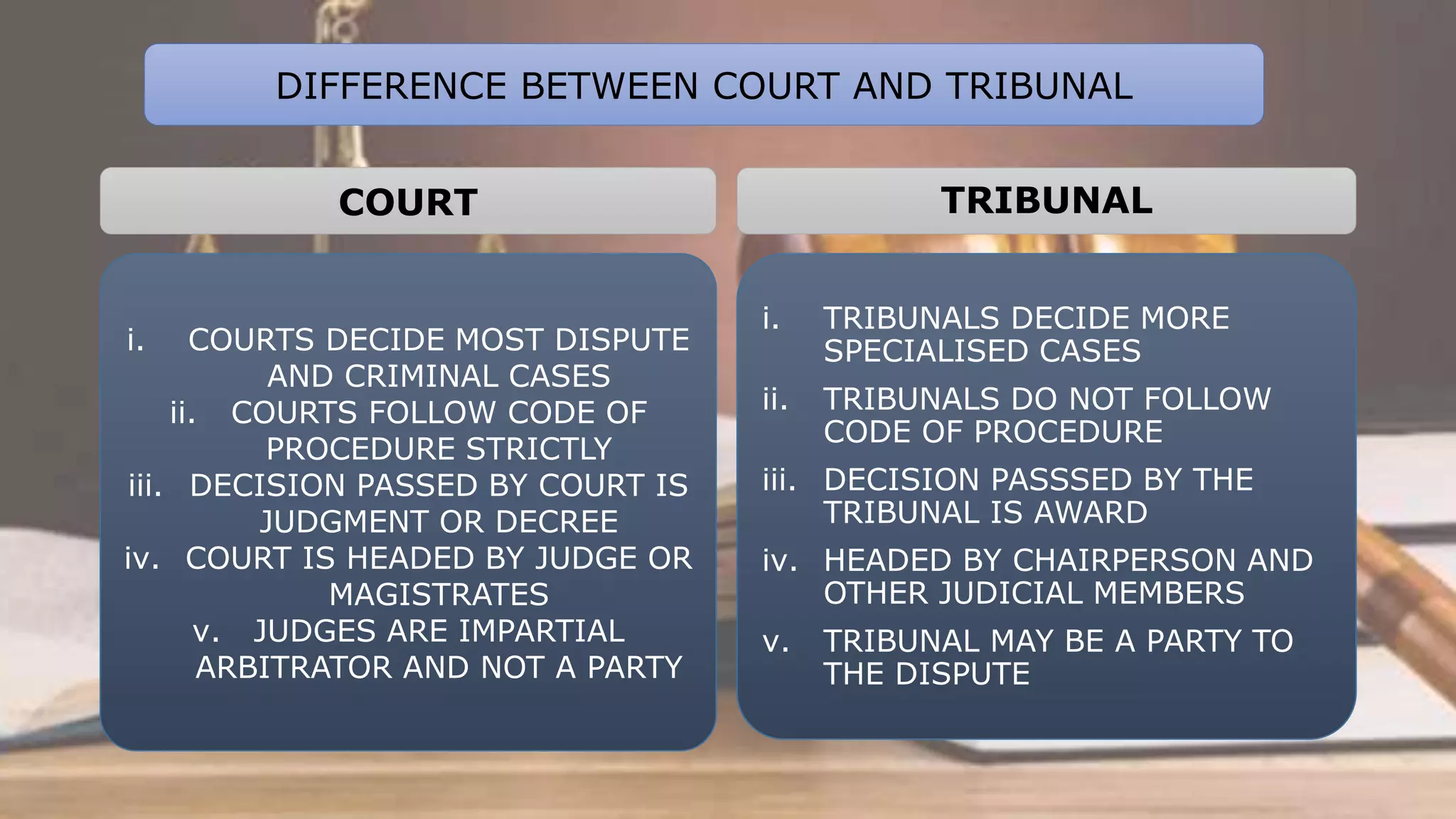
A modern tech-based Tribunal is a decentralized application (dApp) designed to act as an impartial arbitrator. It operates on the principle of “Code is Law,” but with a necessary human or algorithmic layer to interpret intent where code is ambiguous. These systems are characterized by their transparency, as every piece of evidence, every vote, and every verdict is recorded on an immutable ledger. Unlike traditional courts, these tribunals are often global, permissionless, and operational 24/7.
Why Software-Based Dispute Resolution is Surging
The surge in these digital judicial tools is driven by the growth of the “Headless Economy.” As we move toward organizations that lack a central headquarters or a single legal jurisdiction, the need for a neutral, code-based environment for conflict resolution becomes mandatory. Digital security is also a primary driver; by automating the enforcement of a tribunal’s decision through smart contracts, the risk of non-payment or non-compliance is virtually eliminated. Once the “Tribunal” reaches a verdict, the software automatically executes the transfer of funds or the revocation of access rights, bypassing the need for bailiffs or local law enforcement.
Key Technologies Powering the Digital Tribunal
The efficacy of a digital Tribunal relies on a stack of emerging technologies that ensure the process is tamper-proof, fair, and scalable. Without the robust security of the underlying protocols, the system would be vulnerable to the very corruption it seeks to avoid.
Smart Contracts and Immutable Evidence
The foundation of any digital Tribunal is the smart contract. These are self-executing contracts with the terms of the agreement directly written into lines of code. In a dispute scenario, the smart contract acts as the “escrow agent.” When a project begins, funds are locked in the contract. If a dispute is triggered, the contract pauses the transaction and signals the Tribunal software to begin the adjudication process. The evidence provided—ranging from GitHub commits to encrypted communication logs—is hashed and stored on-chain, ensuring that neither party can alter the record of their interactions after the fact.
AI Integration in Fact-Finding and Verdict Prediction
Artificial Intelligence is increasingly becoming the “clerk” of the digital Tribunal. AI tools are used to parse through massive amounts of documentation, identify inconsistencies in testimony, and even predict the likely outcome based on historical precedents within a specific protocol. High-level AI models can summarize complex technical disputes for human jurors, making it easier for non-experts to understand specialized software conflicts. In some advanced iterations, “AI Tribunals” are being piloted to handle low-stakes, high-volume disputes where the cost of human intervention is still too high, using machine learning to apply community guidelines or contract terms with high precision.
Cryptographic Security and Anonymity in Governance
Digital security is paramount when the stakes involve significant financial assets or intellectual property. Tribunals utilize Zero-Knowledge Proofs (ZKPs) to allow parties to prove they have met certain conditions without revealing sensitive underlying data. Furthermore, the jurors or “nodes” participating in the Tribunal often remain anonymous to prevent bribery or intimidation. Their identities are shielded by cryptographic hashes, while their reputation scores—earned through a history of fair and consistent voting—are public and verifiable.
Use Cases: Where the Tribunal Meets the Real World
The application of Tribunal software extends far beyond niche blockchain projects. It is currently being integrated into the core infrastructure of several multi-billion dollar industries.
Decentralized Autonomous Organizations (DAOs)
DAOs are perhaps the most prominent users of digital Tribunals. In an organization governed by token holders rather than a board of directors, disagreements over treasury spending or strategic direction are common. A DAO Tribunal acts as a supreme court for the community. If a proposal is passed that violates the organization’s “constitution” (its core code or whitepaper), the Tribunal can be invoked to veto the proposal or slash the tokens of malicious actors. This provides a layer of “Social Consensus” that protects the organization from governance attacks.
E-commerce and Cross-Border Digital Trade
As digital marketplaces move toward decentralization to avoid high platform fees, they lose the centralized “Customer Support” that traditionally handles refunds and disputes. A decentralized Tribunal fills this gap. By utilizing crowdsourced jurors who are incentivized with platform tokens to reach a fair verdict, e-commerce protocols can offer buyer protection that is faster and cheaper than traditional credit card chargebacks.
Content Moderation and Intellectual Property
The “Tribunal” concept is also a solution to the crisis of centralized content moderation. Rather than a single corporation deciding what constitutes “fair use” or “community standards,” a distributed Tribunal of users can review flagged content. This democratizes the moderation process and utilizes software tools to ensure that decisions are consistent with the platform’s established digital policies, rather than the whims of a centralized authority.
The Software Ecosystem: Tools Redefining Digital Justice
Several key software platforms have emerged as the leaders in providing “Justice as a Service.” These tools are the building blocks that any developer can use to integrate a Tribunal into their own application.
Kleros and the “Justice as a Service” Model
Kleros is one of the most prominent examples of a functional digital Tribunal. It uses game theory and blockchain technology to create a decentralized arbitration service. Jurors are incentivized to vote with the majority through a “Schelling Point” mechanism—if they vote honestly and align with the consensus, they earn fees; if they vote incoherently or maliciously, they lose their staked tokens. This software framework has been used to resolve everything from insurance claims to language translation disputes.
Aragon and Modular Governance Tools
Aragon provides the infrastructure for creating and managing DAOs, including a sophisticated “Aragon Court.” This software allows organizations to draft their own digital bylaws and enforce them through a specialized Tribunal. The modular nature of Aragon means that a brand or a tech startup can “plug in” a dispute resolution layer without having to build the cryptographic backend from scratch.
The Role of Digital Identity (DID)
A Tribunal is only as good as the participants within it. Technologies like Decentralized Identity (DID) and “Proof of Personhood” protocols are essential to prevent Sybil attacks, where one person creates thousands of fake accounts to sway a Tribunal’s decision. By linking a Tribunal’s voting power to a verified, unique digital identity, the software ensures that the “wisdom of the crowd” isn’t just the noise of a botnet.
Challenges and the Future of Automated Adjudication
Despite the rapid advancement of Tribunal software, several hurdles remain before it can achieve mainstream dominance. The intersection of technology and justice is fraught with ethical and technical complexities.
Ethical Implications of AI-Led Decisions
As we delegate more authority to AI within the Tribunal framework, the risk of “Algorithmic Bias” becomes a central concern. If the data used to train a dispute-resolution AI contains historical biases, the Tribunal may inadvertently perpetuate unfairness. Ensuring that the software remains transparent and that its “reasoning” can be audited by human observers is a critical area of ongoing development in digital security and ethics.
Scalability and the Human-in-the-Loop Requirement
While code can handle simple “if-then” scenarios, the nuance of human intent is difficult to program. The most effective Tribunals moving forward will likely be hybrid systems—utilizing AI and smart contracts for the heavy lifting of data processing and enforcement, while reserving a “Human-in-the-Loop” for complex, high-stakes interpretations. Scaling this human element without introducing the slowness of traditional courts is the primary engineering challenge for the next generation of governance tools.
The Tribunal, as a concept, represents the maturation of the internet. It is the transition from a “Wild West” of unregulated digital interactions to a structured, secure, and self-governing society. By leveraging blockchain, AI, and sophisticated game theory, the tech industry is building a new layer of the world’s infrastructure—one where justice is not a matter of geography, but a matter of code. As we move deeper into an era defined by decentralized systems, “The Tribunal” will stand as the essential software layer that ensures trust, security, and fairness in a borderless world.
aViewFromTheCave is a participant in the Amazon Services LLC Associates Program, an affiliate advertising program designed to provide a means for sites to earn advertising fees by advertising and linking to Amazon.com. Amazon, the Amazon logo, AmazonSupply, and the AmazonSupply logo are trademarks of Amazon.com, Inc. or its affiliates. As an Amazon Associate we earn affiliate commissions from qualifying purchases.