
The question “what is the ticker symbol for the S&P 500 Index?” is a common one among investors, particularly those new to the intricacies of the stock market. The immediate answer, perhaps surprisingly, is that the S&P 500 itself does not have a single, direct ticker symbol. This is because the S&P 500 is an index—a hypothetical portfolio of assets designed to represent a specific market or segment—not a tradable security. It’s a benchmark, a statistical measure, rather than an asset you can buy or sell directly on an exchange. However, investors can gain exposure to the S&P 500’s performance through various financial instruments, each with its own distinct ticker symbol. Understanding this distinction is crucial for navigating the world of index investing.
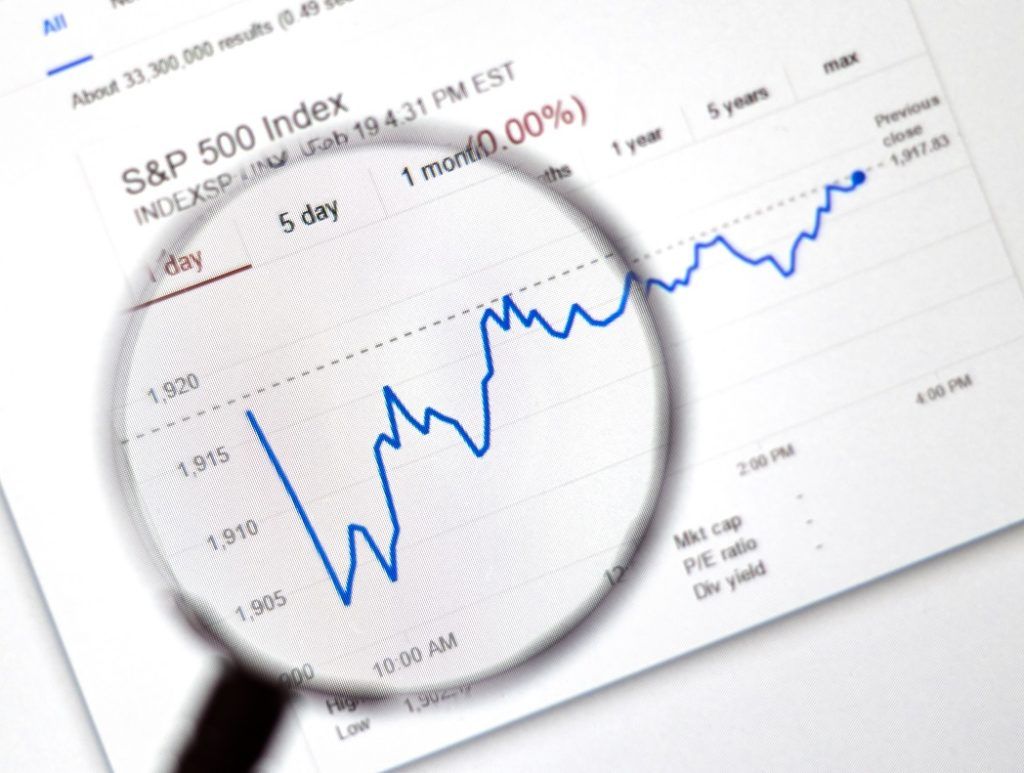
Understanding the S&P 500: An Index, Not a Stock
At its core, the S&P 500 (Standard & Poor’s 500) is a market-capitalization-weighted index that tracks the performance of 500 of the largest publicly traded companies in the United States. These companies are selected by a committee based on criteria such as market size, liquidity, and sector representation, making the index a robust gauge of the overall health of the U.S. stock market. When financial news reports that “the market is up today,” they are often referring to the performance of the S&P 500.
Because the S&P 500 is a statistical construct—a formula that aggregates the prices of its constituent stocks to produce a single value—it cannot be bought or sold like an individual company’s stock. It serves as a benchmark for investment managers, a barometer for economic analysts, and a foundational element for a wide array of investment products. While you can track its performance in real-time on financial websites, you can’t place a buy order for “S&P 500” with a brokerage. Instead, investors seeking to replicate its performance look to financial products specifically designed to mirror the index.
Investing in the S&P 500: The Role of ETFs and Mutual Funds
To invest in the S&P 500, individuals typically use passively managed investment funds that aim to track the index as closely as possible. The two most common types of these funds are Exchange-Traded Funds (ETFs) and mutual funds. Both pool money from multiple investors to buy the underlying securities of the S&P 500 in the same proportions as the index, offering instant diversification across the 500 companies.
Exchange-Traded Funds (ETFs)
ETFs are popular investment vehicles that hold assets such as stocks, commodities, or bonds and trade on stock exchanges like regular stocks. For S&P 500 ETFs, the underlying assets are the 500 companies in the index.
- How They Work: When you buy an S&P 500 ETF, you are purchasing shares of a fund that owns a proportional slice of all 500 companies in the index. The price of an ETF share fluctuates throughout the trading day as investors buy and sell them, just like individual stocks. This real-time trading flexibility is a key differentiator from mutual funds.
- Key Advantages: ETFs generally boast lower expense ratios (management fees) compared to actively managed funds. They also offer intra-day liquidity, allowing investors to buy or sell shares at current market prices at any point during trading hours. Furthermore, their structure can often lead to greater tax efficiency, as capital gains distributions are less common than with traditional mutual funds.
- Popular S&P 500 ETFs and Their Ticker Symbols:
- SPDR S&P 500 ETF Trust (SPY): Launched in 1993, SPY is the oldest and one of the largest ETFs in the world, often referred to as “Spiders.” It offers high liquidity and is a favorite among institutional investors and day traders due to its active options market.
- iShares Core S&P 500 ETF (IVV): Managed by BlackRock, IVV is another massive S&P 500 ETF. It generally has a slightly lower expense ratio than SPY, making it a compelling option for long-term investors.
- Vanguard S&P 500 ETF (VOO): Offered by Vanguard, VOO is known for its extremely low expense ratio, consistent with Vanguard’s reputation for low-cost investing. It’s often favored by buy-and-hold investors for its cost-effectiveness.
- Comparison: While all three aim to track the S&P 500, subtle differences exist in their expense ratios, assets under management, trading volume, and how they handle share creation/redemption, which can impact liquidity and premiums/discounts to Net Asset Value (NAV). For most long-term retail investors, the differences in performance after accounting for fees are minimal, making VOO or IVV often preferred for their slightly lower costs.
Mutual Funds
Mutual funds are another popular vehicle for S&P 500 exposure. Unlike ETFs, mutual funds are priced once a day after the market closes, based on their Net Asset Value (NAV).
- How They Work: Investors buy shares directly from the fund company (or through a brokerage) at the end-of-day NAV. The fund managers then use the pooled money to invest in the S&P 500’s underlying stocks.
- Key Advantages: Mutual funds can offer convenience, especially for investors who prefer to set up automatic investments. They often provide more guidance and support from the fund provider.
- Popular S&P 500 Mutual Funds and Their Ticker Symbols (or identifying codes):
- Vanguard 500 Index Fund Admiral Shares (VFIAX): This is the mutual fund equivalent to VOO, offering an incredibly low expense ratio. It typically requires a higher minimum initial investment than its ETF counterpart.
- Fidelity 500 Index Fund (FXAIX): Fidelity’s flagship S&P 500 index fund, also known for its competitive, low expense ratio and often no minimum investment for certain account types.
- Schwab S&P 500 Index Fund (SWPPX): Charles Schwab’s offering, another low-cost option designed for broad market exposure.
- Comparison: While mutual funds lack the intra-day trading flexibility of ETFs, they can be simpler for hands-off investors due to their end-of-day pricing and often simpler purchasing process within a specific brokerage ecosystem. The primary decision between an S&P 500 ETF and an S&P 500 mutual fund often boils down to preference for trading flexibility versus simplicity and potentially lower minimum investment thresholds in some cases.
Key Factors When Choosing an S&P 500 Index Fund
Selecting the right S&P 500 index fund involves more than just picking a ticker symbol. Several critical factors should influence an investor’s decision, ensuring the fund aligns with their financial goals and preferences.
Expense Ratios
The expense ratio is perhaps the most crucial factor for a passive index fund. This annual fee, expressed as a percentage of the assets under management, is deducted from the fund’s returns. Because S&P 500 funds are designed to track the same index, their gross returns will be nearly identical. Therefore, the fund with the lowest expense ratio will typically provide the highest net returns over the long term. Even a few basis points difference (e.g., 0.03% versus 0.09%) can amount to significant savings over decades due to the power of compounding.
Tracking Error

Tracking error measures how closely a fund’s performance matches that of its benchmark index. A well-managed S&P 500 index fund should have a minimal tracking error, meaning its returns should very closely mirror the S&P 500’s returns, minus the expense ratio. While some small deviation is natural due to fees, cash holdings, and rebalancing costs, consistently high tracking error can erode returns. Investors should review a fund’s historical tracking performance.
Fund Structure and Holdings
Most S&P 500 funds employ a “full replication” strategy, meaning they purchase all 500 stocks in the index in their correct proportions. Some might use “sampling,” particularly for very large or illiquid indices, buying a representative subset of stocks. For the S&P 500, full replication is common and generally preferred for accuracy. Investors should also be aware of the difference between physical ETFs (which directly hold the underlying securities) and synthetic ETFs (which use derivatives to track the index). Physical ETFs are more common and generally simpler for retail investors.
Liquidity and Trading Costs (for ETFs)
For ETFs, liquidity refers to how easily and quickly shares can be bought or sold without significantly affecting the price. Highly liquid ETFs like SPY, IVV, and VOO have tight bid-ask spreads, meaning the difference between the buying and selling price is minimal. This reduces trading costs. While less critical for long-term buy-and-hold investors, it’s an important consideration for frequent traders.
Tax Efficiency
ETFs often have a tax advantage over traditional mutual funds due to their creation/redemption mechanism, which can allow for capital gains to be deferred or avoided more easily. This means mutual funds might distribute taxable capital gains more frequently, even if you haven’t sold your shares. For investors in taxable accounts, this can be a significant consideration. However, for investments held in tax-advantaged accounts like 401(k)s or IRAs, this difference is moot.
Brokerage Platform and Account Type
The choice of fund may also depend on your brokerage. Many brokerages offer their own proprietary S&P 500 index funds or ETFs with commission-free trading. For instance, if you primarily use Vanguard, VOO or VFIAX might be the most convenient and cost-effective choice. Always check for transaction fees, minimum investment requirements, and ease of access through your preferred brokerage platform.
The Benefits of S&P 500 Investing for Long-Term Growth
Investing in an S&P 500 index fund offers several compelling benefits, making it a cornerstone of many long-term investment strategies.
Firstly, it provides broad diversification across 500 leading U.S. companies spanning all major sectors of the economy. This inherent diversification significantly reduces idiosyncratic risk, meaning the poor performance of any single company will have only a minor impact on the overall portfolio. You’re not betting on one horse but rather on the collective growth of the largest segment of the American economy.
Secondly, the S&P 500 has a strong historical track record of long-term growth. While past performance is no guarantee of future results, the U.S. stock market has historically delivered positive returns over extended periods, weathering numerous economic downturns, recessions, and global crises to emerge stronger. Investing in the S&P 500 allows investors to participate directly in this long-term upward trend.
Thirdly, it embodies simplicity and cost-effectiveness. Passive index investing eliminates the need for active stock picking, market timing, or paying high fees to active fund managers. The strategy is straightforward: buy a low-cost S&P 500 fund and hold it for the long term. This approach saves time, reduces stress, and, thanks to low expense ratios, maximizes the portion of returns that stay in the investor’s pocket.
Finally, S&P 500 index funds are suitable for a wide range of investor profiles, from beginners looking for an easy entry point into the market to seasoned investors seeking a reliable core holding for their portfolio. It represents a robust, proven method for wealth accumulation over decades.

Navigating Risks and Considerations
While S&P 500 investing offers significant advantages, it’s essential to understand its inherent risks and limitations. The primary risk is market risk: because you are invested in a broad segment of the stock market, your investment is susceptible to overall market downturns. If the U.S. economy faces a recession or a significant market correction, the value of your S&P 500 fund will likely decrease. There is no active management to sidestep such declines.
Furthermore, while diversified within the U.S. large-cap equity space, an S&P 500 fund does present a degree of concentration risk relative to global markets. It is heavily weighted towards U.S. companies and does not provide direct exposure to international developed or emerging markets. For truly broad diversification, investors might consider complementing an S&P 500 fund with international stock funds and bond funds to create a more balanced and globally diversified portfolio. Relying solely on the S&P 500, while a solid foundation, doesn’t capture the entire universe of investable assets. Understanding these nuances allows investors to make informed decisions and build a robust, resilient financial future.
aViewFromTheCave is a participant in the Amazon Services LLC Associates Program, an affiliate advertising program designed to provide a means for sites to earn advertising fees by advertising and linking to Amazon.com. Amazon, the Amazon logo, AmazonSupply, and the AmazonSupply logo are trademarks of Amazon.com, Inc. or its affiliates. As an Amazon Associate we earn affiliate commissions from qualifying purchases.