
Understanding the S&P 500 Index
The S&P 500 is one of the most widely recognized and respected benchmarks for the U.S. stock market and the broader economy. It represents a significant segment of the American corporate landscape, acting as a crucial indicator for investors, economists, and policymakers alike. Understanding its composition and function is the first step to appreciating its investment implications.
What is the S&P 500?
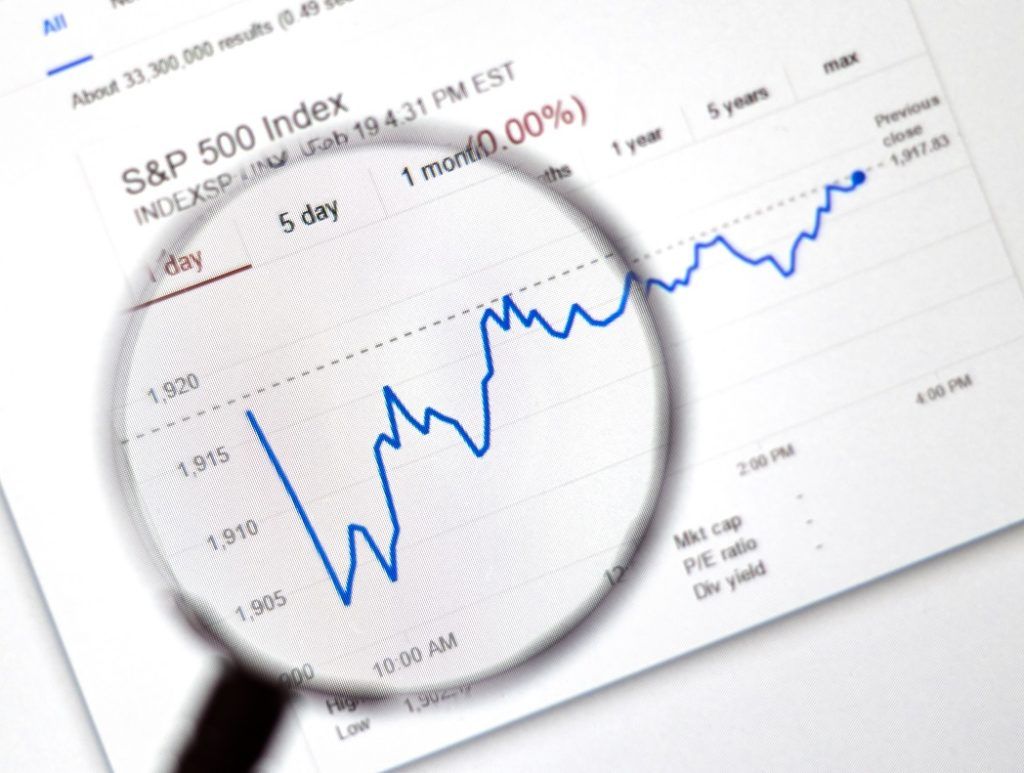
At its core, the S&P 500 is a stock market index that tracks the performance of 500 of the largest publicly traded companies in the United States. Maintained by S&P Dow Jones Indices, it is a market-capitalization-weighted index, meaning that companies with larger market values have a greater impact on the index’s performance. The selection of companies is not based solely on market size; rather, a committee evaluates factors such as liquidity, sector representation, and public float to ensure the index accurately reflects the overall U.S. equity market. The index’s history dates back to 1957, although its roots can be traced to earlier indices. Over decades, it has evolved to become the standard for gauging the health of large-cap U.S. equities and, by extension, the American economy. Its broad diversification across various sectors – including technology, healthcare, financials, and consumer discretionary – provides a holistic snapshot of corporate America’s performance. The S&P 500 is frequently cited in financial news and economic reports, underscoring its pivotal role as a benchmark.
Why the S&P 500 Matters to Investors
For individual and institutional investors, the S&P 500 holds immense significance. Firstly, it offers a robust vehicle for diversification. By investing in a fund that tracks the S&P 500, investors gain exposure to 500 leading companies across numerous industries, inherently reducing the risk associated with investing in individual stocks. This broad exposure mitigates the impact of poor performance from any single company or sector. Secondly, the S&P 500 has demonstrated a strong long-term growth potential, historically delivering substantial returns over extended periods, making it an attractive component for long-term wealth accumulation strategies. Thirdly, it serves as a critical benchmark for evaluating portfolio performance. Many financial professionals measure their success against the S&P 500’s returns, offering a clear standard for comparison. If a diversified portfolio consistently underperforms the S&P 500, it often prompts a re-evaluation of its holdings or strategy. Lastly, as an economic indicator, its movements can signal broader economic trends, influencing investor sentiment and decision-making regarding market outlooks and risk appetite. Its importance in financial discourse is truly paramount.
Navigating the Ticker Quandary: Direct Investment vs. ETFs/Mutual Funds
A common misconception among new investors is that the S&P 500 itself has a singular ticker symbol that can be directly traded. In reality, the S&P 500 is an index, a theoretical portfolio of stocks used for tracking market performance, not a tradable asset in its own right. To invest in the S&P 500, one must utilize financial products designed to mimic its performance.
The S&P 500 Doesn’t Have a Single Ticker Symbol
It’s crucial to clarify that the S&P 500 index itself does not have a ticker symbol in the same way an individual stock like Apple (AAPL) or Microsoft (MSFT) does. You cannot directly buy “the S&P 500” on an exchange. The S&P 500 is a statistical measure, a calculation based on the weighted average of the prices of its 500 constituent companies. This distinction is fundamental for investors to grasp. Instead of a direct ticker, investors gain exposure to the S&P 500’s performance through investment vehicles specifically designed to replicate the index. These vehicles are primarily Exchange-Traded Funds (ETFs) and index mutual funds, which hold the underlying stocks in proportions similar to their weighting in the S&P 500, or use derivative strategies to achieve the same exposure.
Investing in the S&P 500 Through Exchange-Traded Funds (ETFs)
Exchange-Traded Funds (ETFs) are by far the most popular and accessible way for investors to gain exposure to the S&P 500. These funds are designed to track the performance of the S&P 500 index as closely as possible. They are traded on stock exchanges like individual stocks, offering intraday liquidity and price transparency. When you buy an S&P 500 ETF, you are purchasing a share of a fund that holds a diversified basket of stocks mirroring the index.
The most prominent S&P 500 ETFs and their respective ticker symbols include:
- SPDR S&P 500 ETF Trust (SPY): Launched in 1993, SPY is the oldest and one of the largest S&P 500 ETFs by assets under management and trading volume. It is often referred to as “Spiders” and is highly favored by traders due to its exceptional liquidity.
- iShares Core S&P 500 ETF (IVV): Offered by BlackRock, IVV is another immensely popular choice. It often boasts a slightly lower expense ratio than SPY, making it attractive for long-term buy-and-hold investors.
- Vanguard S&P 500 ETF (VOO): VOO, from Vanguard, is renowned for its ultra-low expense ratio, consistent with Vanguard’s philosophy of minimizing investor costs. It is highly favored by passive investors focused on long-term growth.
The advantages of S&P 500 ETFs include their broad diversification, typically low expense ratios (which are crucial for long-term returns), and the ease with which they can be bought and sold through a brokerage account. Most of these ETFs employ a full replication strategy, meaning they purchase all the stocks in the S&P 500 in their respective weightings to accurately track the index.
Mutual Funds Tracking the S&P 500
Beyond ETFs, traditional index mutual funds also offer a viable avenue for investing in the S&P 500. Like their ETF counterparts, these funds aim to replicate the index’s performance by holding its constituent stocks. However, there are some key structural and operational differences. Mutual funds are typically bought and sold once per day at their Net Asset Value (NAV) after the market closes, unlike ETFs which trade throughout the day. They may also have higher minimum investment requirements, although many providers now offer funds with lower entry points.

Examples of popular S&P 500 index mutual funds include:
- Fidelity 500 Index Fund (FXAIX): This fund provides broad market exposure with a very low expense ratio, making it a competitive option for investors seeking S&P 500 tracking.
- Vanguard 500 Index Fund Admiral Shares (VFIAX): VFIAX is the mutual fund counterpart to VOO, also known for its extremely low expense ratio and significant assets under management. Its Investor Shares equivalent is VFIAX, which has a lower minimum investment threshold.
The choice between an S&P 500 ETF and a mutual fund often comes down to an investor’s preference for trading flexibility, minimum investment amounts, and potentially subtle differences in tax efficiency or expense ratios. Both options provide effective means to align your portfolio with the performance of the S&P 500.
Key Factors When Choosing an S&P 500 Investment Vehicle
When selecting an ETF or mutual fund to gain S&P 500 exposure, several critical factors should guide your decision. These elements directly impact your long-term returns and overall investment experience.
Expense Ratios
The expense ratio is perhaps the most crucial factor for an index fund, particularly for one tracking a broad market index like the S&P 500. This annual fee, expressed as a percentage of your investment, covers the fund’s operational costs. Since S&P 500 index funds are passively managed, their goal is simply to replicate the index, not to outperform it. Therefore, a higher expense ratio directly subtracts from your returns without offering the potential for superior active management. For example, an ETF with a 0.03% expense ratio is significantly more cost-effective over decades than one charging 0.09%. Over the long run, even a small difference in expense ratios can amount to tens of thousands of dollars in lost returns due to the power of compounding. Always prioritize funds with the lowest possible expense ratios for S&P 500 tracking.
Tracking Error
Tracking error measures how closely a fund’s performance matches its underlying index. A low tracking error indicates that the fund is doing an excellent job of replicating the S&P 500’s returns. While all funds will have some minimal tracking error due to fees, operational costs, or sampling methods (if not using full replication), well-managed S&P 500 index funds and ETFs typically exhibit very low tracking errors. You want a fund that deviates as little as possible from the actual S&P 500 performance. Reviewing a fund’s historical performance relative to the index can offer insights into its tracking effectiveness.
Liquidity and Trading Costs (for ETFs)
For ETFs, liquidity is an important consideration, especially for active traders or investors making large transactions. Highly liquid ETFs, like SPY, IVV, and VOO, have narrow bid-ask spreads, meaning the difference between the highest price a buyer is willing to pay and the lowest price a seller is willing to accept is minimal. Narrow spreads reduce transaction costs when buying or selling shares. Additionally, factor in any commissions charged by your brokerage, though many online brokers now offer commission-free trading for most ETFs, significantly reducing the cost of entry. Mutual funds, by contrast, do not have bid-ask spreads, as they are traded at their NAV.
Tax Efficiency
Tax efficiency can also play a role, particularly for investments held in taxable accounts. ETFs often have a structural advantage over traditional mutual funds in terms of capital gains distributions. Due to their unique “creation and redemption” mechanism, ETFs can often avoid distributing capital gains to shareholders, even when the fund sells underlying securities at a profit. This can defer taxable events until you sell your ETF shares, making them potentially more tax-efficient than some mutual funds, which might distribute capital gains annually, regardless of whether you sold your shares. For tax-advantaged accounts like IRAs or 401(k)s, this distinction is less relevant, as growth within these accounts is tax-deferred or tax-free.
The Strategic Role of S&P 500 Investments in a Portfolio
Integrating an S&P 500-tracking investment into your portfolio is often a cornerstone strategy for long-term growth and diversification. Its broad market exposure and historical performance make it suitable for various investment objectives.
Core Portfolio Holding
For many investors, an S&P 500 index fund or ETF serves as a fundamental, “core” component of their investment portfolio. Its inherent diversification across 500 leading U.S. companies and various sectors provides a robust foundation for wealth accumulation. By investing in the S&P 500, investors automatically participate in the growth of the largest segment of the U.S. economy. This makes it an excellent choice for long-term strategies, especially when combined with a disciplined approach like dollar-cost averaging, where a fixed amount is invested regularly, regardless of market fluctuations. This strategy allows investors to buy more shares when prices are low and fewer when prices are high, averaging out the cost over time. The S&P 500 is a set-it-and-forget-it type of investment for those seeking broad market exposure without the need for active stock picking.

Complementary Investments
While the S&P 500 provides excellent exposure to large-cap U.S. equities, it is important to remember that it is still a U.S.-centric investment. To achieve true global diversification and potentially enhance risk-adjusted returns, investors often combine S&P 500 holdings with other asset classes and geographies. This might include international stock funds (developed and emerging markets), bonds (government and corporate), real estate, or other alternative investments. For example, complementing an S&P 500 ETF with a total international stock market ETF (like VXUS) and a total bond market ETF (like BND) can create a globally diversified and balanced portfolio. The S&P 500 acts as the strong domestic engine, while other investments provide different risk-return profiles and exposure to non-correlated assets, further spreading risk and potentially capturing growth from various parts of the world economy. Thoughtful asset allocation around an S&P 500 core can lead to a well-rounded and resilient investment strategy.
aViewFromTheCave is a participant in the Amazon Services LLC Associates Program, an affiliate advertising program designed to provide a means for sites to earn advertising fees by advertising and linking to Amazon.com. Amazon, the Amazon logo, AmazonSupply, and the AmazonSupply logo are trademarks of Amazon.com, Inc. or its affiliates. As an Amazon Associate we earn affiliate commissions from qualifying purchases.